Resilience and Empowerment Women Leading the Climate Transition in Vanuatus Remote Communities
In the remote villages of the Vanuatu archipelago, a profound transformation is taking place that challenges the traditional global narrative of Pacific Island nations as mere victims of the climate crisis. While the headlines frequently emphasize the catastrophic damage wrought by intensifying tropical cyclones and rising sea levels, a grassroots movement led by Ni-Vanuatu women is redefining the islands’ future through renewable energy and community-based adaptation. Central to this shift is the Lawital Off-Grid Solar Project on the island of Tanna, an initiative that has become a blueprint for gender-inclusive climate resilience across the South Pacific. By integrating local knowledge with modern technology, these women are not only restoring power to their communities but are also securing a seat at the table in national and international climate policy discussions.
The Republic of Vanuatu, an archipelago of 83 islands, is consistently ranked by the United Nations as one of the world’s most disaster-prone nations. However, the emergence of the "Women Wetem Weta" (Women Weather Watch) network and solar electrification programs signifies a departure from a reliance on external aid toward a model of self-sufficiency. In Lawital, a community that has historically lacked access to the national power grid, the installation of solar hubs managed by women has provided more than just illumination; it has facilitated a socio-economic shift that enhances food security, education, and disaster preparedness.
The Geography of Risk and the Necessity of Adaptation
Vanuatu’s vulnerability is rooted in its geographic location within the "Ring of Fire" and the cyclone belt of the South Pacific. The nation faces a dual threat of geological volatility and climate-induced extreme weather. For decades, the primary response to these threats was reactive, focusing on post-disaster recovery funded by international donors. However, the increasing frequency of Category 5 storms has made the traditional recovery cycle unsustainable.
In the rural interiors of islands like Tanna and Santo, infrastructure is often the first casualty of high-velocity winds and torrential rains. When the centralized grid or diesel generators fail, communities are left in total darkness, severing communication lines and halting essential services. This isolation is particularly acute for women, who bear the primary responsibility for household management, water collection, and caregiving. The Lawital Off-Grid Solar Project was conceived as a direct response to this vulnerability, recognizing that decentralized, renewable energy is the most resilient form of infrastructure in a warming world.
A Chronology of Climate Challenges and the Rise of Women’s Leadership
The path to the current resilience framework in Vanuatu can be traced through a series of pivotal events over the last decade:
2015: Cyclone Pam – This Category 5 storm served as a catastrophic wake-up call, destroying 90% of the structures in some provinces and causing damage equivalent to 64% of the nation’s GDP. In the aftermath, it became clear that community-level communication was the weakest link in disaster response.
2017–2019: The Formation of Women Wetem Weta – Recognizing the gaps left by Cyclone Pam, ActionAid Vanuatu helped launch a network of over 5,000 women across the islands. This network began using SMS technology and traditional knowledge to share weather warnings and agricultural tips, ensuring that even the most remote hamlets were prepared for seasonal shifts.
2020: Cyclone Harold – Striking amidst the global COVID-19 pandemic, Harold tested the new localized networks. With international borders closed, the recovery was led almost entirely by Ni-Vanuatu locals. Women-led hubs proved essential in distributing seeds and managing clean water supplies when external aid could not reach the islands.
2023: The Twin Cyclones (Judy and Kevin) – In an unprecedented meteorological event, two Category 4 cyclones struck Vanuatu within 48 hours. The state of emergency highlighted the need for permanent, hardened infrastructure. This period saw the acceleration of the Lawital solar project as a means to ensure that communication hubs remained powered during multi-day storm events.
2024–2026: The Expansion of Off-Grid Solar – Following the success of pilot programs, the Vanuatu government, in partnership with non-governmental organizations, began scaling the "Solar Sister" model. By March 2026, dozens of villages had transitioned to women-managed solar grids, reducing reliance on expensive, imported fossil fuels.

Technical Implementation and Supporting Data
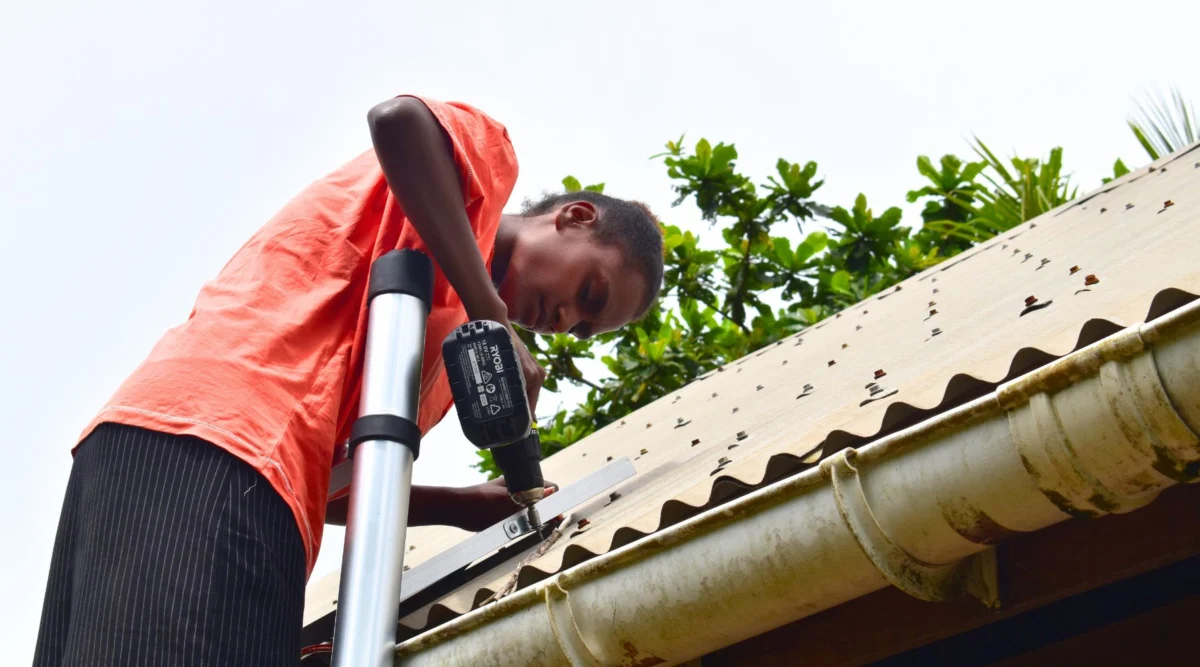
The Lawital Off-Grid Solar Project is not merely a technical installation; it is a pedagogical shift. Women in the community undergo intensive training to become "solar engineers," learning the mechanics of photovoltaic panels, battery storage systems, and circuit maintenance. This technical literacy is critical in a region where professional repair services are often days away by boat or foot.
Data from the Vanuatu Department of Energy indicates that prior to 2020, rural electrification rates hovered below 30% in many provinces. Since the implementation of decentralized solar hubs, access to reliable lighting in participating villages has reached 100%. Furthermore, the economic impact is measurable:
- Productivity: Household evening productivity has increased by an average of three hours, allowing for the production of handicrafts and textiles that are sold in local markets.
- Education: School-aged children in solar-equipped villages have shown a 20% increase in literacy rates, attributed to the ability to study after sunset.
- Health: Community health centers equipped with solar refrigeration can now store vaccines and essential medicines that previously required a "cold chain" that was frequently broken by power outages.
The environmental impact is equally significant. By replacing kerosene lamps and diesel generators, these small-scale solar grids have reduced local carbon emissions and eliminated the health risks associated with indoor air pollution.
Official Responses and the International Legal Battle
The resilience shown by Ni-Vanuatu women has provided a moral and practical foundation for the nation’s aggressive stance in international climate diplomacy. Vanuatu’s leadership, including figures such as Minister for Climate Change Ralph Regenvanu, has frequently cited community-led success stories as evidence that Pacific nations are not just "sinking islands" but are centers of innovation.
"The women of Lawital are showing the world what climate justice looks like in practice," stated a representative from the Vanuatu Ministry of Climate Change during a recent regional summit. "They are not waiting for the Global North to fulfill its financing promises; they are building the future with their own hands. However, their labor does not absolve the world’s largest emitters of their legal and ethical obligations."
This sentiment is echoed in Vanuatu’s historic push at the United Nations. In 2023, the UN General Assembly adopted a resolution, led by Vanuatu, requesting an advisory opinion from the International Court of Justice (ICJ) on the obligations of states regarding climate change. By March 2026, as the ICJ deliberations continue to shape international law, the lived experience of the Lawital women serves as a "living exhibit" of the loss and damage already being managed by vulnerable nations.
Broader Impact and Global Implications
The success of women-led climate initiatives in Vanuatu offers several critical lessons for the global community. First, it demonstrates that climate adaptation is most effective when it is intersectional. By addressing gender inequality and energy poverty simultaneously, the Lawital project creates a "resilience dividend" that strengthens the entire social fabric of the village.
Second, the project highlights the importance of "appropriate technology." While large-scale solar farms are necessary for urban centers, decentralized mini-grids are far more resilient to the physical impacts of cyclones. If one panel is damaged, the rest of the system can often remain functional, and local women have the skills to perform immediate repairs rather than waiting for specialized technicians from the capital, Port Vila.
Finally, the narrative coming out of Vanuatu is a powerful counter to climate fatalism. The transition from the "victim" trope to the "leader" archetype is essential for the psychological resilience of frontline communities. It fosters a sense of agency that is necessary to navigate the decades of climate volatility that lie ahead.
As the world looks toward the 2030 targets for the Sustainable Development Goals, the Lawital Off-Grid Solar Project stands as a testament to the efficacy of localized, gender-inclusive climate action. The challenge now remains for the international community to scale the financing required to replicate this model across the thousands of other remote islands in the Pacific and beyond. For the women of Lawital, the sun has become more than a source of heat; it is a source of power, independence, and a beacon of hope in a changing climate.

Related Posts
Constitutional Court of South Africa Bars Shell Oil Exploration in Landmark Victory for Environmental and Community Rights
The Battle for Saldanha Bay: South Africa’s Ambitious Ocean Economy Strategy Faces Legal and Environmental Reckoning