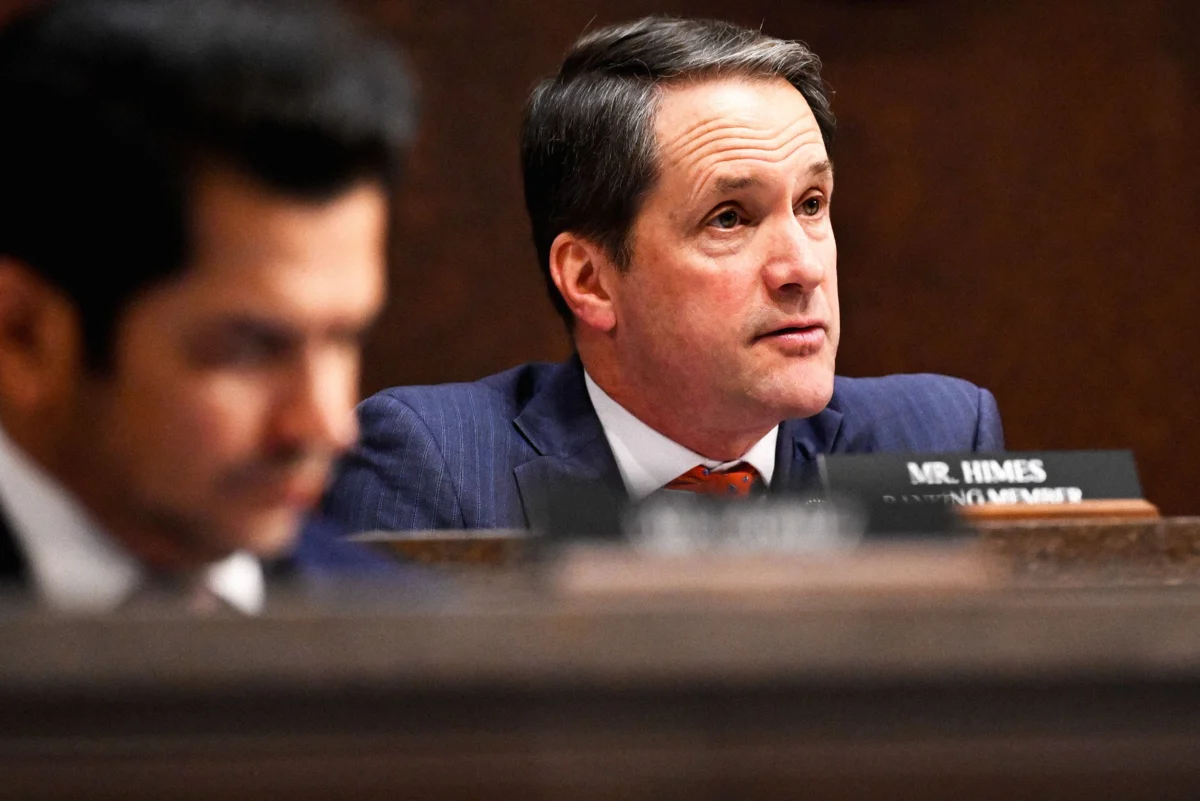
Representative Jim Himes Faces Internal Democratic Backlash Over Push to Renew Warrantless Surveillance Powers
Representative Jim Himes, the ranking Democrat on the House Intelligence Committee, is currently spearheading a private lobbying effort to secure the renewal of the FBI’s warrantless surveillance authority under Section 702 of the Foreign Intelligence Surveillance Act (FISA). The effort, which has sparked significant friction within the Democratic caucus, aims to maintain the status quo regarding the collection of electronic communications, even as critics argue that the current political climate renders existing oversight mechanisms effectively obsolete.
Section 702 was designed to target non-US persons located abroad, yet the architecture of the program inherently captures vast amounts of data belonging to American citizens. For years, the debate over this program has centered on whether the FBI should be required to obtain a probable-cause warrant before searching its databases for information pertaining to US persons. Himes maintains that the reforms codified in 2024 provide sufficient protection, citing internal compliance metrics that claim a success rate exceeding 99 percent.
The Erosion of Internal Oversight
The foundation of the argument for Section 702’s current structure rests on the efficacy of internal FBI audits. However, the operational landscape of the bureau has undergone a radical transformation over the past year. Under the leadership of FBI Director Kash Patel, the Office of Internal Auditing—which previously functioned as an essential check against the misuse of surveillance data—was shuttered.
The elimination of this office has created an accountability vacuum. Historically, data from these internal audits were the primary source for Foreign Intelligence Surveillance Court (FISC) opinions that exposed systemic abuses, including the improper querying of American communications. Without an independent or internal audit mechanism to identify and report failure rates, the "99 percent compliance" metric cited by Himes lacks a verifiable evidentiary basis.
Furthermore, the 2025 overhaul of the federal workforce has stripped civil service protections from many mid-level management and legal positions within the FBI. Under the current administrative guidelines, failing to implement policy directives—even those that might be considered legally dubious—is now a fireable offense. This change has effectively removed the incentive for personnel to push back against requests that may infringe upon civil liberties, transforming the "high-level approval" process into a potential conduit for political influence.
A Chronology of Surveillance Reform and Misuse
The tension surrounding Section 702 is not a sudden development but the culmination of a decade-long conflict between national security imperatives and constitutional privacy rights.
- 2024: Congress passes reauthorization legislation that rejects the requirement for constitutional warrants, instead implementing "56 reforms" intended to add administrative friction to the querying process.
- Early 2025: Director Kash Patel initiates a reorganization of the FBI, leading to the departure of several high-ranking officials and the dissolution of the Office of Internal Auditing.
- Late 2025: A declassified FISC opinion reveals that the FBI deployed a surveillance tool that conducted searches of American data without logging or auditing the queries, directly undermining claims of high compliance.
- February 2026: The Department of Justice Inspector General releases a report expressing inability to verify the FBI’s compliance, noting that past failures continue to cast doubt on current operational integrity.
- Present: The Congressional Progressive Caucus (CPC) formally announces its opposition to a "clean" extension of the program, setting the stage for a showdown in the House.
The Myth of the "Three Branches" Oversight
Himes has argued that the structural design of FISA ensures that any abuse would be quickly identified by the executive, legislative, and judicial branches. This assertion, however, is contested by legal experts. The Foreign Intelligence Surveillance Court, which oversees the program, is a non-investigative body. It lacks the resources or the authority to conduct independent audits of the FBI’s vast databases. Instead, it is almost entirely dependent on the Department of Justice to self-report violations.
Liza Goitein, senior director of the Brennan Center’s Liberty and National Security Program, notes that the current oversight model is fundamentally reactive. "Neither Congress nor the FISA Court conducts independent audits of the FBI’s queries," Goitein stated. "They rely on the Department of Justice to conduct thorough audits and to report the results truthfully. This particular Department of Justice has been rebuked by federal courts for providing inaccurate and misleading information."
The reliance on a system that has historically demonstrated a propensity for error—and is currently operating without its internal "smoke alarm"—leaves millions of Americans vulnerable to surveillance practices that may never be brought to light.
Policy Implications and the Legislative Impasse
The debate over Section 702 reauthorization has become a proxy for broader concerns regarding the weaponization of the federal government. While proponents like Himes emphasize the need for speed in preventing terrorist attacks, opponents point to the existence of the Government Surveillance Reform Act as proof that security and privacy are not mutually exclusive.
The proposed reform bill features specific "emergency carve-outs," allowing the FBI to bypass standard warrant requirements in instances of imminent threat, life-or-death scenarios, or critical cybersecurity breaches. Advocates argue that these exceptions provide the necessary agility for national security while establishing a judicial check on the routine searching of American data for intelligence purposes.
Despite this, Himes continues to lobby for a clean reauthorization. In a recent letter to colleagues, he stated, "A short-term reauthorization of Section 702 will enable Congress to thoroughly debate the pros and cons… without placing our national security in peril." Critics within his own party remain unconvinced, noting that the administration has already utilized surveillance tools to monitor journalists, track activist chat groups, and shift counterterrorism resources toward domestic political targets.
The Political Divide
The divide within the Democratic Party is stark. The Congressional Progressive Caucus, representing 98 members, has pledged to vote against any extension that does not include meaningful privacy reforms. CPC Chair Greg Casar has been vocal about the danger of providing expanded powers to an administration that has, in the view of many, displayed a disregard for democratic norms.
Representative Pramila Jayapal, a key member of the Judiciary Committee, has warned that the current administration’s history of monitoring political figures suggests that the surveillance apparatus is already being repurposed for partisan goals. For many Democrats, the prospect of extending these powers without additional constraints is seen as a strategic and moral error.
"I think it’s incredibly dumb for Democrats to give away leverage," one congressional staffer remarked, speaking on condition of anonymity. "Especially on a bill that is so controversial, given all the domestic spying by this administration."
Conclusion: The Future of FISA
As the expiration date for Section 702 approaches, the pressure on the House leadership to reach a compromise is mounting. Himes’ position as a member of the "Gang of Eight"—the group of lawmakers briefed on the most sensitive intelligence—gives his arguments significant weight. However, that weight is increasingly offset by the lack of transparency in the current FBI administration and the documented history of surveillance overreach.
The final outcome of this legislative battle will likely set the tone for domestic surveillance policy for the remainder of the decade. If the current trajectory holds, the absence of independent auditing and the erosion of internal civil service protections could permanently alter the relationship between the government and the privacy of the American public. The debate is no longer merely about the technicalities of a surveillance program, but about the fundamental trust required to operate a democracy in an age of pervasive digital monitoring.

Related Posts

The Las Vegas Cybersecurity Summit and the Escalating Threat of Autonomous Digital Exploitation

New York City Council members and privacy advocates launch legislative campaign to ban biometric facial recognition at public entertainment venues