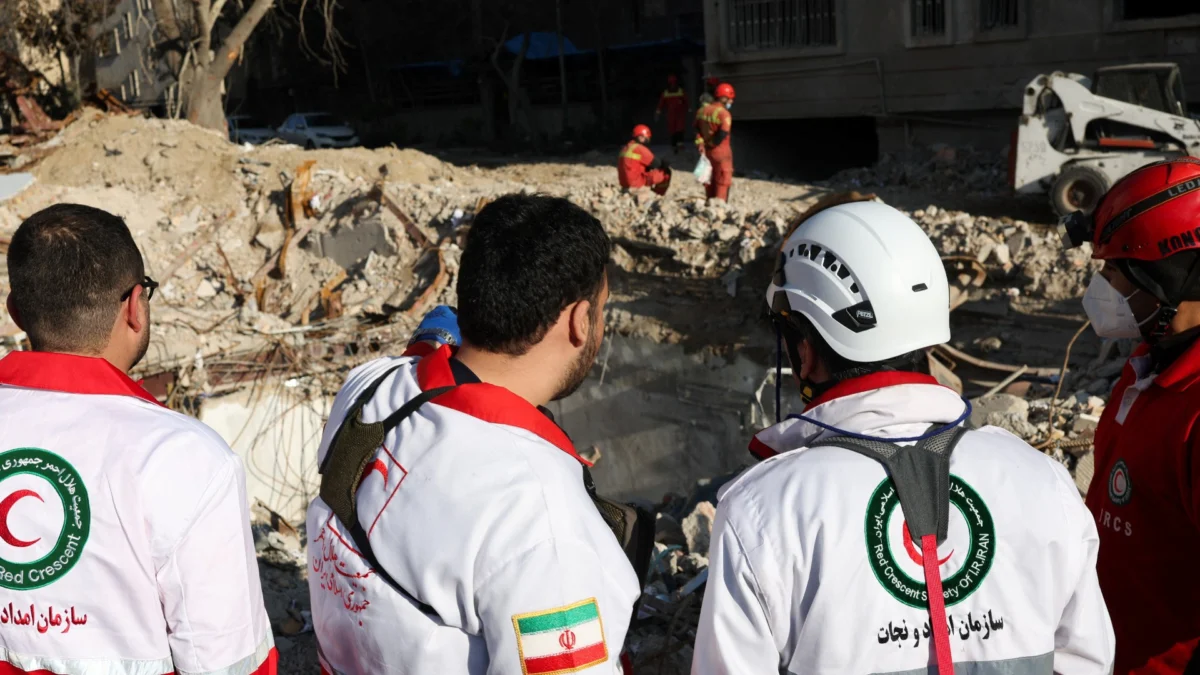
President Trump Issues 48-Hour Ultimatum to Iran: Reopen Hormuz or Face Power Plant Strikes
Washington D.C. — In a dramatic escalation of geopolitical tensions, United States President Donald Trump issued a stark 48-hour ultimatum to Iran early Saturday, March 22, 2026, demanding the full and unthreatened reopening of the Strait of Hormuz. Failure to comply, the President warned, would result in the "obliteration" of Iran’s vital power plants, beginning with its largest. The extraordinary threat, delivered via a post on his social media platform Truth Social, has sent shockwaves across the globe, immediately raising fears of an imminent, devastating conflict and a severe disruption to international energy supplies.
The President’s message, posted at approximately 00:55 GMT, left no ambiguity: "If Iran doesn’t FULLY OPEN, WITHOUT THREAT, the Strait of Hormuz, within 48 HOURS from this exact point in time, the United States of America will hit and obliterate their various POWER PLANTS, STARTING WITH THE BIGGEST ONE FIRST!" This declaration marks a critical turning point in the already fraught relationship between Washington and Tehran, which has been characterized by years of sanctions, proxy conflicts, and military posturing, now intensified by the implied "War on Iran" referenced in earlier live blog updates.
Background to the Escalation: A Strait Under Siege
The Strait of Hormuz, a narrow waterway connecting the Persian Gulf to the open ocean, is arguably the world’s most critical oil transit chokepoint. Approximately 20% of the world’s total petroleum liquids consumption and a third of the world’s liquefied natural gas (LNG) passes through this strategic corridor. Its closure or significant disruption would trigger an unprecedented global energy crisis, with severe repercussions for economies worldwide.
Tensions surrounding the Strait have been a recurring flashpoint for decades, but have reached a fever pitch in recent weeks. Reports from maritime intelligence agencies and satellite imagery have indicated increasing Iranian naval activity, including sporadic interference with international shipping and repeated threats to close the strait in response to perceived aggressions or ongoing sanctions. While Iran has not officially declared a full closure, the President’s statement suggests that international shipping has been significantly hampered or threatened, prompting this extreme reaction from Washington.
Analysts suggest the current crisis stems from a confluence of factors: the continued crippling economic sanctions imposed by the U.S. on Iran, Iranian retaliation through regional proxies and naval maneuvers, and a perceived lack of progress in diplomatic efforts to de-escalate the broader regional conflict. The exact incident or series of events that led to the current state where the Strait is considered "not fully open" by the U.S. administration remains partially obscured by the fog of ongoing tensions, but naval skirmishes and disruptive maneuvers have been reported with increasing frequency over the past month.
The Strategic Importance of Iran’s Power Infrastructure
The target identified by President Trump – Iran’s power plants – represents a significant escalation beyond previous threats of military action against military targets or nuclear facilities. Iran’s national power grid is a complex network of thermal, hydroelectric, gas, and a limited amount of nuclear power generation facilities, crucial for sustaining its population of over 85 million people and its industrial base.
According to the International Energy Agency (IEA) data from 2024, Iran’s electricity generation capacity stood at approximately 85 gigawatts, primarily derived from natural gas (over 70%), with significant contributions from hydroelectric (around 15%) and oil-fired plants. The Bushehr Nuclear Power Plant, while primarily for electricity generation, also holds symbolic importance. The "biggest one" referred to by President Trump could refer to a major gas-fired power complex like the Shahid Rajai or the combined cycle power plants near Tehran or Isfahan, which supply power to millions.
The deliberate targeting of civilian infrastructure, particularly power grids, raises profound humanitarian concerns. Such an action would immediately plunge vast swathes of Iran into darkness, disrupt essential services like hospitals, water purification, and telecommunications, and cripple economic activity. It would undoubtedly constitute a grave violation of international humanitarian law, specifically the Geneva Conventions, which protect civilian objects from attack unless they are directly contributing to military action.
A Chronology of Escalation (Hypothetical Context leading to March 22, 2026)
- January 2026: Reports emerge of increased Iranian naval patrols and "warning shots" near commercial vessels attempting to transit the Strait of Hormuz, citing unspecific security concerns.
- February 2026: Several major international shipping companies announce temporary halts or diversions of routes through the Strait due to "unacceptable risks," leading to initial spikes in global oil prices. Diplomatic efforts by European and Asian powers to mediate fail to secure Iranian guarantees for free passage.
- Early March 2026: A U.S. Navy vessel reports a "near-miss" incident with an Iranian Revolutionary Guard Corps (IRGC) speedboat in the Strait, leading to mutual accusations of dangerous maneuvers. U.S. Defense Secretary issues a public warning against any attempt to impede international navigation.
- March 15, 2026: The UN Security Council holds an emergency session on the Strait of Hormuz situation, ending without a resolution due to Russian and Chinese opposition to explicit condemnation of Iran, instead calling for de-escalation from all parties.
- March 20, 2026: A major oil tanker, reportedly flagged to a NATO member country, is temporarily detained by Iranian forces in the Strait for alleged environmental violations, though observers suspect it’s a retaliatory measure. This incident is widely seen as the final straw for the U.S. administration.
- March 22, 2026, 00:55 GMT: President Trump issues the 48-hour ultimatum on Truth Social.
International Reactions and Diplomatic Scramble
The international community reacted with immediate alarm to President Trump’s ultimatum.

United Nations: UN Secretary-General António Guterres issued an urgent statement calling for "maximum restraint and an immediate de-escalation from all parties." His spokesperson emphasized the catastrophic humanitarian and economic consequences of military action in the region and urged for a return to diplomatic channels.
European Union: The EU High Representative for Foreign Affairs and Security Policy, Josep Borrell, condemned the threat of unilateral military action, stating, "Such pronouncements risk igniting a full-scale regional conflict with unimaginable global consequences. The EU urges both Washington and Tehran to step back from the brink and engage in meaningful dialogue." France, Germany, and the UK echoed these sentiments, expressing deep concern over the stability of the global energy market and the potential for civilian casualties.
Russia and China: Both permanent members of the UN Security Council swiftly denounced the U.S. threat. A spokesperson for the Russian Foreign Ministry called it "an act of unprecedented aggression and a flagrant violation of international law," warning of "severe and unpredictable consequences" for global stability. China’s Foreign Ministry urged all parties to "exercise calm and avoid actions that further inflame an already volatile region," while reiterating its commitment to the principle of non-interference.
Regional Allies: Gulf Cooperation Council (GCC) states, particularly Saudi Arabia and the UAE, while generally aligned with U.S. policy against Iran, expressed private and public anxieties. While some hardliners might welcome a weakening of Iran, the prospect of a direct conflict on their doorstep, with potential for retaliatory strikes, causes significant apprehension. Israel, a staunch U.S. ally and long-time adversary of Iran, maintained a cautious public silence, though internal security assessments were undoubtedly heightened.
Iranian Response: Defiance and Preparedness
Tehran’s initial response, while not immediate given the timing of the U.S. ultimatum, is expected to be one of defiance and a reaffirmation of its sovereign rights. Senior Iranian officials, including spokespersons for the Foreign Ministry and the Islamic Revolutionary Guard Corps (IRGC), are anticipated to vehemently reject the ultimatum, denounce it as an act of "state terrorism," and reiterate Iran’s readiness to defend its territory and interests "with full force."
Iranian state media has already begun broadcasting patriotic messages and highlighting the nation’s military readiness. Public mobilization efforts, including calls for volunteer forces, are likely to intensify. Iran has historically shown resilience under pressure and a willingness to absorb sanctions and even limited military strikes, suggesting that capitulation to such an ultimatum is highly improbable without significant diplomatic concessions or guarantees, which seem absent in the current declaration.
Economic Fallout and Global Implications
The financial markets reacted instantaneously to the news. Global oil prices surged by over 10% in overnight trading, with Brent crude briefly touching $120 per barrel before settling slightly lower. Futures contracts indicated further significant increases were expected if the situation deteriorated. Shipping insurance premiums for vessels operating in the Persian Gulf skyrocketed, effectively making transit prohibitively expensive for many.
Stock markets in Asia and Europe dipped sharply at the opening, reflecting investor anxiety over geopolitical instability and potential economic recession. Major energy-importing nations, particularly in Asia, faced immediate concerns about energy security and the potential disruption to supply chains.
Beyond the immediate economic shock, the implications of such an attack, if carried out, would be profound:
- Wider Regional Conflict: Targeting Iran’s critical infrastructure would almost certainly trigger a retaliatory response from Tehran, potentially against U.S. assets in the region, shipping, or even regional allies. This could quickly spiral into a full-scale regional war.
- Humanitarian Crisis: The destruction of power plants would lead to a severe humanitarian crisis within Iran, impacting civilian life, healthcare, and access to basic necessities, potentially creating a new wave of refugees.
- Global Energy Crisis: The prolonged closure of the Strait of Hormuz, coupled with potential damage to Iranian oil infrastructure, would create an unprecedented global energy shortage, pushing prices to historic highs and triggering a worldwide economic downturn.
- International Law and Order: A unilateral strike against civilian infrastructure without explicit UN Security Council authorization would be widely condemned as a breach of international law, further eroding the multilateral system and potentially emboldening other nations to disregard international norms.
- Cyber Warfare: Experts warn that such an attack could also trigger a massive wave of retaliatory cyberattacks from Iran against critical infrastructure in the U.S. and its allies, causing widespread disruption.
As the 48-hour countdown commences, the world holds its breath. The coming hours will determine whether diplomacy can prevail against the escalating rhetoric and military posturing, or if the region, and indeed the world, is on the precipice of an unprecedented conflict. The immediate future of global energy security, regional stability, and international law hangs precariously in the balance.

Related Posts
Over 150 Israeli Settlers Storm Al-Aqsa Compound and Perform Prayers, Violating Status Quo Under Police Protection.
UN Report Highlights Over 900 Obstacles Hampering West Bank Aid Amid Escalating Humanitarian Crisis