
Oil Prices Plunge as Iran Declares Strait of Hormuz Open Amid Ceasefire, Global Markets Rally Cautiously
Global oil markets experienced a significant downturn today following Iran’s declaration that the strategically vital Strait of Hormuz would be "completely open" to commercial shipping for the duration of the current ceasefire in the US-Israel war with Iran. The announcement, made by Iranian Foreign Minister Abbas Araghchi, triggered an immediate rally across major stock exchanges, yet it was met with considerable caution and calls for verification from international maritime organizations and shipping operators who expressed ongoing safety concerns.
The Announcement and Immediate Market Reaction
The cost of a barrel of Brent crude, the international benchmark, plummeted to $88 (£65) after the Iranian foreign minister’s statement. This marked a sharp decline from over $98 earlier on Friday and a stark contrast to its peak of more than $119 per barrel in March, which occurred amidst the conflict. While prices later rebounded slightly to $92, the initial drop underscored the market’s sensitivity to stability in a region critical for global energy supplies.
Iranian Foreign Minister Abbas Araghchi stated unequivocally: "The passage for all commercial vessels through Strait of Hormuz is declared completely open for the remaining period of ceasefire." This diplomatic overture, following a separate ceasefire agreement between Israel and Lebanon, provided a jolt of optimism to global financial markets. The S&P 500 index, representing the largest firms listed in the US, closed up 1.2%. European bourses also reacted positively, with the Cac index in Paris and the Dax in Frankfurt both ending the day approximately 2% higher, while London’s FTSE 100 saw a 0.7% gain. The immediate market response reflected hopes for eased energy prices and reduced supply chain disruptions that have plagued the global economy since the Strait’s effective closure.
Strategic Significance of the Strait of Hormuz
The Strait of Hormuz is not merely a narrow strip of water; it is a critical chokepoint in global maritime trade, located south of Iran, connecting the Persian Gulf with the Arabian Sea and the open ocean. Its strategic importance cannot be overstated, as approximately one-fifth of the world’s total oil consumption and a substantial portion of its liquified natural gas (LNG) traverse this waterway daily. This makes it an indispensable conduit for energy exports from major producers in the Middle East, including Saudi Arabia, Iran, Iraq, Kuwait, Qatar, and the UAE.
Any disruption to traffic through the Strait has immediate and far-reaching implications for global energy security and prices. Its closure, or even the threat of it, can send shockwaves through international markets, affecting everything from gasoline prices at the pump to the cost of industrial production and international trade. The sheer volume of crude oil and LNG, alongside other vital commodities, that passes through this choke point means that its unobstructed flow is paramount to the stability of the global economy. The alternative routes are either non-existent or significantly longer and more costly, rendering the Strait of Hormuz irreplaceable for the efficient movement of energy resources.
Background to the Closure: The US-Israel-Iran Conflict
The recent crisis in the Strait of Hormuz began in late February when the waterway was effectively shut by Iran, following military strikes launched by the US and Israel in the country. This escalation marked a significant turning point in the US-Israel war with Iran, which had already cast a long shadow over the region. Prior to the conflict, Brent crude had been trading at under $70 per barrel, reflecting a relatively stable global energy market. However, the closure of the Strait rapidly curtailed the amount of oil and gas available on international markets, leading to a dramatic price spike.
Tanker traffic through the waterway slowed to a mere trickle, causing a severe reduction in supply and pushing Brent crude prices above $100 before they reached a peak of more than $119 per barrel in March. This period of heightened tension and restricted passage highlighted the vulnerability of global supply chains to geopolitical events in such critical regions. The recent ceasefire agreement between Israel and Lebanon appears to have provided the diplomatic opening for Iran’s decision to reopen the Strait, offering a glimmer of hope for de-escalation, even if temporary. The initial closure had already demonstrated the potential for such conflicts to ripple outwards, impacting economies and consumers worldwide.
International Reactions and Verification Efforts
Despite the initial positive market reaction, the international community’s response to Iran’s announcement has been marked by a blend of cautious optimism and skepticism. US President Donald Trump welcomed Iran’s statement with characteristic enthusiasm, writing on Truth Social: "IRAN HAS JUST ANNOUNCED THAT THE STRAIT OF IRAN IS FULLY OPEN AND READY FOR FULL PASSAGE. THANK YOU!" He further claimed that Iran had agreed "to never close the Strait of Hormuz again… it will no longer be used as a weapon against the world." However, Trump tempered this optimism with a follow-up post, stating that a naval blockade of Iran would remain "in full force and effect" until a permanent deal to end the US-Israel war with the country is agreed, indicating the underlying fragility of the situation.
Crucially, international maritime organizations and shipping operators have expressed significant reservations. BIMCO, a leading global shipping association, issued a stark warning to its operators, citing concerns about "ongoing risks." Jakob Larsen, BIMCO’s chief safety and security officer, stated, "The status of mine threats in the traffic separation scheme is unclear and BIMCO believes shipping companies should consider avoiding the area. This means that the Traffic Separation Scheme is not declared safe for transit at this point." This caution underscores the practical dangers that may still exist, regardless of official declarations.
Similarly, the head of the International Maritime Organization (IMO), Secretary-General Arsenio Dominguez, indicated that the organization is actively trying to understand the details behind Iran’s commitment. On social media, Dominguez affirmed: "We are currently verifying the recent announcement related to the reopening of the Strait of Hormuz, in terms of its compliance with freedom of navigation for all merchant vessels and secure passage using the IMO established traffic separation scheme." Tracking data concurrently showed minimal ship movement through the Strait, suggesting that operators are exercising extreme prudence.
This hesitancy was echoed by shipping operators themselves. One anonymous oil and gas shipping operator told the BBC that Iran’s announcement "doesn’t change anything" immediately. "We don’t feel like we need to be taking unnecessary risks and our company approach is that we won’t be the first to go through the Strait," the operator explained. Stena Bulk, a prominent company operating oil tankers in the region, confirmed it was "monitoring developments closely," adding that "The safety of our crew and vessels governs every routing decision, and we will not transit until we are satisfied it is safe to do so." These statements highlight the critical gap between a political declaration and the operational realities of ensuring safe maritime passage, particularly after a period of conflict and potential mine deployment.
Broader Economic and Supply Chain Implications
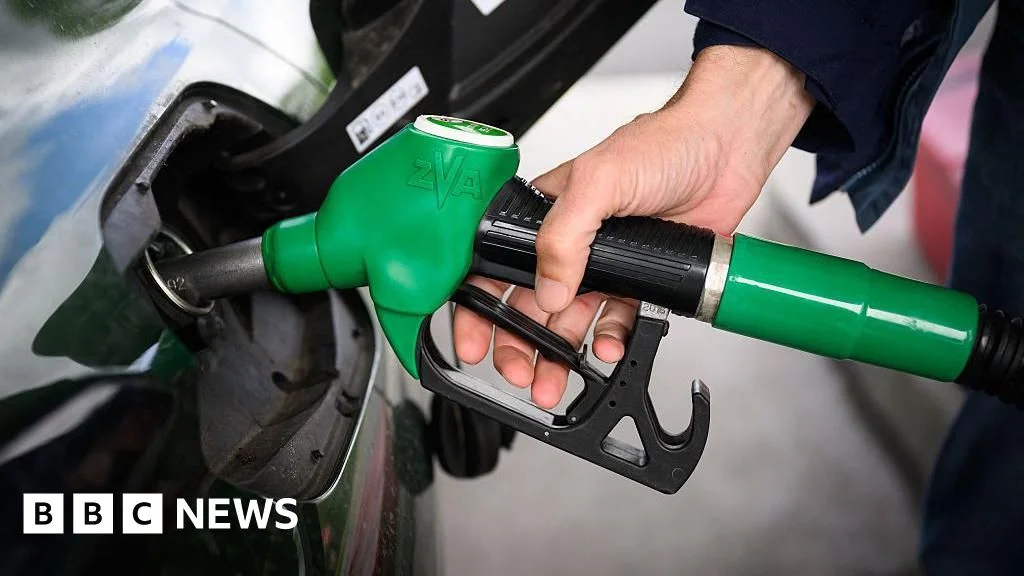
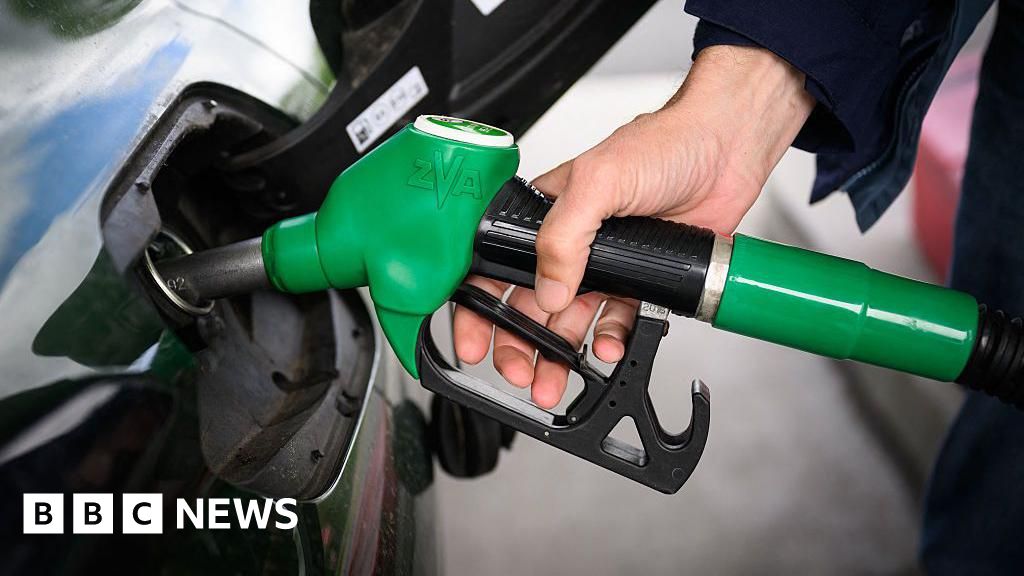
The prolonged closure of the Strait of Hormuz had already begun to exert significant pressure on various sectors of the global economy, beyond just the direct price of oil. The sharp rises in crude prices directly translated into higher costs for consumers at the pump, with petrol and diesel prices escalating significantly. While pump prices began to ease slightly on Thursday and continued on Friday, filling up a tank remains far more expensive than it was in February.
Beyond road transport, the energy crisis sparked concerns over the supply of jet fuel, leading to fears that airlines would have to ground flights due to prohibitively high operating costs or outright fuel shortages. This threatened to disrupt global travel and trade further, adding another layer of complexity to already strained logistics networks.
Perhaps even more critically, the closure of the key waterway had cut off a major supply line of fertilizer, a vital input for farmers worldwide. A staggering one-third of the world’s key fertilizer chemicals pass through the Strait of Hormuz. With this supply severely disrupted, prices for fertilizers have risen steeply since the outbreak of war, raising the grim prospect of higher food prices globally. This potential food inflation adds a humanitarian dimension to the conflict’s economic fallout, impacting vulnerable populations disproportionately.
Economists are also tempering expectations regarding an immediate return to pre-war normalcy. Kieran Tompkins, senior climate and commodities economist at Capital Economics, noted that the ceasefire, slated to end in just nine days, "offers only a narrow window of opportunity for oil tankers to navigate the Strait, load up, and exit." He suggested that "the number of vessels entering the Strait may not return to pre-war norms yet, but it does offer an opportunity for trapped tankers to leave." This indicates that while the immediate crisis might be averted for some vessels, the systemic issues of supply chain recovery will persist. Prof ManMohan Sodhi of the Bayes Business School further elaborated on this, stating that "Supply chains will take months to clear" even if a longer-term peace deal is reached. This underscores the deep and lingering impact of such disruptions, which cannot be undone overnight.
Related Global Energy Dynamics: The Russian Oil Sanction Waiver
Adding another layer of complexity to the global energy landscape, the tumble in oil prices coincided with the US extending its Russian oil sanction waiver, despite previously indicating it would not. Late on Friday, the Treasury Department announced that it would permit the delivery and sale of Russian crude oil and petroleum products already at sea until May 16. This move was framed as an effort to boost global oil supplies and mitigate price volatility.
The sanction, originally aimed at cutting off Russia’s export income from oil following its own geopolitical actions, was first temporarily removed by President Trump in March as global prices soared due to the war in Iran. That initial decision drew significant criticism from leaders in Europe and Canada at the time, who warned that it would inadvertently help fund Putin’s regime. The latest extension highlights the delicate balance major powers face between maintaining geopolitical pressure through sanctions and ensuring global energy stability, especially in the context of multiple concurrent crises impacting supply. The US appears to prioritize tempering global oil prices, even if it means temporarily softening its stance on sanctions against other major producers.
Looking Ahead: The Fragile Ceasefire and Future of the Strait
The current situation remains highly fluid and uncertain. The declared reopening of the Strait of Hormuz, while providing immediate market relief, is fundamentally tied to a ceasefire that is temporary, lasting only nine more days. This limited window creates an urgent, yet cautious, scramble for shipping companies to assess risks and potentially resume operations. The discrepancy between Iran’s official declaration and the cautionary advice from maritime authorities like BIMCO and IMO reflects the complex realities on the ground, where potential residual threats, such as mines, could still pose significant dangers.
The coming days will be critical as international bodies verify the safety of the traffic separation scheme and shipping operators weigh the risks against the commercial imperative. The success of this temporary reopening will also serve as a crucial test of trust and stability, potentially influencing the prospects for a more permanent resolution to the broader US-Israel war with Iran. Should the ceasefire falter, or if the Strait proves unsafe for transit, the global energy markets could quickly revert to, or even surpass, previous levels of volatility and price hikes. The world watches closely, hoping that this diplomatic breakthrough can pave the way for sustained peace and unimpeded global commerce through one of its most vital arteries.

Related Posts

Zambia on Edge: Opposition Leader Arrested Amid Allegations of Insurrection Plot and Election Tensions

Rescuers search for survivors of powerful Indonesia earthquake

