Netanyahu: Iran No Longer Has Capacity to Enrich Uranium or Produce Ballistic Missiles Following Extensive US-Israeli Air Campaign
Israeli Prime Minister Benjamin Netanyahu announced on Thursday, March 19, 2026, that Iran has been stripped of its capacity to enrich uranium and produce ballistic missiles, attributing this critical development to a concerted 20-day campaign of US-Israeli air attacks. The declaration, made during a press conference, signifies a major escalation and potential turning point in the protracted regional standoff, coming amid a live blog update referencing a wider "War on Iran." The statement, delivered at 18:56 GMT, reflects an asserted objective achieved after weeks of intense aerial bombardment across Iranian territory and affiliated regional sites.
The Prime Minister’s assertion, if independently verifiable, represents a profound blow to Iran’s strategic capabilities and its long-standing nuclear and missile programs. For years, Israel and the United States have voiced escalating concerns over Iran’s nuclear advancements, particularly its enrichment of uranium to near weapons-grade levels, and its development of an extensive arsenal of ballistic missiles, perceived as a direct threat to regional stability and Israeli security. The campaign leading to this announcement has unfolded against a backdrop of increasing volatility in the Middle East, with skirmishes and proxy conflicts intensifying across multiple fronts.
The Escalation of Tensions and the Iranian Nuclear Program
The roots of the current crisis stretch back decades, but significant milestones include the 2015 Joint Comprehensive Plan of Action (JCPOA), an international agreement designed to limit Iran’s nuclear program in exchange for sanctions relief. Following the US withdrawal from the JCPOA in 2018 under the previous administration, Iran gradually began to scale back its commitments under the deal, accelerating uranium enrichment, reactivating previously decommissioned centrifuges, and increasing its stockpile of enriched uranium. By early 2026, international atomic energy monitors, though facing increasing restrictions, had reported Iran enriching uranium to levels far exceeding JCPOA limits, raising fears of a "breakout" capability – the theoretical timeframe required to produce enough fissile material for a nuclear weapon.
Concurrently, Iran’s ballistic missile program continued unabated, with the Islamic Revolutionary Guard Corps (IRGC) showcasing advancements in range, precision, and destructive power. These missiles, capable of reaching targets across the Middle East, including Israel, and potentially parts of Europe, became another flashpoint. The US and Israel have consistently labeled both programs as existential threats, leading to a complex web of sanctions, cyber warfare, and covert operations aimed at disrupting Iranian capabilities. The 20-day air campaign is the most overt and extensive military action taken to date in response to these perceived threats.
Chronology of Twenty Days of Coordinated Strikes
The intensive US-Israeli air campaign, which commenced in late February and culminated in Netanyahu’s statement on March 19, 2026, reportedly targeted a wide array of Iranian strategic assets. While specific operational details remain scarce and official confirmation from the US is pending, intelligence reports and satellite imagery, often cited by both US and Israeli officials, suggested a systematic approach.
- Phase One (February 28 – March 5, 2026): Softening Defenses. The initial phase of the campaign reportedly focused on degrading Iran’s integrated air defense systems, radar installations, and command-and-control centers. Strikes were said to have targeted S-300 and domestically produced Bavar-373 missile defense batteries, particularly those protecting critical nuclear and military sites. This strategic approach aimed to establish air superiority and minimize risks to attacking aircraft.
- Phase Two (March 6 – March 12, 2026): Targeting Nuclear Infrastructure. With air defenses ostensibly suppressed, the focus shifted to Iran’s declared and suspected nuclear facilities. Reports indicated significant damage to the underground enrichment facility at Fordow, the Natanz uranium enrichment complex, and the Arak heavy water reactor. Precision-guided munitions were allegedly used to penetrate hardened bunkers, targeting centrifuge cascades, uranium conversion facilities, and related research and development sites. Sources close to the Israeli defense establishment, speaking anonymously, suggested that the aim was not just to destroy but to render these facilities inoperable for a significant duration, dismantling the entire enrichment supply chain.
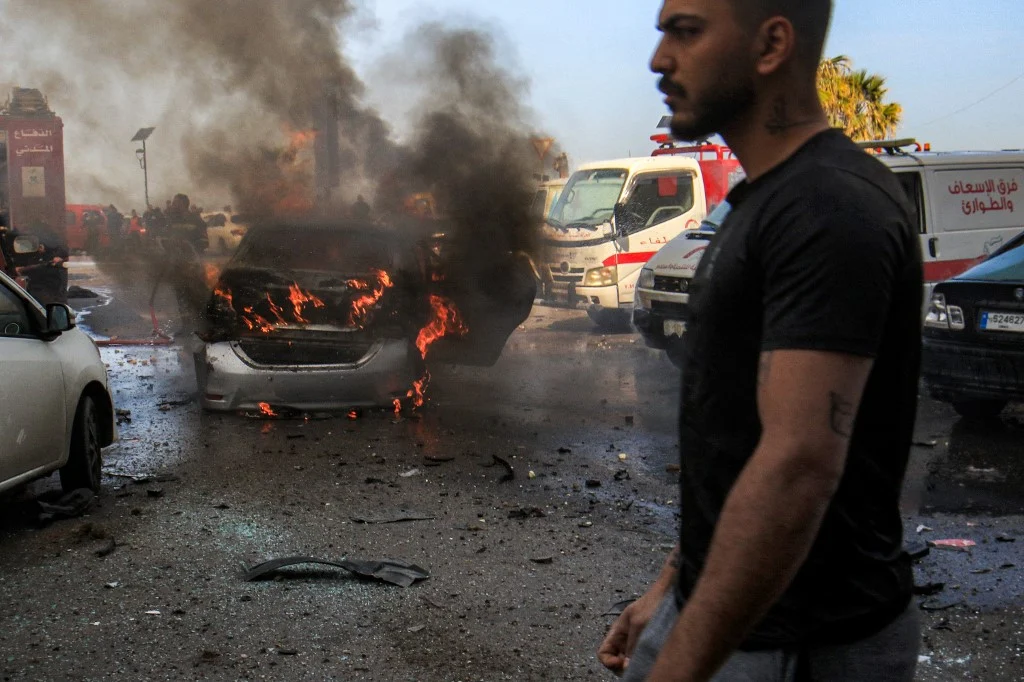
- Phase Three (March 13 – March 18, 2026): Disrupting Missile Production. The final phase of the campaign, preceding Netanyahu’s announcement, concentrated on Iran’s extensive ballistic missile infrastructure. Targets reportedly included manufacturing plants for solid and liquid propellants, assembly lines for various missile types (such as the Shahab, Ghadr, and Sejjil series), and underground storage depots. Research and development facilities linked to missile guidance systems and warhead design were also said to have been hit. The widespread nature of these strikes was underscored by reports of Israeli bombardment extending beyond Iranian borders, specifically a strike on March 18, 2026, in Lebanon’s southern coastal city of Sidon, where a burning vehicle, reportedly a target of Israeli action, signaled the broader regional dimension of the conflict, potentially involving Iranian proxies or arms shipments.
The methodical nature of the strikes over 20 days suggests a pre-planned, comprehensive operation designed to dismantle Iran’s most sensitive strategic capabilities.

Alleged Damage and Operational Status
Netanyahu’s assertion that Iran "no longer has the capacity" to enrich uranium or make ballistic missiles implies catastrophic damage to these programs. In the context of nuclear enrichment, this would mean the destruction or severe incapacitation of:
- Thousands of advanced centrifuges, both IR-1 and more advanced models.
- The infrastructure required for uranium hexafluoride (UF6) production and storage.
- The cascade halls and electrical systems necessary for enrichment operations.
- Key components and supply chains for maintaining and replacing equipment.
For ballistic missiles, it suggests: - The destruction of specialized manufacturing equipment, including those for producing missile bodies, engines, and guidance systems.
- The incapacitation of assembly plants and testing facilities.
- Significant depletion of existing missile stockpiles and key components.
Independent verification of such extensive damage is exceedingly difficult in an active conflict zone. Iran has historically employed deep underground facilities and dispersed production sites to protect its strategic assets, making a complete eradication of capacity a monumental task. However, the sustained nature and apparent precision of the alleged strikes, if confirmed, could indeed set back these programs by years, if not decades.
International Reactions: A Divided Global Response
The implications of Netanyahu’s statement and the preceding military campaign have sent ripples across the international community, eliciting a spectrum of reactions.
- Iran’s Stance: Tehran’s immediate response to Netanyahu’s claims has been a mixture of condemnation and defiance. Iranian officials, including Foreign Minister Hossein Amir-Abdollahian and IRGC commanders, have vehemently denied the extent of the damage, asserting that the country’s strategic capabilities remain intact and resilient. While acknowledging some localized damage from "cowardly aggression," they have vowed "a crushing and decisive response at the appropriate time and place," accusing the US and Israel of flagrant violations of international law and state sovereignty. Iran has also reportedly engaged in internal measures to mitigate the impact of the strikes, including dispersal of assets and accelerating clandestine production.
- United States: While US President [Name of President] has not yet fully corroborated the Israeli Prime Minister’s specific claims, US officials have confirmed active participation in "defensive operations" and "joint precision strikes" aimed at "neutralizing threats to regional stability" and preventing Iran from acquiring nuclear weapons capability. A spokesperson for the Pentagon stated that the US remains committed to the security of its allies and to non-proliferation efforts, framing the actions as necessary measures following persistent Iranian provocations and advancements in its nuclear program. The US has also reportedly engaged in diplomatic outreach to regional partners, emphasizing de-escalation while maintaining a strong deterrent posture.
- United Nations and IAEA: The United Nations Secretary-General, Antonio Guterres, issued a statement expressing grave concern over the escalating conflict and calling for an immediate cessation of hostilities and a return to diplomatic dialogue. The International Atomic Energy Agency (IAEA), which had faced increasing restrictions on its inspections in Iran, announced that it was attempting to assess the situation from available satellite imagery and intelligence, reiterating its mandate for verifying Iran’s nuclear commitments and expressing alarm over the potential for an uncontrolled nuclear crisis. The UN Security Council has been called into emergency session by several non-aligned nations to address the rapidly deteriorating security situation.
- Regional Actors: Reactions from other regional powers have been mixed. Saudi Arabia and the United Arab Emirates, long-standing rivals of Iran, have cautiously welcomed actions aimed at curbing Tehran’s perceived expansionism, though they have also expressed deep apprehension regarding the potential for wider regional destabilization and direct conflict. Russia and China, both permanent members of the UN Security Council, have strongly condemned the US-Israeli strikes as a violation of international law and a dangerous provocation, calling for restraint and emphasizing the need for diplomatic solutions and adherence to the JCPOA framework. European Union nations have reiterated calls for de-escalation and a return to negotiations, expressing concern for the humanitarian impact and the future of global non-proliferation efforts.
Broader Implications: Reshaping Regional Geopolitics
Netanyahu’s declaration, if true, and the military campaign preceding it carry profound implications for regional geopolitics and global security.
- Nuclear Non-Proliferation: The alleged incapacitation of Iran’s nuclear enrichment capabilities could be viewed by some as a forceful, albeit militarily controversial, success in preventing nuclear proliferation. However, it also sets a dangerous precedent, demonstrating that military force can be used to dismantle a nation’s nuclear program outside of international consensus. This could embolden other states to pursue similar pre-emptive strikes or, conversely, incentivize non-nuclear states to accelerate their own programs as a deterrent.
- Regional Stability: The immediate aftermath of such a campaign is likely to be fraught with increased instability. Iran’s proxies, including Hezbollah in Lebanon, Houthi rebels in Yemen, and various militias in Iraq and Syria, may intensify their attacks against Israeli and US interests in retaliation. The strike in Sidon, Lebanon, serves as a stark reminder that the conflict’s geographical scope extends far beyond Iran’s borders. The Strait of Hormuz, a critical global oil chokepoint, remains vulnerable to Iranian disruption, potentially impacting global energy markets.
- Iran’s Future: Internally, the military setbacks could either consolidate support for the hardline regime, fueling nationalist sentiments and calls for revenge, or it could expose vulnerabilities and potentially lead to internal dissent and calls for a re-evaluation of the country’s strategic direction. Economically, the country, already reeling from years of sanctions, faces further hardship and the immense cost of rebuilding damaged infrastructure.
- US-Israel Alliance: The joint campaign underscores the robust strategic alliance between the US and Israel. While it reaffirms their shared commitment to containing Iran, it could also strain US relations with international partners who advocate for diplomatic solutions and adherence to multilateral agreements.
- Global Security Architecture: The unilateral nature of the alleged strikes, even if justified by perceived threats, challenges the existing international security architecture built on multilateralism and the non-use of force except in self-defense or with UN authorization. This could further erode trust in international institutions and lead to a more anarchic global environment.
The coming weeks will be critical in assessing the true extent of the damage inflicted on Iran’s strategic programs and the nature of its response. The international community faces the daunting task of navigating this new, highly volatile landscape, where the prospects for a lasting peace or a wider conflict hang precariously in the balance.

Related Posts
Over 150 Israeli Settlers Storm Al-Aqsa Compound and Perform Prayers, Violating Status Quo Under Police Protection.
UN Report Highlights Over 900 Obstacles Hampering West Bank Aid Amid Escalating Humanitarian Crisis