Meloni breaks with Trump as presidential attacks on Pope Leo XIV trigger a crisis among European conservatives
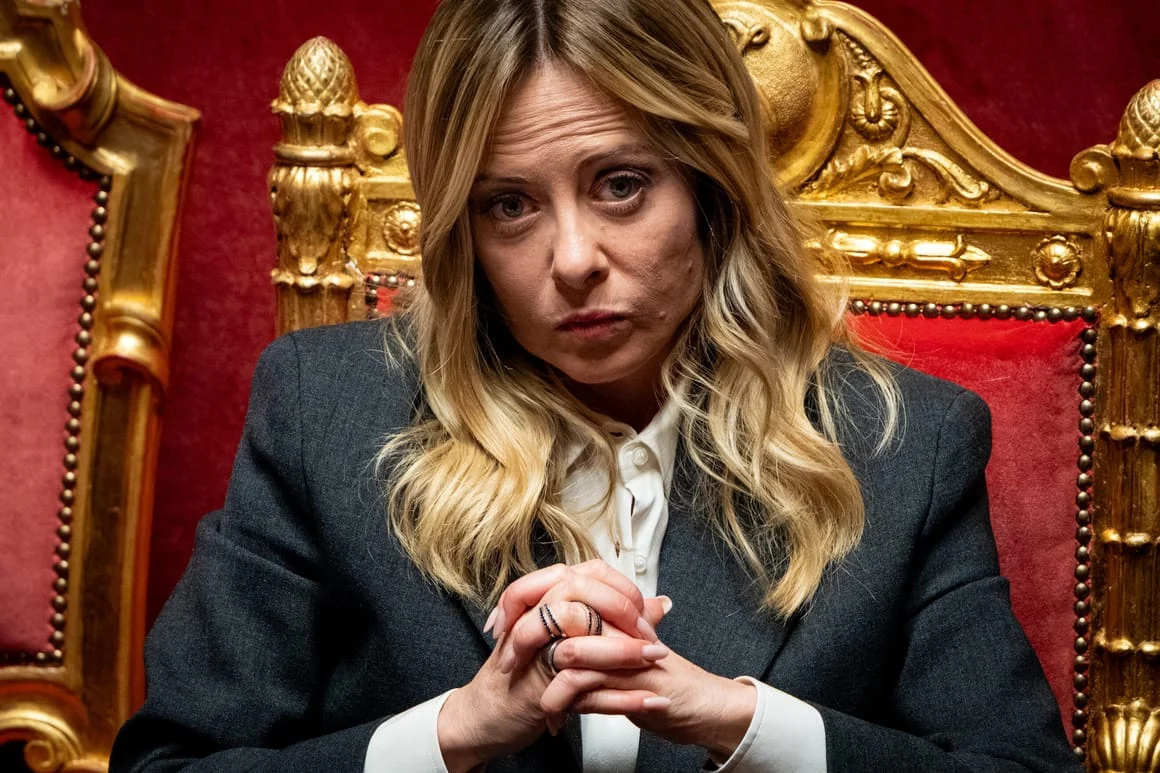
Italian Prime Minister Giorgia Meloni has issued a sharp rebuke of United States President Donald Trump, marking a significant fracture in the relationship between the two once-aligned leaders. The tension follows an escalating series of social media tirades from the White House targeting Pope Leo XIV, the first American-born pontiff. This public condemnation by the Italian premier highlights a broader, growing divide between the American populist movement and the traditionalist right-wing parties of Europe, which find themselves caught between their geopolitical reliance on the U.S. and the deeply held religious sensibilities of their voter bases.
The rift centers on the Pope’s recent vocal opposition to the ongoing U.S.-Israeli military campaign against Iran. President Trump, characterizing the conflict as a necessary defense of Western interests, has accused the Vatican of being out of touch with geopolitical realities. In a series of incendiary posts on his proprietary social media platform, Trump described the pontiff as “weak” and “politically compromised,” further alleging, without providing evidence, that his own administration played a pivotal role in the conclave that led to Leo XIV’s election.
A Chronology of the Diplomatic Breakdown
The current crisis did not emerge in a vacuum; it follows months of cooling relations between Rome and Washington. The timeline of this deterioration is marked by key political milestones:
- January 2026: Prime Minister Meloni publicly champions President Trump for the Nobel Peace Prize, citing his efforts to stabilize various international conflicts.
- March 2026: The Italian government suffers a major setback following a bruising referendum on constitutional reform, a defeat that significantly weakens Meloni’s political capital at home and forces a pivot in her foreign policy priorities.
- April 9, 2026: Pope Leo XIV delivers a stinging homily condemning the “mechanized destruction” of the conflict in the Middle East, specifically naming the U.S.-led coalition.
- April 11, 2026: President Trump responds on social media, claiming the Pope is undermining the security of the free world.
- April 13, 2026: Prime Minister Meloni formally issues a statement labeling the President’s rhetoric “unacceptable,” prompting a swift, defiant reaction from the White House during a press briefing.
The Theological and Political Tightrope
For leaders like Meloni, the situation presents a profound political dilemma. In Italy, where the influence of the Catholic Church remains a potent factor in public life, the population’s affinity for the papacy is not merely spiritual but cultural. Census data from 2025 indicates that approximately 54% of Italian citizens identify as practicing Catholics, with a significantly higher percentage reporting that they hold the office of the Papacy in high regard, regardless of their personal piety.
When Trump attacked the Pope, he inadvertently challenged the foundational identity of the very conservative European constituencies he once sought to court. By labeling the Pope “weak,” Trump has alienated the traditionalist wing of European politics—a group that typically aligns with his stance on border security and national sovereignty but views the degradation of the Church as a step too far.
The Blasphemy Controversy and Digital Fallout
The diplomatic fallout was compounded by a bizarre incident earlier this week, when the President’s official account shared an AI-generated image depicting himself as a messianic, Christ-like figure. The image, which featured the President surrounded by light, eagles, and fighter jets, was intended to project strength. Instead, it triggered a firestorm of criticism across the transatlantic spectrum.
Prominent European conservative commentators, who had previously been sympathetic to the Trump administration’s "America First" agenda, were quick to distance themselves. Various American bishops and theologians issued public statements describing the imagery as “blasphemous” and “narcissistic.” The backlash was so intense that the White House deleted the post within hours. When questioned about the image at a press gaggle on Monday, President Trump attempted to walk back the symbolism, claiming he believed the image was meant to portray him as a doctor or a healer, a statement that did little to soothe the concerns of his critics in the Vatican.

Broader Implications for Transatlantic Relations
The current state of affairs suggests that the "Trump-Meloni" axis is effectively dissolved. Political analysts observe that the President’s shift toward a more aggressive, inward-looking populism has left his former European allies with little room to maneuver.
"The fundamental issue is that Trump views himself as the sole arbiter of the global right," said Dr. Elena Rossi, a political scientist at the University of Bologna. "He fails to recognize that European conservatism is rooted in institutions—the Church, the law, and historical continuity. By attacking the Pope, he is attacking the very institution that provides the moral bedrock for the parties that have supported him for years."
Data from the European Council on Foreign Relations suggests that since the start of 2026, the approval rating of the U.S. administration among European right-leaning voters has dropped by nearly 22 percentage points. This decline is not merely a reflection of the Pope’s popularity but a symptom of a broader exhaustion with the unpredictability of American policy.
The Institutional Response from the Vatican
The Vatican has maintained a posture of diplomatic restraint, though insiders suggest that the Secretary of State, Cardinal Pietro Parolin, is deeply concerned by the tone of the American rhetoric. While Pope Leo XIV has not responded directly to the President’s personal attacks, the Holy See has reaffirmed its commitment to the "principles of universal peace," suggesting that the Church will not be intimidated by secular political pressure.
The implications for the G7 and other international forums are clear: the U.S. will find its traditional partners increasingly hesitant to align with Washington on matters of international law and human rights. As the U.S. enters the next phase of its electoral cycle, the disconnect between the White House and the European right is likely to widen.
Looking Ahead
As of Monday evening, the White House has shown no signs of softening its stance. In his remarks to the press, President Trump doubled down on his critique of the Pope, asserting that he has “nothing to apologize for” regarding his stance on the conflict. For Prime Minister Meloni, the challenge is now to manage the fallout within her own coalition. Several junior partners in her government, who rely on the support of hardline anti-migrant and traditionalist voters, are reportedly divided on how to respond to the escalating feud.
While the diplomatic incident may appear to be a matter of personality, it represents a deep-seated philosophical divide. The U.S. presidency, under Trump, has moved toward a model of governance that prioritizes individual strength and transactional diplomacy, while European conservatives remain tethered to an institutional framework that requires alignment with moral and religious authorities.
Whether this rift can be healed remains doubtful. With the Pope unlikely to change his stance on the conflict and the President unwilling to concede ground on his rhetoric, the tension is poised to linger, potentially creating a vacuum in the transatlantic alliance at a time when the global security environment remains highly volatile. The coming weeks will be critical in determining whether this is a temporary flare-up or the beginning of a permanent realignment of the Western conservative movement.