Iran Targets US-UK Diego Garcia Base with Ballistic Missiles, Interception Success Undetermined Amid Escalating Conflict
The Wall Street Journal reported on Friday, March 21, 2026, that Iran launched two intermediate-range ballistic missiles towards the strategically vital ‘Diego Garcia’ US-UK military base located in the Indian Ocean. According to multiple US officials cited by the publication, neither missile successfully struck the island outpost. One of the projectiles reportedly experienced a flight failure, while a US Navy warship deployed an SM-3 interceptor missile against the second. Crucially, the Wall Street Journal noted that the success of this interception could not be definitively determined at the time of its report. The precise timing of the missile launch was not specified by the Journal, leaving a critical gap in the immediate chronology of the unfolding "War on Iran," but the incident marks a significant escalation in the ongoing regional conflict, demonstrating Iran’s willingness to target high-value assets far from its immediate borders.
Incident Details and Chronology of the Strike
While the Wall Street Journal’s report on March 21, 2026, brought the incident to public attention, the actual missile launch is understood to have occurred sometime prior to this date. The report indicated that Iran employed intermediate-range ballistic missiles (IRBMs), a class of weaponry known for its substantial range and destructive potential. These missiles were aimed at Diego Garcia, a remote atoll that serves as a critical Anglo-American military hub in the Indian Ocean.
The sequence of events, as pieced together from the US officials’ accounts, involved two distinct missile trajectories and outcomes. The first Iranian missile reportedly suffered a catastrophic failure during its flight, indicating a potential technical malfunction or an issue with its guidance system. Such failures, while not uncommon in complex missile systems, are significant in the context of an active conflict, potentially reflecting challenges in Iran’s operational readiness or missile reliability under wartime conditions.
The second missile, however, posed a direct threat, prompting a rapid defensive response from US forces stationed in the region. A US Navy warship, whose identity was not disclosed, launched an SM-3 (Standard Missile-3) interceptor. The SM-3 is a highly advanced anti-ballistic missile designed to intercept short to intermediate-range ballistic missiles in space, during their midcourse flight phase. It employs a "hit-to-kill" mechanism, destroying incoming threats through kinetic energy impact. The ambiguity surrounding the success of this interception—"It could not be determined if the interception succeeded"—highlights the inherent complexities and uncertainties of missile defense, even with sophisticated systems. This lack of definitive confirmation leaves open the possibility that the second missile may have either missed its target independently, been successfully neutralized, or potentially continued towards the base without a confirmed impact.
The decision by Iran to target Diego Garcia represents a calculated, and highly provocative, move. Located approximately 3,500 kilometers (2,175 miles) from Iran, the strike demonstrates Iran’s extended-range capabilities and its intent to project power beyond the immediate Persian Gulf theater. The incident underscores the broadening geographical scope of the "War on Iran," suggesting that no major military asset within a significant radius is considered entirely safe from potential Iranian retaliation or pre-emptive strikes.
Background Context: The "War on Iran"
The term "War on Iran," as indicated in the live blog update, suggests a protracted and intense conflict, far beyond mere skirmishes or proxy engagements. This broader conflict likely encompasses a complex web of geopolitical tensions, strategic rivalries, and direct military confrontations that have escalated over an extended period. The underlying causes could range from Iran’s nuclear program and regional influence to its support for various non-state actors and challenges to international shipping lanes.
For years leading up to 2026, tensions between Iran and Western powers, particularly the United States and the United Kingdom, along with regional allies such as Saudi Arabia and Israel, have been a persistent source of instability in the Middle East. Economic sanctions, cyber warfare, and proxy conflicts in Yemen, Syria, and Iraq likely spiraled into direct military engagements. The current conflict could involve air campaigns, naval confrontations, and strategic missile exchanges, with both sides seeking to degrade the other’s military capabilities and exert regional dominance.
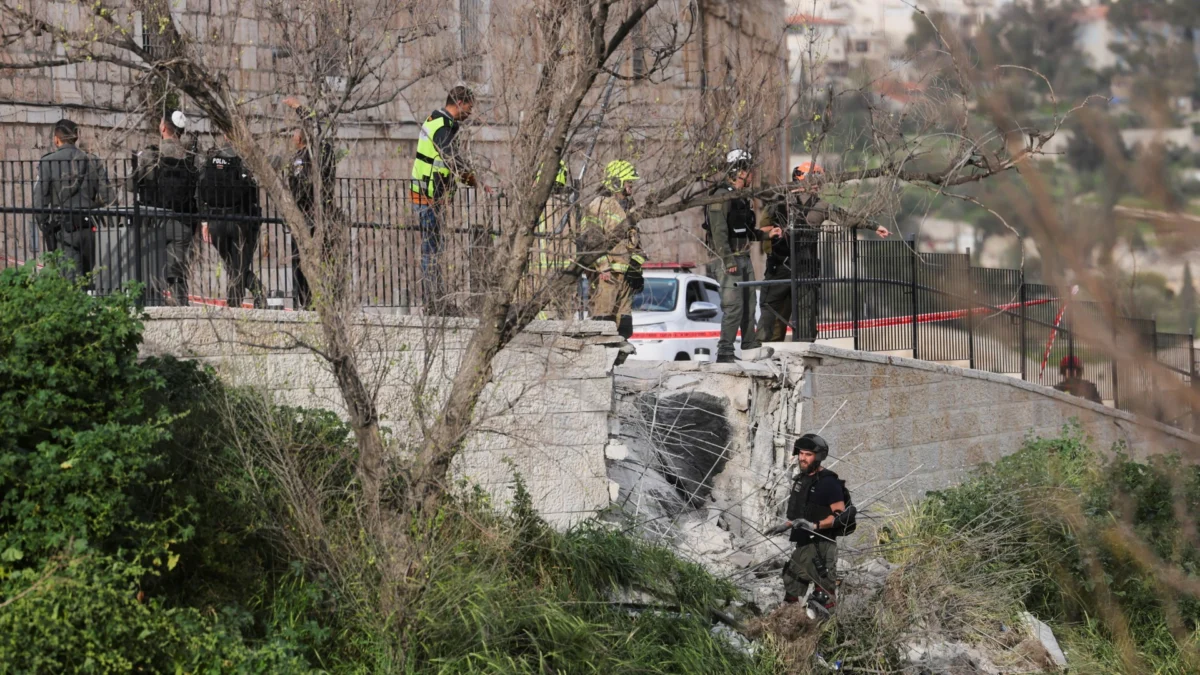
The targeting of Diego Garcia signifies a shift from conventional regional engagements to a more ambitious, long-range strategy. It suggests that Iran perceives itself to be under existential threat or is retaliating for previous strikes on its own territory or assets. Such a move would be designed to demonstrate resolve, disrupt enemy operations, and potentially force a recalculation of strategy by the opposing coalition. The image associated with the original news snippet, showing Jerusalem’s Old City, further hints at the widespread nature of this conflict, suggesting that major population centers and religious sites could also be under threat or have already been impacted by the wider hostilities.
Iran’s Missile Capabilities and Strategic Doctrine
Iran has, over several decades, invested heavily in developing a formidable ballistic missile program, largely as a deterrent against perceived external threats and as a core component of its asymmetric warfare strategy. By 2026, it is plausible that Iran’s arsenal would include a diverse range of liquid and solid-propellant missiles, with varying ranges and payloads. Missiles like the Ghadr-F, Emad, and Sejjil (if further developed) are theoretically capable of reaching targets well beyond its borders, including parts of Europe and bases in the Indian Ocean.
These intermediate-range ballistic missiles (IRBMs) typically have ranges between 1,000 to 5,500 kilometers. Their development has often been shrouded in secrecy and met with international condemnation due to concerns about proliferation and regional stability. Iran’s doctrine for missile usage likely involves several objectives:
- Deterrence: Presenting a credible threat of retaliation to dissuade attacks on Iranian soil.
- Retaliation: Striking enemy assets or infrastructure in response to aggression.
- Power Projection: Demonstrating the capability to hit distant targets, thereby influencing regional dynamics and challenging adversaries’ operational freedom.
- Asymmetric Advantage: Compensating for conventional military disparities against technologically superior adversaries.
The decision to target Diego Garcia with IRBMs aligns with the third objective, aiming to show that Iran possesses the means to reach and potentially disrupt key logistical and operational hubs vital to the US and UK. While precision for older IRBMs can be a concern, modern advancements might have improved their accuracy, making even a near-miss a significant statement.
The Strategic Importance of Diego Garcia

Diego Garcia is far more than just a remote island. It is a critical, irreplaceable military outpost for the United States and the United Kingdom, often referred to as an "unsinkable aircraft carrier" in the Indian Ocean. Its strategic value stems from several key factors:
- Location: Situated roughly equidistant from Africa, Asia, and the Middle East, it provides an unparalleled staging point for military operations across these vast regions.
- Logistical Hub: The base serves as a vital logistics and support hub, capable of storing massive amounts of fuel, munitions, and supplies, crucial for sustaining long-duration air and naval operations.
- Airbase: Its extensive runway can accommodate heavy bombers like the B-52 and B-2, as well as various surveillance and transport aircraft. It has been used historically for missions in Afghanistan, Iraq, and the Persian Gulf.
- Naval Facility: The deep-water port allows for the docking of aircraft carriers, submarines, and other large naval vessels, facilitating rapid deployment and maintenance.
- Intelligence and Surveillance: The island hosts sophisticated communication and intelligence gathering facilities, playing a critical role in global surveillance networks.
Targeting Diego Garcia is thus not merely an attack on a military installation; it is an attempt to strike at the logistical and operational backbone of Western military presence in a vast and strategically crucial part of the world. A successful strike, or even a demonstration of capability to strike, could severely complicate US and UK military planning, force a reallocation of resources for base defense, and send a powerful message about the costs of intervention to the international community.
Official Responses and Anticipated Reactions
Given the gravity of the incident, official responses from the involved parties and the international community would be swift and multifaceted.
United States and United Kingdom:
US officials, having already briefed the Wall Street Journal, would likely issue formal statements condemning the Iranian action as a reckless act of aggression and a significant escalation of hostilities. They would emphasize the defensive measures taken, such as the SM-3 launch, and reiterate their commitment to protecting personnel and assets. There would likely be calls for de-escalation from Iran, coupled with warnings of severe consequences for further attacks. The incident would undoubtedly trigger emergency consultations between Washington and London, potentially leading to enhanced defensive postures, increased intelligence sharing, and discussions about retaliatory options. The UK, as a co-owner of the base, would likely echo US sentiments, emphasizing the inviolability of its sovereign territories and military installations.
Iran:
Iran’s official response could take several forms. It might deny the attack outright, attributing the reports to Western propaganda. Alternatively, it could confirm the launch without specifying the target, framing it as a legitimate exercise of its defensive capabilities or as retaliation for unspecified aggressions against its interests. A third possibility is that Iran could claim the strike as a deliberate warning, demonstrating its reach and resolve in the face of the ongoing "War on Iran," without necessarily confirming the specific outcomes of the missiles. Any statement from Tehran would likely be aimed at projecting strength and defiance.
International Community:
The international community, particularly the United Nations and major global powers, would likely express deep concern over the escalation. Calls for restraint and diplomatic solutions would be paramount. Countries with significant economic interests in the Indian Ocean region, such as China, India, and Japan, would be particularly anxious about the potential disruption to shipping lanes and global trade. The incident would likely be brought before the UN Security Council, although consensus on action could be difficult given geopolitical divisions.
Broader Implications and Analysis
The Iranian missile launch targeting Diego Garcia carries profound implications for the "War on Iran" and global security:
Escalation Risks: This incident represents a significant escalation, pushing the boundaries of the conflict beyond regional proxies and direct confrontations in the Persian Gulf. By targeting a remote, high-value asset, Iran has signaled its willingness to broaden the geographic scope of the conflict, raising the specter of a wider war with unpredictable consequences.
Deterrence vs. Provocation: The attack tests the balance between deterrence and provocation. While Iran may intend to deter further Western actions by demonstrating its long-range strike capabilities, such an act could equally provoke a more robust and direct military response from the US and UK. The ambiguity of the interception success further complicates this, as neither side can definitively claim a clear victory or failure, leaving room for both to interpret the event in ways that suit their narratives.
Future of Missile Defense: The inconclusive nature of the SM-3 interception highlights the ongoing challenges in missile defense technology. Even the most advanced systems are not foolproof, and adversaries continue to innovate to overcome them. This incident will undoubtedly prompt a review of defensive protocols and capabilities at key installations worldwide.
Alliance Solidarity: The attack on a joint US-UK base reinforces the strategic alliance between Washington and London. It underscores their shared vulnerabilities and interests, potentially solidifying their resolve in the face of Iranian aggression.
Regional Stability and Economic Impact: An escalation involving strikes on such strategic assets could have ripple effects across the Indian Ocean and beyond. Shipping routes, critical for global trade and energy supplies, could face increased risks, leading to higher insurance premiums and potential disruptions to supply chains. Global oil prices could spike, adding further instability to an already volatile economic landscape.
Precedent Setting: Should Iran continue to target distant, strategic assets, it could set a dangerous precedent for other state and non-state actors, encouraging similar long-range attacks and further destabilizing international security norms.
In conclusion, the Iranian missile launch towards Diego Garcia, as reported by the Wall Street Journal, marks a perilous turning point in the "War on Iran." It demonstrates Iran’s expanding military reach and its willingness to engage in high-stakes confrontations, far from its traditional operational zones. The uncertain outcome of the missile interception underscores the persistent challenges of modern warfare and missile defense. As the international community grapples with this significant escalation, the path forward remains fraught with risks, demanding urgent diplomatic efforts to prevent a further unraveling of regional and global security.

Related Posts
Over 150 Israeli Settlers Storm Al-Aqsa Compound and Perform Prayers, Violating Status Quo Under Police Protection.
UN Report Highlights Over 900 Obstacles Hampering West Bank Aid Amid Escalating Humanitarian Crisis