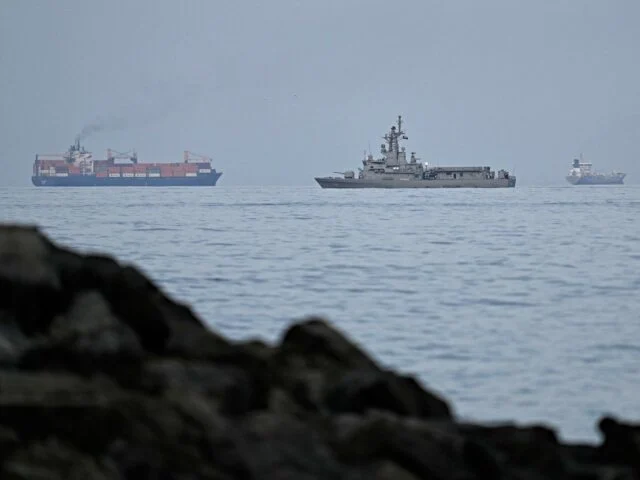
Iran Considers Imposing Controversial Tolls on Strait of Hormuz Shipping Amid Intensifying Regional Conflict and International Condemnation.
Iranian lawmaker Somayeh Rafiei announced on Thursday that members of the Iranian parliament are actively considering a legislative proposal to levy tolls on all vessels navigating the Strait of Hormuz. This declaration, made to the Iranian Students’ News Agency (ISNA), frames the potential charges as a mechanism to fund the security of the vital waterway, which Iran claims it is unilaterally providing amid ongoing hostilities referred to as "Operation Epic Fury." The proposal emerges against a backdrop of heightened tensions and accusations that Iran has been engaged in "wanton attacks" on international shipping since the commencement of this major regional conflict.
The Unilateral Proposal for Maritime Taxation
According to Rafiei, the proposed plan aims to establish a system where "countries will pay tolls and taxes to the Islamic Republic if the Strait of Hormuz is used as a secure route for transit, energy and food security." She elaborated on the rationale, stating, "The security of the strait will be established with strength, authority and grandeur by the Islamic Republic of Iran, and countries must pay a tax in return." This assertion signals a significant shift in Iran’s posture towards international maritime traffic, moving beyond previous threats of closure or harassment to a formal demand for payment. The lawmaker’s comments follow an earlier statement on Tuesday by Parliament Speaker Mohammad Bagher Ghalibaf, who declared that the Strait of Hormuz "won’t return to its pre-war status," indicating a long-term strategic reorientation by Tehran regarding the waterway.
A Chokepoint of Global Significance
The Strait of Hormuz is not merely a regional waterway; it is an indispensable artery for global commerce, particularly for the international energy market. Situated between Iran and Oman, this narrow channel connects the Persian Gulf to the Arabian Sea and beyond, making it the world’s most important oil transit chokepoint. Approximately one-fifth of the world’s total petroleum liquids consumption, and a significant portion of global liquefied natural gas (LNG) transits through this strait annually. According to data from the U.S. Energy Information Administration (EIA), in 2018, an average of 21 million barrels per day (bpd) of crude oil and petroleum liquids flowed through the Strait, representing roughly 30% of all seaborne-traded oil. Any disruption or imposition of fees here directly impacts global energy prices, supply chains, and the economies of numerous nations, particularly those in the Gulf Cooperation Council (GCC) that rely on it for their exports.
International Law and the Right of Transit Passage
Iran’s proposal immediately clashes with fundamental principles of international maritime law. Under the 1982 United Nations Convention on the Law of the Sea (UNCLOS), the Strait of Hormuz is classified as an international strait, guaranteeing the right of "transit passage" for all ships and aircraft, whether military or civilian, through its waters. This right, enshrined in Part III of UNCLOS (Articles 37-44), explicitly prohibits states bordering such straits from impeding transit passage or levying charges upon it. Article 44, for instance, stipulates that "States bordering straits shall not hamper transit passage and shall give appropriate publicity to any danger to navigation or overflight within or over the strait of which they have knowledge."
While neither the United States nor Iran has fully ratified UNCLOS, many of its provisions, particularly those concerning navigation and territorial seas, are widely accepted as customary international law. This means that even without formal ratification, the principles of transit passage are generally considered binding on all states. Legal experts worldwide concur that Iran possesses no recognized international legal basis to block, restrict, or impose tolls on international maritime traffic through the Strait of Hormuz. Similarly, the two nations bordering the Strait to the south, Oman and the United Arab Emirates (UAE), also have no unilateral right to control the waterway or impose such fees.
Iran’s historical actions, including threats to mine the Strait or close it entirely, have consistently been viewed as direct violations of international law. The current proposal to impose tolls represents a novel but equally illicit attempt to assert control and financial leverage over a shared international resource. Iran has previously attempted to skirt these legalities by claiming its attacks are solely directed against ships belonging to its military adversaries, such as the United States and Israel. However, such claims do not alter the fundamental protections afforded to international shipping under UNCLOS, nor do they legalize the imposition of arbitrary tolls.
A History of Provocation and Escalation
The current proposal is not an isolated incident but rather the latest development in a long history of Iranian challenges to the freedom of navigation in the Strait of Hormuz and the wider Persian Gulf. Over recent decades, Tehran has frequently used the Strait as a geopolitical lever, threatening its closure or disrupting traffic in response to international sanctions or perceived aggression.
Timeline of Key Events and Actions:
- 1980s Iran-Iraq War (War of the Tankers): Both sides attacked merchant shipping in the Gulf, highlighting the Strait’s vulnerability. Iran initiated mine-laying operations and targeted commercial vessels.
- Early 2000s onwards: Iran routinely conducted naval exercises in the Strait, often involving threats to close the waterway if its national interests were jeopardized.
- 2019 Tanker Attacks: A series of attacks on oil tankers in the Gulf of Oman and near the Strait of Hormuz, which the U.S. and its allies attributed to Iran, significantly escalated tensions and raised insurance premiums for shipping.
- Seizure of Vessels: Iran has repeatedly seized foreign-flagged vessels, citing various reasons from alleged environmental violations to retaliation for the seizure of Iranian tankers elsewhere. These actions are often seen by the international community as harassment and violations of innocent passage.
- Commencement of "Operation Epic Fury": The current context, described as "Operation Epic Fury," signifies an intensified period of conflict where Iran is accused of launching "wanton attacks on international shipping." This vague but impactful description suggests a pattern of aggressive behavior preceding the toll proposal.
- Mohammad Bagher Ghalibaf’s Statement (Tuesday): The Iranian Parliament Speaker declared that the Strait of Hormuz "won’t return to its pre-war status," signaling a permanent shift in Iran’s approach to the waterway’s management.
- Somayeh Rafiei’s Announcement (Thursday): The lawmaker revealed the parliamentary plan to impose tolls and taxes, formalizing the earlier rhetoric.
- South China Morning Post Report (Friday): The SCMP reported that Iran is already "rolling out screening processes and steep transit fees" for ships seeking safe passage, suggesting the implementation may have already begun or is imminent, even before formal parliamentary approval.
This chronology underscores a consistent pattern of Iranian assertiveness and a willingness to challenge established international norms regarding maritime navigation.
International Reactions and Humanitarian Concerns
The international community has largely condemned Iranian actions that threaten maritime freedom. The latest proposal to impose tolls has been met with significant concern and rejection from global bodies and maritime stakeholders.
The International Maritime Organization (IMO), the specialized agency of the United Nations responsible for regulating shipping, has actively sought to de-escalate the situation. IMO Secretary-General Arsenio Dominguez addressed a special session on Thursday, expressing grave concern over the safety of seafarers and the disruption to global trade. "I am ready to start working immediately in negotiations to establish a humanitarian corridor to evacuate all vessels and seafarers trapped," Dominguez pleaded, highlighting the immediate crisis for merchant ships caught in the Persian Gulf due to the Strait shutdown. The Iranian delegation present at the session reportedly did not respond to his urgent appeal, indicating a lack of willingness to engage constructively on this critical humanitarian issue.
Responses from key international players are anticipated to be strongly negative:
- United States: The U.S. government, a vocal proponent of freedom of navigation, is expected to condemn the proposal as a clear violation of international law and a provocative act. It would likely warn against any attempts to enforce such tolls and could consider further sanctions or increased naval presence in the region.
- European Union: EU member states, heavily reliant on energy supplies transiting the Strait, would likely express strong disapproval, emphasizing the importance of upholding international law and ensuring the free flow of commerce.
- Gulf Cooperation Council (GCC) States: Nations like Saudi Arabia, UAE, Qatar, and Kuwait, whose economies are deeply intertwined with the Strait of Hormuz, would view the imposition of tolls as a direct threat to their sovereignty and economic stability. They would likely call for international intervention and diplomatic pressure on Iran.
- Maritime Industry: Shipping companies, insurers, and commodity traders would face immediate and significant financial implications. Insurance premiums for war risk would skyrocket, potentially making transit through the Strait economically unviable for some, leading to higher costs for consumers globally.
Broader Implications: Economic, Geopolitical, and Security
The implications of Iran’s proposed tolls extend far beyond the legal realm, touching upon global economics, regional geopolitics, and international security.
- Economic Impact: The direct financial burden of tolls would be passed on to consumers, particularly in energy-importing nations. Higher shipping costs would exacerbate inflationary pressures and contribute to global economic instability. The SCMP report already suggesting "steep transit fees" indicates that the economic hit could be substantial. Moreover, the uncertainty created by such unilateral actions could deter investment in the region and disrupt long-term trade agreements. The mention of "food security" by lawmaker Rafiei also highlights the potential for rising costs of food imports for countries reliant on Gulf trade routes.
- Geopolitical Ramifications: This move signifies a bolder, more assertive Iran seeking to project power and financial control over a critical international resource. It challenges the existing global order and norms of international law. It could further isolate Iran diplomatically and intensify its standoff with Western powers and regional rivals. The precedent set by China in disregarding a 2016 tribunal ruling on the South China Sea, as noted in the original article, provides a concerning parallel for how a powerful nation might disregard international legal rulings when it perceives a strategic advantage.
- Security Implications: The enforcement of tolls, potentially involving the boarding and inspection of vessels, could lead to direct confrontations between Iranian forces and international shipping or naval escorts. This significantly heightens the risk of military escalation in an already volatile region, where naval forces from various nations, including the U.S. and its allies, maintain a presence to safeguard maritime security. The ongoing "Operation Epic Fury" context already indicates a fragile security environment, making any new enforcement measures extremely dangerous.
In conclusion, Iran’s consideration of imposing tolls on ships passing through the Strait of Hormuz represents a profound challenge to international law, global commerce, and regional stability. While framed by Tehran as a measure to ensure security and assert sovereignty during "Operation Epic Fury," the proposal is widely viewed as a unilateral and illegal act that could trigger severe economic repercussions and a dangerous escalation of tensions in the world’s most critical maritime chokepoint. The international community, led by maritime bodies and major powers, faces a critical juncture in upholding the principles of freedom of navigation against an increasingly assertive Iran.

Related Posts

Democratic Candidates Must Moderate to Win General Elections, Says Rep. Greg Stanton

Lisa Demuth Secures Republican Gubernatorial Nomination in Minnesota, Defeating Trump-Endorsed Mike Lindell