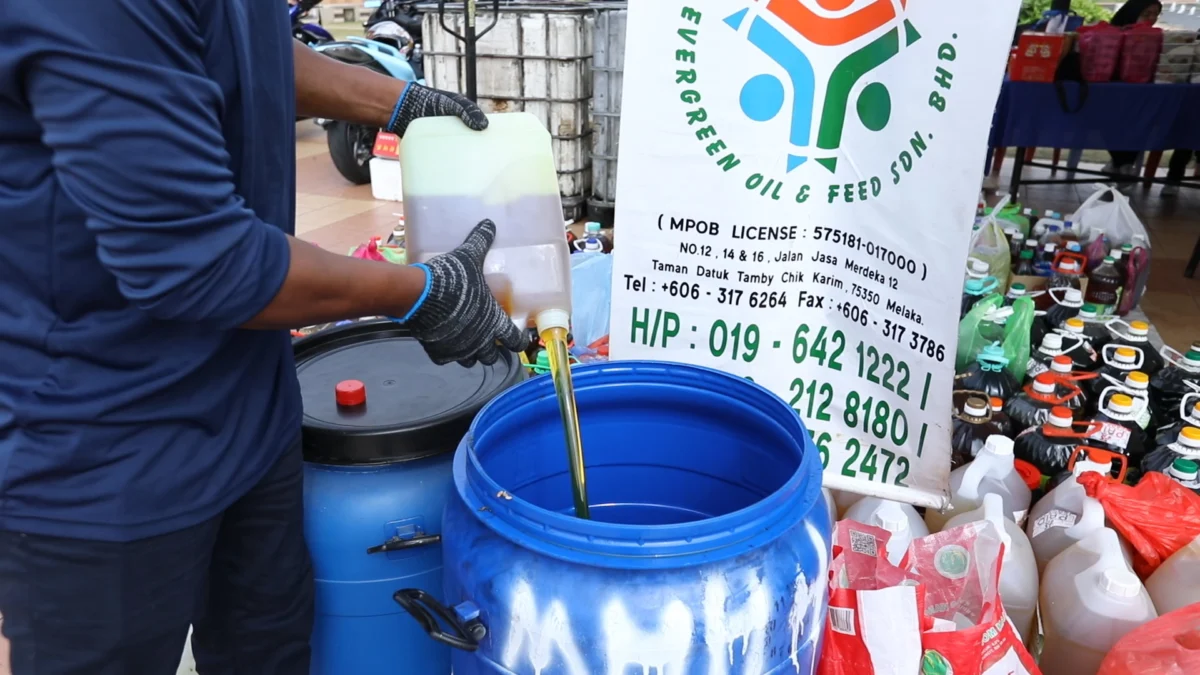
Investigation finds Neste exposed to fraud risk after its top Malaysian supplier accepted fresh palm oil as used cooking oil, with no questions asked.
The integrity of the global sustainable aviation fuel (SAF) market has been called into question following a detailed investigation into the supply chain operations of Neste, the world’s leading producer of renewable fuels. The findings reveal that Neste’s primary Malaysian supplier has been allegedly facilitating the "laundering" of fresh palm oil, rebranding it as used cooking oil (UCO) to meet the growing demand for low-carbon feedstocks. This revelation exposes the Finnish energy giant to significant regulatory and reputational risks, as the use of virgin palm oil under the guise of waste product violates international sustainability standards and undermines the carbon-reduction claims of the aviation industry.
The Core of the Allegations
At the heart of the investigation is a systemic failure in the verification process at collection points managed by Neste’s largest supplier in Malaysia. Undercover monitors and industry whistleblowers documented instances where tankers of fresh, refined palm oil were delivered to collection facilities and offloaded into storage tanks designated for UCO. According to the investigation, these transactions were completed with "no questions asked," bypassing the rigorous chemical testing and documentation checks that are mandated by the International Sustainability and Carbon Certification (ISCC) system.

Used cooking oil is a highly sought-after commodity in the biofuel sector because it is classified as a waste product. Under the European Union’s Renewable Energy Directive (RED II) and similar frameworks in the United States, fuels derived from waste products receive higher carbon credits and subsidies compared to those made from virgin vegetable oils. Fresh palm oil, conversely, is heavily restricted due to its well-documented links to tropical deforestation and biodiversity loss. By mislabeling fresh palm oil as UCO, suppliers can command a higher price while helping biofuel producers meet "waste-based" mandates that would otherwise be impossible to fulfill given the limited global supply of genuine used oil.
The Scale of Neste’s Singapore Operations
The implications of this fraud risk are particularly acute for Neste’s operations in Singapore. The company recently completed a multi-billion-dollar expansion of its Singapore refinery, making it the largest SAF production facility in the world. With an annual production capacity of 1 million tons of SAF, the refinery requires a massive and consistent influx of feedstock.
Industry analysts have long questioned the feasibility of sourcing enough genuine UCO to power such large-scale operations. "There is a mathematical disconnect between the volume of fried food produced globally and the volume of UCO being exported from Southeast Asia," noted a market analyst specializing in renewable fats. "When the demand for ‘waste’ exceeds the physical reality of its production, the incentive for fraud becomes overwhelming."

Neste has positioned itself as a pioneer in the circular economy, promising airlines and corporate clients that its SAF can reduce greenhouse gas emissions by up to 80% compared to conventional jet fuel. However, if the feedstock is actually virgin palm oil—which carries a high carbon debt due to land-use change—the actual emission reductions could be negligible or even negative.
Chronology of the Investigation and Supply Chain Lapses
The investigation into Neste’s Malaysian supply chain began in late 2025 following a tip-off regarding discrepancies in export volumes from several Malaysian ports.
- October 2025: Discrepancy reports emerge showing that Malaysia’s UCO exports exceeded its estimated domestic collection capacity by nearly 40%.
- December 2025: Undercover investigators visited several collection hubs in the Johor and Selangor regions. They observed "clean" oil being blended with small amounts of degraded oil to mimic the appearance and acidity levels of genuine UCO.
- January 2026: A series of "test deliveries" were attempted at a major facility owned by Neste’s top supplier. Investigators reported that delivery drivers were not required to provide proof of origin or "fryer-to-vat" traceability documents.
- February 2026: Chemical analysis of samples taken from the supplier’s export tanks revealed high concentrations of palmitic acid and antioxidants typically found in fresh palm oil, which are usually absent or degraded in oil that has been used for industrial frying.
- March 2026: The full report was presented to Neste and relevant regulatory bodies, detailing the ease with which fresh palm oil entered the "renewable" supply chain.
Economic Incentives and Market Distortions
The financial motivation for this type of fraud is significant. In the global market, UCO often trades at a premium of $200 to $400 per ton over crude palm oil. This price gap is driven by government incentives in the EU and North America that reward "double-counting" of waste-based biofuels toward national renewable energy targets.

For a supplier, the ability to sell fresh palm oil at UCO prices represents a lucrative opportunity with relatively low risk, provided the buyer does not conduct stringent site audits. For the producer, the availability of "cheap" UCO allows for the continued expansion of refinery capacity. However, this creates a "paper sustainability" where carbon targets are met on spreadsheets while the physical environment continues to suffer from expanded palm oil cultivation.
Regulatory and Industry Reactions
The findings have sent shockwaves through the aviation and environmental sectors. Organizations such as Transport & Environment (T&E) have called for an immediate moratorium on UCO imports from regions where traceability cannot be 100% guaranteed.
"This investigation confirms our worst fears," said a spokesperson for an environmental NGO. "The aviation industry is betting its entire decarbonization strategy on SAF, but if that fuel is just palm oil in a different bottle, we are simply accelerating the climate crisis while claiming to solve it."

Neste issued a preliminary statement acknowledging the seriousness of the allegations. The company emphasized its "zero-tolerance policy" for fraud and stated that it has launched an immediate internal audit of its Malaysian suppliers. "Sustainability is the foundation of our business," the statement read. "We are working with third-party auditors to investigate these claims and will take decisive action, including the termination of contracts, if any wrongdoing is confirmed."
Airlines that have signed long-term purchase agreements with Neste, including major European and American carriers, are also under pressure to respond. Many of these airlines use SAF to justify "carbon-neutral" marketing claims to their passengers. If the fuel is found to be fraudulent, these carriers could face legal challenges related to greenwashing.
Broader Implications for the SAF Market
The Neste investigation highlights a systemic vulnerability in the global transition to renewable energy. As the world moves away from fossil fuels, the reliance on "waste" products creates new commodities that are susceptible to the same types of corruption found in the traditional oil and gas sectors.

Several key implications arise from this development:
- Stricter Certification Standards: The ISCC and other certifying bodies will likely face immense pressure to reform their auditing processes. Currently, audits are often scheduled in advance, allowing suppliers to "clean up" operations before inspectors arrive. Unannounced inspections and digital "track-and-trace" systems may become mandatory.
- Technological Solutions: There is an increasing call for "chemical fingerprinting" of feedstocks. By analyzing the molecular structure and isotopic signature of the oil, scientists can determine whether it has undergone the thermal degradation characteristic of frying or if it is virgin oil.
- Diversification of Feedstocks: The industry may need to pivot away from a heavy reliance on UCO and animal fats toward "second-generation" SAF sources, such as agricultural residues, municipal solid waste, and synthetic e-fuels produced from captured CO2 and green hydrogen. These sources are harder to "fake" but currently more expensive to produce.
- Legal and Financial Risk: Investors in renewable energy companies may begin to price in the "fraud risk" of supply chains. If a company’s valuation is based on its sustainability credentials, any breach of those credentials could lead to significant stock volatility and divestment.
The Path Forward
The discovery of fraud risk in Neste’s supply chain is a pivotal moment for the renewable fuel industry. It serves as a reminder that the "green" label is only as credible as the weakest link in the supply chain. For Neste, the challenge will be to prove that it can police its suppliers effectively in regions where regulatory oversight is historically lax.
As the 2030 climate targets approach, the pressure to produce SAF at scale will only increase. However, the Neste case demonstrates that speed and volume cannot come at the expense of integrity. Without rigorous, transparent, and foolproof verification mechanisms, the aviation industry’s journey toward "Net Zero" may be grounded by the very fuels intended to lift it.

The Malaysian government has yet to comment officially on the specific allegations against its domestic supplier, but officials have previously stated their commitment to cleaning up the palm oil industry to maintain access to European markets. Whether this investigation leads to genuine reform or simply a more sophisticated method of concealment remains to be seen. For now, the "green" credentials of the world’s largest SAF producer remain under intense scrutiny, and the aviation industry is left to grapple with the reality that its cleanest fuel may have a very dirty secret.

Related Posts
Constitutional Court of South Africa Bars Shell Oil Exploration in Landmark Victory for Environmental and Community Rights

The Battle for Saldanha Bay: South Africa’s Ambitious Ocean Economy Strategy Faces Legal and Environmental Reckoning