
Hungary’s Pivotal Election: A High-Stakes Battle for the Nation’s Future and International Alignment
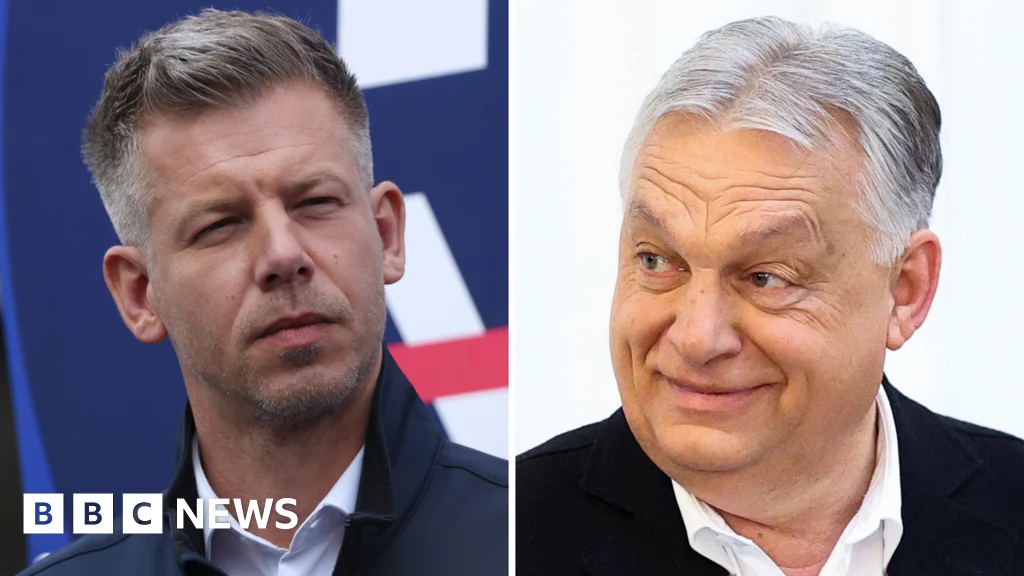
Hungarians have flocked to the polls in record numbers, participating in a general election that could fundamentally alter the country’s political landscape and reverberate across Europe, the United States, and Russia. With an unprecedented 54.14% of the electorate having cast their ballots six hours before polls closed – a dramatic 14-point surge compared to the previous election four years ago – voter mobilisation has reached historic levels, signaling a deeply contested and highly anticipated outcome. The election pits the long-serving Prime Minister Viktor Orbán, seeking a fifth consecutive term after 16 years in power, against a formidable new challenger, Péter Magyar, whose grassroots Tisza party has rapidly galvanised widespread discontent.
A Nation at a Crossroads: East or West?
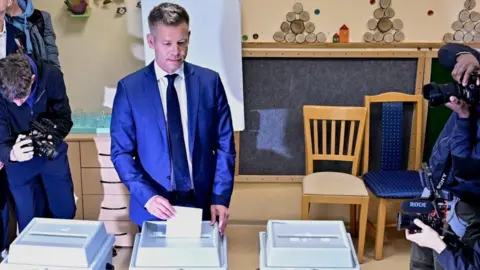
The stakes are exceptionally high, with the contest framed by many as a choice between Hungary’s current "East-leaning" trajectory under Orbán and a renewed commitment to Western democratic values. Péter Magyar, a former Fidesz insider who spectacularly broke with the ruling party, cast his vote in Budapest, asserting that his victory would bolster Hungary’s standing within the European Union and NATO, while also initiating a robust crackdown on pervasive corruption. His campaign rhetoric consistently highlights a stark choice for voters: "East and West, propaganda or honest public discourse, corruption or clean public life."
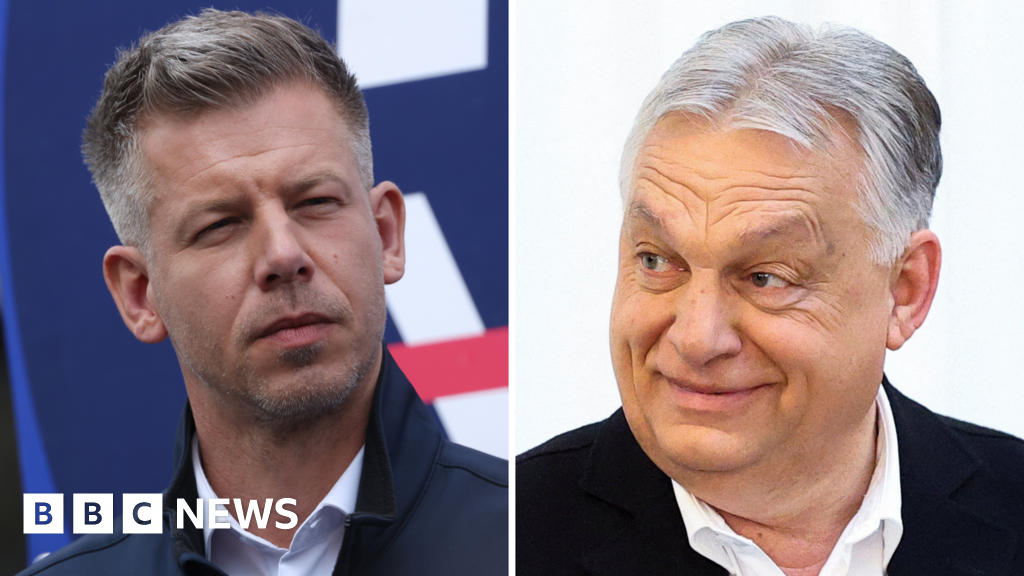
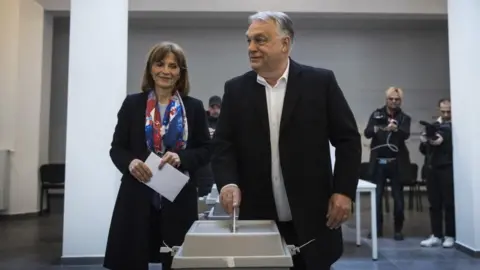
Prime Minister Orbán, ever defiant, maintained his characteristic confidence after voting, simply stating, "I am here to win." When pressed on whether he had underestimated his rival, a smiling Orbán responded, "I don’t underestimate anyone." His campaign has largely focused on defending his nationalist, conservative agenda, often targeting Brussels and Ukraine, echoing themes that have resonated with his core supporters for years.
The Shadow of a Long Reign: Orbán’s Legacy and Challenges
Viktor Orbán’s 16-year tenure has been marked by a profound transformation of Hungary’s political and social fabric. His Fidesz party, having secured successive super-majorities, has systematically implemented constitutional changes that, according to the European Parliament, have led to a "hybrid regime of electoral autocracy." Critics point to significant erosion of judicial independence, state control over vast swathes of the media, and a weakening of democratic checks and balances. Hungary consistently ranks at the bottom of Transparency International’s Corruption Perceptions Index within the EU, fueling public anger and calls for accountability.
Despite his electoral successes, Orbán’s government has recently faced significant headwinds. The Hungarian economy has struggled, grappling with high inflation that has squeezed household incomes and led to a tangible decline in living standards for many. While Orbán’s pro-family policies have offered tax exemptions to mothers with two or more children, their broader economic impact has been uneven, leaving many families feeling left behind.
A series of high-profile scandals has further chipped away at Fidesz’s public image. Notably, revelations regarding Foreign Minister Péter Szijjártó’s regular, undisclosed communications with his Russian counterpart before and after EU summits sparked concerns about transparency and Hungary’s commitment to EU solidarity, particularly in the context of the war in Ukraine. This came on the heels of a presidential pardon scandal earlier in the year, which forced the resignations of the President and the former Justice Minister – Péter Magyar’s ex-wife – further exposing cracks within the ruling elite and providing a fertile ground for Magyar’s anti-establishment message.
Hungary’s Geopolitical Balancing Act: EU, NATO, US, and Russia
Hungary’s foreign policy under Orbán has increasingly diverged from that of its Western allies, creating friction within both the EU and NATO. While a member of both organisations, Orbán has cultivated close ties with Russia and China, often adopting a critical stance towards Brussels and Washington. His government’s consistent vetoing of significant EU aid packages to Ukraine, totalling approximately €90 billion (£78 billion), has been a major source of contention, angering European partners and raising questions about the bloc’s unity.
On the eve of the election, former US President Donald Trump publicly endorsed Orbán, calling him a "true friend, fighter, and WINNER," underscoring the ideological alignment between the two populist leaders. This endorsement highlights the potential international ramifications of the Hungarian election, with a change in leadership potentially shifting Hungary’s geopolitical calculus and its relations with key global players. A victory for Magyar could signal a significant re-alignment towards a more pro-Western, less confrontational foreign policy, impacting everything from sanctions against Russia to military cooperation within NATO.
The Rise of a Challenger: Péter Magyar and the Tisza Party
Péter Magyar’s ascent has been meteoric and unexpected. A lawyer and former diplomat, he was once deeply embedded within the Fidesz establishment. However, his dramatic public break with the party two years ago, fueled by disillusionment with alleged corruption and the perceived erosion of democratic norms, quickly transformed him into a potent symbol of opposition. He strategically avoided allying with established opposition parties, many of which are fragmented and have struggled to gain traction against Fidesz. Instead, Magyar opted for a grassroots approach, building his Tisza party from the ground up through a network of "Tisza-islands" – small groups of activists in local communities.
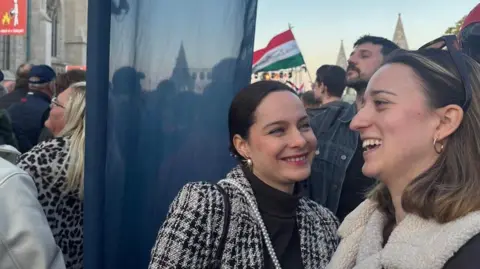
This strategy, reminiscent of Orbán’s own "citizen circles" during his years in opposition, has allowed Magyar to bypass traditional media channels, which are largely controlled by Fidesz-friendly outlets, and connect directly with voters. His campaign rallies, culminating in a massive gathering of at least 100,000 anti-Fidesz supporters in Budapest’s Heroes’ Square on Friday evening, demonstrated a remarkable capacity to mobilise public sentiment across the political spectrum.
Magyar’s candidates are largely political newcomers: surgical specialists, teachers, and business figures who bring direct experience from their local communities and a fresh perspective on issues such as healthcare and education. This deliberate choice aims to counter the perception of a stale political class and appeal to voters weary of career politicians. His platform promises a "change of regime," a reset of relations with the EU, an end to close ties with Russia, and a relentless fight against corruption. He has vowed to bolster Hungary’s position within the EU and NATO, signalling a potential reversal of Orbán’s often confrontational foreign policy.
Electoral System and the Path to Victory
Hungary’s complex electoral system combines elements of proportional representation and single-member constituencies. Out of 199 seats in parliament, 106 are decided by direct vote in single-member districts, while the remaining 93 are allocated from national party lists based on proportional representation. This system has historically benefited larger parties, particularly Fidesz, which has admitted to leveraging its advantages.
Polls leading up to the election consistently indicated a "huge lead" for Magyar’s Tisza party, a trend that defied analysts’ expectations that Fidesz would narrow the gap as election day approached. Róbert László, an election specialist at Budapest think tank Political Capital, noted that most predictions pointed towards a comfortable, absolute majority for Tisza, though a two-thirds super-majority – which would be required to roll back many of Fidesz’s constitutional changes concerning the judiciary, media ownership, and other areas – could not be entirely ruled out. This unprecedented level of support for a new party underscores a significant shift in public mood.
Conversely, the Fidesz-aligned Nézőpont Institute offered a more optimistic outlook for the ruling party, identifying 22 "battleground seats" out of the 106 constituencies. Winning these seats, according to Nézőpont’s head Ágoston Mráz, could pave the way for a Fidesz victory, though the final results in these crucial districts might take several days to become clear due to the counting process. Mráz also suggested that Fidesz voters might be "more hidden" and less willing to engage with pollsters, potentially leading to an underestimation of their support.
Voices from the Ground: Discontent and Hope
The shift in public sentiment is palpable in key regions. Győr, Hungary’s sixth-largest city, located near the Slovakian border, has emerged as a crucial battleground. Prime Minister Orbán himself notably lost his composure during a recent campaign stop there, lashing out at booing protesters and accusing them of "pushing Ukrainian interests." In stark contrast, Magyar drew a massive crowd to a rally in Győr last Thursday.
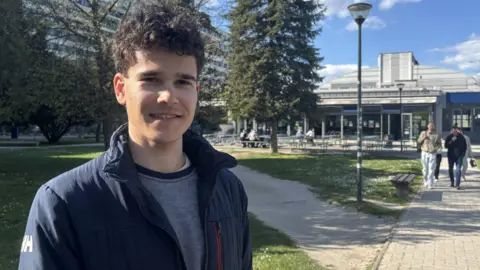
Gergely Németh, a 20-year-old student attending Magyar’s rally with his mother, articulated a common sentiment among younger voters. He spoke of his family’s financial struggles under the current government, highlighting how Orbán’s policies had not benefited everyone equally. For Németh, and many like him, the election is less about individual personalities and more about instigating change. "I think it’s not the man, Péter Magyar, who’s most important. More important is that someone changes these politicians in the parliament," he explained, reflecting a broader desire to dislodge Fidesz.
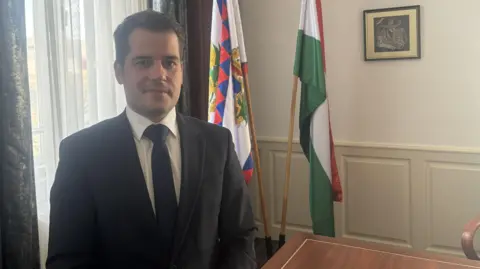
Győr’s Deputy Mayor, Roland Kósa, an independent who has served for the past two years, echoed the frustration with Fidesz’s perceived arrogance and mismanagement. "I know what Fidesz brings, I know what Fidesz does, I live in it," Kósa stated, criticising the ruling party’s squandering of public funds and opportunities in the city. He believes that Magyar’s success lies in his ability to transcend traditional party lines, attracting a broad coalition of voters who, despite potential personal reservations about Magyar, are willing to unite behind a movement for systemic change.
Concerns for Post-Election Stability
As the votes are counted, concerns linger about the aftermath of the election. The Clean Voting Coalition, a local civilian observer group, reported receiving numerous complaints of irregularities, including alleged vote-buying and the transportation of voter groups to polling stations – practices that, if substantiated, could cast a shadow over the legitimacy of the process.
Fidesz officials, while outwardly confident, have hinted at potential unrest. Balázs Orbán, the political director for Fidesz, suggested that the opposition might not accept defeat, fueling anxieties about post-election stability. Ágoston Mráz from the Nézőpont Institute voiced similar fears, stating, "I’m really afraid of getting violence on the streets because tension is in the air. I hope very much that every politician will be smart enough to help voters avoid violence on the street." However, Magyar has consistently urged his supporters "not to fall for any kind of provocation," advocating for a peaceful and democratic transition should he win.
The results, expected to begin trickling in this evening, will mark a watershed moment for Hungary. Whether Viktor Orbán secures an unprecedented fifth term or Péter Magyar orchestrates a historic upset, the outcome will undoubtedly reshape Hungary’s domestic politics, its relationship with the European Union and NATO, and its complex position on the global stage for years to come.

Related Posts
Zambia on Edge: Opposition Leader Arrested Amid Allegations of Insurrection Plot and Election Tensions
Rescuers search for survivors of powerful Indonesia earthquake

