How to Recover Argentinian Taxes on Foreign Purchases Through ARCA
Argentinian residents who made purchases abroad and had withholdings for Income Tax (Ganancias) and Personal Assets Tax (Bienes Personales) can now initiate the process for a refund. These withholdings, typically applied during the previous year, can be reclaimed through a streamlined online procedure managed by ARCA (Administración Federal de Ingresos Públicos, the Argentinian tax authority). This guide details the steps for individuals who do not actively pay Income Tax or Personal Assets Tax, offering a pathway to recover these funds in 2025.
Understanding the Tax Reclaim Process via ARCA
The process for recovering foreign purchase withholdings is designed to be accessible to a broad range of taxpayers. ARCA has implemented an online system to simplify the application, reducing the need for in-person visits and extensive paperwork. For those not registered as taxpayers for Ganancias or Bienes Personales, the reclaim process is specifically tailored. It’s crucial for eligible individuals to be aware of the timeline and the necessary documentation to ensure a successful refund. The refunds are generally processed within the following calendar year, meaning that withholdings made in 2024 can be claimed and expected in 2025.
The core of this reclaim lies in the concept of tax withholdings, which are advance payments against a taxpayer’s potential tax liability. When individuals make purchases in foreign currency, especially through credit or debit cards, a percentage is often withheld by financial institutions on behalf of the tax authority. This percentage is determined by regulations related to Ganancias and Bienes Personales. If the individual’s overall tax situation does not necessitate these payments (i.e., their income and assets fall below the taxable thresholds), these withheld amounts are effectively overpayments and can be recovered.
The ARCA platform serves as the central hub for these applications. It requires users to log in with their unique tax identification credentials and navigate to the specific section dedicated to foreign purchase refund requests. The system guides applicants through a series of questions and forms designed to verify their eligibility and the details of their foreign transactions. This digital approach aims to enhance transparency and efficiency in the tax refund system.
Current Market Exchange Rates: A Snapshot
In parallel with the tax reclaim information, understanding the current economic landscape is vital for Argentinians. The value of the U.S. dollar and the Euro in the informal ("blue") market continues to be a key indicator of economic sentiment and purchasing power.
As of the reporting period, 100 U.S. dollars on the informal market would cost approximately ARS $142,500. This figure reflects the premium paid for dollars outside the regulated banking system, often sought for international transactions or as a store of value.
The Euro also shows a significant presence in the parallel market, trading at ARS $1623.85 for sale. This indicates a strong demand for the European currency, influenced by trade relations and investment flows.
The "crypto dollar," often represented by stablecoins like DAI, provides another reference point. On platforms such as Ripio, DAI is being purchased at ARS $1446.13. Stablecoins are digital currencies pegged to a stable asset, typically the U.S. dollar, and are increasingly used as a digital alternative for holding dollar value, especially in economies with currency volatility.
The Brazilian Real, a crucial currency for Argentina due to its significant trade relationship with Brazil, is trading at ARS $260 for purchase and ARS $275 for sale at the Banco Nación. These rates are vital for businesses engaged in regional trade and for individuals planning travel or remittances to Brazil.
Cryptocurrency Market Performance
The digital asset market remains a dynamic sector, with significant activity in major cryptocurrencies. Ethereum (ETH), the cryptocurrency powering the Ethereum blockchain, is trading at USD $2288.29. Ethereum is recognized not only as the second-largest cryptocurrency by market capitalization but also as a foundational platform for decentralized finance (DeFi) and non-fungible tokens (NFTs), showcasing its utility beyond simple currency.
Bitcoin (BTC), the pioneering cryptocurrency, is currently valued at USD $74,148.01. Its increasing acceptance for purchasing goods and services globally underscores its evolving role in the financial ecosystem.
Official vs. Parallel Market Dynamics
The Argentinian currency market is characterized by the interplay between the official, regulated exchange rate and the parallel or "blue" market. The official dollar, managed by the Central Bank of Argentina (BCRA), operates within banking hours, with its trading sessions concluding at 3 PM on business days. This rate is crucial for official import/export operations and heavily regulated transactions.
The dollar blue, operating in the informal market, lacks official opening and closing times. However, its trading rounds typically conclude between 3 PM and 4 PM. This parallel rate often serves as a barometer of market sentiment and the demand for dollars outside the formal system.
As of the reporting period, the official retail dollar saw a slight decrease, trading at ARS $1415 for sale at Banco Nación, down from its opening value. In contrast, the dollar blue remained stable, quoted at ARS $1395 for purchase and ARS $1415 for sale. This stability in the blue market, despite minor fluctuations in the official rate, suggests a temporary equilibrium in the informal demand and supply.
The dollar MEP (Mercado Electrónico de Pagos) and the dollar CCL (Contado con Liquidación) are other important indicators reflecting dollar availability through financial market operations. These rates, while not explicitly detailed in the provided snippets for this specific day, are closely watched by investors and businesses as they offer alternative ways to access foreign currency, often with fewer restrictions than direct bank purchases.
The "tarjeta dollar" (card dollar) is a specific rate used for foreign currency purchases made abroad or for services rendered internationally. Following the elimination of the PAIS tax (an import tax), its calculation now primarily incorporates a 30% income tax withholding on top of the retail dollar rate. This brings the current cost of the tarjeta dollar to ARS $1846.
Understanding the Daily Exchange Rate Cycle
The Argentinian financial market has a defined rhythm for currency trading. The official dollar rates, both retail and wholesale, are disseminated by the Central Bank of Argentina (BCRA) starting at 10 AM on business days. The parallel market rates, particularly for the dollar blue, tend to become clearer later in the morning, typically between 11 AM and 11:30 AM, as money changers and financial institutions in Buenos Aires establish their indicative prices.
The closing of the official dollar market at 3 PM on weekdays aligns with general banking hours. The dollar blue, while not officially regulated, usually concludes its trading activity between 3 PM and 4 PM, reflecting the end of the business day for many informal currency traders.
Inflationary Pressures and Economic Indicators
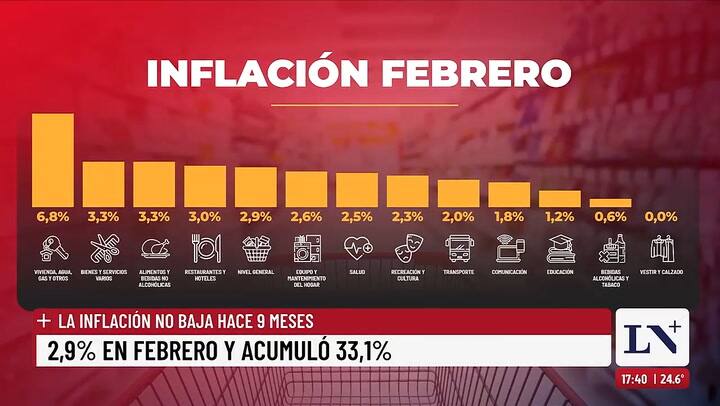
The broader economic context is significantly shaped by inflation. For February, the National Institute of Statistics and Censuses (Indec) reported an inflation rate of 2.9%. This figure was higher than anticipated by market analysts and the Minister of Economy, Luis Caputo, who had projected a slowdown for that month. The cumulative inflation for the first two months of 2026 reached 5.9%, with an interannual increase of 33.1%. This persistent inflation significantly impacts purchasing power and the cost of goods and services.
Broader Economic and Financial Indicators
Beyond currency exchange rates and inflation, other economic indicators provide a comprehensive view of Argentina’s financial health. The country risk, as measured by JP Morgan, stood at 583 points on the reporting Monday. A higher country risk indicates a greater perceived risk for investors to lend money to a country, often reflecting concerns about political stability, economic policies, and the ability to repay debt.
Facilitating Dollar Purchases Through Home Banking
With the recent lifting of some currency exchange controls ("cepo cambiario"), banks in Argentina have enabled dollar purchases through their home banking platforms. This offers a more accessible and regulated channel for individuals to acquire U.S. dollars. It is advisable for individuals to consult their respective banking institutions for specific instructions and operating hours, as each bank may have its own defined procedures and timeframes for these transactions. This move towards digital accessibility aims to bring more dollar transactions into the formal financial system.
The Evolution of the Argentinian Foreign Exchange Market
The Argentinian foreign exchange market has historically been characterized by a complex web of regulations, multiple exchange rates, and significant informal market activity. For years, the "cepo cambiario" imposed strict controls on dollar purchases, limiting access for individuals and businesses and fostering a wide gap between the official and parallel market rates. The recent moves to liberalize some of these controls, such as the ability to purchase dollars via home banking and the potential for easier access to foreign currency for imports, represent a significant policy shift.
These changes are intended to stabilize the economy, attract foreign investment, and reduce the distortions caused by parallel currency markets. However, the persistence of a significant "blue dollar" premium indicates that market confidence and the underlying economic fundamentals are still in a state of adjustment. The reclaim process for foreign purchase withholdings through ARCA is a part of this broader effort to rationalize tax procedures and potentially improve liquidity for individuals.
The multiple dollar rates—official, blue, MEP, CCL, crypto, and card—reflect the fragmented nature of the Argentinian economy and the various strategies individuals and businesses employ to navigate currency volatility and access foreign exchange. Each rate serves a specific purpose and is influenced by a unique set of supply and demand dynamics. The ongoing efforts by the government to unify these rates and create a more stable economic environment remain a central focus.
The reclaim process through ARCA, while specific to foreign purchase taxes, is emblematic of a larger trend towards digitalization and simplification of administrative procedures in Argentina. As the country seeks to integrate more effectively into the global financial system, the efficiency and transparency of its tax and financial regulatory bodies become increasingly important. The ability for citizens to easily reclaim overpaid taxes contributes to a fairer system and can bolster confidence in the official financial infrastructure.

Related Posts

The Electric Vehicle Battery Health Debate Emerges as Argentina’s EV Market Accelerates

President Donald Trump Confirms Secret Departure from Turkey Amidst Assassination Threat