Hong Kong Court Drops Charge Against Former Financial Chief of Jimmy Lai’s Flagship Media Company
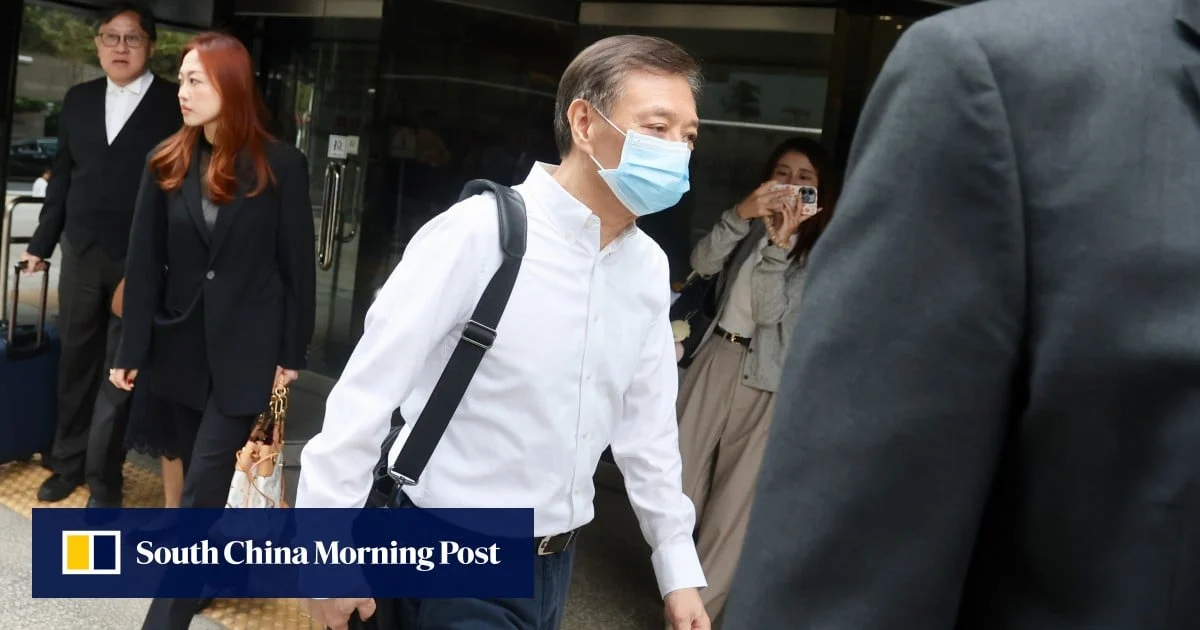
A Hong Kong court has formally withdrawn a charge against Royston Chow Tat-kuen, the former chief financial officer and chief operating officer of Next Digital, the parent company of the now-defunct Apple Daily. The decision follows Chow’s pivotal testimony as a prosecution witness against his former employer, media mogul Jimmy Lai Chee-ying, in a complex fraud trial. The development marks a significant turn in the legal proceedings that have ensnared individuals associated with Lai’s media empire.
The charge against Chow, related to an alleged fraud concerning the subleasing of office space, was dropped after the prosecution formally applied for its withdrawal. Presiding Judge Stanley Chan Kwong-chi acknowledged the considerable pressure Chow had endured over the years as a key witness in the case against Lai. "For you, this is a full stop. You will no longer be entangled in this case," the judge stated, signifying the conclusion of Chow’s direct involvement in this particular legal matter.
This latest development occurs in the wake of a substantial ruling last week, wherein the Court of Appeal quashed Lai’s conviction for operating a consultancy office out of his newspaper’s premises. The appellate court found that the prosecution had failed to provide sufficient evidence to prove that Lai had made a "false representation" or was criminally liable for concealment in relation to the consultancy. This ruling effectively exonerated Lai from the fraud conviction that had been a central element of the legal battles surrounding him and his media ventures.
Background to the Charges and the Apple Daily Saga
The charges against Chow and Lai stemmed from allegations of improperly subleasing office space at Apple Daily Printing Limited to a secretarial firm, Dico Consultants Limited. The period in question for these alleged offenses was between June 27, 2016, and May 22, 2020. The prosecution argued that this arrangement breached the land lease conditions for the Apple Daily premises. Both Lai and Wong Wai-keung, Next Digital’s chief administrative officer, were initially charged and subsequently found guilty of these offenses in a District Court trial four years prior to the recent appellate ruling.
The saga of Apple Daily and its founder, Jimmy Lai, is intrinsically linked to the broader political and social landscape of Hong Kong. Launched in 1995, Apple Daily became a vocal and often critical voice in Hong Kong’s media, known for its pro-democracy stance and its willingness to challenge established authorities. Its closure in June 2021, following a police raid and the arrest of senior staff, sent shockwaves through the city and raised international concerns about press freedom in Hong Kong. The subsequent legal actions against Lai and his associates have been widely seen as a consequence of the national security law imposed on Hong Kong by Beijing in 2020.
Chronology of Key Events
- June 27, 2016 – May 22, 2020: Alleged period during which Apple Daily Printing Limited improperly subleased office space to Dico Consultants Limited, in breach of land lease conditions.
- Prior to 2023: Jimmy Lai Chee-ying, Royston Chow Tat-kuen, and Wong Wai-keung are charged with fraud related to the office subleasing.
- District Court Trial: Lai, Chow, and Wong are found guilty of the fraud charges. Chow testifies as a prosecution witness against Lai.
- June 2021: Apple Daily ceases publication following a police raid and arrests of key personnel, citing concerns over the national security law.
- Last Week: The Hong Kong Court of Appeal quashes Jimmy Lai’s fraud conviction, ruling that the prosecution failed to prove a "false representation" or criminal liability for concealment. The Department of Justice decides not to appeal this ruling.
- Friday’s Hearing: Judge Stanley Chan Kwong-chi grants the prosecution’s application to formally withdraw the charge against Royston Chow Tat-kuen, recognizing the conclusion of his involvement as a witness.
Supporting Data and Legal Context
The legal framework underpinning these charges is crucial to understanding the proceedings. The initial fraud charges were brought under Hong Kong’s legal system, which historically has operated with a degree of judicial independence. However, the imposition of the national security law has introduced a new layer of complexity and has been a focal point of international scrutiny.
The specific charge against Chow and Lai revolved around the concept of "deception" and "concealment" in a contractual or leasehold context. For a conviction on fraud charges, the prosecution typically needs to demonstrate that a false representation was made, or that there was a fraudulent concealment of facts, with the intent to deceive and cause financial loss or gain. The Court of Appeal’s decision to quash Lai’s conviction indicates that the initial findings at the District Court level did not meet this threshold of proof in the eyes of the appellate judges.
The decision by the Department of Justice not to appeal the appellate court’s ruling on Lai’s fraud conviction is a significant indicator of the legal strength of that decision. Appeals are generally pursued when there is a perceived error of law or a substantial miscarriage of justice. The absence of an appeal suggests that the Department of Justice accepted the Court of Appeal’s reasoning.
Official Responses and Statements
While direct official statements from the Department of Justice regarding the withdrawal of the charge against Chow were not detailed in the initial report, the prosecution’s application to the court is itself a formal indication of their stance. Judge Stanley Chan Kwong-chi’s remarks at Friday’s hearing provide a direct insight into the judicial perspective on Chow’s situation, emphasizing the closure of his entanglement in the case.
The broader implications of these legal maneuvers are substantial. The quashing of Lai’s conviction and the withdrawal of charges against his former colleagues signify a reduction in the number of successful prosecutions against individuals directly associated with Apple Daily’s operations, at least concerning the fraud charges. This comes amidst ongoing, more serious charges against Lai under the national security law, including charges of sedition and conspiracy to collude with foreign forces.
Broader Impact and Implications
The legal journey of Jimmy Lai and his associates has become a potent symbol of the shifting political and legal landscape in Hong Kong. The closure of Apple Daily and the subsequent trials have been interpreted by many as a crackdown on dissent and a blow to press freedom.
The decision to drop the charge against Royston Chow, while seemingly a procedural matter, underscores the complexities of prosecuting individuals in high-profile cases, particularly when witness testimony plays a crucial role. It highlights the dependency of the prosecution on the cooperation of former employees, who may find themselves in precarious positions, balancing loyalty, legal obligations, and personal consequences.
For Lai himself, the quashing of the fraud conviction offers a partial reprieve from one set of charges, but it does not diminish the gravity of the national security law charges he still faces. These charges carry potentially much harsher penalties and have been viewed by international observers as politically motivated.
The developments also raise questions about the future of independent media in Hong Kong and the extent to which individuals associated with critical news organizations can expect fair trials. The legal battles have undeniably cast a long shadow over Hong Kong’s once-vibrant media environment and its commitment to the rule of law as understood in its pre-handover era. The international community continues to monitor these cases closely, viewing them as indicators of Hong Kong’s autonomy and its adherence to fundamental freedoms. The withdrawal of Chow’s charge, while a personal relief for him, is a footnote in a much larger, ongoing narrative about power, dissent, and the evolving legal fabric of Hong Kong.