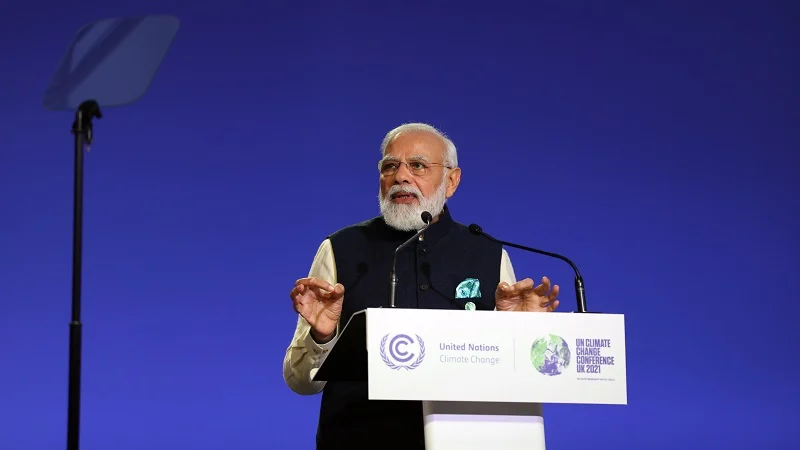
Global Climate Leadership in Flux as Government Withdraws Bid to Host 2028 UN Climate Summit
In a move that has sent shockwaves through the international diplomatic community, the government has formally rescinded its offer to host the 2028 United Nations Climate Change Conference, commonly known as COP33. The decision, announced in a terse statement late Monday, marks a significant retreat from the nation’s previous ambitions to position itself as a central broker in global environmental policy. The official explanation provided was notably sparse, with spokespeople stating only that the administration had completed a comprehensive review of its strategic commitments for the year 2028 and determined that hosting the summit was no longer "aligned with national priorities."
The reversal comes at a critical juncture for international climate negotiations. COP33 is slated to be a milestone event, serving as the platform for the second Global Stocktake under the Paris Agreement. This process is essential for evaluating the collective progress of nations toward limiting global warming to 1.5 degrees Celsius above pre-industrial levels. By withdrawing its bid, the government has left a vacuum in the leadership of the 2028 cycle, prompting concerns among UNFCCC (United Nations Framework Convention on Climate Change) officials regarding the continuity of the transition toward renewable energy and the mobilization of climate finance for developing nations.
The Significance of the 2028 Climate Summit
The 2028 summit is not merely another entry in the annual rotation of climate conferences. According to the timeline established by the Paris Agreement in 2015, 2028 is the year when nations must submit updated and more ambitious Nationally Determined Contributions (NDCs) for the post-2030 period. It is also the year when the "Loss and Damage" fund—a mechanism designed to provide financial assistance to nations most vulnerable to climate-driven disasters—is expected to reach full operational maturity.
Hosting a COP is a massive undertaking that involves years of diplomatic preparation and significant domestic investment. Historically, host nations use the platform to showcase their own green transitions and to influence the thematic focus of the negotiations. The withdrawal of a leading candidate suggests a pivot away from multilateralism at a time when climate scientists warn that the window for meaningful intervention is closing. Data from the Intergovernmental Panel on Climate Change (IPCC) indicates that by 2028, global emissions must be on a steep downward trajectory to avoid the most catastrophic tipping points. The absence of a committed host for COP33 could delay the technical and political coordination required to meet these targets.
Chronology of a Policy Reversal
The government’s journey from enthusiastic proponent to sudden detractor has been marked by several key phases. Understanding this timeline is essential to deciphering the underlying motivations for the "change of heart."
- Initial Bid (Late 2024): Following the conclusion of COP29, the government announced its intention to host COP33, framing it as a "Legacy Summit" that would bridge the gap between Global North and Global South interests.
- Strategic Positioning (2025): Throughout the following year, diplomatic missions were dispatched to secure endorsements from regional blocs. The government committed to a "Green Infrastructure" plan that would have seen the summit venue powered entirely by renewable energy, serving as a model for urban sustainability.
- Economic Headwinds (Early 2026): In the first quarter of 2026, domestic economic indicators began to signal a slowdown. Rising energy costs and a cooling manufacturing sector led to increased political pressure to redirect public spending toward domestic subsidies rather than international events.
- The Review Phase (March 2026): Internal memos leaked to the press suggested that the Ministry of Finance had begun questioning the projected $450 million price tag of hosting the summit. The review cited concerns over the "diplomatic return on investment."
- The Withdrawal (April 8, 2026): The government officially notified the UNFCCC Secretariat of its withdrawal, citing the need to prioritize domestic "commitments for 2028."
Supporting Data: The Costs and Logistics of Climate Diplomacy
Hosting a UN climate summit is one of the most expensive and logistically complex tasks a government can undertake. Data from previous conferences provides a clear picture of the scale involved. COP28, hosted by the UAE in 2023, saw over 80,000 delegates, including heads of state, CEOs, and civil society leaders. The security costs alone for such an event typically exceed $100 million.
For the 2028 host, the challenges would have been even greater. Analysts suggest that the requirements for digital infrastructure and carbon-neutral logistics have become more stringent. Furthermore, the "commitments for 2028" mentioned by the government likely refer to the massive capital expenditure required for the nation’s own grid modernization. Current projections show that to meet 2030 net-zero targets, the government must invest an estimated 3% of its annual GDP into energy storage and transmission upgrades beginning in 2027. By hosting the summit, the government would have been forced to reconcile its international rhetoric with a domestic budget that is increasingly stretched thin.
Official Responses and International Fallout
The reaction to the announcement has been swift and largely critical. A spokesperson for the UN Secretary-General expressed "regret" over the decision, noting that the predictability of the hosting cycle is vital for the stability of global climate governance. "We look forward to hearing more detailed reasoning from the government," the spokesperson added, "as the world requires clear signals of commitment, not retreats into domestic ambiguity."
Within the country, the political opposition has seized on the decision as evidence of a "failed foreign policy." The Shadow Minister for Climate Change released a statement arguing that the withdrawal "damages our international standing and forfeits our seat at the table where the rules of the future economy are being written." Environmental NGOs have been even more vocal. A joint statement from a coalition of climate advocacy groups labeled the move a "betrayal of future generations," suggesting that the government is choosing short-term fiscal optics over long-term planetary survival.

Conversely, some domestic industry groups have quietly welcomed the news. A representative from the National Chamber of Commerce stated that while climate change remains a concern, "the focus must remain on ensuring that our domestic industries remain competitive during this transition. Redirecting the summit budget toward industrial innovation and energy relief for citizens is a pragmatic step."
Broader Implications for Global Climate Governance
The government’s withdrawal highlights a growing trend of "climate fatigue" among some developed and middle-income nations. As the costs of the energy transition become more tangible for taxpayers, the appetite for high-profile international leadership appears to be waning in certain capitals. This creates a precarious situation for the "Troika" of COP presidencies—a mechanism designed to ensure continuity between summits.
There are three primary implications of this decision for the 2028 horizon:
1. The Hosting Vacuum and Geopolitical Realignments
With the current candidate stepping aside, the question of who will host COP33 remains unanswered. This opens the door for other nations—potentially from the BRICS+ bloc or a coalition of Small Island Developing States (SIDS)—to step in. However, few nations have the infrastructure and diplomatic capacity to organize a summit of this scale on such short notice. If a replacement is not found quickly, the UNFCCC may be forced to hold the summit at its headquarters in Bonn, Germany, which typically results in a more technical, less politically charged atmosphere.
2. Impact on the Second Global Stocktake
The 2028 Stocktake is intended to be a "moment of truth." Without a strong host nation to drive the political agenda, there is a risk that the Stocktake will result in a watered-down consensus. A host nation acts as a "deal-maker," using its diplomatic leverage to push recalcitrant countries toward higher ambition. The loss of a host that was previously seen as a bridge-builder could lead to a more fragmented and contentious negotiation process.
3. Signals to the Private Sector
The private sector relies on clear policy signals to direct long-term investments in green technology. The government’s sudden pivot suggests a lack of policy certainty, which could lead to a slowdown in domestic renewable energy projects. Investors often view a country’s willingness to host a COP as a "seal of approval" regarding its commitment to a low-carbon future. Rescinding that commitment may increase the perceived risk for green bonds and sustainable infrastructure projects within the country.
Fact-Based Analysis: Why 2028?
The specific mention of "commitments for 2028" is the most revealing part of the government’s brief explanation. By 2028, several international and domestic deadlines converge. The nation is currently under pressure to meet its interim 2030 emissions targets, and recent data shows it is currently 12% behind its projected reduction pathway. Hosting a summit in 2028 would have placed the government under an intense international spotlight, potentially exposing its failure to meet its own Paris Agreement obligations.
Furthermore, the global financial landscape in 2026 is characterized by high interest rates and a shift toward protectionist trade policies. The government may have calculated that the "soft power" gained from hosting a climate summit does not outweigh the "hard power" lost by spending hundreds of millions of dollars that could otherwise be used to shore up the national energy grid or provide subsidies to industries struggling with the transition.
Conclusion: A Turning Point for Multilateralism
The decision to withdraw from hosting COP33 is more than a logistical change; it is a symptom of the deepening tension between national economic constraints and international environmental obligations. As the planet moves closer to the 2030 deadline for halving global emissions, the willingness of nations to lead the collective effort is being tested by domestic realities.
In the coming months, the UNFCCC will need to fast-track the selection of a new host to ensure that the momentum for the 2028 Global Stocktake is not lost. For the government that has stepped back, the challenge will be to prove that its "change of heart" does not signal a total abandonment of its climate responsibilities. Whether this withdrawal is a strategic recalibration or a permanent retreat from the front lines of climate diplomacy remains to be seen, but the impact on the global stage is already being felt. The world now watches to see which nation will step forward to fill the void, and whether the 2028 summit can still deliver the ambitious outcomes the planet so urgently requires.

Related Posts
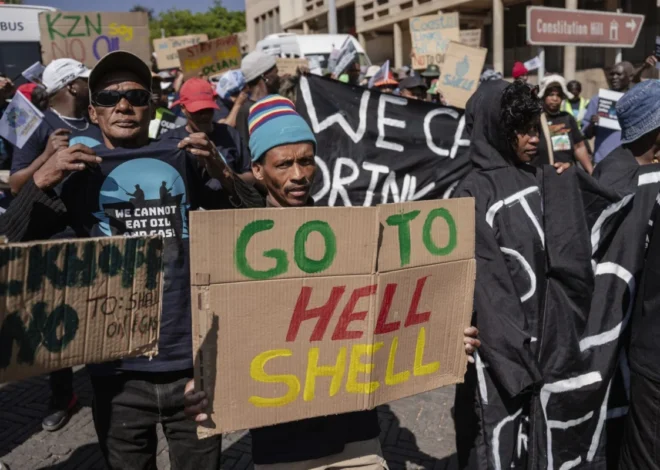
Constitutional Court of South Africa Bars Shell Oil Exploration in Landmark Victory for Environmental and Community Rights
The Battle for Saldanha Bay: South Africa’s Ambitious Ocean Economy Strategy Faces Legal and Environmental Reckoning