FAA and Defense Department Establish Landmark Safety Protocols for High-Energy Laser Deployment in United States Airspace
In a significant shift for domestic air defense strategy, the Federal Aviation Administration (FAA) and the Department of Defense (DOD) have finalized a comprehensive safety agreement that permits the regular deployment of high-energy laser weapons on American soil. The move, announced following a rigorous safety assessment, is designed to counter the escalating threat of low-cost, weaponized drones along the United States-Mexico border and at critical infrastructure sites. This landmark agreement marks the first time such advanced directed-energy systems have been formally integrated into the management of the National Airspace System (NAS), signaling a new era in homeland security where futuristic defense technology meets civilian aviation safety.
The Shift Toward Directed Energy for Domestic Security
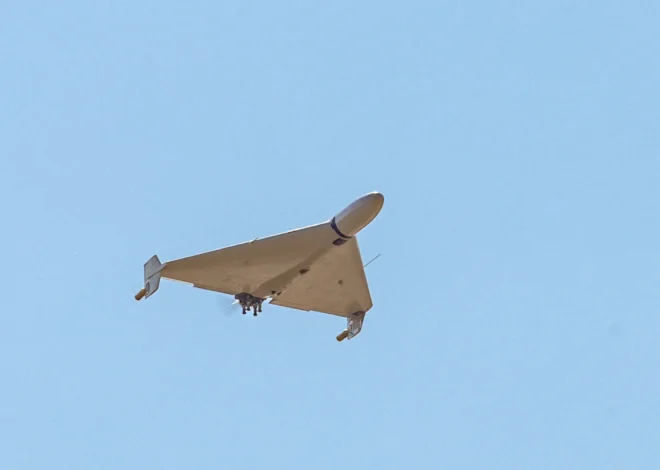
The decision to authorize laser countermeasures follows a series of internal assessments concluding that these systems do not pose an "undue risk" to passenger aircraft or the flying public. As drone technology becomes increasingly accessible to non-state actors, including transnational criminal organizations and cartels, the Pentagon and the FAA have found it necessary to modernize the domestic defense posture. Traditional kinetic interceptors—such as missiles or heavy-caliber rounds—carry significant risks of collateral damage in populated areas and are economically unsustainable when used against inexpensive, off-the-shelf drones.
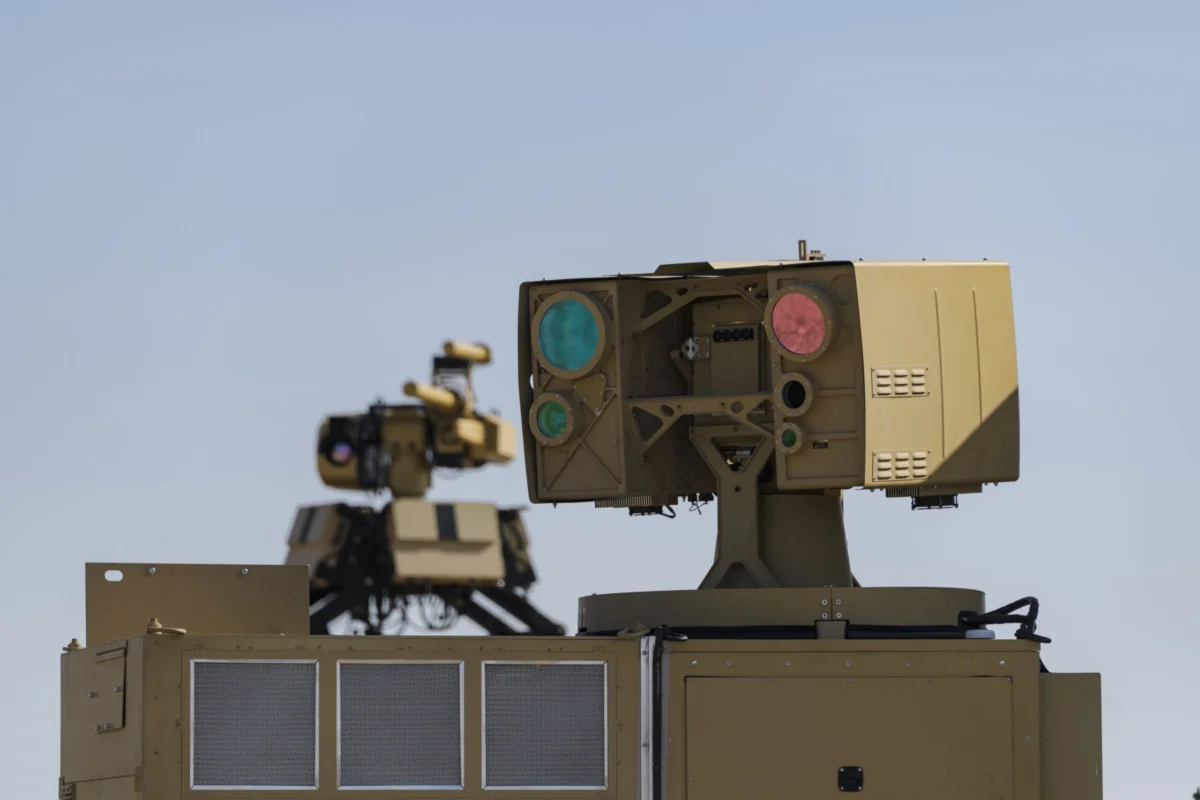
The safety agreement specifically addresses the use of the Army Multi-Purpose High Energy Laser (AMP-HEL), a 20-kilowatt system integrated into a vehicle-mounted platform. This system is a variant of the LOCUST Laser Weapon System, developed by defense contractor BlueHalo and utilized by the U.S. Army. By formalizing the safety protocols for these weapons, the FAA is acknowledging that directed energy is no longer a concept confined to overseas battlefields, but a necessary component of domestic border and infrastructure protection.
Chronology of the Texas Border Incidents
The path to this agreement was accelerated by two high-profile incidents in early 2024 along the southern border of Texas. These events highlighted the urgent need for a deconfliction framework between military defense operations and civilian air traffic control.
On February 11, 2024, U.S. Customs and Border Protection (CBP) personnel, utilizing an AMP-HEL unit on loan from the Department of Defense, engaged an unidentified aerial target near Fort Bliss. The engagement prompted the FAA to abruptly shutter the airspace over El Paso, as the potential impact of a high-energy beam on civilian corridors was, at the time, not fully quantified.
A second incident occurred on February 27 near Fort Hancock. In this instance, military personnel engaged what appeared to be a threatening drone. It was later determined that the target was an authorized CBP drone. This "friendly fire" incident resulted in another immediate airspace closure and underscored the necessity for better identification protocols and a more robust safety assessment of how laser energy interacts with the surrounding environment.
In the wake of these shutdowns, the FAA and the Pentagon’s Joint Interagency Task Force 401 (JIATF-401) initiated a "first-of-its-kind" evaluation at the White Sands Missile Range in New Mexico. The results of this March assessment provided the data-driven foundation for the current safety agreement.
Technical Safety Assessments and White Sands Testing
The primary concern regarding the domestic use of lasers has always been the potential for a "stray beam" to strike a commercial airliner or blind a pilot. However, the data gathered at White Sands Missile Range suggests these fears may be based on outdated perceptions of laser technology.
The evaluation involved firing the AMP-HEL system at the fuselage of a decommissioned Boeing 767 airliner from various distances. The goal was to measure the structural damage—or lack thereof—caused by the laser at its maximum effective range. According to Colonel Scott McLellan, deputy director of JIATF-401, the energy from a 20kW laser dissipates significantly over space and time. During the tests, the laser was fired at the grounded fuselage for up to eight seconds at full intensity, resulting in no structural damage to the aircraft.
Furthermore, the LOCUST system incorporates a series of "safety votes" or automated checks. Before the system can discharge, its internal hardware and software must verify several conditions:
- The beam path must be clear of known civilian flight corridors.
- Internal sensors must confirm the target’s distance and trajectory.
- The automatic shutoff mechanism must be fully functional, ensuring that if a non-target object enters the "keep-out zone," the beam terminates instantly.
"Following a thorough, data-informed Safety Risk Assessment, we determined that these systems do not present an increased risk to the flying public," stated FAA Administrator Bryan Bedford. The assessment confirmed that even in the event of a total system failure, the laser beam is incapable of inflicting catastrophic damage on aircraft flying at cruising altitudes.
Economic Sustainability and the Drone Proliferation Crisis
The pivot to laser weapons is driven as much by economics as it is by technology. Currently, U.S. border officials estimate that approximately 1,000 cartel-operated drones cross the U.S.-Mexico border every month. These drones are used for surveillance, scouting transit routes for smuggling, and occasionally for kinetic attacks against rival factions or authorities.
Engaging these low-cost drones with traditional missiles is financially ruinous. A single interceptor missile can cost hundreds of thousands, if not millions, of dollars, whereas the drones they target often cost less than $1,000. For a Department of Defense already managing high munition consumption rates in overseas theaters, such as Operation Epic Fury, domestic laser emplacements offer a "deep magazine" with a negligible cost-per-shot. Once the initial hardware is purchased, the cost of firing a laser is limited essentially to the price of the electricity required to generate the beam.
International Precedents and Global Adoption
The United States is not alone in its pursuit of domestic laser defenses. Several nations have already integrated directed energy into their homeland security architectures:
- France: During the 2024 Paris Olympics and Paralympics, the French military deployed the HELMA-P (High Energy Laser for Multiple Applications) to protect the Île-de-France region from potential drone-borne threats.
- China: The People’s Liberation Army utilized mobile laser defense units during major military parades in Beijing to ensure the security of the airspace above high-ranking officials and crowds.
- United Kingdom: The Ministry of Defence is currently developing a "laser screen" designed to protect critical national infrastructure and military installations from small unmanned aerial systems (sUAS).
These international examples have provided a proof-of-concept for the FAA and DOD, demonstrating that directed energy can be safely managed within complex, high-density civilian environments when proper regulatory frameworks are in place.
Future Expansion: The 2026 World Cup and "Golden Dome"
The FAA-DOD agreement arrives as the Pentagon significantly ramps up funding for counter-drone initiatives. JIATF-401 recently announced a $100 million allocation to enhance security for the 2026 FIFA World Cup. This funding will facilitate the protection of stadiums and fan zones across 11 U.S. cities, where unauthorized drone activity is expected to be a major security concern.
Furthermore, the Pentagon has requested $580 million in research and development funding for JIATF-401 in the fiscal year 2027 budget, with an additional $800 million potentially earmarked for procurement. This surge in funding aligns with broader national defense goals, including the proposed "Golden Dome" missile and drone shield—a concept championed by the current administration to create a multi-layered defense perimeter around the United States.
While the current focus is on the southern border, the infrastructure being built today—both technical and regulatory—suggests that laser emplacements could eventually become common sights at airports, power plants, and government buildings across the country.
Remaining Challenges and Jurisdictional Ambiguity
Despite the landmark nature of the FAA-DOD agreement, significant hurdles remain before a "Laser Dome" becomes a reality. One of the primary unresolved issues is jurisdictional authority. In a fast-moving crisis involving an unauthorized drone, it remains unclear which agency holds the final "fire" authority: the military, Customs and Border Protection, or the FAA.
The February incidents in Texas demonstrated that without a clear chain of command, the default response is to shut down all civilian air traffic, causing massive economic disruption and travel delays. Until a real-time communication and authorization protocol is established between civilian air traffic controllers and military laser operators, the deployment of these weapons will likely remain restricted to specific, high-risk corridors.
Additionally, the U.S. military’s current inventory of operational laser weapons is relatively small. While the goal is to field new systems at scale within the next three years, the manufacturing and integration of these complex systems take time. The era of "sleek beam directors" standing watch over every major American city is still years away, but the legal and safety foundation has now been firmly laid.
The agreement between the FAA and the Department of Defense represents a pragmatic response to a changing security landscape. By validating the safety of high-energy lasers in civilian airspace, the U.S. government is ensuring that its defensive capabilities keep pace with the rapid proliferation of drone technology, prioritizing both the safety of the flying public and the integrity of the nation’s borders.

Related Posts

Pentagon Forges Landmark Seven-Year Agreements with Boeing and RTX to Accelerate Standard Missile-3 Production and Stabilize Defense Supply Chains
Boeing Unveils Ultra Low-Cost Seeker to Enhance Missile Inventory and Combat Cost Challenges in Modern Warfare