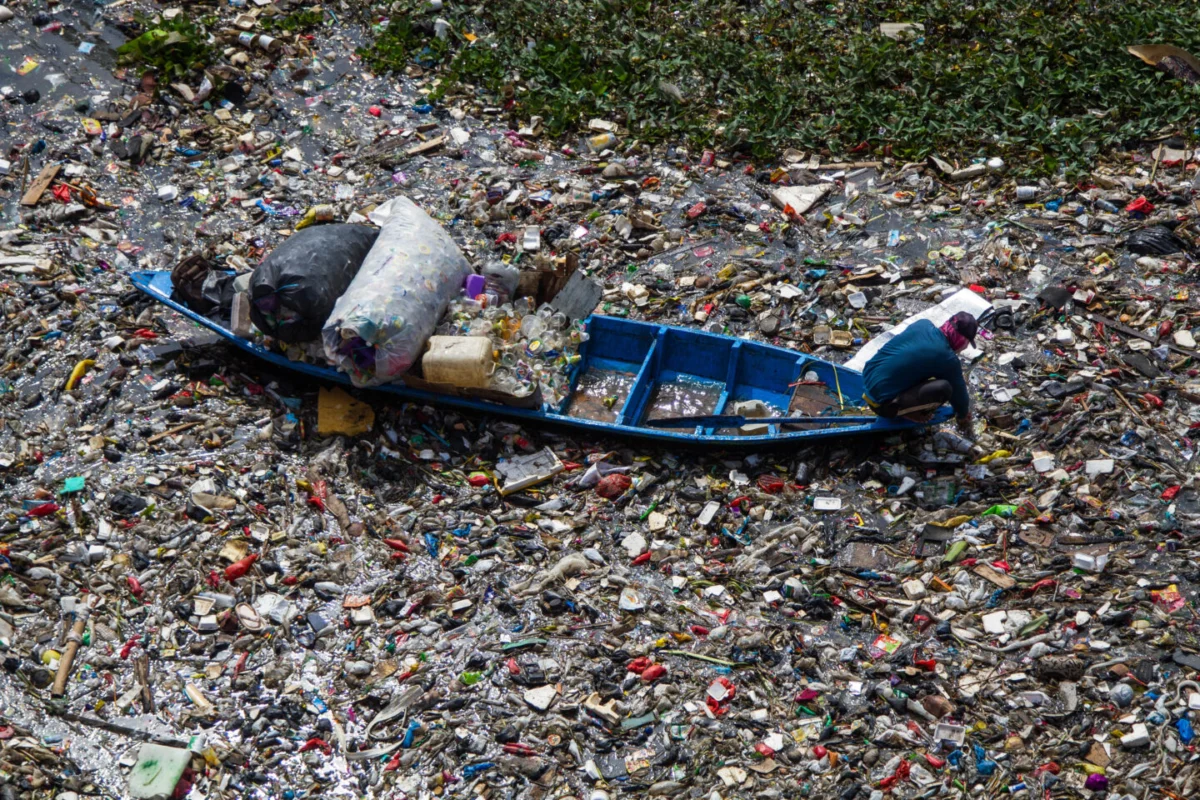
EU Decision to Bring Refuse Incineration into the Emissions Trading System Restores the Polluter Pays Principle
In a landmark shift for European climate policy, the European Commission has finalized the integration of municipal waste incineration into the European Union Emissions Trading System (EU ETS), effectively ending a decades-long exemption that environmental advocates argue has incentivized the burning of plastics over recycling. This regulatory pivot, confirmed in Brussels this week, aligns the waste management sector with the broader European Green Deal objectives, ensuring that the "polluter pays" principle is applied to the carbon-intensive process of turning refuse into energy. By requiring waste-to-energy (WtE) plants to monitor, report, and eventually pay for their CO2 emissions, the EU aims to close a significant loophole in its decarbonization strategy and drive a more robust circular economy.

The decision comes at a critical juncture for the European Union as it seeks to slash net greenhouse gas emissions by at least 55% by 2030. For years, waste incineration occupied a grey area in climate accounting. While often marketed as a renewable energy source when burning biogenic matter like wood or food waste, modern municipal solid waste (MSW) is heavily composed of fossil-based plastics. When these materials are incinerated, they release significant amounts of CO2 that were previously unpriced under the ETS framework.
The Regulatory Shift: From Exemption to Accountability
The inclusion of waste incineration in the EU ETS is the culmination of a multi-year legislative process. Under the revised ETS Directive, Member States are now required to include municipal waste incineration in their national carbon markets. The rollout begins with a mandatory monitoring, reporting, and verification (MRV) phase, followed by full integration where plants must surrender allowances for every tonne of CO2 emitted.

Historically, the waste-to-energy sector was excluded from the ETS to avoid penalizing municipalities for essential public services and to encourage a shift away from landfills, which emit methane—a greenhouse gas significantly more potent than CO2. However, as the European energy grid decarbonizes through wind and solar, the relative carbon intensity of waste-derived electricity has surged. In many EU member states, WtE plants have become some of the largest stationary sources of CO2 emissions not yet covered by carbon pricing.
According to data from the European Environment Agency, the waste sector is responsible for approximately 3% of total EU greenhouse gas emissions. While landfill emissions have declined due to stricter regulations, emissions from incineration have risen steadily as more countries adopt the "Rome to Amsterdam" model—shipping municipal waste across borders to be processed in high-efficiency northern European incinerators.

The "Polluter Pays" Principle and Market Distortions
The core of the Brussels decision rests on the "polluter pays" principle, a cornerstone of EU environmental law since the 1970s. By exempting incinerators, the EU had inadvertently created a market distortion where it was often cheaper for waste management companies to burn plastic-rich refuse than to invest in the complex sorting and cleaning required for high-quality recycling.
"For too long, the waste sector has been a blind spot in our climate strategy," noted a senior policy advisor to the European Commission’s Directorate-General for Climate Action. "By putting a price on the carbon emitted from burning plastics, we are finally aligning the economic incentives with our environmental hierarchy. If it is expensive to burn, it becomes profitable to recycle."

The economic implications are substantial. With EU Allowance (EUA) prices frequently fluctuating between €80 and €100 per tonne of CO2, the cost of incinerating a tonne of municipal waste—which typically generates between 0.7 and 1.2 tonnes of CO2—could increase by as much as €50 to €90. This price signal is expected to ripple through the entire supply chain, from municipal tax rates to the design of plastic packaging.
Chronology of the Integration Process
The path to this week’s decision has been marked by intense lobbying and technical assessments:

- 2022: The European Parliament first proposed including MSW incineration in the ETS during the "Fit for 55" negotiations, citing the need for a level playing field between energy sources.
- 2023: A provisional agreement was reached between the Council and Parliament, mandating that Member States begin monitoring emissions from 2024.
- 2024-2025: The "Monitoring and Reporting" phase allowed for the collection of granular data on the fossil-to-biogenic ratio of incinerated waste.
- Early 2026: The Commission releases its final impact assessment, confirming that the benefits of inclusion—specifically increased recycling and the adoption of Carbon Capture and Storage (CCS)—outweigh the risks of "carbon leakage" to landfills.
- March 19, 2026: Official confirmation that full allowance surrender requirements will be phased in, marking the end of the transition period.
Stakeholder Reactions: Support and Skepticism
The reaction to the decision has been polarized. Environmental NGOs, such as Zero Waste Europe and the European Environmental Bureau, have hailed the move as a victory for the circular economy. They argue that carbon pricing is the only way to force the packaging industry to move away from non-recyclable multi-layered plastics.
Conversely, the Confederation of European Waste-to-Energy Plants (CEWEP) has expressed concerns regarding potential unintended consequences. The industry body warns that high carbon costs could lead to "waste leakage," where refuse is diverted to countries with lower environmental standards or, worse, returned to landfills.

"While we support the goal of decarbonization, the ETS must be applied carefully to avoid a situation where waste is simply dumped in landfills, which are even worse for the climate due to methane leakage," a CEWEP spokesperson stated. "Furthermore, many WtE plants provide essential district heating to European cities. Drastic price increases could impact energy poverty during the winter months."
In response, the Commission has included safeguards, allowing Member States to use a portion of the revenues generated from the sale of ETS allowances to fund the modernization of waste sorting facilities and the installation of CCS technology at incineration sites.

Broader Geopolitical and Climate Context
The move to tax waste emissions does not exist in a vacuum. It coincides with several global climate developments that have increased the pressure on the EU to demonstrate domestic leadership.
Recent disruptions in the Middle East, referred to by UN Climate Chief Simon Stiell as the "Iran crisis," have sent oil and gas prices soaring. This volatility has underscored the danger of fossil fuel dependency and the need for a resilient, circular economy that treats waste as a resource rather than a liability. Stiell recently warned that "delusional" supporters of continued fossil fuel expansion are ignoring the economic reality of the green transition—a sentiment that Brussels has echoed by tightening the screws on waste-based fossil emissions.

Furthermore, the deadlock in the UN Plastics Treaty negotiations has highlighted the difficulty of reaching a global consensus on plastic production. By integrating incineration into the ETS, the EU is taking a unilateral step to reduce the demand for virgin plastic by making its "end-of-life" incineration more costly. This aligns with the broader roadmap launched earlier this year to restart the stalled plastic talks, positioning the EU as a "high-ambition" bloc that is willing to back its diplomatic positions with domestic fiscal policy.
Implications for Waste Management and Technology
The inclusion of incineration in the ETS is expected to trigger a wave of innovation in the waste sector. Two primary trends are anticipated:

1. Advanced Pre-Sorting
To avoid paying carbon taxes on the fossil fraction of waste, operators will likely invest in sophisticated automated sorting plants. These facilities use infrared sensors and robotic arms to remove plastics and synthetic textiles from the waste stream before they reach the furnace. This not only reduces the carbon footprint of the plant but also provides high-quality feedstock for the chemical recycling industry.
2. Carbon Capture and Storage (CCS)
For the remaining CO2 emissions—particularly those from biogenic sources which could potentially generate "negative emissions"—CCS is becoming a viable option. Several pilot projects in Scandinavia and the Netherlands are already testing the feasibility of capturing CO2 from WtE stacks and transporting it to depleted sub-sea gas fields. The carbon price provided by the ETS makes the business case for these multi-million-euro investments far more attractive.

Impact on Municipalities and Citizens
For the average European citizen, the most visible impact of this decision may be an increase in municipal waste collection fees. Cities like Rome, which rely heavily on exporting waste to facilities in Amsterdam or Hamburg, face significant logistical and financial challenges.
Local governments will be forced to choose between passing the carbon cost onto taxpayers or radically improving local recycling rates to reduce the volume of residual waste. In the long term, this is intended to encourage "pay-as-you-throw" schemes, where households are billed based on the amount of non-recyclable waste they produce, further incentivizing source separation.

Analysis: A Necessary Step Toward Climate Neutrality
The inclusion of refuse incineration in the EU ETS represents a maturation of the European carbon market. By removing the "free pass" for burning fossil-based waste, the EU is addressing a significant inconsistency in its policy framework.
However, the success of this measure will depend on its implementation. If the transition is too abrupt, it risks destabilizing the waste management infrastructure of southern and eastern European nations that are still building out their recycling capabilities. If it is too slow, it will fail to provide the necessary impetus for the packaging industry to redesign its products.

Ultimately, the decision reinforces the idea that in a climate-neutral economy, there is no "away" to throw things. Every tonne of carbon must be accounted for, whether it comes from a coal-fired power plant or a bag of household trash. As the EU moves toward its 2040 and 2050 targets, the waste sector will no longer be an exception to the rule, but a central player in the struggle for a sustainable future.

Related Posts
Constitutional Court of South Africa Bars Shell Oil Exploration in Landmark Victory for Environmental and Community Rights

The Battle for Saldanha Bay: South Africa’s Ambitious Ocean Economy Strategy Faces Legal and Environmental Reckoning