Elbit Systems to Develop Advanced Airborne Laser Weapons for Israeli Air Force Platforms
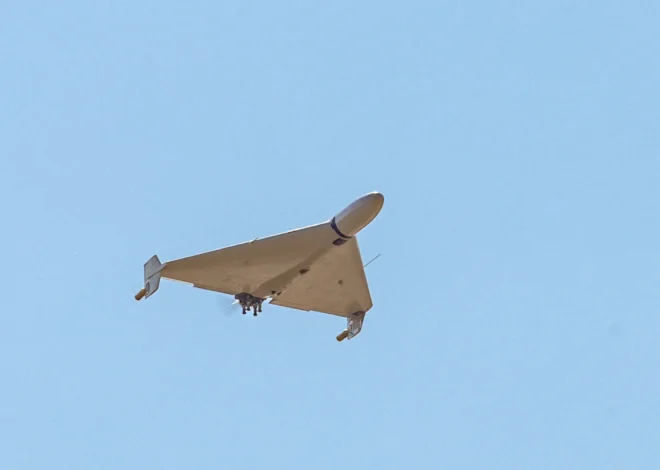
Elbit Systems, the Israel-based international defense electronics company, officially announced a landmark project to develop and integrate high-power laser weapon systems onto Israeli Air Force (IAF) fighter jets and military helicopters. The announcement, made during the presentation of the company’s 2025 financial statements, marks a significant technological leap in the Israel Defense Forces’ (IDF) multi-layered defense strategy. While the company has withheld specific technical benchmarks and a definitive deployment schedule, the move signals a transition from ground-based directed energy prototypes to mobile, high-altitude interceptors designed to neutralize a new generation of aerial threats.
The development comes at a critical juncture for Israeli national security. The Israeli Ministry of Defense (IMoD) accelerated the procurement of these systems in direct response to the operational demands of "Operation Epic Fury," a joint military campaign conducted alongside the United States. This operation has seen Israel and its allies engaged in high-intensity defense against a persistent barrage of missiles and unmanned aerial vehicles (UAVs) launched from Iranian territory and proxy positions in Lebanon. The airborne laser initiative is intended to complement existing kinetic interceptors, such as the Iron Dome and David’s Sling, by providing a virtually inexhaustible magazine and a significantly lower cost-per-interception.
The Strategic Transition to Airborne Directed Energy
The primary catalyst for taking laser technology into the skies is the inherent limitation of ground-based systems. Israel’s current directed energy capability is centered on the Iron Beam, a ground-based laser system developed by Rafael Advanced Defense Systems. Iron Beam became fully operational in late 2025, providing a localized defense layer with a power output ranging between 10 and 100 kilowatts. While effective at ranges of two to ten kilometers, ground-based lasers are highly susceptible to "atmospheric attenuation." This phenomenon involves the scattering and absorption of the laser beam by dust, moisture, and thermal turbulence in the lower atmosphere, which can drastically reduce the weapon’s effectiveness in poor weather.
Bezhalel Machlis, President and CEO of Elbit Systems, emphasized that elevating the laser platform bypasses these environmental hurdles. By mounting high-power lasers on aircraft, the IAF can operate above cloud cover and thick atmospheric haze. This positioning allows the laser to maintain beam coherence over much longer distances, effectively extending the engagement envelope. Furthermore, an airborne platform provides the mobility to intercept threats closer to their point of origin, potentially destroying missiles or drone swarms before they reach Israeli airspace.
Chronology of Israel’s Laser Development
The path toward airborne laser dominance has been a decades-long pursuit for the Israeli defense establishment. The timeline below illustrates the rapid acceleration of the program in the mid-2020s:
- 2021–2023: Early feasibility tests conducted by the IMoD’s Directorate of Defense Research and Development (DDR&D) and Elbit Systems. Initial trials involved a 100kW laser mounted on a Cessna aircraft, successfully intercepting UAVs at various altitudes.
- Late 2024: Heightened regional tensions and the proliferation of "kamikaze" drones lead to an emergency funding injection for Directed Energy (DE) programs.
- Late 2025: Rafael’s Iron Beam system enters operational service, providing the first functional ground-based laser shield against short-range rockets and mortars.
- Early 2026: Elbit Systems confirms the official contract for the development of miniaturized, high-output lasers specifically tailored for high-performance fighter jets (such as the F-35I Adir and F-15IA) and attack helicopters (including the AH-64 Apache).
Technical Requirements and Engineering Hurdles
Integrating a high-energy laser (HEL) onto a tactical aircraft presents a vastly different set of engineering challenges compared to ground-based installations. While a ground system can utilize large power generators and heavy cooling units, an airborne system must adhere to strict Size, Weight, Power, and Cooling (SWaP-C) constraints.
To be effective against sophisticated threats like cruise missiles or high-speed drones, the laser must possess sufficient "dwell time"—the duration the beam stays on a single point of the target to cause structural failure. Elbit’s engineers are reportedly focusing on advanced beam-steering technology that can compensate for the vibrations and high-speed maneuvers of a fighter jet. Additionally, the system requires a massive electrical draw, necessitating the development of specialized capacitors or tapping into the high-output engines of modern aircraft to power the solid-state laser modules.
The cooling of these systems is equally vital. Lasers generate significant waste heat; on a ground system, this is managed by large liquid-cooling radiators. On a fighter jet, Elbit must utilize innovative heat-exchange systems that do not compromise the aircraft’s aerodynamic profile or infrared signature.
Economic Data and Industrial Impact
The announcement coincided with Elbit Systems’ 2025 financial report, which showed a robust increase in defense orders and R&D investment. The company reported a significant uptick in its backlog, fueled by the global demand for autonomous systems and electronic warfare suites. The Israeli government’s pivot toward laser technology is seen by economists as a long-term cost-saving measure.
Traditional interceptors, such as the Tamir missiles used by the Iron Dome, cost between $40,000 and $50,000 per unit. In contrast, a laser interception costs only the price of the electricity used—estimated at just a few dollars per shot. For a nation facing thousands of low-cost drone threats, this economic asymmetry is a vital component of sustainable national defense. The contract with Elbit is expected to support thousands of high-tech jobs within Israel’s "Silicon Wadi" and strengthen the country’s position as a leading exporter of directed energy technology.
Official Responses and Tactical Implications
While the IMoD has not released a formal statement regarding the specific deployment of "Epic Fury" assets, defense analysts suggest that the airborne laser will revolutionize the concept of "Air Superiority." Historically, air superiority was defined by the ability to clear the skies of enemy aircraft. In the modern era, it is increasingly defined by the ability to clear the skies of "asymmetric" threats—massed swarms of inexpensive, autonomous drones.
Bezhalel Machlis hinted at a broader application for the technology during his address to shareholders. "High-Power Laser is not just a defensive weapon," he noted, suggesting that once the technology matures, it could be used for precision strikes against sensitive ground targets or to disable enemy sensors and communications from a distance. This offensive potential would allow the IAF to conduct "silent" operations, as a laser beam is invisible to the naked eye and produces no acoustic signature upon firing.
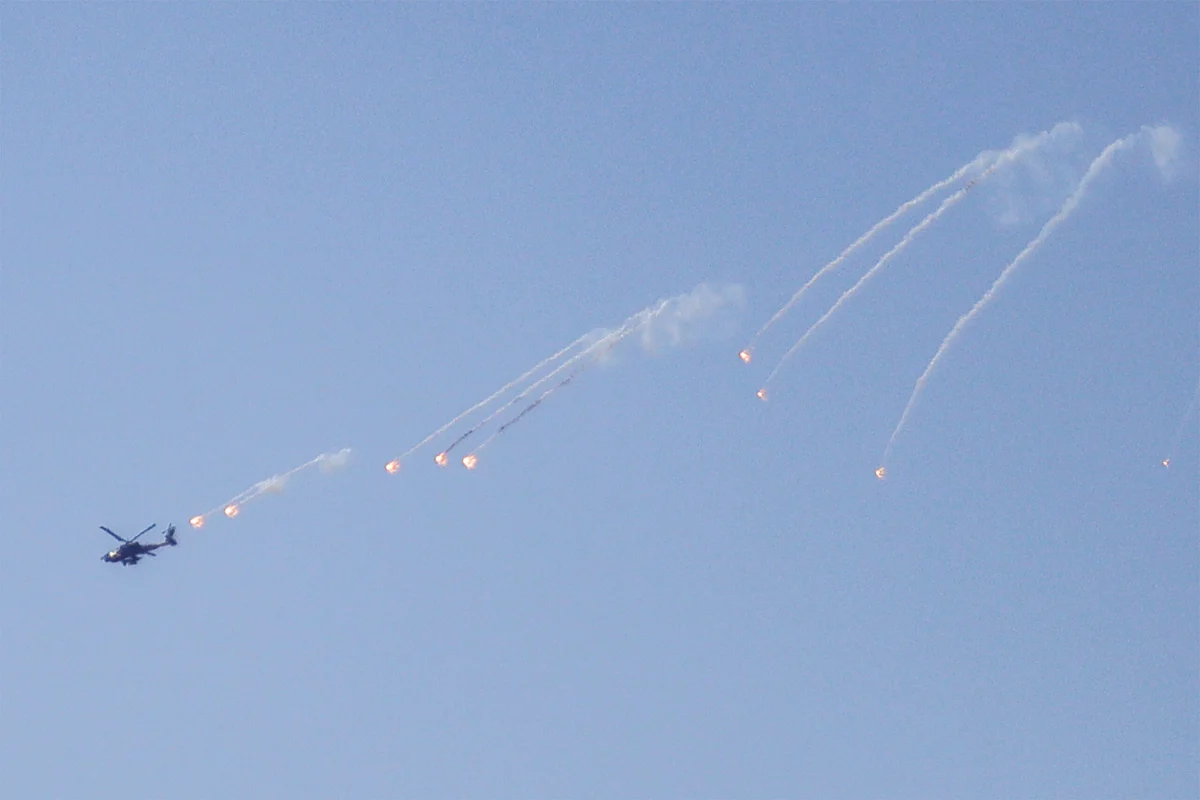
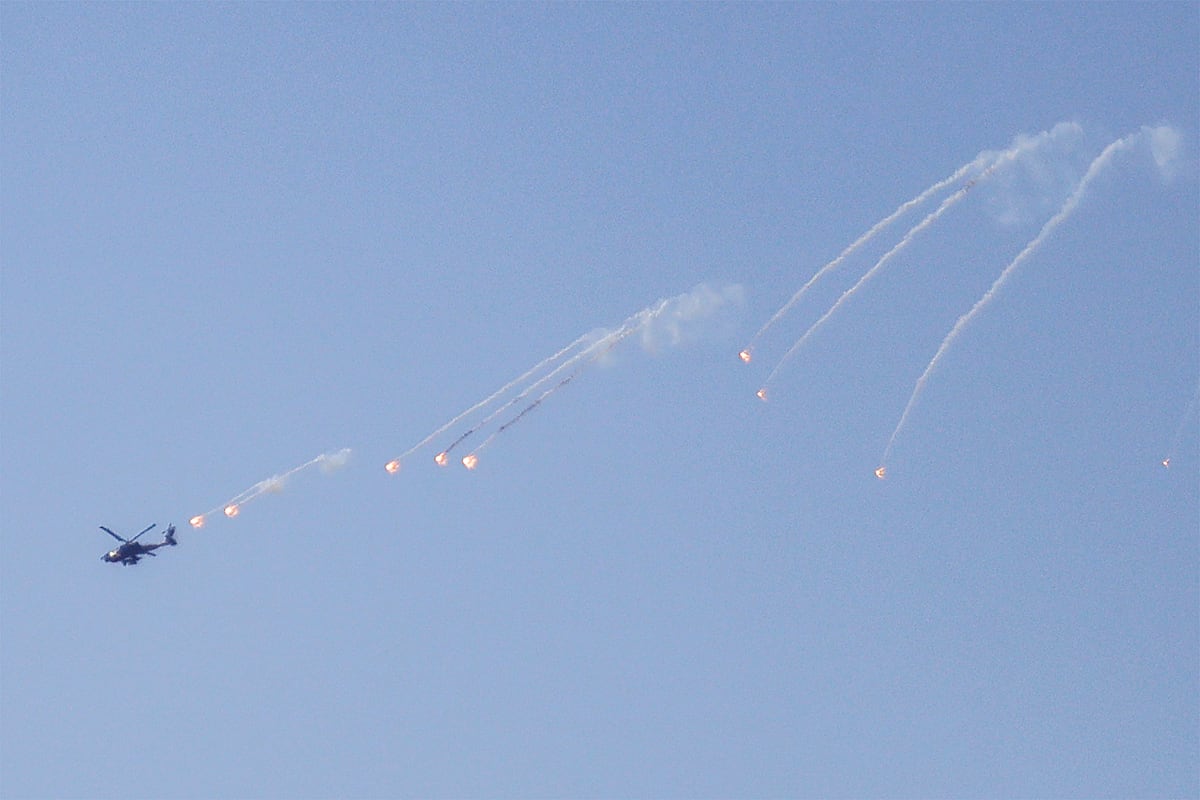
Military officials within the IAF have expressed optimism regarding the integration. An anonymous senior officer noted that having a laser-equipped AH-64 Apache would provide a "game-changing" escort for ground troops, capable of zapping incoming anti-tank guided missiles (ATGMs) or mortar rounds before they impact friendly positions.
Analysis: The Future of Global Warfare
Israel’s pursuit of airborne lasers is being watched closely by global powers, including the United States, China, and Russia. The U.S. Air Force has experimented with its own Self-Protect High Energy Laser Demonstrator (SHiELD) program, but Israel’s active combat environment provides a unique "laboratory" for real-world testing.
The success of Elbit’s airborne laser would likely lead to a shift in global procurement trends. As drone technology becomes cheaper and more accessible to non-state actors, traditional missile-based defenses will become economically unviable for many nations. Israel’s move toward a laser-centric aerial defense provides a blueprint for how modern militaries can maintain a technological edge in an era of saturated, high-volume warfare.
The strategic depth provided by an airborne laser cannot be overstated. By neutralizing threats at higher altitudes and greater distances, Israel reduces the risk of falling debris—a common byproduct of kinetic interceptions—damaging civilian infrastructure. Furthermore, the ability to operate above the weather ensures that the "laser umbrella" is available 24/7, regardless of seasonal conditions or regional dust storms.
As Elbit Systems moves into the final stages of engineering, the defense community anticipates a prototype flight test within the next 18 to 24 months. If successful, the Israeli Air Force will become the first in the world to field a fully integrated, combat-ready airborne laser fleet, fundamentally altering the calculus of aerial combat and regional deterrence. This technological milestone not only reinforces Israel’s domestic security but also cements Elbit Systems’ role as a pioneer in the next generation of directed energy warfare.

Related Posts

Pentagon Forges Landmark Seven-Year Agreements with Boeing and RTX to Accelerate Standard Missile-3 Production and Stabilize Defense Supply Chains
Boeing Unveils Ultra Low-Cost Seeker to Enhance Missile Inventory and Combat Cost Challenges in Modern Warfare