El Salvador Accused of Enforced Disappearances and Arbitrary Detention of Salvadorans Deported from the United States
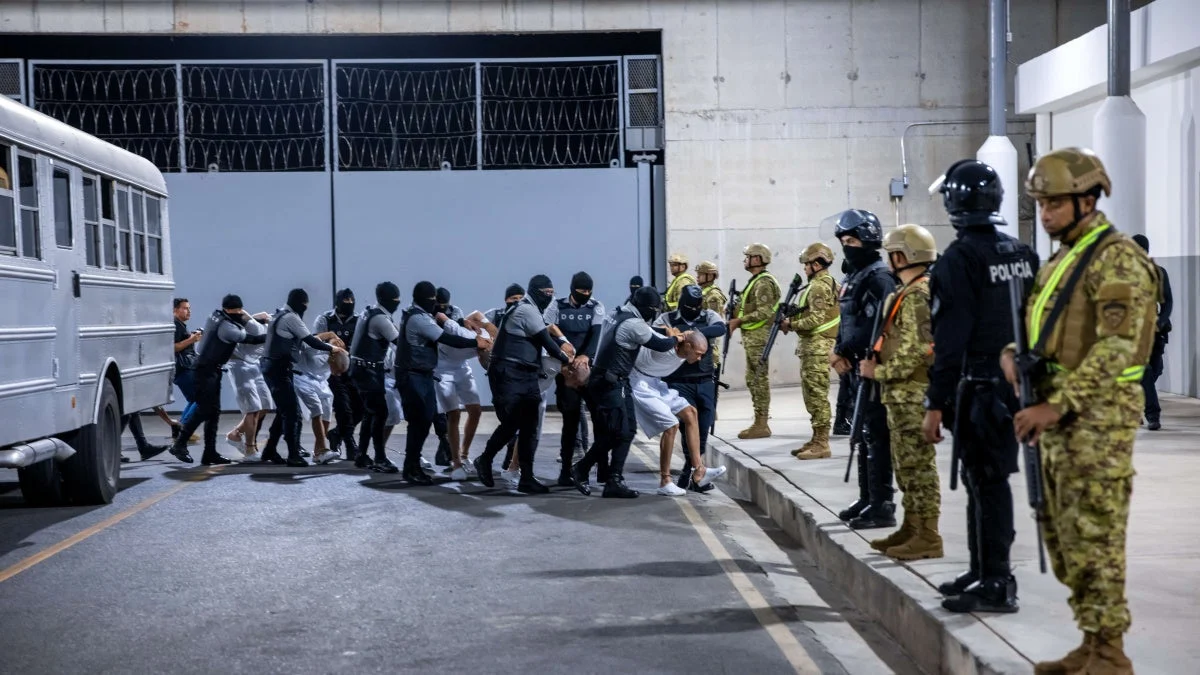
Human Rights Watch has released a comprehensive report detailing a disturbing pattern of enforced disappearances and arbitrary detentions carried out by the Salvadoran government against citizens recently deported from the United States. According to the international watchdog, Salvadoran authorities have systematically isolated returnees, denying them access to legal counsel, judicial oversight, and communication with their families, a practice that has intensified throughout 2025. This development marks a significant escalation in the human rights crisis within the Central American nation, which has remained under a restrictive state of emergency since March 2022. The report highlights that since the beginning of 2025, the United States has deported more than 9,000 Salvadorans, a significant portion of whom have vanished into El Salvador’s opaque and increasingly criticized penal system immediately upon their arrival on Salvadoran soil.
The allegations center on the treatment of individuals such as those deported on March 15, 2025. These deportees were reportedly processed alongside Venezuelan nationals who, according to previous Human Rights Watch investigations, were subjected to torture and sexual abuse within the Center for Terrorism Confinement (CECOT), a high-security "mega prison" designed to hold tens of thousands of suspected gang members. Juanita Goebertus, the Americas director at Human Rights Watch, emphasized that regardless of an individual’s past criminal record, the fundamental right to due process remains non-negotiable. Goebertus noted that deportation must not be used as a precursor to enforced disappearance, a crime under international law that occurs when a state deprives a person of their liberty and subsequently refuses to acknowledge their whereabouts or legal status.
A System of Incommunicado Detention
The investigation conducted by Human Rights Watch involved interviews with 20 relatives and legal representatives of 11 Salvadorans deported between March and October 2025. In every documented case, the individuals were detained immediately upon arrival and have since been prevented from communicating with the outside world. This "black hole" of detention has left families in a state of perpetual anguish, as they are unable to confirm if their loved ones are alive, healthy, or facing specific charges. The report indicates that none of the families or lawyers interviewed have received confirmation that the detainees have been brought before a judge, a standard legal requirement that has been effectively suspended under the current Salvadoran administration’s security policies.
In five specific instances, the whereabouts of the deportees were only disclosed following rigorous litigation and intervention by the Inter-American Commission on Human Rights (IACHR). Even with international pressure, the information provided by the Salvadoran state has been minimal, often limited to the name of the facility where the individual is being held without providing details regarding their health or the legal basis for their continued incarceration. For families without the resources to seek international legal aid, the silence from the state is absolute.
Political Rhetoric Versus Statistical Reality
The Trump administration has frequently characterized these deportees as high-level threats to national security, often labeling them as members of the notorious MS-13 gang. While the U.S. government has publicly identified specific individuals such as César Humberto López Larios, known as "El Greñas," as a high-ranking gang leader, Human Rights Watch argues that such profiles do not represent the vast majority of the deported population. An analysis of U.S. Immigration and Customs Enforcement (ICE) data reveals a stark discrepancy between political rhetoric and the actual criminal backgrounds of the returnees.
Of the roughly 9,000 Salvadorans deported since January 2025, only 10.5 percent had a prior conviction in the United States for a violent or potentially violent crime. Interviews with families of ten detainees revealed that while some had served sentences for drug possession or, in two cases, serious violent offenses like homicide and sexual assault, many others had no significant criminal history. Furthermore, several deportees had originally fled El Salvador to escape the very violence they are now being accused of perpetuating, including gang extortion and forced recruitment. Many had lived in the United States for decades, building lives and families, only to be returned to a country where they are now treated as "terrorists" by default.
Chronology of Key Events and Legal Failures
The timeline of these detentions illustrates a coordinated effort between the deportation mechanisms of the United States and the security apparatus of El Salvador. On March 15, 2025, a flight carrying 23 Salvadorans arrived in San Salvador. Among them was Kilmar Ábrego García, a man whose case has become a focal point for critics of the current deportation policy. The Trump administration later admitted that Ábrego García was deported due to an "administrative error." Despite this admission, he was held in a Salvadoran prison where he was reportedly beaten and tortured. It took a federal judge’s order and a subsequent ruling by the U.S. District Court in Maryland on December 11 to secure his return to the United States and his eventual release from ICE custody.
On April 14, 2025, the White House published a list of 12 additional deported Salvadorans, though it omitted the specific dates of their removal. By July 17, leaked flight manifests published by investigative outlets like 404 Media suggested that dozens of people were being moved on unpublicized flights. Throughout this period, families attempting to use the ICE Online Detainee Locator System found no records of their relatives, only to be told later by U.S. officials that the individuals had already been handed over to Salvadoran authorities.
The Salvadoran judiciary has offered no protection to these individuals. Between May and October 2025, lawyers filed multiple habeas corpus petitions before the Constitutional Chamber of the Supreme Court. The court, which critics argue has been stripped of its independence, has either rejected these petitions on technicalities—such as claiming the facts were not "precise" enough—or has simply ignored them. This judicial paralysis ensures that there is no domestic mechanism to challenge the legality of the detentions.
The State of Exception and Human Rights Violations
The ongoing "state of emergency" or "state of exception" in El Salvador provides the legal veneer for these abuses. Initially enacted in March 2022 to combat a spike in gang violence, the decree has been renewed monthly for over three years. Under this regime, the Salvadoran government has suspended several fundamental constitutional rights, including:
- The right to be informed promptly of the reasons for an arrest.
- The right to remain silent and to have access to legal representation.
- The requirement to present a detainee before a judge within 72 hours (this window has been extended to 15 days, though in practice it is often ignored indefinitely).
- The inviolability of private communications and correspondence.
Human Rights Watch and other international observers have documented widespread violations under this state of emergency, including mass arbitrary arrests, overcrowding in prisons that amounts to cruel and unusual punishment, and hundreds of deaths in custody. The government’s refusal to provide information to families is often justified by officials who claim they "lack a legal mandate" or that the state of emergency absolves them of the obligation to account for detainees.
International Reactions and Implications
The international community has expressed growing concern over the lack of transparency in El Salvador’s penal system. The IACHR has issued several precautionary measures, urging the Salvadoran state to disclose the legal status of detainees and to end the practice of incommunicado detention. In some responses to the commission, El Salvador claimed it was holding the men while awaiting information from the United States regarding their "migratory and legal status," effectively using the U.S. deportation process as a justification for indefinite detention without trial.
The human impact of these policies is profound. One sister of a 32-year-old deportee described her desperate attempts to find her brother, who had originally migrated to the U.S. to escape police abuse in 2022. After his deportation in March 2025, she was told by the Human Rights Ombudsperson’s Office that because of the state of emergency, no information could be provided. Another mother, whose son had lived in the U.S. for 11 years, expressed a sense of total abandonment after being told by multiple Salvadoran government ministries that they were not obligated to help her.
The situation suggests a burgeoning crisis in the regional management of migration and human rights. As the United States continues to utilize aggressive deportation strategies, it risks becoming an accomplice to the human rights abuses occurring in the receiving nations. The findings by Human Rights Watch suggest that for many Salvadorans, the journey back to their homeland is not a return to safety, but a descent into a system where the rule of law has been replaced by state-sanctioned disappearance. Analysts warn that if these practices continue unchecked, they could trigger further instability in the region, potentially fueling new waves of migration as citizens flee a state that no longer recognizes their basic human rights.

Related Posts
Human Rights Watch Calls for Investigation into Death of Detainee Following Removal from Najaf Hospital by Iraqi Drug Police
Human Rights Watch Urges UN Security Council to Extend Lebanon Peacekeeping Mission Amid Escalating Conflict and Humanitarian Crisis