Britain’s Former MI6 Chief Sir Alex Younger Asserts US Has "Lost Initiative to Iran" in Escalating Regional Conflict
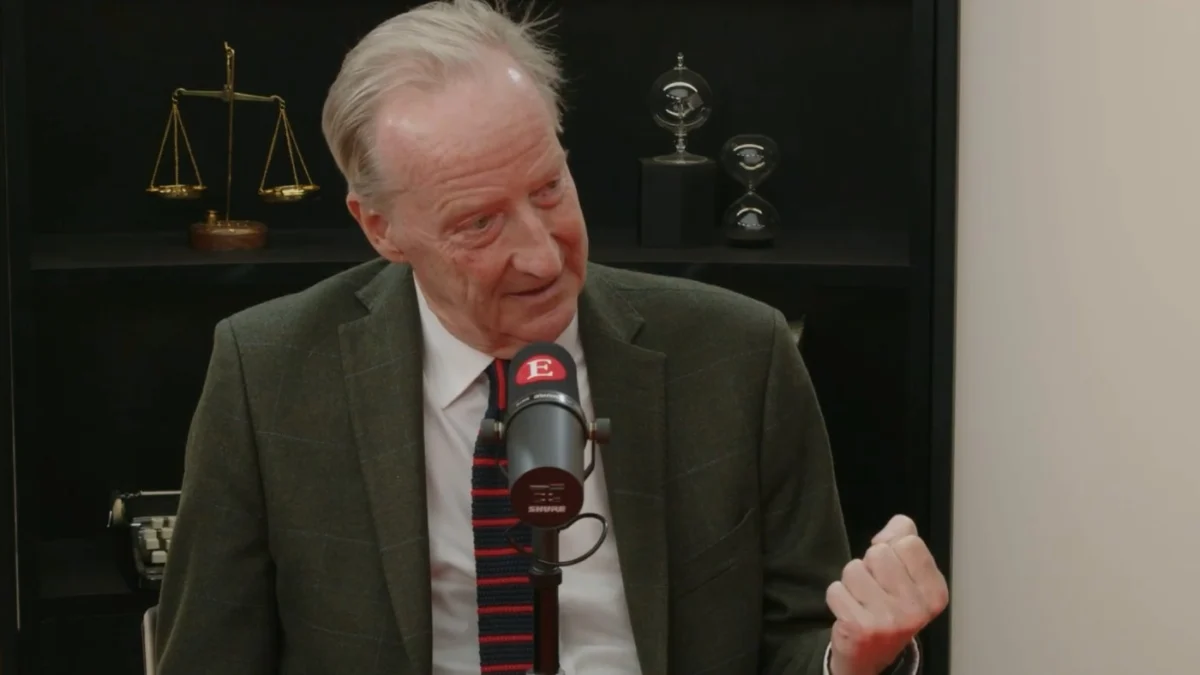
Sir Alex Younger, who led the UK’s Secret Intelligence Service (MI6) from 2014 to 2020, has delivered a stark assessment of the ongoing conflict involving the United States, Israel, and Iran, contending that the US has "lost the initiative" to Tehran. Speaking to The Economist in a podcast interview published on March 25, 2026, Younger, a veteran intelligence professional with deep experience in Middle Eastern affairs, suggested that Washington had significantly underestimated Iran’s resilience and strategic acumen in the face of sustained military pressure. His comments underscore a growing concern among some international observers regarding the efficacy of the current military campaign and the shifting power dynamics in the volatile region.
Younger’s analysis highlighted a fundamental disparity in motivations driving the respective belligerents. "The reality is the US underestimated the task and I think as of about two weeks ago lost the initiative to Iran," he stated, adding, "In practice, the Iranian regime has been more resilient than I think anyone would have expected." He further elaborated on Iran’s strategic adaptations, noting, "They took some good decisions – as early as last June – about dispersing their military capability and delegating the authority for the use of those weapons, which has given them significant extra resilience against this incredibly powerful air campaign." This tactical foresight, according to Younger, has allowed Iran to absorb substantial blows while maintaining operational capacity and projecting influence.
Background to a Deepening Conflict
The conflict, which reportedly commenced on February 28, 2026, with US and Israeli strikes across Iran, represents a dramatic escalation of decades-long tensions. The roots of this animosity are complex, encompassing Iran’s nuclear program, its regional proxy network, its ballistic missile capabilities, and its consistent opposition to US and Israeli policies in the Middle East. For the US, concerns about Iranian proliferation, support for militant groups, and destabilizing actions have long been central to its foreign policy. Israel, in turn, views Iran as an existential threat, citing Tehran’s calls for its destruction, its funding of groups like Hezbollah and Hamas, and its nuclear ambitions.
The Trump administration, which initiated the recent military actions, has cited various justifications, including preventing Iran from developing nuclear weapons and retaliating for alleged provocations. However, US senators have reportedly expressed skepticism, with some asserting that the administration has "no plan" for the war and that regime change is not among its official goals. This internal discord within Washington reflects a broader debate about the strategic objectives and potential consequences of direct military engagement with Iran.
Younger drew a critical distinction between the motivations of the warring parties. He noted that former US President Donald Trump’s rhetoric, specifically his assertion that "they’re in a civilisational war… they’re in a war of existence," has inadvertently solidified Iran’s resolve. "Whereas America has embarked on a war of choice, and in those terms, that’s imbued Iran with more staying power than their US counterparts," Younger observed. This concept of a "war of existence" versus a "war of choice" is crucial, suggesting that a nation fighting for its survival will invariably demonstrate greater tenacity and endurance than one engaging in a conflict perceived as optional.

A Chronology of Escalation
The path to the current confrontation is marked by several pivotal events:
- October 7, 2023: The surprise attack by Hamas-led militants on Israel ignites a major regional crisis. Younger critically commented on this event, stating, "It was an an intelligence failure by any standard… The Netanyahu government basically made it pretty clear that it regarded as inconvenient any idea that Hamas was anything other than acquiescent." This event fundamentally reshaped regional security calculations and intensified calls for confronting Iran, which is widely seen as a key patron of Hamas.
- January 2026: Iran experiences a significant wave of popular protests, which the government brutally suppresses. Reports from human rights groups indicated at least 7,000 fatalities, while an Iranian official reportedly verified 5,000 deaths. Younger claimed that 10,000 Iranians had been "machine-gunned in the street" by the Islamic Revolutionary Guard Corps (IRGC). This internal turmoil, though suppressed, highlighted the regime’s vulnerability but also its willingness to use extreme force to maintain power, a factor contributing to its "resilience" in the external conflict.
- February 28, 2026: The US and Israel reportedly launch coordinated military strikes against targets across Iran, marking the official commencement of the "war." These attacks aimed at Iranian military installations, infrastructure, and reportedly resulted in the deaths of key Iranian officials, including former Supreme Leader Ali Khamenei and former security chief Ali Larijani.
- March 2026: The conflict continues, with Iran retaliating against Gulf countries hosting US military bases. Younger’s interview with The Economist takes place, offering his assessment of the unfolding situation and Iran’s unexpected upper hand.
Iran’s Strategic Counter-Moves: The Strait of Hormuz
A central element of Younger’s analysis is Iran’s effective use of "horizontal escalation" and its control over the Strait of Hormuz. "They’ve understood the significance of the energy war and held the straits at threat and globalised the conflict in a way that gives them some weapons. They’ve played a weak hand well," the former MI6 chief asserted. He concluded that controlling the Strait of Hormuz had given Iran the "whip hand" in the war.
The Strait of Hormuz is one of the world’s most critical maritime chokepoints. This narrow waterway, situated between the Persian Gulf and the Gulf of Oman, is indispensable for global energy markets. Approximately 20% of the world’s total petroleum consumption, and roughly one-third of the world’s liquefied natural gas (LNG), transits through the Strait. This includes nearly all oil exports from Saudi Arabia, Iran, Iraq, Kuwait, Qatar, and the UAE. Any significant disruption to traffic through the Strait has immediate and profound implications for global oil prices, supply chains, and the stability of the international economy. Historically, Iran has repeatedly threatened to close the Strait in response to sanctions or military threats, leveraging its strategic geography as a powerful deterrent and a potential offensive weapon. Its current ability to maintain control amidst a powerful air campaign demonstrates a significant tactical achievement.
The Resilience of the Iranian Regime
Younger’s remarks on the Iranian regime’s resilience extend beyond its military dispersal. Despite internal dissent and external pressure, the regime has demonstrated a remarkable capacity for survival. The brutal suppression of the January 2026 protests, where thousands were reportedly killed, showcases the state’s uncompromising approach to internal threats. This internal cohesion, albeit maintained through authoritarian means, contributes to its ability to project strength externally. The Islamic Revolutionary Guard Corps (IRGC), a powerful paramilitary organization distinct from the regular armed forces, plays a pivotal role in enforcing internal security and executing Iran’s regional foreign policy. Its reported capacity to disperse military assets and delegate authority for weapon use suggests a sophisticated command and control structure capable of adapting to a high-intensity conflict environment.

Scrutiny of US and Israeli Intelligence and Strategy
The intelligence leading up to the conflict, and the strategy employed, have come under considerable scrutiny. The New York Times reported this week that promises made by Mossad, Israel’s external intelligence agency, regarding its ability to instigate regime change in Iran, had played a significant role in convincing the US to go to war. Israeli Prime Minister Benjamin Netanyahu reportedly used this intelligence in conversations with former President Trump. However, Younger’s earlier comments on the "intelligence failure" surrounding the October 7, 2023, Hamas attack raise questions about the reliability and interpretation of intelligence assessments in the region, particularly when political motivations may influence their reception. If Mossad’s promises proved overly optimistic, it could further undermine confidence in intelligence-driven foreign policy decisions.
US senators’ claims of "no plan" for the war also highlight potential strategic miscalculations. A "war of choice" lacking clear objectives beyond initial strikes risks entanglement in a protracted conflict with unforeseen consequences. The absence of a defined exit strategy or a comprehensive plan for post-conflict scenarios could leave the US vulnerable to the very "initiative" that Younger suggests Iran has now seized.
Broader Implications and Inferred Responses
The former MI6 chief’s assessment carries significant geopolitical implications. If Iran has indeed gained the "whip hand" and the "initiative," it signals a profound shift in the regional power balance. This could embolden Iran’s regional proxies, destabilize global energy markets further, and potentially lead to a wider regional conflagration if other nations are drawn into the conflict.
Inferred Reactions:
- From the United States: Officials from the US Department of State or the Pentagon would likely challenge Younger’s assessment, emphasizing the ongoing nature of their operations and their commitment to regional security. They might point to specific objectives achieved, such as the disruption of Iranian military capabilities or the elimination of key leadership figures, to assert that the US maintains the strategic advantage. They would likely reiterate their determination to prevent nuclear proliferation and counter Iranian destabilizing activities, while downplaying the notion of a "war of choice" by framing it as a necessary response to Iranian aggression.
- From Iran: Iranian state media and high-ranking officials would likely seize upon Younger’s comments as validation of their resilience and strategic prowess. They would probably highlight their successful defense of the Strait of Hormuz, their retaliatory strikes against US bases, and their ability to withstand the "incredibly powerful air campaign." They would likely frame their actions as defensive measures against external aggression, reinforcing the narrative of a "war of existence" to rally internal support and garner international sympathy.
- From Israel: Israeli officials would likely express continued resolve in confronting Iran, reaffirming their commitment to national security. They might defend the intelligence assessments provided by Mossad, attributing any perceived setbacks to the unpredictable nature of warfare or the complexities of the Iranian operational environment, rather than fundamental intelligence failures. They would likely emphasize the shared threat posed by Iran to regional stability and the necessity of coordinated action with allies.
The former spy chief’s candid remarks serve as a critical warning. While he expressed regret at concluding that Iran was winning, given his career-long confrontation with the "violence and brutality of the IRGC," his professional assessment prioritizes factual observation over personal sentiment. The unfolding situation in the Middle East, as described by Younger, suggests a complex and dangerous phase where traditional power dynamics are being challenged, and the outcome remains highly uncertain. The ability of Iran to adapt, control vital choke points, and leverage its perception of fighting a "war of existence" may prove to be decisive factors in determining the long-term trajectory of this escalating conflict.

Related Posts
Over 150 Israeli Settlers Storm Al-Aqsa Compound and Perform Prayers, Violating Status Quo Under Police Protection.
UN Report Highlights Over 900 Obstacles Hampering West Bank Aid Amid Escalating Humanitarian Crisis