Analyst says Pakistan’s nuclear arsenal is on the table for Saudi Arabia if it joins war
A provocative statement from a Saudi Arabian geopolitical researcher has thrust Pakistan’s nuclear capabilities into the spotlight, suggesting they could serve as a "nuclear umbrella" for Saudi Arabia should the Kingdom become embroiled in a hypothetical US-Israeli conflict against Iran. This assertion, made by Salman al-Ansari in an interview with Canada’s CBC News, underscores the intricate and potentially volatile security architecture emerging in the Middle East, particularly in the wake of a mutual defense pact signed between Riyadh and Islamabad last year. The analyst’s comments indicate a significant escalation in strategic thinking within the Kingdom, hinting at a deepening of military cooperation that could dramatically reshape regional power dynamics and global security concerns.
The declaration by al-Ansari, who described the potential for Saudi Arabia to "activate its bilateral defence agreement with Pakistan" if it were to "enter [the war] with complete force," implies a strategic reliance on Pakistan’s established nuclear deterrence. "We can say it literally that there is a nuclear umbrella over Saudi Arabia," al-Ansari stated, drawing a direct link between the bilateral defense pact and Pakistan’s nuclear status. This perspective suggests a readiness to leverage all available strategic assets in a potential confrontation, transforming what might otherwise be a regional conflict into one with profound implications for nuclear non-proliferation and international stability.
The Foundation of a Strategic Alliance: The Mutual Defense Pact
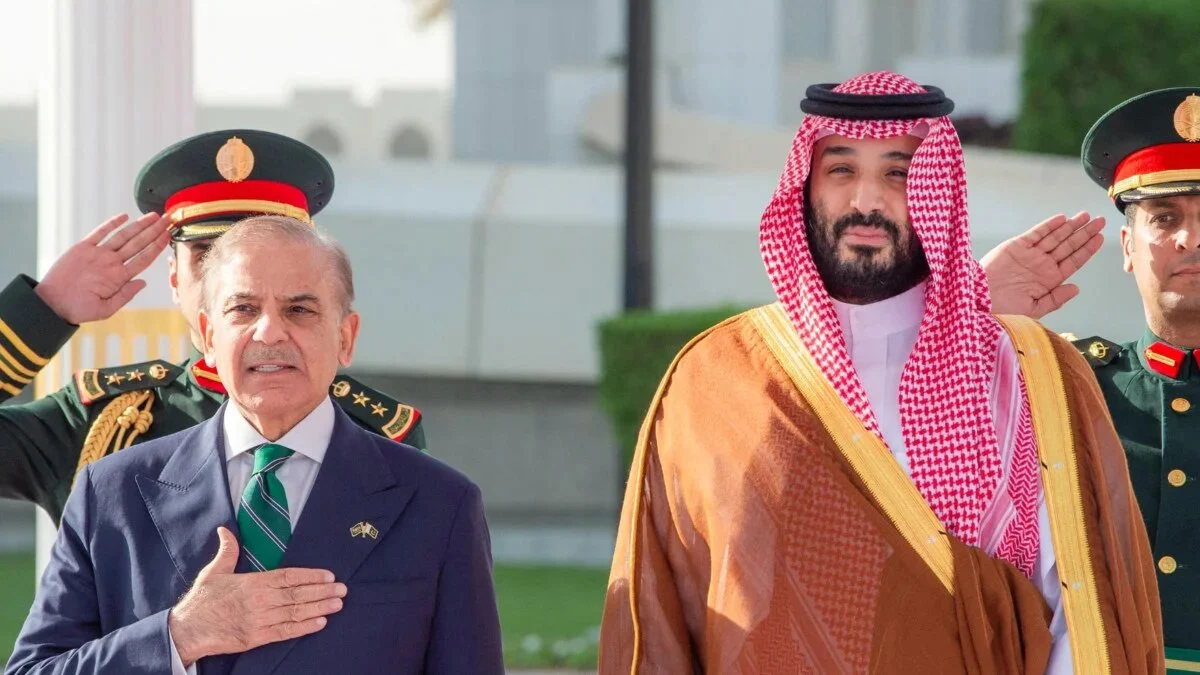
The cornerstone of this evolving strategic relationship is the mutual defense agreement inked between Saudi Arabia and Pakistan in 2025. This landmark pact, signed following an Israeli attack on Hamas negotiators in Doha, Qatar, marked a significant deepening of military and strategic ties between the two nations. Official statements from both governments have consistently described the agreement as stipulating that "any aggression against either country shall be considered an aggression against both." This language mirrors the collective defense principle enshrined in Article 5 of NATO’s founding treaty, which mandates that an attack against one member state is considered an attack against all.
For Saudi Arabia, a non-nuclear state, such an agreement with Pakistan, a declared nuclear power, carries immense strategic weight. While the exact modalities of how Pakistan’s nuclear capabilities might be extended as a "nuclear umbrella" remain unstated and highly speculative, the very suggestion by a Saudi analyst indicates a perceived strategic depth to the alliance. Historically, Pakistan has maintained close military ties with Saudi Arabia, providing training, military personnel, and strategic support. The new defense pact elevates this relationship to a new level, formally binding their security interests in a way that could have far-reaching consequences for regional stability.
Pakistan’s Nuclear Arsenal: A Strategic Asset

Pakistan officially became a nuclear power in 1998, developing its capabilities as a deterrent against perceived threats, primarily from India. Its arsenal is estimated to comprise approximately 170 warheads, deliverable via various platforms including ballistic missiles (Hatf series, Shaheen series, Ababeel), cruise missiles (Ra’ad, Babur), and potentially aircraft. The doctrine of "minimum credible deterrence" guides Pakistan’s nuclear policy, focusing on maintaining a sufficient deterrent to discourage aggression.
The idea of Pakistan extending a "nuclear umbrella" to Saudi Arabia, however, raises complex questions regarding nuclear doctrine, command and control, and international non-proliferation norms. Such a scenario would represent an unprecedented arrangement for a declared nuclear power to potentially link its deterrence to a non-nuclear state’s defense, especially in the context of a highly volatile regional conflict. While it does not imply a direct transfer of nuclear weapons, it suggests a commitment to respond to aggression against Saudi Arabia with the full weight of Pakistan’s strategic capabilities, potentially including nuclear threats if Pakistan’s survival or vital interests were deemed to be at stake due to its alliance commitments.
Escalating Regional Tensions and the Specter of War
The context for these discussions is the intensifying regional conflict, referred to in the analyst’s statement as the "US-Israeli war on Iran." This framing suggests a hypothetical but increasingly plausible scenario of a direct military confrontation involving Iran and its adversaries. Saudi Arabia has already been a target of numerous attacks attributed to Iran or its proxy groups. These include ballistic missile and drone strikes against critical infrastructure, such as the Abqaiq and Khurais oil facilities in 2019, which temporarily halved the Kingdom’s oil output. The US embassy in Riyadh and Prince Sultan Air Base have also faced attacks, highlighting the persistent threat landscape.
Iran’s strategic control over the Strait of Hormuz, a critical chokepoint for global oil shipments, further complicates the regional security picture. Roughly one-fifth of the world’s oil supply, approximately 21 million barrels per day, transits through this narrow waterway. Any significant disruption could trigger a global energy crisis. Saudi Arabia has sought to mitigate this vulnerability through its East-West pipeline, which allows it to bypass Hormuz and continue exporting crude from its Red Sea ports. Even amidst conflict, the Kingdom maintained exports of approximately four million barrels per day through this route, down from seven million bpd before the war, demonstrating its strategic efforts to ensure continued access to international markets.
Pakistan’s Delicate Balancing Act: Diplomacy and Dependence
Pakistan finds itself in a precarious position, balancing its deep strategic and economic ties with Saudi Arabia against the imperative of maintaining regional stability and avoiding direct entanglement in major conflicts. Historically, Pakistan has often acted as a mediator between Saudi Arabia and Iran, leveraging its relationships with both Islamic nations.

This mediation role was evident earlier this month when Pakistani Foreign Minister Ishaq Dar directly raised the defense pact with Iranian Foreign Minister Abbas Araghchi. Dar explicitly stated, "We have a defence pact with Saudi Arabia, and I conveyed this to the Iranian side," signaling Pakistan’s commitment to its alliance. Tehran’s response, seeking assurances that Saudi territory would not be used as a launchpad for attacks against Iran, underscores the high-stakes diplomatic tightrope Islamabad is walking.
Beyond strategic alliances, Pakistan’s economic reliance on the Gulf Cooperation Council (GCC) states, particularly Saudi Arabia, is substantial. The Kingdom is a major source of crude oil and natural gas for Pakistan, and remittances from Pakistani expatriates working in Saudi Arabia and other Gulf states are a crucial component of Pakistan’s foreign exchange earnings, significantly contributing to its economy. This economic interdependence adds another layer of complexity to Pakistan’s foreign policy decisions, making a refusal to honor its defense commitments to Saudi Arabia politically and economically challenging.
The recent transit of the Pakistan-flagged vessel, the Karachi (also known as the Lorax), carrying non-Iranian crude through the Strait of Hormuz with its Automatic Identification System (AIS) on, is a telling indicator of this delicate balance. The vessel, belonging to Pakistan’s state-owned National Shipping Corporation and carrying oil from the UAE, likely negotiated safe passage with Iran’s government. This event suggests a pragmatic approach by Pakistan to ensure its energy security while navigating the treacherous geopolitical waters of the Gulf, even as it stands allied with Saudi Arabia.
Broader Implications for Regional and Global Security
The prospect of Pakistan’s nuclear capabilities being implicitly or explicitly linked to Saudi Arabia’s defense in a conflict with Iran carries profound implications for regional and global security.
- Nuclear Proliferation Risks: While not a direct transfer of nuclear weapons, the concept of a "nuclear umbrella" for a non-nuclear state, especially one in a volatile region, could set a dangerous precedent. It might encourage other non-nuclear states to seek similar arrangements or even pursue their own nuclear programs, potentially undermining the global non-proliferation regime.
- Escalation Dynamics: The introduction of a nuclear dimension, even a theoretical one, into a conventional conflict dramatically raises the stakes. It could lead to miscalculation, rapid escalation, and a lowering of the nuclear threshold, making regional conflicts far more dangerous.
- Geopolitical Realignment: Such an alliance would solidify a new geopolitical axis, potentially drawing South Asia more deeply into Middle Eastern conflicts and further fragmenting regional security architecture.
- International Diplomacy Challenges: Major global powers, including the United States, China, and Russia, would face immense pressure to de-escalate tensions and prevent the weaponization of nuclear rhetoric. The scenario presents a severe test for international crisis management and arms control efforts.
- Economic Instability: A full-blown conflict involving major oil producers and transit routes, potentially with nuclear undertones, would unleash unprecedented economic turmoil globally, far beyond the energy sector.
As the Middle East continues to grapple with intricate alliances, deep-seated rivalries, and the shadow of potential conflict, the statements regarding Pakistan’s nuclear arsenal serving as a strategic asset for Saudi Arabia highlight the urgent need for de-escalation and robust diplomatic engagement. The interconnectedness of security interests, economic dependencies, and military capabilities across continents means that a conflict in one region can quickly ripple outwards, transforming into a global challenge with unpredictable and potentially catastrophic consequences.

Related Posts
Over 150 Israeli Settlers Storm Al-Aqsa Compound and Perform Prayers, Violating Status Quo Under Police Protection.
UN Report Highlights Over 900 Obstacles Hampering West Bank Aid Amid Escalating Humanitarian Crisis