The Fund for Responding to Loss and Damage and the Critical Imperative for Sustainable Resource Mobilization in Global Climate Policy
The Board of the Fund for Responding to Loss and Damage (FRLD) convenes this week to deliberate on a Resource Mobilization Strategy that will fundamentally define the international community’s ability to mitigate the catastrophic impacts of climate change on the world’s most vulnerable populations. As the FRLD transitions from its initial operationalization phase into a functioning financial mechanism, the stakes have never been higher. According to Wamuyu Manyara, the country director for Trócaire Malawi, and Tarcizio Kalaundi, the organization’s climate resilience officer, the decisions made during these sessions regarding the scale and accessibility of the Fund are not merely administrative; they are essential to upholding international obligations toward climate justice and human rights. The looming threat of the 1.5°C warming limit, combined with a projected funding exhaustion by 2027, has placed the FRLD at a critical crossroads where failure to secure long-term, predictable financing could render the mechanism obsolete before it has the chance to fulfill its mandate.
The Genesis and Evolution of the Loss and Damage Framework
The concept of "loss and damage" refers to the permanent losses and repairable damages caused by both extreme weather events—such as hurricanes and floods—and slow-onset events—such as sea-level rise and desertification. For decades, the inclusion of loss and damage as a distinct pillar of climate action was met with resistance from developed nations concerned about legal liability and compensation claims.
The journey toward the FRLD began in 1991 when the Alliance of Small Island States (AOSIS) first proposed a compensation scheme for nations affected by rising sea levels. It took over thirty years for this proposal to materialize into a formal agreement. A significant breakthrough occurred at COP27 in Sharm el-Sheikh in 2022, where parties finally agreed to establish a dedicated fund. This was followed by the rapid operationalization of the Fund at COP28 in Dubai in 2023, where an initial $700 million was pledged by various nations, including the United Arab Emirates, Germany, the United Kingdom, and the United States.
However, despite this diplomatic success, the FRLD remains in a precarious financial position. The current pledges represent less than 0.2% of the estimated annual needs of developing countries, which are projected to face between $290 billion and $580 billion in climate-related damages by 2030. The board’s current focus on resource mobilization is intended to bridge this staggering gap and ensure that the Fund does not become a "hollow shell" by the end of the decade.
The 2027 Funding Cliff and the Scale of the Crisis
One of the most pressing concerns for climate advocates and policy analysts is the sustainability of the Fund’s current resources. Analysis of the FRLD’s financial trajectory suggests that without a renewed and significantly scaled-up commitment from donor nations, the Fund faces a "funding cliff" by 2027. The initial pledges made in Dubai were largely one-time contributions rather than recurring annual commitments.
This financial instability coincides with the worsening of the global climate crisis. The World Meteorological Organization (WMO) has repeatedly warned that the earth is teetering on the edge of the 1.5°C threshold established by the Paris Agreement. Crossing this threshold would lead to irreversible tipping points, significantly increasing the frequency and intensity of climate disasters. For nations like Malawi, which are already grappling with the aftermath of events like Cyclone Freddy in 2023, the absence of a reliable FRLD means falling deeper into debt cycles as they borrow to fund recovery efforts.
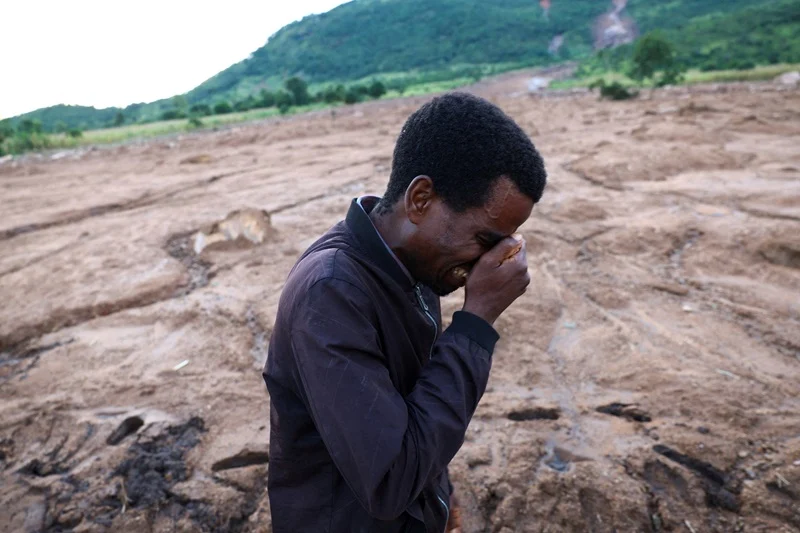
In Malawi, the impacts of climate change are not theoretical. Cyclone Freddy displaced over half a million people and caused damages estimated at $500 million—roughly 5% of the nation’s GDP. Manyara and Kalaundi emphasize that for countries in the Global South, loss and damage is a present-day reality that exhausts national budgets and halts developmental progress. The Resource Mobilization Strategy must therefore account for the "scale" of the crisis, moving beyond millions into the billions and trillions required for genuine recovery.
Data and Economic Projections: The Cost of Inaction
To understand the necessity of the FRLD, one must examine the economic data surrounding climate-induced losses. A 2022 report by the V20 group (the Vulnerable Twenty Group of Ministers of Finance) revealed that the 58 most climate-vulnerable economies had lost approximately $525 billion—or 20% of their total wealth—over the past two decades due to climate change.
Projections for the future are even more dire:
- By 2030, economic losses in developing countries are estimated to reach $400 billion per year.
- By 2050, if current emissions trajectories continue, these costs could escalate to $1.1 trillion to $1.7 trillion annually.
- Non-economic losses, including the loss of cultural heritage, biodiversity, and human lives, are harder to quantify but are estimated to be equally devastating to the social fabric of affected nations.
The FRLD Board is currently exploring various "innovative" sources of finance to meet these needs. These include global levies on shipping, aviation, and fossil fuel extraction, as well as wealth taxes and the redirection of fossil fuel subsidies. Advocates argue that these mechanisms are necessary because voluntary contributions from wealthy nations have historically proven insufficient to meet the scale of global crises.
Accessibility and the Role of the World Bank
A central point of contention in the current discussions is the accessibility of the Fund. At COP28, it was agreed that the World Bank would serve as the interim host of the FRLD for the first four years. This decision was met with skepticism by many developing nations and civil society organizations who fear that the World Bank’s bureaucratic processes and "loan-heavy" approach could hinder the rapid delivery of aid to the communities that need it most.
For the Fund to be effective, Manyara and Kalaundi argue that it must be accessible directly to local communities and grassroots organizations. Currently, many international climate funds require rigorous accreditation processes that favor large international NGOs and government ministries, often leaving local actors—who are the first responders to climate disasters—without support.
The Resource Mobilization Strategy must therefore prioritize:
- Direct Access: Streamlining the process for local governments and community groups to apply for and receive funds.
- Grants, Not Loans: Ensuring that loss and damage finance does not exacerbate the debt distress of developing nations. Providing recovery funds in the form of loans is seen by many as a violation of climate justice, as it forces the victims of climate change to pay for damages they did not cause.
- Speed of Disbursement: Establishing "trigger-based" financing that releases funds immediately following a declared disaster, rather than waiting for lengthy assessment periods.
Official Responses and Political Tensions
The debate over the FRLD is deeply rooted in the broader geopolitical tensions between the Global North and the Global South. Developing nations, led by the G77 and China, view the Fund as a matter of legal and moral obligation. They argue that the "polluter pays" principle should apply, requiring industrialized nations with high historical emissions to bear the financial burden of the damages.
In contrast, many developed nations, including the United States and members of the European Union, have framed their contributions as voluntary acts of solidarity. They have consistently pushed back against language that implies "compensation" or "liability." These differing interpretations of the Fund’s purpose continue to influence negotiations over the Resource Mobilization Strategy.
Civil society organizations have been vocal in their demands. A coalition of over 300 NGOs recently issued a statement urging the FRLD Board to ensure that the Fund is "new and additional," meaning it should not be diverted from existing foreign aid or climate adaptation budgets. They also called for the Fund to address "non-economic loss and damage" (NELD), such as the loss of ancestral lands and the psychological trauma of displacement, which have traditionally been ignored by financial institutions.
Broader Implications for Human Rights and International Law
The failure or success of the FRLD has profound implications for international law and human rights. The United Nations has increasingly recognized that climate change poses a direct threat to the enjoyment of human rights, including the right to life, food, water, and housing. In 2023, the UN General Assembly requested an advisory opinion from the International Court of Justice (ICJ) on the obligations of states in respect of climate change.
If the FRLD fails to mobilize adequate resources, it could lead to a surge in climate litigation. Vulnerable nations and affected individuals may increasingly turn to domestic and international courts to seek redress from carbon-intensive corporations and negligent governments. A fully funded and accessible FRLD serves as a vital safety valve, providing a structured, diplomatic pathway for addressing grievances that might otherwise result in protracted legal battles and social unrest.
Furthermore, the Fund’s ability to address loss and damage is inextricably linked to global security. Climate-induced displacement is a major driver of migration and can exacerbate regional conflicts over dwindling resources. By providing the means for communities to rebuild and remain in their homelands, the FRLD contributes to global stability and the preservation of human dignity.
Conclusion: The Path Toward 2027
As the FRLD Board concludes its current deliberations, the international community will be watching closely for signals of genuine commitment. The 2027 deadline is not merely a date on a calendar; it is a deadline for the credibility of the Paris Agreement framework. If the Fund is allowed to run dry, the trust between developed and developing nations—already strained by broken promises regarding the $100 billion annual climate finance goal—may be irreparably damaged.
The mandate of the FRLD is clear: to respond to the harms already being done by a changing climate. This requires a Resource Mobilization Strategy that is as ambitious as the crisis is severe. It requires moving beyond the "charity" model toward a system based on equity, justice, and the recognition of shared responsibility. For the people of Malawi and millions of others on the front lines of the climate crisis, the Fund represents more than just a financial mechanism; it represents the hope that the world will not leave them to face the consequences of a disaster they did nothing to create.

Related Posts
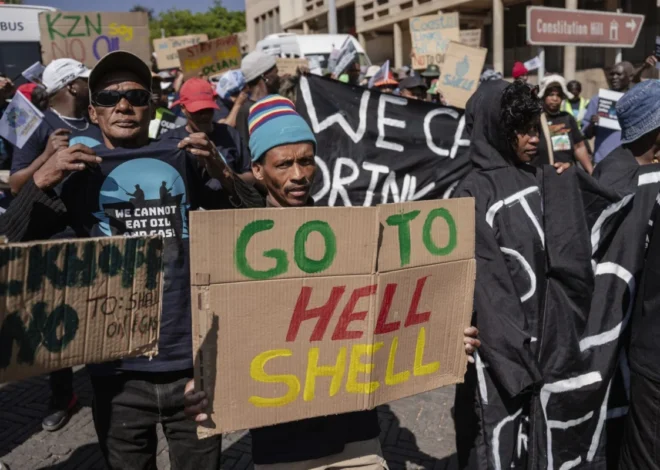
Constitutional Court of South Africa Bars Shell Oil Exploration in Landmark Victory for Environmental and Community Rights
The Battle for Saldanha Bay: South Africa’s Ambitious Ocean Economy Strategy Faces Legal and Environmental Reckoning