Senator Ed Markey Declares ICE a "Renegade, Terrorist Army" Amidst Fatal Maine Shooting and Growing Calls for Abolition
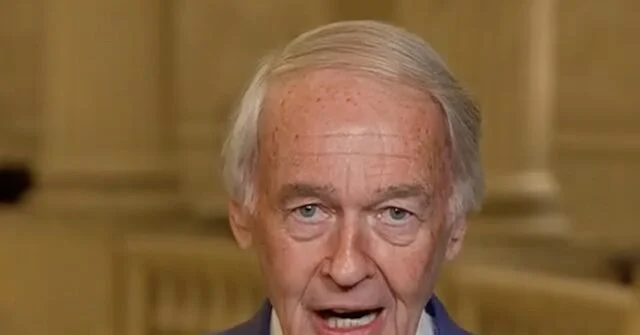
Senator Ed Markey (D-MA) ignited a fervent debate on the role and conduct of U.S. Immigration and Customs Enforcement (ICE), starkly labeling the agency a "renegade, terrorist army" during an appearance on MS NOW’s "All In." The senator’s provocative remarks came as he visited Biddeford, Maine, in the wake of a fatal shooting involving ICE agents and local resident John Guerrero, an incident that has amplified nationwide calls for the agency’s abolition and defunding. Markey’s strong condemnation underscores a deeply polarized national conversation surrounding immigration enforcement, federal overreach, and community relations.
The broadcast on Friday featured Senator Markey in conversation with host Chris Hayes, who inquired about the senator’s observations in Biddeford following the tragic event. Hayes highlighted the widespread outrage and anger simmering in the community after the death of Guerrero, described as a young man, father, and husband, during a traffic stop involving ICE. Markey’s response painted a vivid picture of a community in mourning, yet simultaneously galvanized by a profound sense of injustice and a demand for accountability.
"Yeah. I spent the day here in Biddeford, Maine, where John Guerrero was murdered by ICE agents," Markey stated, directly accusing the federal agency of murder. He elaborated on the local sentiment: "Biddeford is in mourning. But they’re also angry and justifiably angry because they’re not getting the answers to the questions as to how such a heinous act could be committed on the streets of Biddeford or any other place in our country." Markey described attending a rally in Biddeford where "hundreds of people" voiced unified calls for the abolition and defunding of ICE, demanding that the agency be kept "out of Biddeford, out of Maine, out of the United States of America."
The senator further asserted that Biddeford’s experience has become emblematic of a broader national trend, depicting a "cultural revolution" unfolding across the country. He linked the local incident to what he characterized as a wider pattern of deployment by the Trump administration, warning of threats to deploy federal agents "on Election Day in communities and states all across our country." Markey concluded his impassioned statement by reiterating Massachusetts’ solidarity with Biddeford, expressing shared grief and anger over the "unnecessary loss of life of an immigrant who was a father, who was a husband, and who was an immigrant just working hard up here in Maine," and condemning what he termed a "reign of terror" unleashed by the Trump administration against immigrant families.
The Biddeford Incident: A Catalyst for Outrage
While specific details surrounding the fatal encounter between John Guerrero and ICE agents remain subject to ongoing investigation and public scrutiny, such incidents frequently involve complex legal and operational parameters. Federal immigration enforcement operations, including those conducted by ICE’s Enforcement and Removal Operations (ERO), often target individuals identified for deportation based on immigration violations or criminal history. These operations can occur in various settings, including homes, workplaces, or, as in Guerrero’s case, during traffic stops. The use of force by federal agents is governed by strict protocols, typically allowing for force only when an agent perceives an imminent threat or to overcome resistance. However, critical incidents involving fatalities invariably trigger internal reviews, and often, independent investigations, demanding transparency and accountability.
The death of John Guerrero in Biddeford quickly became a flashpoint for local activism and drew national attention, particularly from political figures like Senator Markey. Community organizers and immigrant rights advocates swiftly mobilized, demanding answers, justice for Guerrero’s family, and a reevaluation of ICE’s operational procedures and presence in local communities. Rallies and vigils, such as the one attended by Senator Markey, serve as crucial platforms for expressing collective grief, anger, and political demands, often calling for policy changes, including the defunding or outright abolition of federal immigration enforcement agencies.
The Historical and Evolving Role of ICE
To fully appreciate the gravity of Senator Markey’s remarks and the intensity of the "abolish ICE" movement, it is essential to understand the agency’s relatively recent origins and its evolving mandate. U.S. Immigration and Customs Enforcement was established in March 2003, in the aftermath of the September 11, 2001, terrorist attacks. It was created as part of the Department of Homeland Security (DHS), consolidating enforcement functions from the former Immigration and Naturalization Service (INS) and the U.S. Customs Service. Its primary mission was defined as protecting national security, public safety, and the integrity of the U.S. borders.
ICE comprises two principal operational directorates: Enforcement and Removal Operations (ERO) and Homeland Security Investigations (HSI). ERO is responsible for identifying, arresting, and deporting undocumented immigrants within the United States, particularly those deemed priorities due to criminal convictions or national security concerns. HSI investigates a wide range of transnational criminal activities, including human trafficking, drug smuggling, and cybercrime. While HSI’s work often receives less public scrutiny in the context of immigration debates, ERO’s activities are frequently at the center of controversies surrounding immigration enforcement, civil liberties, and community impact.
Over the years, ICE’s operations have faced increasing scrutiny and criticism, particularly concerning its tactics, detention conditions, and the impact of its enforcement actions on families and communities. Under different presidential administrations, the agency’s priorities and enforcement postures have shifted, often reflecting broader political agendas on immigration. For instance, the Obama administration initially focused on deporting individuals with serious criminal records, but also faced criticism for record-high deportation numbers. The Trump administration, however, adopted a more aggressive and expansive approach, declaring virtually all undocumented immigrants as enforcement priorities, leading to a significant increase in arrests and deportations and a more visible federal presence in communities.
Supporting Data and Statistics: A Glimpse into ICE’s Scope
ICE operates with a substantial budget and a significant workforce, reflecting its critical role in federal immigration enforcement. In recent fiscal years, ICE’s annual budget has consistently exceeded $8 billion, supporting tens of thousands of employees, including thousands of ERO officers. For example, in Fiscal Year 2020, ERO reported 103,456 administrative arrests, with 85% of those individuals having criminal convictions or pending criminal charges. The same year, ICE carried out 185,884 removals. While these numbers illustrate the scale of ICE’s operations, they also represent a complex human toll, often separating families and impacting community stability.
Data on incidents involving use of force by ICE agents, particularly those resulting in serious injury or death, are closely monitored by civil rights organizations and congressional oversight committees. While official reports often emphasize agent safety and adherence to protocols, each incident sparks questions about training, de-escalation tactics, and accountability. Such events contribute to public distrust and fuel narratives of an agency operating without sufficient oversight or regard for human life, especially within immigrant communities.
Official Responses and the "Abolish ICE" Movement
The "abolish ICE" movement, gaining significant traction in recent years, especially during the Trump administration, is a direct response to perceived abuses and the agency’s controversial enforcement practices. Proponents of abolition argue that ICE, as currently structured, is inherently flawed, operates with excessive force, and disproportionately targets vulnerable populations. They contend that its enforcement actions create a climate of fear, undermine community trust in law enforcement, and lead to humanitarian crises, such as family separations and inadequate detention conditions. The movement advocates for a complete dismantling of ICE, with some functions potentially reassigned to other agencies, but with a fundamental shift away from the current enforcement-heavy paradigm.
In contrast, official statements from ICE and its supporters consistently emphasize the agency’s vital role in upholding federal law, protecting national security, and maintaining border integrity. ICE officials often highlight the agency’s efforts to target individuals involved in serious criminal activities, such as drug trafficking, gang violence, and child exploitation, asserting that their operations are crucial for public safety. They maintain that ICE agents operate professionally and ethically, adhering to strict legal and ethical guidelines, and that calls for abolition jeopardize national security and the rule of law. The agency typically responds to specific incidents by stating that they are under investigation and that agents are trained to use force only when necessary and justified.
The debate also involves local law enforcement agencies, many of whom have varying degrees of cooperation with ICE. While some jurisdictions maintain close partnerships through programs like 287(g) agreements, which deputize local officers to perform federal immigration functions, others have adopted "sanctuary city" policies, limiting their cooperation with federal immigration authorities. This patchwork of policies reflects the broader tension between federal immigration mandates and local community values, often leading to jurisdictional disputes and operational challenges for both federal and local agencies.
Broader Impact and Implications
Senator Markey’s characterization of ICE as a "renegade, terrorist army" is not merely rhetorical flourish; it represents a deep-seated frustration and moral indignation felt by a significant segment of the population and political spectrum. Such strong language, while controversial, serves to galvanize public opinion, rally support for the abolition movement, and pressure policymakers for significant reforms. It also, however, risks further polarizing the debate, potentially alienating those who believe in the necessity of immigration enforcement and contributing to an environment where nuanced discussions become increasingly difficult.
The implications of such rhetoric extend beyond political discourse. For ICE agents, being labeled a "terrorist army" can be demoralizing and may be perceived as an unfair vilification of individuals performing a lawful, albeit contentious, duty. It can also exacerbate tensions between federal agents and the communities they operate in, potentially making their work more challenging and dangerous. For immigrant communities, such statements validate their fears and experiences, reinforcing the perception of ICE as an oppressive force.
The incident in Biddeford, coupled with Senator Markey’s strong condemnation, underscores the profound challenges facing the United States in reconciling its immigration laws with its humanitarian values. The ongoing debate about ICE’s future—whether it should be reformed, defunded, or abolished—is intertwined with fundamental questions about national identity, human rights, and the balance of power between federal authority and local autonomy. As the nation grapples with these complex issues, the call for transparency, accountability, and a humane approach to immigration enforcement will continue to resonate across communities and political landscapes, demanding comprehensive and compassionate solutions. The tragic death of John Guerrero in Biddeford serves as a stark reminder of the human cost embedded within this fiercely contested terrain.

Related Posts

Democratic Candidates Must Moderate to Win General Elections, Says Rep. Greg Stanton

Lisa Demuth Secures Republican Gubernatorial Nomination in Minnesota, Defeating Trump-Endorsed Mike Lindell