The Unseen Front: Inside the High-Stakes War Game Simulating a National Cyber Collapse
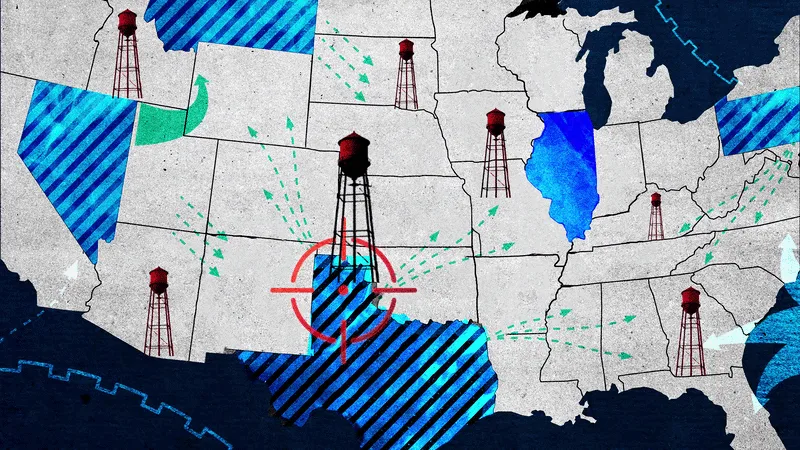
Seventy minutes into a high-stakes simulation conducted in a skyscraper overlooking Times Square, the atmosphere shifts from intellectual exercise to a grim realization of systemic vulnerability. The scenario: a coordinated, catastrophic cyberattack has crippled 5,000 water utilities across the United States. Orchestrated by Joshua Corman, a former strategist for the Cybersecurity and Infrastructure Security Agency (CISA), the event brings together dozens of insurance executives to confront a crisis that threatens the structural integrity of American civilian life. What begins as a strategic tabletop exercise rapidly evolves into a chilling examination of how the nation might unravel when its most fundamental resources are held hostage by foreign adversaries.
The Anatomy of a Simulated Crisis
The simulation is set in the near future, specifically July 2027, just days before the Independence Day holiday. In this fictional timeline, the geopolitical climate is volatile, with heightened tensions regarding a potential conflict in the Taiwan Strait. The attack is not merely a disruption of IT systems; it is a multi-vector assault causing physical destruction to critical infrastructure. As the "dungeon master" of the exercise, Corman pushes the participants—who are tasked with managing the insurance response—to address second-order consequences that extend far beyond simple data loss.
By the second day of the game, the participants are forced to reckon with a cascading failure of the American grid. Food refrigeration systems at cold storage facilities are failing, threatening the nation’s supply chain. Drug and chemical manufacturing, which relies heavily on high-purity water, has ground to a halt, triggering acute shortages of essential medicines like insulin. Perhaps most devastatingly, 2,000 hospitals are reported to be without water, forcing facility managers to contemplate mass evacuations as HVAC systems fail during a brutal July heatwave.
The Volt Typhoon Context: A Pre-positioned Threat
This simulation is grounded in real-world intelligence reports that have occupied the minds of national security experts for years. The primary focus of these concerns is "Volt Typhoon," a state-sponsored hacking collective attributed to the Chinese military. First disclosed in May 2023 by a coalition including Microsoft, the NSA, and CISA, the group distinguished itself from traditional cyber-espionage actors by focusing on "living off the land" techniques. Instead of deploying noisy malware that could be easily detected, these actors hijack legitimate network functions, making their presence almost invisible to standard security tools.
According to government advisories, the objective of Volt Typhoon is not data theft but strategic "pre-positioning." By infiltrating the operational technology (OT) of ports, telecommunications, and energy grids, the group is establishing the capability to sabotage the US homeland during a kinetic military conflict. The threat is not limited to major metropolitan targets; investigators have identified breaches in systems as small as the Littleton Electric Light & Water Departments in Massachusetts. This suggests that the adversary’s strategy involves creating widespread societal chaos to undermine the American public’s will to support a protracted conflict.

Insurance Industry Challenges and the Act of War Dilemma
The war game highlights a critical, often overlooked node in the national security apparatus: the insurance industry. In the event of a cyber-catastrophe, these firms are typically the first point of contact for victims. They serve as the gatekeepers for incident response, providing the funding and legal frameworks required to deploy top-tier cybersecurity firms like Mandiant or CrowdStrike.
However, the simulation forces a confrontation with the limitations of the current insurance model. A central tension in the game is the potential for insurers to invoke "act of war" exclusions. In standard policies, this clause exempts carriers from liability during armed conflict. If insurance companies were to invoke this, they could effectively deny coverage to thousands of businesses and municipalities, potentially leading to mass bankruptcies and a complete collapse of trust in the financial system.
Furthermore, the game highlights the lack of consensus on prioritization. When resources are scarce and incident responders are overwhelmed, do insurance companies prioritize their largest, most profitable corporate clients, or do they pivot to "national security" assets as defined by federal authorities? The participants struggled with these ethical quandaries, noting that government guidance remains vague and, in many cases, non-existent.
Data and Infrastructure Realities
The scale of the threat is underscored by sobering statistics regarding the nation’s infrastructure. The United States maintains approximately 151,000 public water systems. According to CISA and industry experts, only a fraction of these entities possess the resources to maintain robust cybersecurity programs. Corman notes that fewer than 0.3 percent of these utilities participate in the sector-specific information-sharing organizations that could help them detect and defend against state-sponsored intrusions.
The economic implications are equally staggering. In the wake of the 2017 NotPetya attack, which caused over $10 billion in global damages, the cyber insurance market faced a reckoning regarding systemic risk. Unlike localized disasters, a nation-wide cyberattack is a "correlated risk," meaning it could impact nearly every policyholder simultaneously, rendering the traditional insurance model fundamentally incapable of absorbing the losses.
Official Responses and Strategic Implications
Former CISA director Jen Easterly, now a leader in the private sector, has frequently warned that the discovery of Volt Typhoon is likely "the tip of the iceberg." The consensus among analysts is that the digital "explosives" mentioned by former NSA cybersecurity director Rob Joyce are already in place. The strategy is to maintain dormant access, waiting for a signal to initiate a synchronized disruption.

During the war game, the participants attempted to solicit help from federal agencies, only to be reminded of the reality of current bureaucratic limitations. The simulation posited a version of CISA that had endured months without a Senate-confirmed director and significant staffing attrition, mirroring real-world anxieties about the agency’s ability to scale its response during a national emergency.
The Path Toward Resilience: Prevention Over Response
The conclusion of the simulation left participants with a clear, albeit uncomfortable, takeaway: there is no effective "response" to a catastrophe of this magnitude once it has begun. The winning strategy, according to Corman and other industry experts, lies in radical prevention.
For the insurance industry, this means moving away from passive underwriting. Instead, carriers must begin to act as a regulatory force by mandating that clients meet specific security standards, such as regular patching of edge devices and participation in information-sharing cooperatives. By tying insurance premiums to proven cybersecurity hygiene, the industry could theoretically force a baseline of security across the most vulnerable segments of the U.S. economy.
The war game served as a "shattering of assumptions" for those involved. It illustrated that in a scenario of mass sabotage, the market, the government, and the private sector are currently ill-equipped to coordinate a defense. As the simulation ended, the participants were left to consider a fundamental question: if the nation’s digital infrastructure is indeed "strapped with explosives," at what point does the private sector take the necessary steps to disarm them, rather than merely calculating the cost of the blast?
The exercise was not designed to yield a winner, but rather to illuminate the fragility of the status quo. As Corman reminded the group, quoting the 1983 film WarGames, there are situations where the only successful move is to fundamentally alter the board before the game begins. For the insurance executives, this means shifting their focus from the "claims" of the future to the "hardening" of the present. The threat posed by state-sponsored actors like Volt Typhoon is not a hypothetical scenario for the next decade; it is an active, persistent, and evolving reality of the current geopolitical era.

Related Posts

The Las Vegas Cybersecurity Summit and the Escalating Threat of Autonomous Digital Exploitation

New York City Council members and privacy advocates launch legislative campaign to ban biometric facial recognition at public entertainment venues