Turkey Voices Alarm Over Growing Israel-Greece-Cyprus Military Alliance, Citing Regional Instability Concerns
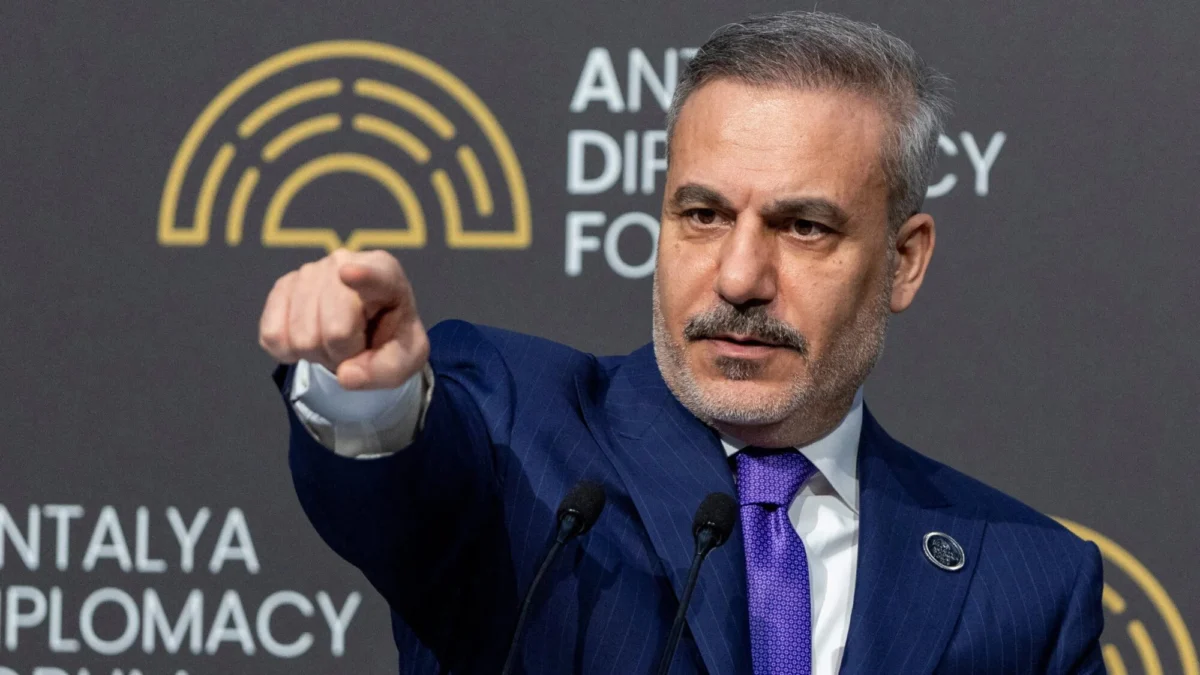
Ankara’s foreign minister, Hakan Fidan, has issued a stark warning regarding the burgeoning military alliance between Israel, Greece, and Cyprus, asserting that the grouping possesses clear military dimensions and is a source of significant concern for Turkey and other Muslim nations in the region. Speaking at the Antalya Diplomacy Forum on Sunday, April 19, 2026, Fidan reiterated Turkey’s long-standing unease over the trilateral cooperation, suggesting it contributes to regional instability rather than fostering peace.
Deepening Turkish Concerns Over a Strategic Alignment
Minister Fidan articulated Turkey’s position, highlighting that the alliance, which includes NATO member Greece, has failed to provide assurances that its activities are not directed against Ankara. "No one has given assurances to us that this wasn’t an initiative against us before or after its founding," Fidan stated, underscoring a deep-seated suspicion within Turkish foreign policy circles. He specifically referenced comments made by Israeli Prime Minister Benjamin Netanyahu during a trilateral summit in Israel last year (December 2025), where Netanyahu declared, "To those who fantasise they can re-establish their empires and their dominion over our lands, I say: Forget it. It’s not going to happen. Don’t even think about it." While not explicitly naming Turkey, Ankara interpreted these remarks as a direct challenge, further solidifying its perception of the alliance as an antagonistic entity.
Fidan had previously voiced similar concerns last week, suggesting that the alliance’s intent was to encircle Turkey from its southern flank, warning that such initiatives "bring more problems" and could potentially "lead to war." On Sunday, he doubled down on these assertions, dismissing counter-arguments from Athens. "Greece can say what it wants, but the picture is clear," Fidan asserted. "There is no other country in Europe that has taken this kind of step towards military cooperation and partnership." He further broadened the scope of concern, indicating that while not always publicly expressed, the alliance troubles Muslim countries throughout the region, echoing a sentiment that Israel’s "expansionist policy" validates Turkey’s apprehension.

The Trilateral Alliance: Origins, Scope, and Geopolitical Context
The strategic alignment between Israel, Greece, and Cyprus dates back to the early 2010s, emerging against a backdrop of shifting geopolitical dynamics in the Eastern Mediterranean. Initially focused on energy cooperation following significant natural gas discoveries in the Levant Basin, the partnership rapidly expanded to encompass security and defense. This cooperation includes joint military exercises, intelligence sharing, and coordinated diplomatic efforts on regional issues.
The alliance’s evolution is intrinsically linked to the complex energy landscape of the Eastern Mediterranean. Discoveries of vast natural gas fields, such as Israel’s Leviathan and Tamar, and Cyprus’s Aphrodite, have transformed the region into a potential energy hub. This has spurred intense competition over maritime boundaries and Exclusive Economic Zones (EEZs), often putting Turkey at odds with Greece and Cyprus, particularly concerning the proposed EastMed pipeline project, which aims to transport gas from the region to Europe, bypassing Turkey. Ankara views this project and the underlying alliance as an attempt to sideline its geopolitical influence and energy transit ambitions.
Furthermore, the historical grievances and ongoing disputes between Turkey and Greece, particularly over the Aegean Sea, maritime delimitation, and the divided island of Cyprus, provide fertile ground for mutual suspicion. Turkey’s military presence in Northern Cyprus and its assertive stance on drilling rights in disputed waters have consistently fueled tensions with Nicosia and Athens. For Israel, the alliance offers a strategic partnership in a volatile region, diversifying its diplomatic and security ties beyond traditional Western allies, and potentially creating a counterweight to perceived threats or regional rivals.
Chronology of Key Developments

- Early 2010s: The Israel-Greece-Cyprus trilateral alignment begins to take shape, initially driven by shared interests in energy exploration and security cooperation in the Eastern Mediterranean.
- Mid-2010s onwards: The alliance deepens, characterized by regular trilateral summits, joint military drills (including air force, naval, and special forces exercises), and coordination on regional security challenges.
- December 2025: Israeli Prime Minister Benjamin Netanyahu, alongside the Greek Prime Minister and Cypriot President, delivers a speech at a trilateral summit in Israel, including remarks perceived by Turkey as hostile and indicative of the alliance’s anti-Turkish stance.
- April 2026 (prior to April 19): Turkish Foreign Minister Hakan Fidan publicly suggests the alliance aims to encircle Turkey and warns of its potential to lead to conflict.
- April 19, 2026: Fidan reiterates and elaborates on Turkey’s concerns at the Antalya Diplomacy Forum, firmly stating the alliance’s military dimensions and its perceived threat to regional stability.
- December 2025 (post-summit): Reports emerge from Cypriot media, notably Politis, indicating Nicosia’s discomfort with being drawn into heightened Israel-Turkey tensions, accusing Netanyahu of leveraging the alliance for domestic political gain.
- Early 2026: Cypriot Defence Minister Vasilis Palmas denies reports of a joint brigade involving 1,000 soldiers each from Israel and Greece, and 500 from Cyprus, stating no such plans exist. A senior Greek official also independently confirms this to Middle East Eye.
Responses from Allied Nations and Turkey’s Diplomatic Counter-Move
The nations involved in the trilateral alliance have consistently rejected Turkey’s characterization of their cooperation. Athens has maintained that its partnership with Israel and Cyprus is fundamentally peaceful and not directed against any third country. Greek officials emphasize that the alliance is a framework for regional stability, promoting cooperation in areas such as energy, environmental protection, counter-terrorism, and disaster relief, in addition to security. They argue that as sovereign nations, Greece and Cyprus are entitled to forge alliances that serve their national interests, particularly in a complex geopolitical environment.
Similarly, Nicosia has sought to temper the more bellicose interpretations of the alliance. Reports from late 2025 indicated that Cyprus was "agitated" by perceived Israeli attempts to drag it into an escalating rhetoric against Turkey. A regional official familiar with the matter commented to Middle East Eye at the time that Israel’s approach often involves "messaging to its domestic audience with lots of bluster and gusto, ignoring the hard facts and projecting its own narrative." Concerns within Cyprus were further exacerbated by "selective and targeted leaks" from Israel suggesting the formation of a joint brigade. However, Cypriot Defence Minister Vasilis Palmas firmly denied any such plan in December 2025, a denial echoed by a senior Greek official earlier this year, reinforcing the narrative that the alliance’s military component is for defensive and cooperative purposes rather than offensive posturing against Turkey.
In response to what it perceives as a hostile encirclement strategy, Turkey has sought to forge its own regional diplomatic initiatives. Minister Fidan highlighted the establishment of regular dialogue mechanisms with Saudi Arabia, Egypt, and Pakistan to discuss regional issues. He explicitly differentiated this grouping from the Israel-Greece-Cyprus alliance, stating, "We aren’t like Israel. They established a military alliance with Greece and Cyprus against the Muslim countries. We, unlike Israel, try to end the conflicts in the region, stabilise it." This initiative signals Turkey’s intent to build a network of partnerships based on dialogue and conflict resolution, presenting a contrasting model to what it views as a militarily confrontational approach by the trilateral alliance.
Broader Impact and Implications

The growing tensions surrounding the Israel-Greece-Cyprus alliance and Turkey’s vocal opposition carry significant geopolitical implications for the Eastern Mediterranean and beyond.
- Regional Security Architecture: The dispute highlights a deepening fragmentation within the Eastern Mediterranean’s security landscape. Instead of a unified approach to regional challenges, the emergence of rival blocs risks escalating existing flashpoints and creating new ones. The militarization of these alliances could lead to a regional arms race, diverting resources and exacerbating instability.
- NATO Cohesion: Greece and Turkey are both members of NATO, an alliance fundamentally built on collective defense. The formation of a military grouping by one NATO member that is explicitly perceived as a threat by another NATO member presents a unique challenge to the alliance’s unity and operational cohesion. It complicates joint planning, intelligence sharing, and the ability to present a united front on broader geopolitical issues, potentially forcing NATO to mediate internal disputes rather than focusing on external threats.
- Energy Geopolitics: The strategic competition over energy resources and their transportation routes remains a central driver of these alliances. The EastMed pipeline, while facing economic and technical hurdles, symbolizes a potential route that excludes Turkey. Turkey’s counter-narrative, advocating for alternative routes and its own drilling rights, ensures that energy remains a highly politicized and contentious issue, with direct implications for European energy security.
- Israel-Turkey Relations: The alliance further strains the often-turbulent relationship between Israel and Turkey. While both countries have historically maintained periods of cooperation, their divergent stances on regional issues, particularly the Palestinian question and the Eastern Mediterranean, frequently lead to diplomatic spats and increased mistrust. The military dimension of the trilateral alliance, coupled with Netanyahu’s rhetoric, is likely to keep relations between Ankara and Jerusalem frosty.
- Diplomatic Resolution Challenges: The entrenched positions of the parties involved suggest that finding a diplomatic resolution to these tensions will be challenging. Turkey’s insistence on the alliance’s hostile intent, contrasted with the allies’ assertions of peaceful cooperation, creates a fundamental disconnect. International mediation, possibly involving the EU or the US, may become necessary to de-escalate rhetoric and explore avenues for dialogue, particularly concerning maritime delimitation and energy resource sharing.
The Antalya Diplomacy Forum served as a platform for Turkey to unequivocally articulate its deep-seated concerns regarding the Israel-Greece-Cyprus alliance. As the Eastern Mediterranean continues to be a crucible of energy competition, historical grievances, and shifting power dynamics, the trajectory of this trilateral cooperation and Turkey’s response will be critical in shaping the region’s future stability.

Related Posts
Over 150 Israeli Settlers Storm Al-Aqsa Compound and Perform Prayers, Violating Status Quo Under Police Protection.
UN Report Highlights Over 900 Obstacles Hampering West Bank Aid Amid Escalating Humanitarian Crisis