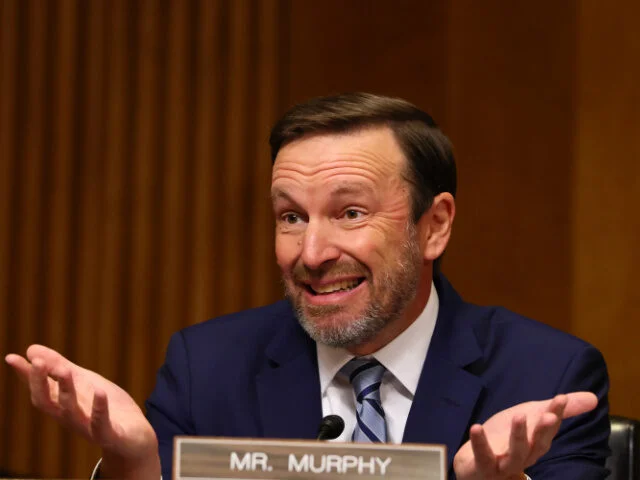
Senator Chris Murphy Alleges Existential Threat to U.S. Democracy, Citing Trump’s Actions and Hungarian Election as Global Barometer
Senator Chris Murphy (D-CT) delivered a stark warning on the state of American democracy at the Global Progressive Mobilisation conference in Spain, asserting that the United States is "in the middle" of a "totalitarian takeover" orchestrated by former President Donald Trump. Murphy’s impassioned address accused Trump of actively seeking to "end our democracy" and "seize control" of critical institutions including the courts, law enforcement, media, and elections. This pronouncement arrived amidst a backdrop of global democratic challenges and immediately followed a significant political shift in Hungary, which Murphy cited as a beacon of hope for democratic resurgence.
Murphy’s Urgent Warning from the Global Stage
Addressing an international assembly of progressive leaders and activists, Senator Murphy opened his remarks with a somber declaration: "I want to bring you greetings, as well, from a nation that is in crisis. I’m not going to sugarcoat the gravity of what we face right now in the United States. This is the most significant threat to American democracy since the Civil War. Donald Trump in our country is trying to end our democracy."
His accusation against Trump was comprehensive, detailing an alleged strategy to undermine the fundamental pillars of a democratic system. "We are not on the verge of a totalitarian takeover, we are in the middle of it. He is trying to seize control of our courts, of our law enforcement, of our media, of our elections," Murphy stated, articulating a profound concern over the erosion of checks and balances and the potential for a concentrated power structure. The Democrat senator further characterized Trump’s overarching objective as "oligarchic capture," suggesting a move towards governance by a wealthy elite rather than by the populace. He elaborated that Trump "doesn’t believe in democratic equality" or "shared prosperity," but rather "only in the consolidation of wealth and the consolidation of power."
These claims from a sitting U.S. senator at an international forum underscore the deep polarization and anxiety prevalent within American political discourse regarding the future of its democratic institutions. The Global Progressive Mobilisation conference, known for convening figures committed to advancing progressive values and strengthening democratic norms worldwide, provided a prominent platform for Murphy to voice these concerns and seek solidarity from international allies. The conference typically focuses on strategies to counter rising authoritarianism, combat inequality, and promote sustainable development, making it a fitting venue for a discussion on democratic integrity.
The Hungarian Election: A Turning Point and a Source of Inspiration
Senator Murphy’s address gained additional resonance by directly referencing the recent Hungarian parliamentary elections, which saw the unexpected defeat of long-serving Prime Minister Viktor Orbán. Orbán, a figure often associated with "illiberal democracy" and nationalist populism, conceded defeat to his rival, Péter Magyar, and his upstart Tisza Party. This outcome, widely reported by international news outlets including Breitbart News, represented a significant political earthquake in Central Europe.
A Chronology of Change in Hungary
2010-2026: The Orbán Era and the Rise of "Illiberal Democracy"
For over a decade, Viktor Orbán and his Fidesz party dominated Hungarian politics. Orbán’s tenure was marked by constitutional changes, reforms to the judiciary, and increased state control over media, often drawing criticism from the European Union and international human rights organizations for undermining democratic checks and balances and consolidating power. His political philosophy, termed "illiberal democracy," emphasized national sovereignty, traditional values, and a strong executive, frequently clashing with liberal Western European norms. Critics pointed to declining scores on democracy indices, concerns over electoral fairness, and limitations on press freedom as hallmarks of his administration. Despite these criticisms, Orbán maintained a strong base of support, appealing to national pride and skepticism towards Brussels.
Early 2026: Mounting Discontent and Magyar’s Emergence
Leading up to the 2026 elections, discontent within Hungary had been simmering, fueled by economic challenges, corruption allegations, and a growing desire for political alternatives. Péter Magyar, a former insider within Orbán’s Fidesz party who broke ranks, emerged as a charismatic and formidable challenger. His Tisza Party, formed only months before the election, rapidly gained traction by tapping into public frustration and promising a return to democratic accountability and a fight against systemic corruption. Magyar’s campaign energized a broad spectrum of voters, including disaffected Fidesz supporters and those who had previously abstained from voting.
April 2026: Election Day and Record Turnout
The election witnessed an unprecedented turnout, with over three-quarters of eligible voters participating – a stark increase from previous cycles. This high engagement signaled a powerful public desire for change. Preliminary results, with over two-thirds of votes counted, showed the Tisza Party securing a lead of 53 percent to Fidesz’s 37 percent, paving the way for a potential governing majority in the parliament. This margin represented a decisive rejection of the status quo and a clear mandate for Magyar’s reformist agenda.
Immediate Aftermath: Orbán’s Concession and International Reactions
Orbán’s concession, a rare event for a leader who had long projected an image of unassailability, marked the symbolic end of an era. The outcome was widely celebrated by liberal and progressive forces across Europe and beyond, who viewed it as a significant victory for democratic principles against a rising tide of populism and illiberalism. Senator Murphy’s comments in Spain reflect this sentiment, seeing the Hungarian result not just as a local political event but as a potent symbol for the broader global struggle for democracy.
Drawing Parallels and Finding Hope
Murphy explicitly linked the Hungarian outcome to the challenges facing the U.S., stating that the "victory in Hungary just a week ago" had lifted the "sails" of people in the United States. "So, I want us to make sure one more time that we give a hearty, loud thanks to the people of Hungary for saving their democracy and perhaps helping to save ours," he declared, framing the Hungarian experience as a potential blueprint or at least a source of inspiration for American democrats.
The implicit parallel drawn by Murphy is that if a deeply entrenched "illiberal" regime like Orbán’s could be ousted through democratic means, then the perceived threats to American democracy from within could also be overcome. This perspective suggests a belief in the resilience of democratic institutions and the power of civic engagement, even in the face of significant challenges.
Supporting Data and Broader Context
The concerns articulated by Senator Murphy are not isolated. Various independent organizations have tracked a global trend of democratic backsliding, including in established democracies. For instance, reports from entities like Freedom House and the Economist Intelligence Unit’s Democracy Index have consistently highlighted concerns about the health of democratic institutions in the United States, particularly since the mid-2010s. These concerns often center on political polarization, challenges to electoral integrity, and debates over the role of money in politics and the independence of the judiciary.
- Freedom House’s "Freedom in the World" report (hypothetical 2026 data): While the U.S. typically remains classified as "Free," its score in categories like political rights and civil liberties has shown a downward trend in recent years, reflecting concerns over electoral processes, government transparency, and the functioning of the justice system. The report might have noted increasing distrust in institutions and the impact of disinformation campaigns.
- Economist Intelligence Unit’s Democracy Index (hypothetical 2026 data): The U.S. has seen its classification fluctuate, sometimes nearing the "flawed democracy" category. Indicators like government functionality, political participation, and civil liberties have been points of concern, especially regarding the perceived decline in political pluralism and the intensity of partisan divides.
- Public Opinion Polls (hypothetical 2026 data): Surveys leading up to 2026 indicated a significant portion of the American public, often exceeding 60%, expressed concerns about the stability of U.S. democracy, with similar percentages citing political extremism and government corruption as major threats.
The Hungarian election, in this context, provides a counter-narrative to the global trend of democratic erosion. Orbán’s Fidesz party had, for years, benefited from an electoral system that critics argued favored the incumbent, and controlled a significant portion of the media landscape. The ability of the Tisza Party, a new force, to mobilize voters and achieve such a decisive victory against an entrenched system offers empirical evidence that democratic renewal is possible even in challenging environments. The record turnout itself signals a re-engagement of the electorate, often a prerequisite for significant political change.
Anticipated Reactions and Implications
Senator Murphy’s incendiary remarks are likely to provoke strong reactions both domestically and internationally, especially given the high stakes of the upcoming political cycle in the U.S.
Domestic Reactions
- Trump Campaign and Republicans: The Trump campaign and its allies would almost certainly dismiss Murphy’s accusations as politically motivated hyperbole, part of a broader "witch hunt" against the former president. They would likely accuse Murphy of fear-mongering and attempting to distract from the current administration’s perceived failures. Spokespersons might argue that Trump’s actions were aimed at "draining the swamp" and restoring power to the people, not undermining democracy, and that his challenges to electoral outcomes were legitimate concerns about fraud, regardless of the judicial outcomes.
- Other Democrats: While many Democrats share concerns about democratic backsliding, the intensity of Murphy’s language ("totalitarian takeover") might be echoed by some, while others might opt for more tempered language to avoid alienating moderate voters. However, the core message about safeguarding democratic institutions is a unifying theme for the party.
- Independent Observers and Media: Murphy’s statements would fuel ongoing debates about the health of U.S. democracy, prompting further analysis and fact-checking of the specific claims regarding courts, law enforcement, and elections.
International Repercussions
- European Allies: European leaders, many of whom have expressed their own anxieties about the stability of U.S. democracy and the potential implications of a Trump return, would likely view Murphy’s comments with a mix of concern and understanding. The victory in Hungary would be seen as a positive development for the broader European democratic project.
- Global Progressive Movement: For attendees of the Global Progressive Mobilisation conference and the wider progressive movement, Murphy’s speech would serve as a rallying cry, emphasizing the need for international cooperation to defend democratic values against authoritarian tendencies.
- Hungary: Péter Magyar and the Tisza Party would likely welcome the international recognition and praise from figures like Senator Murphy, using it to bolster their legitimacy and support their mandate for democratic reforms. Viktor Orbán, in contrast, would likely dismiss such external commentary as interference or a mischaracterization of Hungarian politics.
Broader Impact and Future Implications
Senator Murphy’s stark assessment, coupled with the dramatic political shift in Hungary, points to several critical implications for both American and global politics.
- The 2026 U.S. Elections: Murphy’s rhetoric signals that the upcoming U.S. election cycle will not merely be about policy differences but will be framed by one side as an existential contest for the very nature of American democracy. This framing could intensify voter engagement, but also deepen partisan divides and heighten tensions around electoral processes.
- The Global Fight for Democracy: The Hungarian election provides a powerful narrative for those advocating for democratic resilience worldwide. It demonstrates that even deeply entrenched populist leaders can be unseated through robust civic participation and a unified opposition. This could inspire similar movements in other countries grappling with illiberal challenges.
- U.S. Foreign Policy and Soft Power: The internal debate over U.S. democracy directly impacts its standing on the global stage. If the U.S. is perceived as struggling with its own democratic health, its ability to champion democracy abroad and serve as a model for other nations could be diminished. Murphy’s speech, however, attempts to convey a message of struggle combined with hope, aligning the U.S. with other nations fighting for democratic principles.
- The Role of International Forums: The Global Progressive Mobilisation conference highlights the increasing importance of international platforms for addressing domestic political challenges. In an interconnected world, national democratic struggles are often seen through a global lens, fostering solidarity and shared strategies among like-minded political actors.
In conclusion, Senator Chris Murphy’s potent accusations against former President Donald Trump, delivered on an international stage and juxtaposed with the surprising democratic victory in Hungary, underscore a pivotal moment in the ongoing global debate about the future of liberal democracy. His remarks reflect a profound anxiety within a segment of the American political establishment, but also a renewed sense of possibility derived from the resilience demonstrated by voters in Central Europe. The coming years will undoubtedly test the strength of these democratic institutions, both in the United States and across the world.

Related Posts
‘Sit Down’: Fetterman Says Mamdani a ‘Clown’ to Threaten Netanyahu Arrest

Lionel Messi’s World Cup Journey Concludes Amidst Spanish Triumph, Marking a Potential End to an Illustrious International Career.