Iran Recloses Strait of Hormuz and Fires on Commercial Vessels Amid Stalled Negotiations with United States
The global energy market and maritime security landscape faced a severe disruption on Saturday, April 18, 2026, as Iranian naval forces officially declared the Strait of Hormuz closed to all commercial traffic, punctuating the announcement with kinetic action against merchant vessels. The escalation, which saw at least two ships targeted by gunfire, marks a definitive collapse of the fragile maritime "safe lanes" established only 24 hours prior and signals a dangerous new chapter in the ongoing geopolitical confrontation between Tehran and Washington. According to shipping sources and maritime security agencies, the Iranian Navy and the Islamic Revolutionary Guard Corps (IRGC) have moved from passive monitoring to active interdiction, leaving hundreds of vessels stranded and global oil prices in a state of high volatility.
Direct Kinetic Action and the Saturday Incidents
The transition from a restricted passage to a total blockade was marked by violence in the early hours of Saturday. Merchant vessels, acting on a Friday notice to mariners that suggested transit would be permitted through specific Iranian-designated lanes, attempted to enter the narrow waterway. However, these attempts were met with immediate resistance. Maritime security sources confirmed to Reuters that at least two commercial ships reported being targeted by Iranian patrol boats.
The most detailed report came from the United Kingdom Maritime Trade Operations (UKMTO) agency, which documented an incident approximately 20 nautical miles northeast of the Omani coast. The captain of a crude oil tanker reported being intercepted by two IRGC gunboats. According to the captain’s testimony, the gunboats maneuvered aggressively before firing several rounds toward the vessel’s superstructure. While the tanker and its crew were reported safe and managed to maneuver out of the immediate danger zone, the psychological impact on the shipping community was immediate.
In a separate but related incident, a large container ship transiting between the islands of Qeshm and Larak—the narrowest and most strategically sensitive point of the Strait—was also struck by gunfire. Maritime security analysts suggest these specific locations were chosen to demonstrate Iran’s total control over the shipping lanes. Following the reports of gunfire, all commercial vessels currently attempting the crossing were observed turning back or seeking anchorage in the Gulf of Oman, effectively halting the flow of goods through the chokepoint.
The Radio Proclamation and Diplomatic Breakdown
The physical interdiction of ships was accompanied by a clear and threatening VHF radio broadcast transmitted by the Iranian Navy to all vessels in the vicinity. The message explicitly linked the closure to a breakdown in high-level diplomatic talks between Tehran and the United States, suggesting that the maritime blockade is being used as primary leverage in a broader geopolitical dispute.
The broadcast, monitored by multiple vessels and security agencies, stated: "Attention all ships, regarding the failure of the U.S. government to fulfill its commitment in the negotiation, Iran declares the Strait of Hormuz completely closed again. No vessel of any type or nationality is allowed to pass through the Strait of Hormuz."
This statement confirms that the brief window of "restricted passage" offered on Friday was a tactical maneuver rather than a sustainable diplomatic breakthrough. Analysts suggest the "failed commitments" likely refer to stalled discussions regarding sanctions relief or the unfreezing of Iranian assets, which have been the subject of backchannel negotiations for several months. By citing a specific failure of the U.S. government, Tehran has effectively shifted the responsibility for the global economic fallout onto Washington, a move typical of Iranian strategic communication during periods of heightened tension.
Chronology of the Crisis: From Restricted Lanes to Total Blockade
The current crisis has developed rapidly over the last 48 hours, catching many shipping companies off guard.
- Friday, April 17, 2026: Iran issues a "Notice to Mariners" (NOTAM) stating that the Strait of Hormuz would be open for transit, but only through specific "safe lanes" monitored by the Iranian Navy. This followed a week of total closure and sparked a cautious wave of vessel movements as captains sought to clear the backlog.
- Saturday, April 18, 04:00 GMT: The first wave of merchant vessels approaches the eastern entrance of the Strait. Initial reports indicate heavy Iranian naval presence but no immediate interference.
- Saturday, April 18, 09:00 GMT: Reports emerge of IRGC gunboats harassing a tanker near the Omani coast. The first shots are fired.
- Saturday, April 18, 11:30 GMT: A container ship reports being hit by small-arms fire near Larak Island. UKMTO issues an emergency alert.
- Saturday, April 18, 13:00 GMT: The Iranian Navy begins broadcasting the VHF message declaring the Strait "completely closed again," citing U.S. diplomatic failures.
- Saturday, April 18, 15:00 GMT: Satellite imagery and AIS (Automatic Identification System) data show a massive "U-turn" of commercial traffic away from the Strait, with hundreds of ships seeking safe harbor in the UAE and Oman.
The Massive Scale of the Shipping Backlog
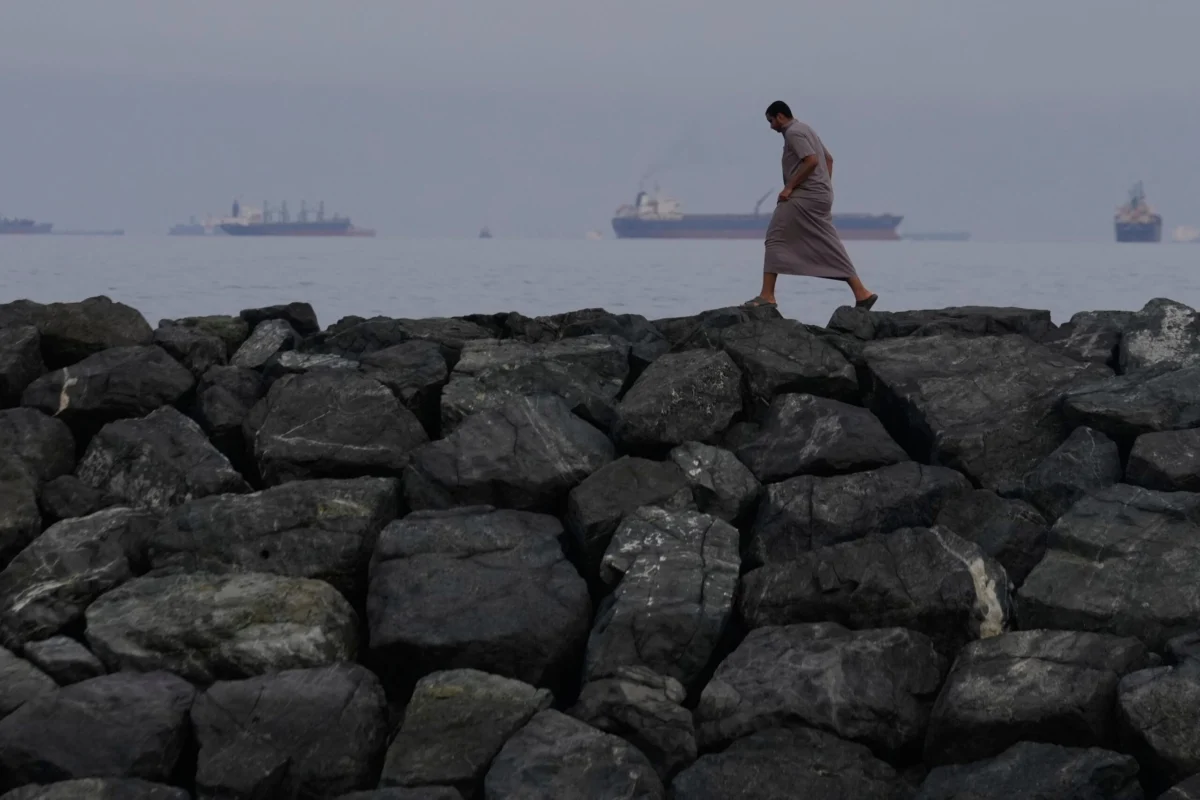
The implications of a total closure are difficult to overstate. The Strait of Hormuz is widely considered the most important oil chokepoint in the world. As of Saturday afternoon, an estimated 200 to 300 large merchant vessels—including Very Large Crude Carriers (VLCCs), Suezmax tankers, and massive container ships—are stranded in the Persian Gulf or the Gulf of Oman.
Data from energy analytics firms suggests that approximately 20% of the world’s total consumption of petroleum liquids passes through the Strait daily. This includes crude oil from Saudi Arabia, the United Arab Emirates, Kuwait, Iraq, and Iran itself. Furthermore, the Strait is the primary exit point for liquefied natural gas (LNG) from Qatar, which accounts for a significant portion of the energy supply for European and Asian markets.
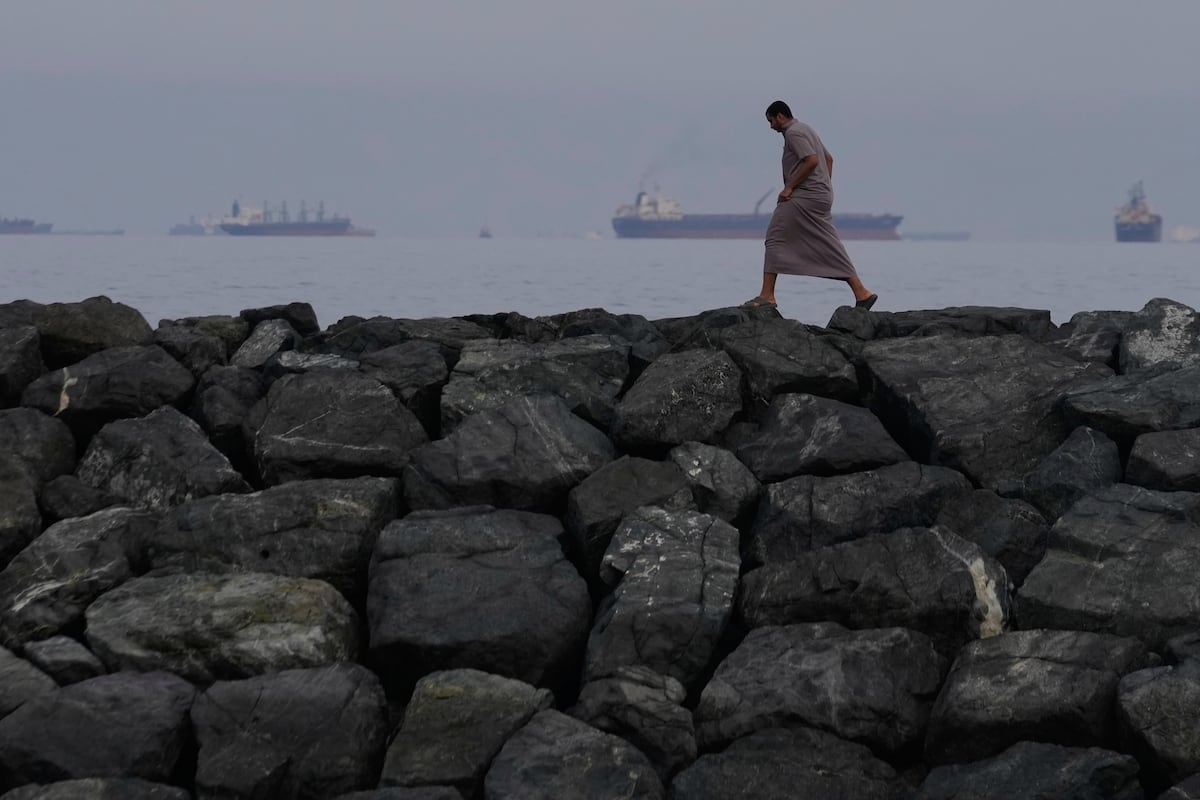
Beyond the cargo, the human cost is mounting. Approximately 20,000 seafarers are currently aboard the stranded vessels. These crews face increasing uncertainty regarding their safety, supplies, and duration of stay. Maritime unions have expressed grave concern over the "kinetic" nature of the Saturday incidents, noting that merchant sailors are civilians and should not be targeted in state-level conflicts.
Official Responses and Market Reaction
The international community has reacted with a mix of condemnation and emergency planning. While the Pentagon has not yet announced a direct military escort operation, a spokesperson for the U.S. 5th Fleet, based in Bahrain, stated that they are "closely monitoring the situation" and are in "constant communication with international partners to ensure the freedom of navigation."
In London, the UK Maritime Trade Operations and the International Maritime Security Construct (IMSC) have advised all vessels in the region to exercise extreme caution and maintain maximum distance from Iranian territorial waters. Shipping industry bodies, such as BIMCO and the International Chamber of Shipping, have called for an immediate de-escalation, warning that the "weaponization of trade routes" threatens the stability of the global economy.
The reaction in the energy markets was instantaneous. Brent Crude futures spiked by nearly 8% within hours of the reported gunfire, as traders priced in the risk of a prolonged supply disruption. If the closure persists for more than a few days, analysts predict that fuel prices in major importing nations—particularly Japan, South Korea, and India—could reach record highs, potentially triggering a global inflationary surge.
Fact-Based Analysis: Strategic Implications
The re-closure of the Strait of Hormuz represents a significant escalation in "gray zone" warfare. By using its navy to dictate who can pass through an international waterway, Iran is challenging the fundamental tenets of the United Nations Convention on the Law of the Sea (UNCLOS), which guarantees the right of "innocent passage" through international straits.
From a strategic perspective, Tehran’s move serves several purposes:
- Leverage: It creates an immediate crisis that forces the United States and its allies back to the negotiating table under duress.
- Economic Warfare: It demonstrates Iran’s ability to inflict pain on the global economy without launching a full-scale conventional war.
- Regional Dominance: It asserts Iranian hegemony over the Persian Gulf, signaling to regional neighbors that security cannot be guaranteed by Western powers alone.
However, the risk for Iran is substantial. By firing on commercial vessels, Tehran risks a unified international military response. In previous decades, such as during the "Tanker War" of the 1980s, similar actions led to direct military engagements between the U.S. Navy and Iranian forces.
Future Outlook and Security Considerations
As the sun sets on Saturday, the maritime industry remains in a state of paralysis. The immediate future depends on whether the United States and its allies decide to provide armed escorts for merchant ships—a move that could either deter further Iranian aggression or spark a wider naval conflict.
For shipping companies, the cost of the blockade is already mounting. War risk insurance premiums for vessels operating in the Middle East are expected to quadruple by Monday morning. Some shipowners are already considering the long-term alternative of rerouting vessels around the Cape of Good Hope, a journey that adds weeks to transit times and millions of dollars in fuel costs, further straining a global supply chain that is already under pressure.
The "completely closed" status of the Strait of Hormuz remains the single greatest threat to global economic stability this year. Until a diplomatic off-ramp is found or a military solution is implemented, the 20,000 seafarers and the millions of barrels of oil they carry remain pawns in a high-stakes geopolitical standoff.

Related Posts
Pentagon Forges Landmark Seven-Year Agreements with Boeing and RTX to Accelerate Standard Missile-3 Production and Stabilize Defense Supply Chains
Boeing Unveils Ultra Low-Cost Seeker to Enhance Missile Inventory and Combat Cost Challenges in Modern Warfare