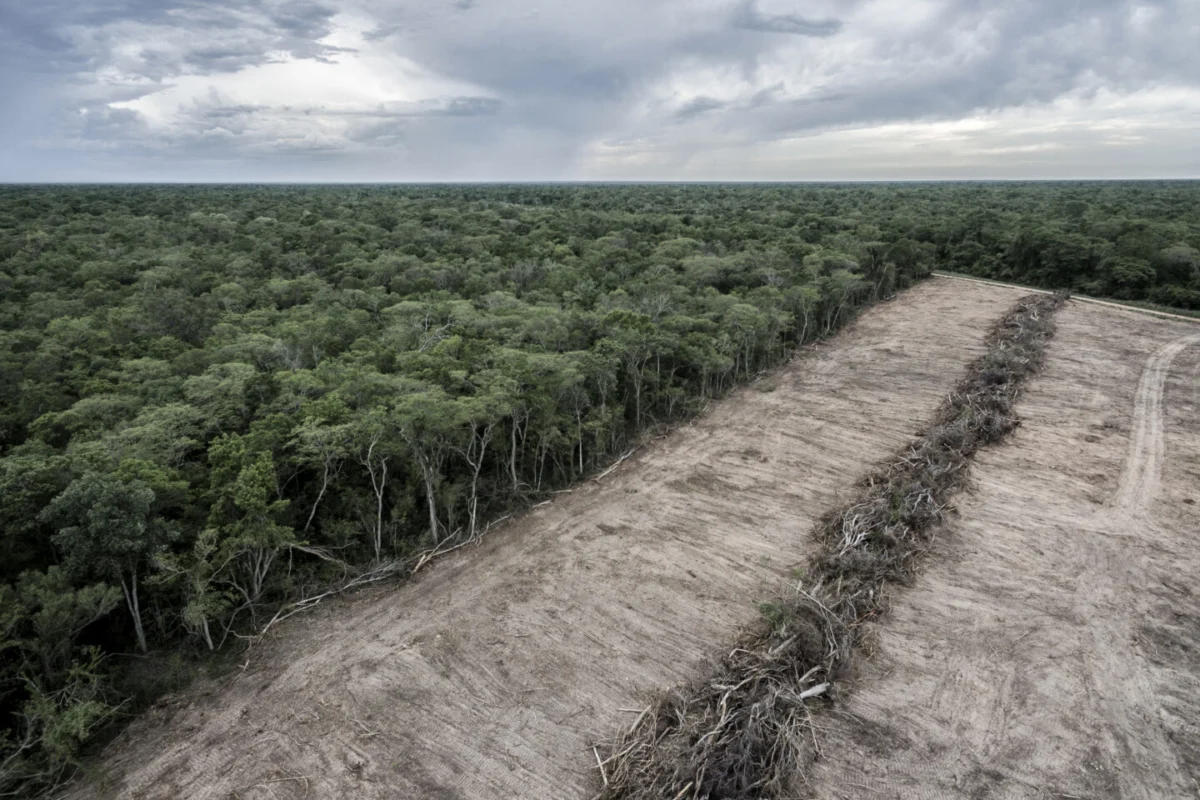
GEF raises $3.9bn ahead of funding deadline, $1bn below previous budget
The Global Environment Facility (GEF), a cornerstone of international environmental financing for over three decades, is facing a pivotal moment as it approaches the finalization of its ninth replenishment cycle (GEF-9). In a series of high-level negotiations concluding in April 2026, donor nations have signaled a retreat from the ambitious funding trajectories established during previous rounds. This cooling of financial support comes at a critical juncture when the "triple planetary crisis"—climate change, biodiversity loss, and pollution—is accelerating, leaving developing nations and indigenous communities at the front lines of ecological collapse.

As the four-year funding package moves toward its late May finalization, the discrepancy between the scientific necessity for conservation and the political will of wealthy nations has never been more apparent. While the previous replenishment (GEF-8) achieved a record-breaking $5.33 billion in 2022, preliminary figures for GEF-9 suggest a significant contraction in real terms, adjusted for inflation and the escalating costs of field-level interventions.
The Financial Gap in the Face of Planetary Crisis
The GEF serves as the primary financial mechanism for five major international environmental conventions: the Convention on Biological Diversity (CBD), the United Nations Framework Convention on Climate Change (UNFCCC), the Stockholm Convention on Persistent Organic Pollutants, the Minamata Convention on Mercury, and the UN Convention to Combat Desertification (UNCCD). The current shortfall in pledges threatens the integrity of these agreements.

The reduction in funding is largely attributed to a confluence of domestic economic pressures in the Global North and a shift in geopolitical priorities. Significant donor nations, including members of the G7, have cited the ongoing economic fallout from regional conflicts—most notably the volatility in energy markets following the war in the Middle East—and the resulting "aid fatigue" among taxpayers. In several European capitals, right-leaning governments have successfully campaigned on platforms that prioritize domestic industrial subsidies over international climate reparations.
This fiscal conservatism arrives despite the 2022 Kunming-Montreal Global Biodiversity Framework, which set a target of closing a $700 billion annual funding gap for nature by 2030. Analysts suggest that if the GEF-9 cycle fails to meet or exceed the benchmarks of its predecessor, the "30×30" goal—to protect 30% of the world’s land and sea by 2030—may become mathematically impossible to achieve.

A History of Global Environmental Stewardship
To understand the gravity of the current funding crisis, one must look at the evolution of the GEF. Established on the eve of the 1992 Rio Earth Summit, the GEF was designed to help developing countries and countries with economies in transition to meet the objectives of international environmental conventions and agreements. Since its inception, it has provided more than $22 billion in grants and mobilized an additional $120 billion in co-financing for more than 5,000 projects in 170 countries.
The GEF operates on four-year cycles. GEF-7 (2018-2022) saw a total of $4.1 billion pledged. The subsequent GEF-8 cycle (2022-2026) was heralded as a triumph of multilateralism, securing a 30% increase to $5.33 billion. That increase was driven by a post-pandemic realization that human health and planetary health are inextricably linked. However, the momentum of 2022 has dissipated. By April 2026, the spirit of "building back greener" has been replaced by a more insular approach to national security and economic protectionism.

The GEF-9 Replenishment Timeline: From Pledges to Implementation
The negotiation process for GEF-9 began in early 2025, involving a series of meetings between donor governments, recipient countries, and civil society organizations.
- January 2025: Initial technical assessments identified a need for at least $6.5 billion to address the expanding mandates of the GEF, particularly the new High Seas Treaty and the Global Biodiversity Framework Fund (GBFF).
- October 2025: During the first pledging session, several key donors, including the United States and the United Kingdom, remained non-committal, citing legislative hurdles and budgetary reviews.
- April 10, 2026: Leaked documents from the latest round of talks indicate that total pledges are currently hovering below the $5 billion mark, a nominal decrease from GEF-8 and a substantial decrease when accounting for 2024-2025 inflation rates.
- Late May 2026: The final replenishment meeting is scheduled to take place, where the final figure will be codified. This will be the last opportunity for "champion" nations to bridge the funding gap.
Geopolitical Shifts and the "Aid Fatigue" Phenomenon
The current funding landscape is heavily influenced by the shifting political tides in the United States and Europe. In Washington, the debate over climate finance has become increasingly polarized. While some segments of the U.S. government continue to push for leadership in green technology, others have successfully pressured international financial institutions to scale back climate targets.

As seen in concurrent negotiations at the World Bank, there is a growing push to refocus multilateral aid on traditional infrastructure and fossil fuel expansion under the guise of "energy security." This internal friction has directly impacted the GEF, as the U.S. remains one of its largest historical contributors. The hesitation from Washington has provided a "political cover" for other donor nations to similarly reduce their commitments.
Furthermore, the International Energy Agency (IEA) recently reported a significant reduction in global oil demand forecasts due to the Iran-Israel conflict and the subsequent acceleration of domestic renewable transitions in some regions. While this is a positive development for emissions, it has led to a paradoxical "fiscal tightening" in donor countries that previously relied on stable energy prices to fund their foreign aid budgets.

The High Cost of Underfunding: Impact on Indigenous Communities
The human face of this funding crisis is perhaps best illustrated by the indigenous communities who rely on GEF-funded programs for land tenure and reforestation. In the Muara Tae Village of East Kalimantan, Indonesia, indigenous leaders like Petrus Asuy have spent decades fighting to protect ancestral forests from the encroachment of palm oil plantations and coal mining.
In 2015, the Muara Tae community was awarded the United Nations Equator Prize for their efforts. However, the survival of their 400 remaining hectares of intact forest depends on sustained international support for community-led agroforestry. GEF-funded initiatives have historically provided the technical and legal resources necessary for these communities to assert their rights.

A reduction in GEF-9 funding means fewer resources for the Small Grants Programme (SGP), which specifically targets grassroots organizations. Without this "last-mile" financing, the conversion of biodiverse forests into monoculture plantations is likely to accelerate, negating the carbon sequestration efforts of the Global North and destroying the cultural heritage of indigenous peoples.
Broader Implications for the Kunming-Montreal Framework
The success of the Kunming-Montreal Global Biodiversity Framework (GBF) is contingent on the GEF’s ability to act as its primary financial engine. The framework includes 23 targets to be achieved by 2030, including the restoration of 30% of degraded ecosystems.

Policy analysts warn that a weak GEF-9 replenishment will send a demoralizing signal to the Global South ahead of the upcoming COP31 leaders’ summit in Antalya, Türkiye. If wealthy nations are seen as reneging on their financial promises, developing nations—which hold the vast majority of the world’s remaining biodiversity—may be less inclined to implement stringent conservation policies that limit their own industrial development.
"The GEF is the glue that holds these international treaties together," said a senior climate negotiator who requested anonymity. "If the glue fails, the treaties become nothing more than paper. We are looking at a potential collapse of trust between the North and the South that could take a decade to repair—a decade we do not have."

The Intersection of Debt and Climate Finance
Another complicating factor in the 2026 negotiations is the global debt crisis. Many recipient countries are currently spending more on debt servicing to private creditors in the Global North than they are on climate adaptation. This "broken debt system" has prompted calls for a new UN-supported forum to challenge a global financial architecture that leaves no fiscal breathing space for climate action.
Some donor nations have suggested that "debt-for-nature swaps" could supplement the GEF’s shortfall. However, critics argue that these swaps are often too small in scale and too complex to implement to replace direct grant-based funding. The GEF’s unique value proposition is its ability to provide predictable, long-term grants that do not add to the debt burden of vulnerable nations.

Conclusion: The Road to late May
As the international community looks toward the finalization of the GEF-9 package in late May, the stakes could not be higher. The decision made by donor governments will determine whether the world can realistically meet its 2030 targets or if 2026 will be remembered as the year the global community retreated from its environmental obligations.
The enrichment of the GEF is not merely a matter of charity; it is an investment in global stability. As climate shocks become more frequent and biodiversity loss threatens food security, the cost of inaction will far exceed the few billion dollars currently being debated in the halls of international finance. The coming weeks will reveal whether donor nations have the foresight to recognize that in the era of the triple planetary crisis, there is no such thing as a domestic-only solution.

Related Posts
Constitutional Court of South Africa Bars Shell Oil Exploration in Landmark Victory for Environmental and Community Rights
The Battle for Saldanha Bay: South Africa’s Ambitious Ocean Economy Strategy Faces Legal and Environmental Reckoning