The Strategic Realignment of the Anglo-German Partnership in the Shadow of Global Uncertainty
The historical designation of Britain and Germany as the "awkward cousins" of Europe has long defined a complex geopolitical dance characterized by periods of intense rivalry and deep, pragmatic cooperation. In the post-Brexit landscape, Prime Minister Keir Starmer has prioritized a fundamental reset of this relationship, seeking to elevate bilateral ties beyond mere post-divorce administrative necessity. The cornerstone of this initiative is the Kensington Treaty, signed nine months ago, which formalizes a new era of defense and diplomatic synchronization. As the European continent faces the dual pressures of an increasingly assertive Russia and an unpredictable political climate in Washington, the efficacy of this Anglo-German axis is being tested on an unprecedented scale.
The Genesis of the Kensington Treaty
The Kensington Treaty emerged from a recognition that the vacuum left by the United Kingdom’s departure from the European Union had weakened the collective security architecture of Western Europe. Signed by Prime Minister Starmer and Chancellor Friedrich Merz—who assumed power in Berlin last year—the agreement is designed to function as a structural bridge. It facilitates joint development in high-tech defense sectors, intelligence sharing, and unified policy responses to continental threats.
The treaty serves as a critical mechanism for the "E3"—the grouping of the United Kingdom, Germany, and France—to exert leverage on the global stage. While France has historically maintained a distinct strategic autonomy, the London-Berlin alignment represents a pivot toward a more integrated NATO-focused European security pillar. This partnership is not merely symbolic; it is a response to the reality that individual European nations lack the individual weight to influence a volatile American administration or to deter adversaries like Russia without a unified bloc.
Chronology of a Shifting Diplomatic Landscape
The evolution of this partnership can be traced through several key milestones over the last eighteen months:
- Late 2023: Preliminary discussions between Starmer’s government and the German opposition (led by Merz) signal a desire for a post-Brexit "reset" regardless of the electoral outcome in Berlin.
- Early 2024: Chancellor Merz assumes office, prioritizing a revitalized relationship with London to offset regional instability.
- Nine Months Ago: The formal signing of the Kensington Treaty occurs, focusing on long-range missile cooperation and joint naval patrols in the North Sea.
- Current Month: High-level discussions regarding the E3’s collective approach to Middle Eastern security and the potential escalation of the conflict with Iran.
- Forthcoming: The scheduled review of European defense spending commitments, where the U.K. and Germany are expected to present a unified front regarding NATO’s Article 3 requirements.
Data and Defense Realities
The partnership is underpinned by significant economic and military statistics that define the scope of the cooperation. Germany’s Zeitenwende—a historic shift in its defense policy—has seen the German government commit to the NATO target of spending 2% of GDP on defense, a goal the U.K. has consistently met or exceeded.
According to the latest figures from the International Institute for Strategic Studies (IISS), the combined defense budgets of the U.K. and Germany now account for approximately 35% of all NATO European defense spending. The Kensington Treaty specifically facilitates the "Javelin-plus" initiative, a collaborative project focused on long-range precision weaponry. This is intended to mitigate the current gap in European stockpiles, which were depleted by significant transfers of equipment to Ukraine over the past two years.
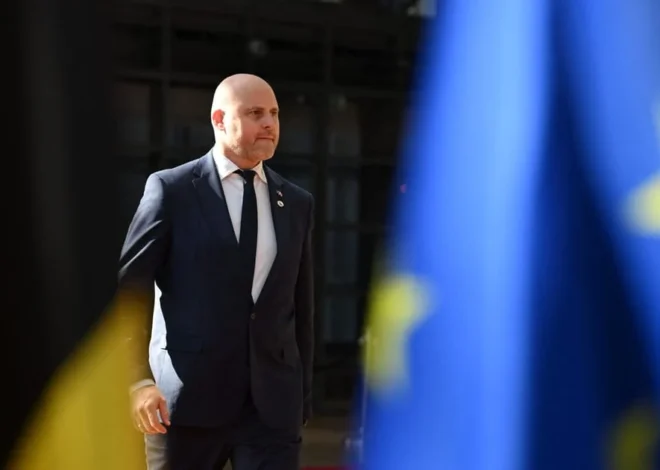
However, the U.K. government has faced recent domestic criticism regarding its defense plans, with reports suggesting that the Ministry of Defence is struggling to maintain current operational tempo while modernizing its fleet. Ambassador Susanne Baumann, in her first major interview since taking up her post last September, addressed these concerns head-on. She emphasized that the German-British collaboration on missile projects is not merely a bilateral arrangement but a foundational component of the European defense industrial base.
Diplomatic Challenges and the "Trump Factor"
Perhaps the most significant variable in the current diplomatic equation is the volatility of the American executive branch under President Donald Trump. The E3’s capacity to influence Washington on matters of international security, particularly the confrontation with Iran, remains a point of intense speculation.
Analysts note that the E3’s strategy is built on the premise of "persuasive alignment"—the idea that if London, Berlin, and Paris speak with one voice, they can steer American policy away from isolationist impulses. However, history suggests that such alignment is often fragile. In the past, internal disagreements over the Joint Comprehensive Plan of Action (JCPOA) and regional economic interests have fractured the E3. The current diplomatic challenge is to ensure that the Kensington Treaty provides a sufficient framework to resolve these differences before they become public fissures.
Regarding Iran, the official stance of the British and German governments remains focused on containment and diplomatic pressure. The ambassador noted that the E3 is currently working to align sanctions regimes and coordinate intelligence on Iranian ballistic missile proliferation. Whether this coordination can survive a divergent approach from the White House remains the primary test for the newly strengthened Anglo-German relationship.
The Role of Ambassador Susanne Baumann
Ambassador Baumann’s appointment comes at a time when the German embassy in London is playing a more prominent role than at any point since the 1990s. In her recent media engagements, Baumann has sought to project stability and continuity. Her defense of Germany’s military cooperation projects is seen by observers as a signal to the London policy establishment that Berlin is committed to a long-term, deep integration of defense assets.
Beyond the hard politics of security, the ambassador also touched upon the cultural dimensions of the relationship. As the United Kingdom prepares for the summer football season, the appointment of Thomas Huchel as the coach for the English national team has sparked a national conversation. While trivial compared to geopolitical strategy, this appointment serves as a barometer for the current "mood" of the relationship: an acknowledgment that the expertise exchange between the two nations is becoming increasingly fluid.
Strategic Implications and Future Outlook
The implications of the Anglo-German reset extend far beyond the immediate concerns of defense procurement. If the Kensington Treaty proves successful, it could serve as a template for other bilateral agreements within the European security framework, potentially softening the hard lines between EU member states and the U.K.
However, the risks are substantial. Failure to deliver on the promised defense milestones could lead to a renewed sense of skepticism in both Whitehall and the Reichstag. Furthermore, if the E3 fails to influence U.S. policy regarding Iran or other global flashpoints, the treaty risks being viewed as a "hollow agreement"—a document of intent that lacks the teeth to handle 21st-century crises.
The upcoming months will be pivotal. As the U.K. government faces pressure to clarify its long-term defense spending, and as Germany continues to navigate the complexities of its coalition politics, the partnership will be judged by its tangible results. The "awkward cousins" are currently engaged in a high-stakes reconciliation, attempting to turn the remnants of historical rivalry into a functional, modern alliance.
Whether this effort will succeed depends largely on the consistency of leadership in both London and Berlin. Starmer and Merz have signaled that they are prepared to weather the criticism of their respective domestic audiences to ensure that the Anglo-German relationship remains the bedrock of European stability. As the international order faces increasing polarization, this partnership stands as one of the few active efforts to institutionalize cooperation in an era defined by geopolitical fragmentation.
In conclusion, the Kensington Treaty is a recognition that the era of "splendid isolation" or "European detachment" is over. The U.K. and Germany are tied by necessity, by history, and by a shared set of risks that no single nation can address alone. The next phase of this relationship will determine if these two powers can truly act as a stabilizing force in an increasingly volatile global landscape, or if they will remain, as the Victorians once put it, merely cousins who have yet to find a common language.