Top Foreign Office civil servant is out as Starmer government again reels from the Mandelson scandal
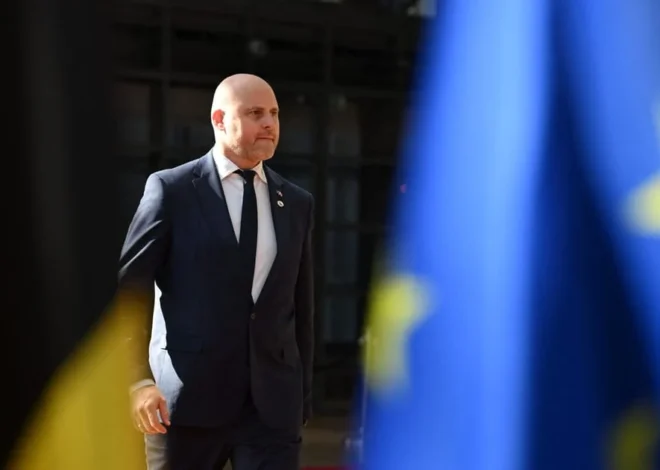
The British government was plunged into a profound crisis on Thursday evening following the abrupt dismissal of Olly Robbins, the permanent under-secretary at the Foreign, Commonwealth and Development Office (FCDO). The removal of one of Whitehall’s most senior figures marks a significant escalation in the ongoing political fallout surrounding the controversial appointment of Peter Mandelson as the United Kingdom’s ambassador to the United States in late 2024. Robbins’ exit, sanctioned by Prime Minister Keir Starmer and Foreign Secretary Yvette Cooper, serves as the latest casualty in a scandal that has begun to threaten the foundational credibility of the current Labour administration.
The dismissal follows explosive revelations that Mandelson—a veteran political operator and former cabinet minister—had been granted the Washington posting despite failing his security vetting process. According to reports surfaced by The Guardian and corroborated by government officials, the agency responsible for the clearance, United Kingdom Security Vetting (UKSV), had actively advised against Mandelson’s appointment. This advice was reportedly bypassed or ignored, leading to a direct confrontation between the government’s stated commitment to transparency and the clandestine realities of high-level diplomatic appointments.
A Chronology of the Mandelson Appointment Crisis
The current controversy is the culmination of a series of events that began shortly after the Starmer administration took office. To understand the gravity of the current situation, one must examine the timeline of the appointment and the subsequent fallout:
- December 2024: Peter Mandelson is formally appointed as the United Kingdom’s ambassador to the United States, a role widely viewed as the most critical diplomatic position in the British foreign service.
- Early 2025: Questions begin to circulate in the press and parliament regarding Mandelson’s historical associations, specifically his ties to the late convicted sex offender Jeffrey Epstein.
- September 2025: Following mounting pressure and the emergence of new details from the "Epstein files," Mandelson is dismissed from his role in Washington.
- Early 2026: Parliament passes a formal motion compelling the government to release internal documents concerning the vetting and appointment process of the former ambassador.
- April 17, 2026: A government review, conducted to comply with the parliamentary motion, reveals that Mandelson had in fact failed his security vetting.
- April 17, 2026 (Late): Olly Robbins is dismissed as the top official in the Foreign Office after it is discovered he played a central role in the oversight of the vetting process that permitted the appointment to proceed.
The Role of UK Security Vetting
At the heart of the crisis is the integrity of the Developed Vetting (DV) process. DV is the highest level of security clearance in the United Kingdom, required for individuals who have frequent access to top-secret information or sensitive government locations. The process involves an extensive background check, including financial history, foreign travel, and character references.
For a career diplomat or a political appointee of such high standing, failing the vetting process usually acts as an automatic disqualifier. The revelation that the government proceeded with the appointment despite a "fail" or "advisory against" marker from UKSV suggests a profound breakdown in the checks and balances that govern the executive branch.
Government spokespeople have scrambled to clarify that neither Prime Minister Starmer nor any other cabinet minister was explicitly informed of the negative vetting outcome until the internal document trawl conducted earlier this week. However, this defense has proven insufficient to quell the anger of backbenchers and opposition leaders, who argue that the systemic failure reflects a culture of negligence within No. 10 Downing Street.
Political Fallout and Parliamentary Accountability
The political stakes for Prime Minister Starmer have reached a critical threshold. Earlier this year, Starmer insisted in the House of Commons that "full due process" had been followed regarding the appointment. The revelation that the vetting advice was ignored directly contradicts this assertion.
Kemi Badenoch, the leader of the Conservative Party, has wasted no time in calling for accountability. Under the U.K. ministerial code, knowingly misleading Parliament is a resigning matter. Badenoch stated on Thursday, "If Mandelson failed the security vetting, full process was not followed. Misleading Parliament is a resigning offense. The Prime Minister must explain to the public why he chose to ignore security protocols in favor of political patronage."

Internal tremors within the Labour Party are equally concerning for the Prime Minister. While many MPs were initially satisfied with the government’s decisive handling of recent geopolitical tensions, including the conflict in Iran, the Mandelson scandal has created a vacuum of trust. "All we want is the truth," said Rachael Maskell, a Labour MP, echoing the sentiments of many colleagues who feel that the version of events provided to the House has been fundamentally undermined.
The Career of Olly Robbins: A Polarizing Figure
The departure of Olly Robbins is, in itself, a significant event in the landscape of the British civil service. Robbins has long been a lightning rod for political controversy. As the chief Brexit negotiator under Prime Minister Theresa May, he was the primary architect of the proposed withdrawal agreement that faced fierce resistance from the Conservative party’s Euroskeptic wing. His reputation for technocratic pragmatism made him a target for hardline politicians, who dubbed him "the PM’s Rasputin."
Following the collapse of the May administration, Robbins transitioned to the private sector, holding positions at Goldman Sachs and the geopolitical advisory firm Hakluyt. His return to the public sector in 2025 to lead the Foreign Office was intended to bring a steady hand to the department during a period of global instability. His sudden dismissal, therefore, represents not only the loss of a senior administrator but also the end of a long and contentious career in the upper echelons of Whitehall.
Broader Implications for the Starmer Government
The implications of this scandal extend beyond the loss of a senior civil servant. First, it raises questions about the "cronyism" narrative that has periodically haunted the Labour administration. Critics argue that the desire to place a high-profile, experienced political operator in Washington took precedence over standard security requirements.
Second, the scandal threatens to paralyze the government’s legislative agenda. As the opposition prepares for a potential motion of no confidence or at least a series of grueling parliamentary debates, the government will find it increasingly difficult to pass critical legislation. The energy of the administration, which should be focused on the economy and foreign policy, is being diverted to crisis management and damage control.
Finally, the incident highlights the fragility of the relationship between political appointees and the career civil service. If ministers are seen to be scapegoating civil servants for systemic failures, morale across the Whitehall departments is likely to plummet. The "blame culture" that appears to be developing risks making the civil service more risk-averse and less likely to provide the candid, objective advice that is essential for effective governance.
Conclusion: A Crisis of Confidence
As the dust settles on the removal of Olly Robbins, the Starmer government remains in a state of high alert. The opposition is expected to continue its pursuit of the documents surrounding the Mandelson appointment, and it is likely that more information will surface as the parliamentary inquiry continues.
For a Prime Minister who campaigned on a platform of "honesty and integrity," the Mandelson scandal represents a significant test of his leadership. The sacking of a top civil servant may provide a temporary buffer, but it does not address the fundamental question of why security protocols were bypassed in the first place. Whether this scandal ultimately leads to a restructuring of the Cabinet or further resignations remains to be seen, but for now, the stability of the Starmer government hangs in the balance. The coming days will be defined by how the administration manages the demand for accountability, as the public and the political class alike wait to see if the government can survive the fallout from one of the most significant security lapses in recent British history.