Fossil Free Zones can be on-ramps to the clean energy transition
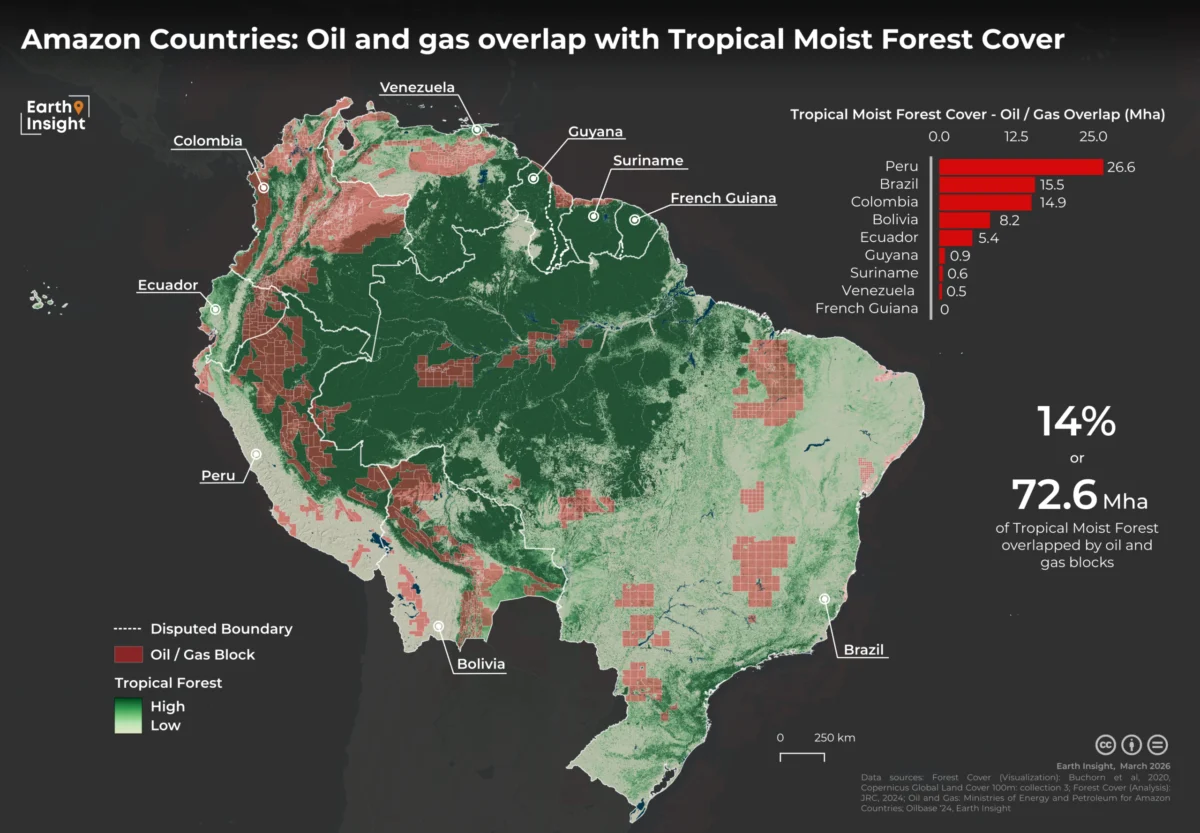
The intersection of global energy extraction and environmental preservation has reached a critical juncture, as new geospatial data reveals that 20 percent of the world’s most vital tropical forests are currently designated as oil and gas blocks. This overlap, spanning the Amazon, the Congo Basin, and Southeast Asia, presents a profound challenge to international climate goals and biodiversity targets. As the world approaches the mid-point of the decade, the dual necessity of transitioning away from fossil fuels and halting deforestation has become inseparable, requiring a unified policy framework that addresses both carbon emissions and habitat preservation simultaneously.
The findings, highlighted during the lead-up to high-level environmental summits, underscore a systemic conflict between national economic development strategies and global ecological stability. These "overlapping zones" represent some of the most carbon-dense and biodiverse regions on Earth. The presence of extraction concessions in these areas suggests that current conservation efforts are frequently at odds with industrial expansion, creating a "carbon bomb" scenario where the clearing of trees for infrastructure is followed by the release of subterranean hydrocarbons.
The Geography of Contradiction: Regional Breakdowns
The scale of the overlap varies across the three primary tropical forest basins, yet the implications remain consistently dire. In the Amazon, which serves as a massive carbon sink for the planet, the expansion of oil blocks has historically been a driver of secondary deforestation. When an oil company enters a primary forest, the primary damage is often not the drill site itself, but the access roads. These roads provide a gateway for illegal logging, mining, and agricultural expansion. Reports indicate that in certain Andean-Amazonian regions, over 60 percent of the territory is covered by oil and gas contracts, many of which are in various stages of exploration or production.
In the Congo Basin, the world’s second-largest rainforest, the situation has escalated in recent years as governments seek to leverage fossil fuel wealth to combat poverty. The Democratic Republic of Congo (DRC) recently auctioned several oil and gas blocks, some of which overlap with peatlands—ecosystems that store vast amounts of carbon. If these areas are disturbed, the resulting methane and CO2 emissions could negate years of global climate progress.
Southeast Asia presents a different but equally complex challenge. In Indonesia and Malaysia, the fragmentation of forests by industrial concessions has already pushed species like the Sumatran tiger and the orangutan to the brink. The overlap of energy blocks with remaining primary forests in Papua and Borneo threatens the last vestiges of "frontier forests" that have remained largely untouched by the palm oil industry.
A Chronology of Expanding Concessions
The current crisis is the result of decades of overlapping land-use policies. Understanding the timeline of these concessions is vital for navigating a way out of the current impasse:
- 1990s–2000s: The Era of Expansion. Global demand for energy led many tropical nations to map out vast swaths of their territory for hydrocarbon exploration. During this period, environmental regulations were often secondary to the goal of attracting foreign direct investment.
- 2010–2015: The Rise of Climate Awareness. The lead-up to the Paris Agreement saw a surge in "Zero Deforestation" commitments. However, these commitments often focused on agriculture (soy, cattle, palm oil) while ignoring the extractive sector.
- 2020–2022: The Post-Pandemic Push. Following the global economic slowdown, several nations accelerated the leasing of oil and gas blocks to bolster national treasuries, leading to the current 20 percent overlap figure.
- 2024–2026: The Biodiversity-Climate Convergence. Recent years have seen a shift in scientific consensus, recognizing that climate change cannot be solved without protecting biodiversity. This has led to the current demand for integrated policies that treat fossil fuel phase-outs and forest protection as a single objective.
Supporting Data: The Carbon and Biodiversity Cost
The statistical reality of the overlap is stark. The three tropical basins in question hold approximately 25 percent of the world’s terrestrial carbon. According to data from environmental monitoring groups, the development of all currently active oil and gas blocks within these forests would result in the release of billions of tons of CO2 equivalent.
Furthermore, the "edge effect" caused by oil and gas infrastructure—pipelines, roads, and seismic lines—degrades the quality of the surrounding forest. Research suggests that for every hectare of forest cleared for an oil well, up to ten hectares of surrounding forest lose their ability to store carbon effectively due to changes in humidity, light, and increased vulnerability to fires.
In terms of biodiversity, these overlapping zones are home to thousands of endemic species. In the Amazon alone, a single oil block can overlap with the habitats of hundreds of bird and amphibian species found nowhere else on Earth. The disruption of migratory paths and the pollution of water sources by potential spills pose an existential threat to these delicate ecosystems.
Stakeholder Reactions and Official Responses
The revelation of the 20 percent overlap has sparked a range of reactions from global leaders, Indigenous communities, and the private sector.

Indigenous representatives from the Amazon Basin have been the most vocal, arguing that many of these oil blocks were granted without Free, Prior, and Informed Consent (FPIC). "For us, the forest is not a ‘block’ on a map; it is our life, our pharmacy, and our supermarket," stated a spokesperson for a coalition of Indigenous nationalities. "Developing these concessions is a violation of our territorial rights and a death sentence for the climate."
International NGOs have called for a "No-Go Zone" policy for extractive industries in primary forests. They argue that the 30×30 goal—the international commitment to protect 30 percent of the world’s land and sea by 2030—is impossible to achieve if 20 percent of the core target areas are already leased to oil companies.
Conversely, some government officials in the affected regions point to a "double standard" held by Western nations. They argue that developed countries built their wealth on fossil fuels and are now asking developing nations to forgo their own resources without adequate financial compensation. This has led to calls for "Debt-for-Nature" swaps and increased funding through the Global Biodiversity Framework Fund to provide a viable economic alternative to oil extraction.
Analysis of Implications: The Path Toward Integrated Policy
The current situation demands a radical shift in how environmental policy is structured. Historically, "climate policy" (focused on carbon emissions) and "nature policy" (focused on species and forests) have operated in silos. The 20 percent overlap demonstrates that these two spheres are inextricably linked.
The Fossil Fuel-Deforestation Nexus
To effectively address the crisis, policies must recognize that the fossil fuel industry is a primary driver of deforestation, both directly and indirectly. A transition away from fossil fuels is not just about changing the energy mix in cities; it is about removing the industrial pressure from the world’s last wild places.
Economic Alternatives and Just Transitions
For nations like the DRC or Ecuador, leaving oil in the ground requires a "Just Transition" that provides alternative revenue streams. This includes the expansion of high-integrity carbon markets, direct payments for ecosystem services, and investment in sustainable bio-economies. Without these financial mechanisms, the economic pressure to develop oil blocks will likely override conservation pledges.
Legal and Regulatory Frameworks
There is a growing movement to establish legal "rights of nature" or to designate certain tropical basins as "global commons" that are off-limits to industrial extraction. Strengthening the legal standing of Indigenous territories is also seen as one of the most effective ways to block oil expansion, as Indigenous-managed lands consistently show lower rates of deforestation and industrial encroachment.
Conclusion: The Urgency of Now
The fact that one-fifth of the most important forests on Earth are currently under threat from oil and gas development is a wake-up call for the international community. The window to stay within the 1.5°C warming limit is closing, and the loss of these forests would make that target mathematically impossible to reach.
The challenge of protecting 30 percent of the world’s land and sea by 2030 cannot be met through "paper parks"—protected areas that exist only on maps while industrial activity continues beneath the canopy. It requires a fundamental realignment of global priorities, where the intrinsic value of standing forests is weighed more heavily than the short-term gains of hydrocarbon extraction.
As policy discussions continue at COP16 and beyond, the focus must remain on the integration of fossil fuel phase-outs with aggressive forest protection. The two are not separate battles; they are two fronts of the same war for a livable planet. The maps have been drawn, the data is clear, and the overlap is undeniable. The only remaining question is whether global leaders have the political will to redraw those lines in favor of life rather than extraction.

Related Posts
Constitutional Court of South Africa Bars Shell Oil Exploration in Landmark Victory for Environmental and Community Rights

The Battle for Saldanha Bay: South Africa’s Ambitious Ocean Economy Strategy Faces Legal and Environmental Reckoning