Three-Year-Old Killed, Several Wounded in Israeli Strike on Gaza City Police Vehicle Amid Heightened Regional Tensions
A devastating Israeli strike on a police vehicle in Gaza City on Tuesday, April 15, 2026, resulted in the tragic death of three-year-old Yahya al-Malah and four other Palestinians. The incident, which also left nine bystanders wounded, some critically, has intensified an already volatile situation in the besieged enclave and further exacerbated regional tensions, which are currently overshadowed by the broader "War on Iran" narrative gripping the Middle East. The strike occurred at approximately 07:51 BST, sending shockwaves through the densely populated urban area and drawing immediate condemnation from Palestinian officials.
The Strike Unfolds: A Tragic Tuesday in Gaza City
The targeted vehicle, identified by local Palestinian authorities as a police car, was reportedly struck in a residential area of Gaza City. Witnesses described a powerful explosion that tore through the street, causing significant damage to surrounding structures and scattering debris. Emergency services rushed to the scene, where they found multiple casualties, including the lifeless body of young Yahya al-Malah, whose death quickly became a poignant symbol of the conflict’s devastating impact on civilians, particularly children. The four other fatalities were identified as adults, reportedly members of the local police force. Among the nine wounded, several sustained severe injuries, necessitating immediate and intensive medical care, further straining Gaza’s already overstretched healthcare infrastructure.
The specific circumstances leading to the strike remain contested. Palestinian officials swiftly denounced the attack as a deliberate act of aggression against civilian infrastructure and personnel, emphasizing that local police forces are primarily responsible for maintaining public order, not engaging in combat operations. Conversely, the Israeli Defense Forces (IDF) typically maintain that any targets struck are legitimate military assets, alleging that groups like Hamas routinely use civilian areas and vehicles for operational purposes, thereby blurring the lines of engagement. Such claims are frequently met with skepticism by international observers and human rights organizations, who highlight the principle of distinction under international humanitarian law, which mandates that combatants must at all times distinguish between civilians and combatants, and between civilian objects and military objectives.
Background to the Escalation: Gaza in the Regional Crucible
The Gaza Strip, a small, densely populated Palestinian territory, has been under an Israeli and Egyptian blockade since 2007, leading to a protracted humanitarian crisis. Its 2.3 million residents face severe restrictions on movement, chronic shortages of essential goods, and a collapsed economy. The territory is governed by Hamas, an Islamist militant group, which Israel and several Western countries designate as a terrorist organization. The cycle of violence between Israel and Palestinian militant factions in Gaza has been recurrent, marked by intermittent flare-ups, rocket fire from Gaza, and Israeli retaliatory strikes.
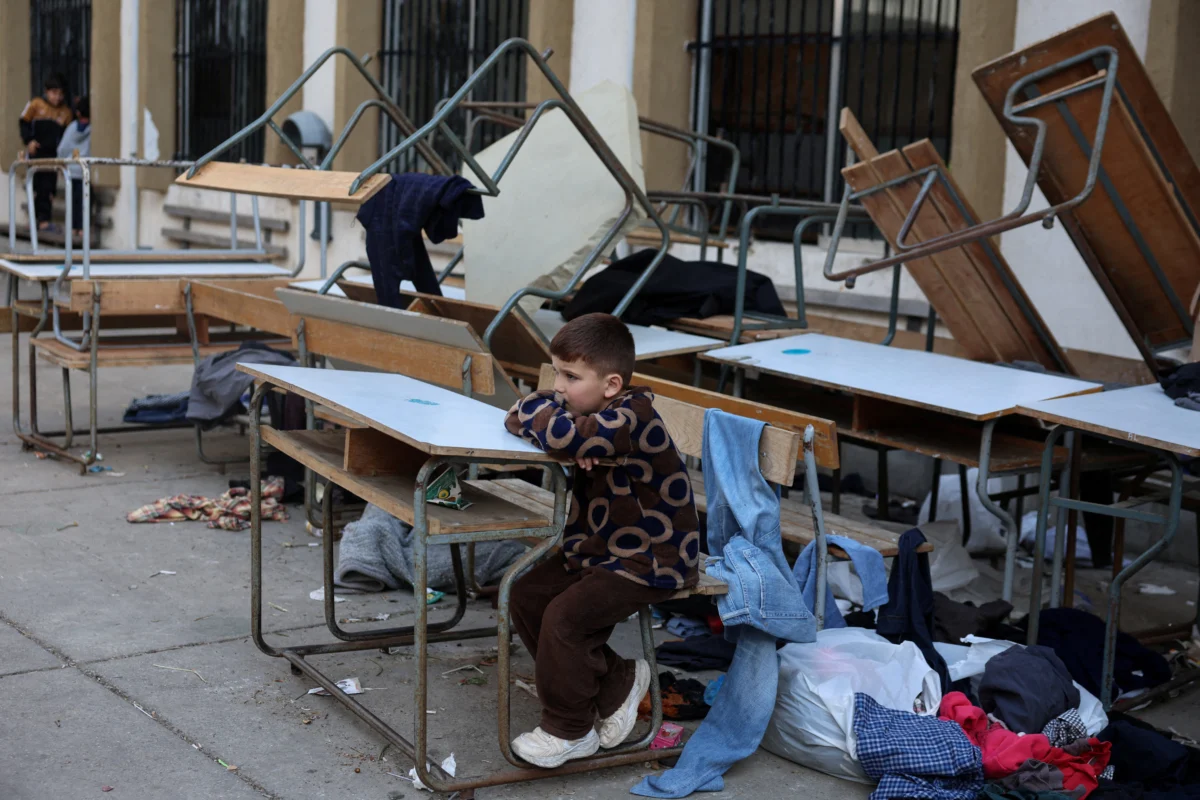
This latest incident does not occur in a vacuum but is framed by a wider regional instability, as indicated by the "Live Blog Update | War on Iran" title under which this specific report appeared. While the Gaza strike is not directly linked to the conflict with Iran, it underscores the interconnectedness of various flashpoints across the Middle East. The escalating tensions, often characterized by proxy conflicts and a heightened state of alert, mean that localized incidents in places like Gaza can quickly become catalysts for broader regional destabilization. The image accompanying the original report, showing a child in a school-turned-shelter in Tyre, Lebanon, on April 12, 2026, further illustrates the widespread displacement and humanitarian fallout affecting civilian populations across the Levant, caught between multiple axes of conflict. Lebanon, bordering both Israel and Syria, often finds itself on the front lines of regional confrontations, experiencing its own internal fragilities exacerbated by external pressures. The presence of displaced persons in Tyre points to a significant regional crisis, potentially stemming from cross-border skirmishes or the wider geopolitical ripple effects.
A Chronology of Recent Escalations
The region has witnessed a significant uptick in hostilities in the preceding weeks and months, setting a dangerous precedent for incidents like the one in Gaza City. Prior to April 15, 2026, reports indicated a series of alleged Israeli airstrikes in Syria targeting Iranian-backed militias and weapons convoys. Simultaneously, maritime incidents in the Red Sea, attributed to Houthi rebels in Yemen, had seen commercial shipping disrupted, drawing responses from international naval forces. On the Israeli-Lebanese border, exchanges of fire between the IDF and Hezbollah had become more frequent, forcing thousands of residents on both sides to evacuate their homes, contributing to the scenes of displacement observed in Tyre.
In Gaza itself, a period of relative calm in early 2026 had been punctuated by occasional rocket launches from militant groups, often met with targeted Israeli airstrikes on what the IDF described as underground infrastructure or weapons manufacturing sites. Human rights groups had consistently warned that these tit-for-tat exchanges disproportionately affect Gaza’s civilian population, with children being particularly vulnerable. The strike on April 15 appears to be a stark escalation in the nature of targets, moving beyond overt militant strongholds to vehicles associated with local governance, raising questions about the rules of engagement and the potential for increased civilian harm.
Official Responses and Justifications
The immediate aftermath of the strike saw a flurry of official statements, each reflecting the deeply entrenched positions of the parties involved.

Palestinian Authorities: The Palestinian Ministry of Health in Gaza swiftly confirmed the casualties, issuing a strong condemnation of what it termed a "barbaric act of aggression." Dr. Ashraf al-Qudra, spokesperson for the ministry, highlighted the death of Yahya al-Malah, calling it a "war crime" and a "direct violation of international law." He reiterated appeals to the international community to intervene and provide protection for Palestinian civilians, particularly children, who bear the brunt of the ongoing conflict. Hamas, the de facto ruling authority in Gaza, also issued a statement, vowing "retaliation for the blood of the martyrs" and accusing Israel of deliberately targeting civilian infrastructure and personnel to destabilize the territory. They asserted that the local police force operates purely for civil administration and public safety, not military objectives.
Israeli Defense Forces (IDF): The IDF, in its initial response, stated that it had targeted a vehicle identified as belonging to a "terrorist cell" actively involved in planning attacks against Israeli civilians and soldiers. While acknowledging the tragic loss of civilian life, the IDF spokesperson expressed regret, attributing it to Hamas’s alleged strategy of operating from within densely populated civilian areas. The statement emphasized Israel’s right to self-defense and its commitment to preventing future attacks. The IDF also claimed that intelligence indicated the police car was being used to transport operatives or equipment related to militant activities, though specific evidence was not immediately provided. This narrative is consistent with Israel’s long-standing policy of holding Hamas responsible for any hostilities originating from Gaza.
International Reactions: The international community reacted with a mixture of concern and condemnation.
- United Nations: The UN Special Coordinator for the Middle East Peace Process issued a statement expressing "deep alarm" over the escalating violence and the tragic loss of civilian lives, especially that of a child. The statement reiterated calls for all parties to adhere strictly to international humanitarian law, particularly the principles of distinction and proportionality, and urged an immediate de-escalation of hostilities. The UN Office for the Coordination of Humanitarian Affairs (OCHA) warned of the severe impact on Gaza’s humanitarian situation.
- Humanitarian Organizations: Groups like Save the Children and Doctors Without Borders voiced outrage at the killing of Yahya al-Malah, underscoring the horrific toll of conflict on children. They called for an independent investigation into the incident and for greater protection of civilians in Gaza, where basic services are already on the brink of collapse.
- Major Powers: The United States, while reaffirming Israel’s right to self-defense, also called for restraint and protection of civilian lives. A spokesperson for the U.S. State Department urged a thorough investigation into the incident and reiterated Washington’s commitment to a two-state solution as the ultimate path to lasting peace. The European Union echoed similar sentiments, condemning the violence and stressing the need for immediate de-escalation and a return to diplomatic efforts. Regional powers like Egypt and Jordan also condemned the strike, emphasizing the need to prevent further destabilization in an already fragile Middle East.
Humanitarian Crisis Deepens
The strike on April 15 added another layer of suffering to Gaza’s already dire humanitarian crisis. The territory’s healthcare system, crippled by years of blockade and conflict, struggles to cope with mass casualty events. Hospitals frequently face shortages of essential medicines, equipment, and even electricity. The critically wounded from this strike further taxed these limited resources, highlighting the urgent need for international aid and unimpeded access for humanitarian supplies.
Beyond the immediate physical injuries, the psychological toll of continuous conflict on Gaza’s population is profound, especially for children. Yahya al-Malah’s death is not an isolated incident; countless children in Gaza live with the trauma of war, displacement, and loss. The UN Children’s Fund (UNICEF) has repeatedly warned about the mental health crisis among Palestinian children, many of whom exhibit symptoms of PTSD and anxiety. The recurring violence deprives them of a sense of safety, stability, and a normal childhood. The sight of schools being repurposed as shelters for displaced families, as seen in Tyre, Lebanon, underscores a regional reality where education is disrupted, and the fabric of community life is torn apart by conflict.
Legal and Ethical Considerations
The targeting of a police vehicle in a civilian area raises significant questions under international humanitarian law (IHL), also known as the laws of armed conflict. IHL mandates that parties to a conflict must distinguish between civilian and military objects and must not target civilians or civilian objects. While military objectives can be targeted, any attack must be proportionate, meaning the anticipated military advantage must not be outweighed by expected incidental harm to civilians. The principle of precaution requires parties to take all feasible precautions to avoid or minimize civilian casualties.
The debate often centers on whether a local police force in a territory like Gaza constitutes a legitimate military target. Palestinian officials argue that these forces perform essential civilian functions, such as traffic control and crime prevention, and are therefore protected under IHL. Israeli authorities, however, often contend that police forces in Gaza are integrated into Hamas’s security apparatus, making them legitimate targets due to their alleged involvement in militant activities or command structures. The tragic death of a three-year-old child and the wounding of numerous bystanders in this strike bring into sharp focus the severe challenges of adhering to IHL in densely populated urban environments, regardless of the target’s nature. It reignites calls for greater accountability and independent investigations into such incidents.
Broader Geopolitical Implications
The incident in Gaza City, though localized, carries significant geopolitical implications, especially within the context of the wider "War on Iran" and the ongoing regional power struggles. An escalation in Gaza could trigger a chain reaction, potentially drawing in other regional actors and further destabilizing the already volatile Middle East.
- Regional Spillover: Increased violence in Gaza could provoke a stronger response from Iranian-backed groups in Lebanon, Syria, or Yemen, creating new fronts in the broader regional conflict. This could lead to a more direct confrontation between Israel and Iran or its proxies.
- Peace Efforts: The repeated cycles of violence undermine any nascent or future peace initiatives between Israelis and Palestinians. Each casualty, particularly of a child, deepens mistrust and hardens positions, making diplomatic solutions increasingly elusive.
- Domestic Politics: The incident will undoubtedly exert pressure on both Israeli and Palestinian leadership. For Israel, it fuels debate over the efficacy and morality of its military operations. For Palestinian factions, it intensifies calls for unity and resistance, potentially leading to further internal divisions or consolidation of power.
- International Scrutiny: The killing of a child will inevitably draw increased international scrutiny and condemnation, potentially leading to calls for sanctions or greater diplomatic pressure on the parties involved.
In conclusion, the tragic death of three-year-old Yahya al-Malah and the wounding of several others in the Israeli strike on a police vehicle in Gaza City serve as a stark reminder of the devastating human cost of the protracted conflict. Occurring amidst a backdrop of escalating regional tensions, this incident not only exacerbates the humanitarian crisis in Gaza but also threatens to ignite further instability across the Middle East. As calls for de-escalation and adherence to international law grow louder, the immediate future for Gaza’s vulnerable population, and indeed the wider region, remains fraught with uncertainty and the looming specter of further violence. A durable political solution, rooted in justice and respect for human rights, remains the only viable path to breaking this tragic cycle.

Related Posts
Over 150 Israeli Settlers Storm Al-Aqsa Compound and Perform Prayers, Violating Status Quo Under Police Protection.
UN Report Highlights Over 900 Obstacles Hampering West Bank Aid Amid Escalating Humanitarian Crisis