Jimmy Kimmel’s Silence on Eric Swalwell’s Downfall Sparks Media Scrutiny and Raises Questions About Late-Night Accountability
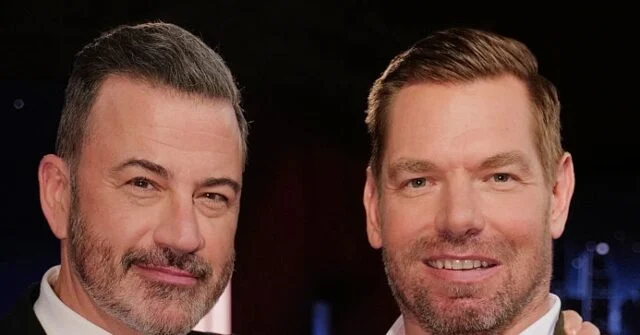
On a recent Monday evening, the broadcast of Jimmy Kimmel Live! on ABC notably omitted any mention of former Representative Eric Swalwell, despite the late-night program having served as the prominent launchpad for his now-suspended gubernatorial campaign just months prior. This conspicuous silence from host Jimmy Kimmel came on the heels of significant news: Swalwell’s resignation from his congressional seat and the suspension of his bid for California governor, both precipitated by a cascade of sexual assault allegations. Instead of addressing the unfolding scandal involving a past guest and political ally, Kimmel’s airtime was largely dedicated to critiques of former President Donald Trump, focusing on a series of recent controversies surrounding the Republican figure.
The Unspoken Narrative: Kimmel’s Monday Night Broadcast
The Jimmy Kimmel Live! episode in question unfolded against a backdrop of swirling allegations and political upheaval concerning Eric Swalwell. However, the late-night host’s monologue and subsequent segments made no reference to these developments. Kimmel instead delved into various controversies involving former President Trump, including remarks allegedly made about historical religious figures, a now-deleted AI-generated image that Trump claimed depicted him as a doctor, a White House event focused on a "No Tax on Tips" policy, and ongoing issues related to international relations, specifically Iran. The focus on Trump-related content, while a common staple of late-night commentary, highlighted the deliberate omission regarding Swalwell, a figure who had recently occupied a significant space on Kimmel’s own platform.
For many viewers and media observers, the absence of any commentary on Swalwell was striking. Late-night talk shows, particularly those with a reputation for political engagement, often seize upon significant political news, especially when it involves individuals previously featured on their programs. The decision to overlook a major political and personal downfall of a former guest, particularly one whose campaign announcement was treated as a significant event, prompted questions about journalistic integrity, selective outrage, and the perceived impartiality of such entertainment platforms. The typical format of these shows allows for a blend of humor and current events, and a high-profile scandal involving a recent guest would ordinarily be prime material for discussion, if not outright critique.
A Political Launchpad: Swalwell’s Gubernatorial Bid on Kimmel
The connection between Jimmy Kimmel and Eric Swalwell dates back several months prior, when the then-Congressman chose Jimmy Kimmel Live! as the platform to formally announce his candidacy for Governor of California. This decision underscored the increasing role of late-night television as a venue for political figures to connect with a broader, often younger, audience beyond traditional news outlets. During that November appearance, Kimmel introduced Swalwell as a prominent Democratic voice, framing him as a politician actively engaged in "battle daily with the forces of MAGA," and noting, "the president does not like him at all." This introduction positioned Swalwell as an adversarial figure to the Trump administration, aligning him with a political narrative often embraced by late-night hosts.
Swalwell, seizing the opportunity presented by the national platform, used his segment to articulate his vision for California. He declared that the state required "a fighter and a protector," emphasizing his past experiences as a city council member in Dublin, a prosecutor in Oakland, and his efforts "taking on the most corrupt president ever in the U.S. Congress." He concluded his announcement by directly addressing Kimmel and his audience: "But I’m ready to bring this fight home. So, I came here tonight, Jimmy, to tell you and your audience that I’m running to be the next governor of California." The declaration was met with enthusiastic applause from the studio audience, cementing the moment as a successful, high-profile launch for his campaign. The segment garnered significant media attention at the time, underscoring the influence of late-night television in shaping political narratives and candidate visibility. The decision to launch on Kimmel’s show was a strategic move, leveraging the host’s reach and perceived political leanings to appeal to a specific demographic of voters.
The Allegations Emerge: A Rapid Downfall
The political trajectory of Eric Swalwell took a dramatic and unforeseen turn when multiple women came forward with serious allegations of sexual misconduct. These accusations ranged from unwanted advances and inappropriate touching to sexting and, most gravely, non-consensual sexual encounters while inebriated. The nature and volume of these allegations quickly mounted, creating an untenable situation for the Congressman and his burgeoning gubernatorial campaign.
The revelations led to immediate and intense public scrutiny, forcing Swalwell to confront a crisis that jeopardized his political career. Within a short period, the pressure became insurmountable. Faced with a rapidly eroding public image and the potential for prolonged legal and ethical battles, Swalwell made the announcement on that same recent Monday that he would be resigning from his seat in Congress and concurrently suspending his campaign for the California governorship. This swift and decisive action underscored the severity of the allegations and the immediate damage they inflicted upon his political standing. The speed of his downfall served as a stark reminder of the heightened accountability expected of public figures, especially in an era marked by increased awareness and zero-tolerance policies regarding sexual misconduct. The allegations and subsequent resignation marked a significant and abrupt end to what had been a promising political career for the California Democrat.
Silence from the Spotlight: Hollywood’s Muted Response
The silence surrounding Eric Swalwell’s scandal was not limited to Jimmy Kimmel Live! A broader pattern of reticence emerged from various influential quarters, most notably from segments of Hollywood’s elite who had previously championed the "Me Too" and "Time’s Up" movements. These movements gained considerable momentum in recent years, advocating for victims of sexual harassment and assault, and demanding accountability from powerful individuals across various industries. Many prominent actors, producers, and activists had been vocal proponents of these causes, using their platforms to call out misconduct and support survivors.
However, in the wake of the allegations against Swalwell and his subsequent resignation, several high-profile figures who had been vocal advocates for "Me Too" and "Time’s Up" remained conspicuously quiet. Celebrities such as Alyssa Milano, Gwyneth Paltrow, America Ferrera, Neve Campbell, and Lady Gaga, all known for their public support of these movements, reportedly made no public comments regarding Swalwell’s alleged crimes or his departure from office. This collective silence stood in stark contrast to their past impassioned calls for justice and accountability when similar allegations were made against other public figures, particularly those perceived to be on the opposing political spectrum or from industries like entertainment where they held sway.
This perceived double standard drew sharp criticism from various media commentators and members of the public. Critics argued that the selective application of "Me Too" principles, where condemnation seemed to be reserved for certain individuals while others were overlooked, undermined the credibility and universality of the movement’s stated goals. The absence of a unified, vocal response from these celebrity advocates raised questions about the consistency of their commitment to holding all powerful individuals accountable, regardless of their political affiliation or perceived alignment with progressive causes. The situation highlighted a complex intersection of politics, celebrity activism, and the evolving landscape of social justice movements.
The Role of Late-Night: Comedy, Politics, and Perceived Bias
The incident involving Kimmel’s silence on Swalwell sheds light on the evolving role of late-night television in contemporary political discourse. Historically, late-night shows have blended entertainment with social commentary, often using humor to critique political figures and events. However, in recent decades, many of these programs have adopted increasingly partisan stances, particularly in the post-2016 political landscape. This shift has led to late-night hosts frequently aligning themselves with specific political ideologies, often becoming vocal critics of conservative figures while being more supportive of liberal ones.
This perceived bias has been a subject of ongoing debate. Supporters argue that late-night hosts, like any commentators, have a right to express their political views and that their critiques often reflect the sentiments of a significant portion of their audience. They also contend that comedy inherently involves taking sides and that humor can be a powerful tool for political commentary and satire. On the other hand, critics argue that this partisan alignment compromises the shows’ ability to offer balanced commentary and creates an echo chamber where certain narratives are amplified while others are suppressed. They contend that when a host consistently criticizes one political faction while overlooking similar transgressions from another, it erodes public trust and contributes to political polarization.
In the context of the Swalwell scandal, Kimmel’s decision not to address the allegations against a former guest, particularly one he had previously championed, reinforced concerns about selective engagement. For many, it underscored a perceived willingness to hold some figures accountable while granting others a pass, based on their political leanings. This selective approach, critics argue, transforms late-night shows from platforms of broad social commentary into instruments of partisan advocacy, potentially undermining their credibility as sources of genuine political insight or even lighthearted, yet pointed, critique.
Media Scrutiny and Public Expectation
The silence from Jimmy Kimmel Live! and other prominent figures did not go unnoticed by media watchdogs and the public. Numerous news outlets and commentators quickly highlighted the discrepancy between the fervent criticism directed at former President Trump and the complete absence of discussion regarding Eric Swalwell’s grave circumstances. This disparity fueled a narrative of media bias and selective accountability, particularly among conservative-leaning media outlets and commentators, but also among segments of the general public who value consistency in ethical standards.
Public reaction, often amplified through social media platforms, ranged from disappointment to outright anger. Many questioned the integrity of late-night hosts and Hollywood figures who had built reputations on their vocal advocacy for social justice and accountability. The expectation from a significant portion of the audience is that public figures, especially those in media, should apply ethical standards uniformly, regardless of political affiliation. When this expectation is unmet, it can lead to a erosion of trust in mainstream media and entertainment outlets.
Moreover, the incident spurred broader discussions about the responsibilities of media personalities when they serve as platforms for political campaigns. When a show hosts a candidate’s launch, it inherently lends a degree of legitimacy and visibility to that individual. Consequently, some argue there is a moral, if not journalistic, obligation to address significant subsequent developments, especially those involving serious allegations of misconduct. The refusal to engage with such news can be interpreted as a tacit endorsement of the individual or a deliberate attempt to shield them from scrutiny, further deepening the perception of bias.
Implications for Political Endorsements and Accountability
The Swalwell episode carries significant implications for the future of political endorsements by celebrities and the broader conversation around accountability for public figures. When high-profile entertainers lend their platforms and voices to political candidates, they often do so with the intention of influencing public opinion and mobilizing support. However, this power also comes with a corresponding responsibility. The perceived failure to address serious allegations against an endorsed or platformed individual can damage the credibility of the endorser and, by extension, the movements they claim to support.
For the "Me Too" and "Time’s Up" movements, the silence from key celebrity advocates in the Swalwell case risks undermining the universal message of survivor support and accountability for perpetrators, irrespective of their political leanings or social standing. The movements’ strength lies in their perceived impartiality and their commitment to advocating for all victims. When this impartiality is questioned, it can create a wedge, leading to accusations of hypocrisy and eroding the moral authority of the movements themselves. This situation could make future celebrity endorsements more fraught, as public figures might face increased scrutiny over the consistency of their ethical stances.
Ultimately, the events surrounding Eric Swalwell’s resignation and the subsequent silence from various media and celebrity figures underscore a critical challenge in contemporary public life: the consistent application of accountability. In an era where political and social discourse is often highly polarized, there is a growing demand from the public for leaders, media personalities, and activists to uphold universal ethical standards. The Kimmel-Swalwell dynamic serves as a potent case study, highlighting the complexities of navigating political alliances, media responsibilities, and the unwavering imperative for justice in the face of serious allegations. The incident will likely continue to fuel debates about media ethics, celebrity activism, and the ongoing quest for consistent accountability in public life.

Related Posts
Department of Homeland Security Reports Steady 2,000 Daily Migrant Arrests Amidst Intense Political Scrutiny and Calls for Greater Enforcement
Federal Building in New York City Targeted by Incendiary Device, Suspect in Custody Following Incident at 26 Federal Plaza