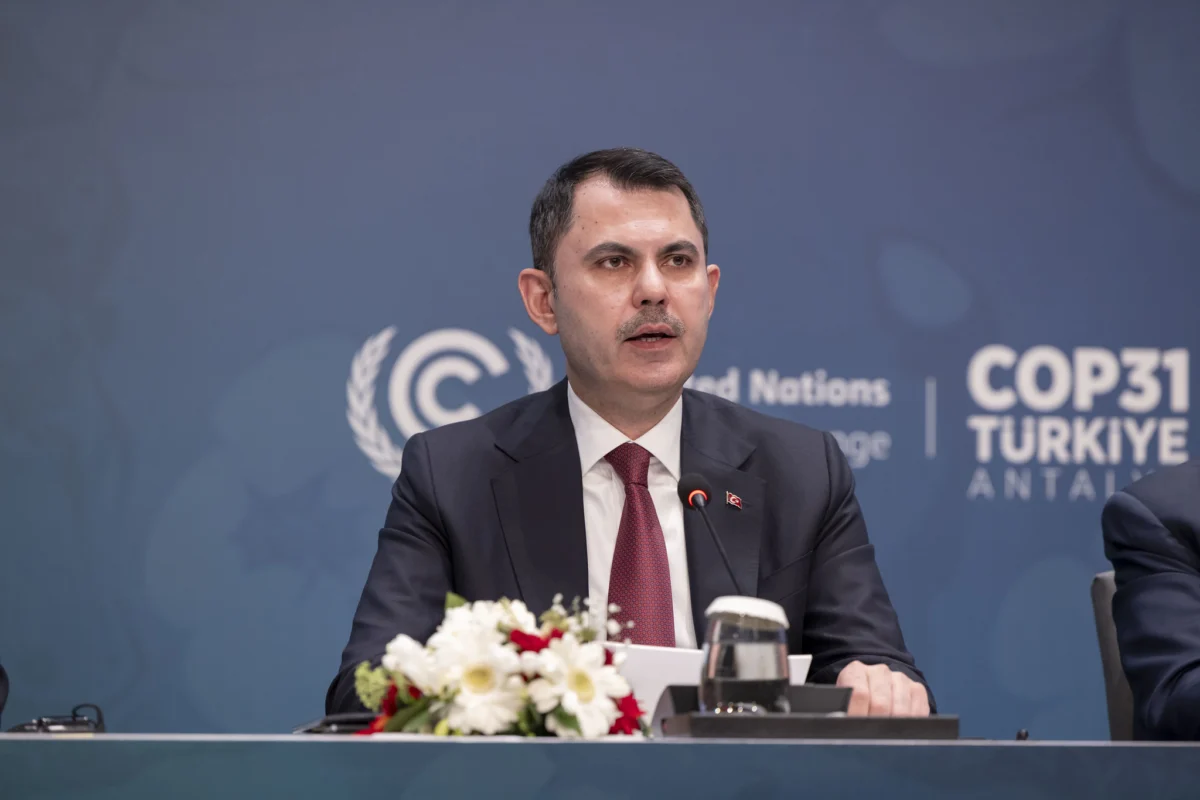
Turkey COP31 President-Designate Murat Kurum Outlines Roadmap for Pacific Pre-COP and Antalya Summit
In an open letter addressed to the international community and parties of the United Nations Framework Convention on Climate Change (UNFCCC), Murat Kurum, the President-Designate for COP31, has provided a comprehensive framework for the upcoming climate negotiations. The letter details a strategic two-phase approach to the 2026 climate calendar, centering on a high-level Pacific pre-COP in October and the culminating COP31 Leaders’ Summit in the Turkish coastal city of Antalya in November. This announcement marks a critical juncture in global climate diplomacy, as Turkey seeks to position itself as a bridge between the developed North and the developing South, specifically focusing on the vulnerabilities of Small Island Developing States (SIDS).
The selection of Antalya as the host city for the 31st Conference of the Parties reflects Turkey’s ambition to showcase its own climate resilience efforts and its strategic location as a crossroads of continents. Murat Kurum, who has previously served as Turkey’s Minister of Environment, Urbanization, and Climate Change, emphasized that the 2026 summit must move beyond rhetoric to deliver "tangible, equitable, and enforceable" climate finance mechanisms. The roadmap comes at a time when the world is grappling with the implementation of the New Collective Quantified Goal (NCQG) on climate finance, a successor to the $100 billion annual pledge that dominated previous decades of negotiation.
The Strategic Pivot to the Pacific: October Pre-COP
Perhaps the most significant revelation in Kurum’s letter is the decision to hold the official pre-COP gathering in the Pacific region this October. Historically, pre-COP meetings—which serve as the final ministerial-level preparation before the main summit—have often been held in the host nation or in close proximity to the main venue. By moving this session to the Pacific, the Turkish presidency is signaling a deep commitment to the concerns of the Blue Pacific Continent, a region that faces an existential threat from rising sea levels and intensified tropical cyclones.
This move is widely viewed by analysts as a diplomatic gesture toward the Pacific Island nations, many of whom had initially supported a rival bid for COP31 hosting duties. By centering the Pacific in the lead-up to Antalya, Turkey aims to ensure that the voices of the most climate-vulnerable populations are not overshadowed by the logistical and geopolitical weight of a Mediterranean-hosted summit. The October pre-COP will focus specifically on "Loss and Damage" funding and the technicalities of the Global Goal on Adaptation (GGA).
Supporting data indicates that the Pacific region requires an estimated $1.5 billion annually just for coastal protection and infrastructure reinforcement. Kurum’s letter suggests that the October meeting will be used to pressure developed nations to fulfill their commitments to the Loss and Damage Fund, which was operationalized at COP28 but remains undercapitalized relative to the trillions of dollars in projected economic losses.

Antalya as the Center of Global Climate Governance
Following the Pacific consultations, the focus will shift to Antalya for the main summit in November 2026. Antalya, a city that has faced its own climate-related challenges including record-breaking heatwaves and forest fires in recent years, provides a poignant backdrop for the negotiations. The city’s infrastructure is being prepared to host an estimated 60,000 to 80,000 delegates, including heads of state, climate scientists, activists, and private sector leaders.
The Turkish presidency has identified three core pillars for the Antalya summit:
- Accelerating Mitigation: Ensuring that the 2025 Nationally Determined Contributions (NDCs) are not only submitted but are ambitious enough to keep the 1.5°C goal within reach.
- Climate Finance Reform: Finalizing the operational structures of the NCQG and ensuring transparent tracking of financial flows.
- Technology Transfer and Resilience: Facilitating the movement of green technologies from the Global North to the Global South to prevent a "green divide" in industrial development.
Chronology of the 2026 Climate Calendar
To provide clarity for international stakeholders, the COP31 Presidency has outlined a strict timeline for the remainder of the year:
- June 2026: The Bonn Climate Change Conference (SB64). This will serve as the primary technical negotiation phase where draft texts for Antalya will be debated.
- September 2026: High-Level Week at the UN General Assembly in New York. Turkey intends to host a "Climate Ambition Circle" for G20 leaders to align on finance targets.
- October 2026: The Pacific Pre-COP. A ministerial gathering focused on the specific needs of SIDS and Least Developed Countries (LDCs).
- November 11–22, 2026: COP31 in Antalya. The summit will begin with a two-day World Climate Action Summit for heads of state and government.
Supporting Data and Financial Context
The urgency of the COP31 roadmap is underscored by recent climate data. 2025 was recorded as one of the warmest years on record, with global average temperatures consistently hovering near the 1.5°C threshold established by the Paris Agreement. Furthermore, the "State of the Climate" report released early in 2026 indicates that greenhouse gas concentrations have reached a new peak of 425 parts per million (ppm).
On the financial front, the Turkish presidency faces a daunting task. The NCQG, which is expected to be a central theme in Antalya, involves negotiations over a target that some developing blocs, such as the G77 + China, argue should be in the range of $1.1 trillion to $1.3 trillion annually. In contrast, many developed nations are pushing for a broader contributor base that includes emerging economies and a heavier reliance on private-sector mobilization. Kurum’s letter hints at a "blended finance" model that Turkey hopes will satisfy both camps, though details remain a point of contention.
Official Responses and Diplomatic Reactions
The response to Murat Kurum’s roadmap has been cautiously optimistic. Simon Stiell, the Executive Secretary of UN Climate Change, issued a brief statement acknowledging the "ambitious scope" of the Turkish presidency. "The decision to hold the pre-COP in the Pacific is a testament to the principle of inclusivity," Stiell noted. "We look forward to working with the Turkish government to ensure that Antalya delivers the breakthroughs necessary for this decade of action."

Representatives from the Alliance of Small Island States (AOSIS) have also welcomed the Pacific-centric approach. A spokesperson for the group stated, "For too long, the Pacific has been a footnote in summits held in distant capitals. Bringing the ministerial negotiations to our waters is a symbolic victory, but it must be backed by a commitment in Antalya to provide the grants-based financing we need to survive."
Domestically, the announcement has been met with significant attention. Turkey’s own climate targets—including a net-zero goal by 2053—are under scrutiny. Opposition leaders and environmental NGOs within the country have called on the government to lead by example, urging a faster phase-out of coal-fired power plants, which still account for a significant portion of Turkey’s energy mix.
Analysis of Implications and the Road Ahead
The success of COP31 will largely depend on Turkey’s ability to navigate the increasingly fractured landscape of international relations. The ongoing geopolitical tensions in Eastern Europe and the Middle East have historically complicated climate negotiations, often diverting attention and funding away from environmental goals. As a NATO member with significant ties to the Global South, Turkey is uniquely positioned to act as a mediator.
However, the logistical challenge of hosting a summit of this magnitude cannot be overstated. Antalya’s readiness will be tested not only by the sheer volume of visitors but by the security requirements of a world in flux. Furthermore, the "Pacific Pre-COP" strategy carries a high risk; if the October meeting fails to produce a consensus on Loss and Damage, the Antalya summit could begin under a cloud of disappointment and distrust from the most vulnerable nations.
Murat Kurum’s open letter serves as a rallying cry, but it also sets a high bar for his presidency. By detailing the timeline and the thematic focus so early in the year, he has invited the world to hold the Turkish presidency accountable. As the focus shifts from the planning stages to the technical negotiations in Bonn this June, the international community will be watching closely to see if the "Antalya Roadmap" can truly bridge the gap between climate ambition and climate reality.
In the coming months, the COP31 Presidency is expected to announce further details regarding the "Antalya Green Zone," which will host civil society and the private sector, as well as specific initiatives regarding Mediterranean biodiversity. For now, the roadmap is clear: the path to Antalya runs through the Pacific, and the stakes for the planet have never been higher.

Related Posts
Constitutional Court of South Africa Bars Shell Oil Exploration in Landmark Victory for Environmental and Community Rights
The Battle for Saldanha Bay: South Africa’s Ambitious Ocean Economy Strategy Faces Legal and Environmental Reckoning