France leads diplomatic push at United Nations for resolution to reopen the Strait of Hormuz amid escalating regional tensions
France is spearheading a high-stakes diplomatic initiative at the United Nations Security Council, providing technical and strategic counsel to Bahrain as it drafts a resolution aimed at securing the Strait of Hormuz. The proposed measure seeks a formal mandate to utilize international force to clear the vital maritime chokepoint, which has been rendered largely impassable by persistent drone and missile threats from Tehran. This intervention comes as the global economy faces mounting pressure from a sustained disruption in energy supplies, a direct consequence of the ongoing military conflict between Iran and the U.S.-Israel alliance.
The resolution, which is currently undergoing rigorous review by officials from France, the United States, and several Gulf Cooperation Council (GCC) nations in New York, invokes Chapter 7 of the U.N. Charter. This designation is significant, as it provides the legal framework for the Security Council to authorize actions—including the use of military force—to restore international peace and security. For the international community, the goal is to establish a protected shipping corridor that would allow tankers to transit the chokepoint without fear of asymmetric attacks.
The Strategic Importance of the Strait of Hormuz
The Strait of Hormuz is widely regarded as the world’s most critical maritime energy artery. Positioned between Oman and Iran, it connects the Persian Gulf with the Gulf of Oman and the Arabian Sea. According to data from the U.S. Energy Information Administration (EIA), roughly 20 to 21 million barrels of oil per day pass through the narrow waterway, accounting for approximately 20 percent of total global petroleum liquids consumption.
Beyond crude oil, the Strait is a primary transit route for Liquefied Natural Gas (LNG), particularly for exporters like Qatar. Any prolonged closure or significant impediment to traffic through this 21-mile-wide passage acts as a systemic shock to the global energy market. Since the onset of hostilities, shipping companies have faced exorbitant insurance premiums, and many have opted to reroute vessels around the Cape of Good Hope, adding weeks to transit times and exponentially increasing freight costs. This logistical bottleneck has already begun to manifest in domestic inflation across European and Asian markets, fueling fears of a broader, sustained economic recession.
Chronology of the Crisis and Diplomatic Escalation
The current state of affairs is the culmination of months of deteriorating relations and direct military engagement. While the conflict intensified sharply in early 2026, the vulnerability of the Strait has been a perennial concern for global powers for decades.
- Late 2025: Tensions escalate as Iran signals its intent to utilize its naval capabilities and drone swarms to project power in response to U.S.-Israeli military maneuvers.
- January–February 2026: A series of targeted drone and missile strikes against commercial tankers creates a de facto blockade, forcing global shipping giants to suspend operations in the region.
- March 25, 2026: French Foreign Minister Jean-Noël Barrot holds a series of closed-door consultations with his Bahraini counterpart and other Gulf regional leaders. The primary objective of these meetings is to harmonize the language of the draft resolution, ensuring it carries the requisite international legitimacy to be presented to the Security Council.
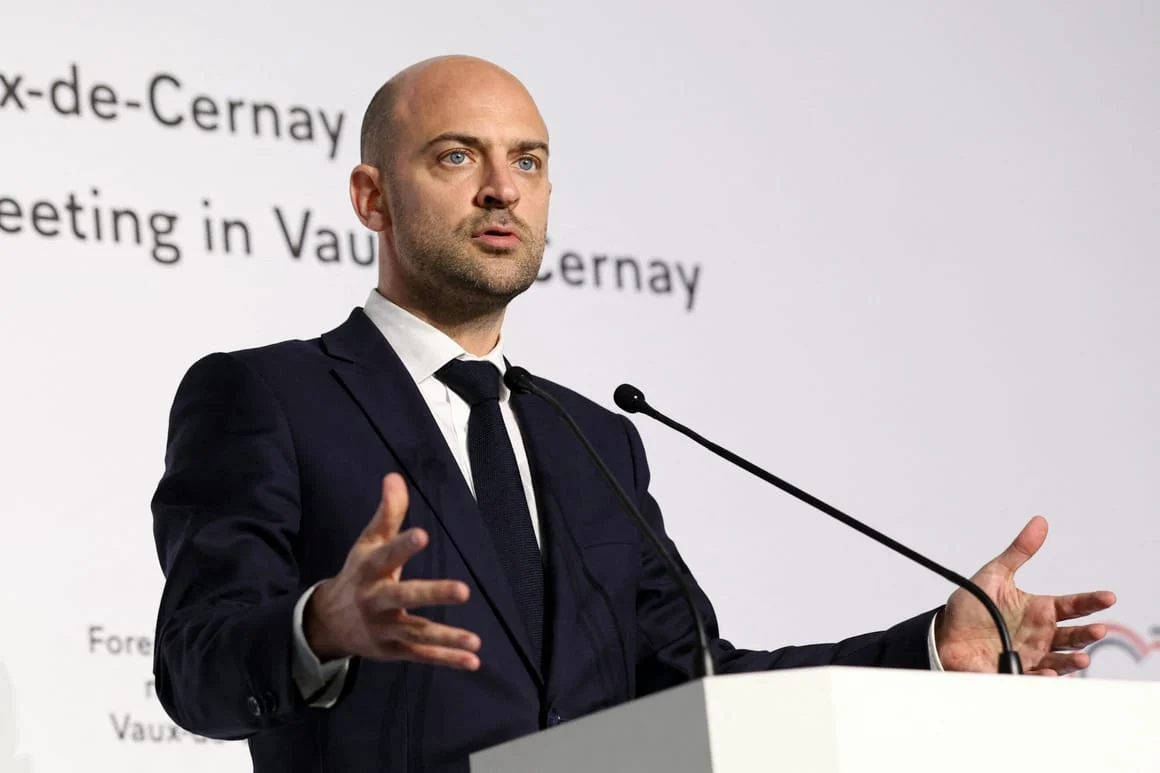
- March 27, 2026: Speaking at the G7 Foreign Ministers’ meeting in Cernay-la-Ville, France, Minister Barrot emphasizes the necessity of a multilateral approach to safeguarding global trade routes, signaling that Paris is prepared to commit naval assets once a legal mandate is in place.
- April 2, 2026: Reports emerge detailing the specific U.N. diplomatic push, confirming that Bahrain is acting as the primary sponsor for the draft resolution, with France acting as the principal advisor.
The Coalition of the Willing
Recognizing the legislative hurdles at the U.N., Western powers are simultaneously working on a "coalition of the willing." The United Kingdom has scheduled a virtual summit for later this week, inviting representatives from 35 nations to discuss the formation of a multinational maritime security task force. This initiative is designed to complement the U.N. process rather than replace it.
The strategy relies on a dual-track approach: diplomatic cover through the Security Council and operational readiness through a coalition of naval powers. France has already pledged to deploy warships to the region, provided that the security environment stabilizes sufficiently to prevent a direct escalation between European forces and Iranian proxies.

Challenges to Security Council Adoption
The path to passing this resolution is fraught with geopolitical complications, most notably the requirement for unanimous support from the five permanent members of the Security Council (P5). While France, the United States, and the United Kingdom are likely to support the resolution, the positions of China and Russia remain the primary points of concern.
Diplomatic observers point to the precedent of the Black Sea Grain Initiative, which succeeded in creating a humanitarian corridor for Ukrainian agricultural exports despite the ongoing war in Ukraine. In that instance, intense diplomatic pressure, including mediation by Turkey and the United Nations, eventually secured Russian acquiescence. However, the situation regarding the Strait of Hormuz is fundamentally different. Russia has strengthened its strategic partnership with Tehran, particularly in the realms of defense and intelligence sharing.
"Why would they?" one senior EU diplomat remarked, questioning the likelihood of Moscow supporting a resolution that directly undermines its primary ally in the Middle East. If Russia or China chooses to exercise their veto power, the resolution will be dead on arrival in the Security Council. This potential stalemate forces the U.S. and its allies to consider whether to bypass the U.N. entirely, an action that would carry significant risks regarding international law and long-term diplomatic relations.
Broader Economic and Geopolitical Implications
The involvement of France as a lead broker underscores the EU’s anxiety regarding the potential for a localized conflict to spiral into a global energy crisis. For Europe, which has spent the last two years decoupling from Russian energy, the stability of the Persian Gulf is not merely a strategic preference; it is a matter of economic survival.
Market analysts warn that if the Strait remains blocked for another quarter, the impact on global food and energy prices could lead to social unrest in import-dependent developing nations. The "risk of a broader economic shock," as cited by regional experts, is rooted in the interconnectedness of energy prices and industrial production. If energy costs remain at current elevated levels, central banks may be forced to maintain higher interest rates for longer, potentially stifling the global economic recovery.
Furthermore, the involvement of Bahrain—a key regional player—in drafting the resolution suggests that Gulf states are increasingly willing to take a public, leading role in addressing their own security, provided they have the backing of Western institutional power. This marks a shift in regional dynamics, moving away from a total reliance on U.S. unilateralism and toward a more collaborative security architecture.
As the diplomatic process moves into the drafting and negotiation phase at the U.N. headquarters, the world watches with anticipation. The outcome of these discussions will not only determine the safety of the world’s most important shipping lane but will also serve as a litmus test for the effectiveness of the United Nations in the face of deep-seated geopolitical polarization. Whether the resolution achieves its goals or becomes another casualty of P5 gridlock, the push to reopen the Strait of Hormuz represents one of the most significant diplomatic maneuvers of the decade, reflecting the fragile equilibrium upon which the modern globalized economy rests.