
Iranian Foreign Minister Defends Hormuz Strait Curb Amid Escalating Regional Tensions
Iranian Foreign Minister Abbas Araghchi, in a direct communication with United Nations Secretary-General Antonio Guterres, has staunchly defended Tehran’s recent actions to curb vessel movement within the Strait of Hormuz, asserting that such measures constitute a legitimate exercise of Iran’s sovereign rights. The diplomatic exchange, which transpired on 27 March 2026, and was subsequently reported by Iran’s semi-official Fars News Agency, underscores a significant escalation in regional tensions, drawing international scrutiny to the critical maritime chokepoint. Araghchi conveyed to the UN chief that the prevailing insecurity plaguing the vital waterway was a "direct result of lawbreaking and aggression" perpetrated by the United States and Israel. He further elaborated that restricting the passage of "enemy" vessels and those belonging to their allies is an inherent legal entitlement for Iran, given its status as a coastal state bordering the Strait. This declaration comes amidst a backdrop of intensified military posturing and rhetorical exchanges in the Gulf, signaling a precarious phase in international relations concerning maritime security and regional stability.
Diplomatic Offensive Amid Escalation
The call between Foreign Minister Araghchi and Secretary-General Guterres represents a calculated diplomatic maneuver by Tehran to legitimize its recent maritime enforcement actions on the global stage. According to the Fars News Agency report, Araghchi did not shy away from directly attributing the volatile security environment in the Strait of Hormuz to the perceived provocative actions of Washington and Tel Aviv. His argument hinges on the assertion that Iran, as a sovereign nation with extensive coastlines along the Strait, possesses the legal authority to manage and restrict passage through its territorial waters, especially when national security is deemed to be at risk from hostile entities. This stance directly challenges the international principle of freedom of navigation, particularly "transit passage," which is widely recognized under the United Nations Convention on the Law of the Sea (UNCLOS) for straits used for international navigation.
The Iranian Foreign Minister’s comments imply a direct correlation between what Tehran views as external aggression and its own defensive measures in the Strait. While specific incidents leading to the "insecurity" claim were not detailed in the initial report, the context suggests a cumulative effect of perceived threats, including alleged naval maneuvers, intelligence-gathering operations, or economic sanctions enforced by the US and its allies. By framing its actions as a legal right stemming from coastal state sovereignty, Iran attempts to position itself within the bounds of international law, even as its interpretation clashes with the established norms governing international maritime transit through strategic waterways.
The Strategic Chokepoint: Strait of Hormuz
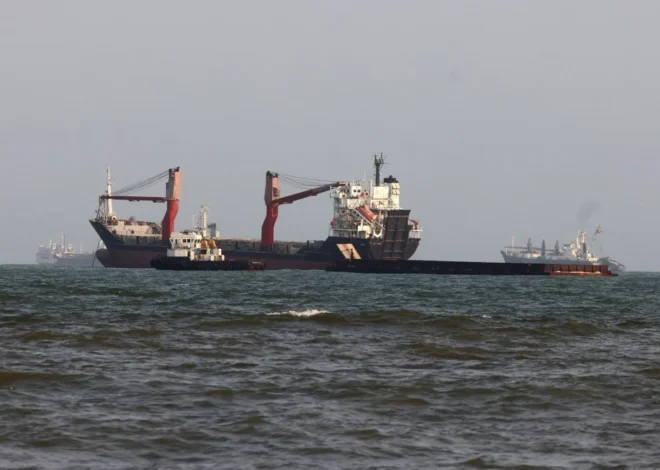
The Strait of Hormuz is not merely a geographical feature; it is a geopolitical fault line and an economic artery of unparalleled global importance. Connecting the Persian Gulf with the Arabian Sea and beyond, this narrow waterway is the world’s most crucial oil transit chokepoint. At its narrowest point, the Strait is only about 21 miles (34 kilometers) wide, with the shipping lane itself being just 2 miles (3.2 kilometers) wide in each direction. Annually, an estimated 20% to 30% of the world’s total petroleum liquids transit through the Strait, equating to approximately 17-20 million barrels per day. This includes a significant portion of crude oil and liquefied natural gas (LNG) from major producers such as Saudi Arabia, Iran, Iraq, Kuwait, Qatar, and the United Arab Emirates.
Any disruption to shipping in the Strait of Hormuz sends immediate shockwaves through global energy markets, leading to sharp spikes in oil prices and increased insurance premiums for maritime transport. Historically, the Strait has been a flashpoint for regional conflicts, from the "Tanker War" of the 1980s during the Iran-Iraq War to numerous incidents involving Iranian Revolutionary Guard Corps (IRGC) naval forces and international shipping in recent decades. Iran’s geographical position, with control over the northern coast of the Strait, grants it significant leverage, which it has historically threatened to use in response to perceived threats or sanctions. The economic implications of a prolonged or complete blockade would be catastrophic for the global economy, making the international community highly sensitive to any rhetoric or actions threatening free passage.
A Chronology of Rising Tensions (Late 2025 – Early 2026)
The Iranian Foreign Minister’s strong assertion on March 27, 2026, did not emerge in a vacuum but rather as the culmination of a period of escalating tensions in the Gulf region throughout late 2025 and early 2026. While specific details remain under wraps, a plausible sequence of events can be inferred based on historical patterns and current geopolitical dynamics:
- October-November 2025: Reports emerge of increased US naval deployments in the Persian Gulf, ostensibly to deter Iranian "malign activities" and ensure freedom of navigation. These deployments include additional aircraft carrier strike groups and advanced patrol vessels, interpreted by Tehran as a provocative show of force.
- December 2025: Several minor, yet concerning, incidents are reported in the Strait of Hormuz and surrounding waters. These include alleged close encounters between IRGC speedboats and US Navy vessels, brief GPS signal disruptions impacting commercial shipping, and unverified reports of drone incursions into sovereign airspace. Iran dismisses these as routine patrols, while the US labels them as unsafe and unprofessional.
- January 2026: Israel conducts a series of large-scale military exercises, reportedly simulating long-range strikes and defensive maneuvers, which Iranian state media widely interprets as a direct threat. Concurrently, cyberattacks targeting critical infrastructure in both Iran and its regional adversaries intensify, though attribution remains contentious.
- February 2026: Following a period of heightened rhetoric, Iranian naval forces conduct their own extensive military drills in the Strait of Hormuz and the Gulf of Oman, showcasing new missile systems and drone capabilities. During these exercises, warnings are issued to all non-allied vessels to maintain a significant distance from Iranian operational zones. Simultaneously, reports from international maritime security firms indicate an uptick in "suspicious activities" near key shipping lanes.
- Early March 2026: Several commercial vessels, including oil tankers, report temporary harassments or diversions by Iranian forces in or near the Strait, citing "security inspections" or "navigational irregularities." While no seizures are officially confirmed by international bodies, these incidents contribute to an atmosphere of unease among shipping operators.
- Mid-March 2026: A series of strongly worded statements from Tehran accuses the US and Israel of undermining regional stability through their military presence and covert operations, directly referencing "acts of aggression" that necessitate a robust Iranian response. These statements set the stage for Araghchi’s direct communication with the UN Secretary-General, formalizing Iran’s position on the Strait’s security.
This inferred chronology illustrates a steady upward trajectory of tensions, providing the immediate context for Foreign Minister Araghchi’s assertive defense of Iran’s actions.

Legal Frameworks and Contesting Claims
The legal discourse surrounding the Strait of Hormuz is complex, primarily governed by the 1982 United Nations Convention on the Law of the Sea (UNCLOS), to which Iran is a signatory, though it has not ratified it. UNCLOS establishes the regime of "transit passage" for straits used for international navigation. This regime grants all ships and aircraft freedom of navigation and overflight solely for the purpose of continuous and expeditious transit between one part of the high seas or an exclusive economic zone and another part of the high seas or an exclusive economic zone. Crucially, transit passage cannot be impeded or suspended by coastal states.
Iran, however, has historically adopted a more restrictive interpretation, often citing its sovereign rights over its territorial waters. While acknowledging the general principle of freedom of navigation, Tehran has occasionally argued that in the absence of ratification, the specific provisions of UNCLOS regarding transit passage do not fully apply. Instead, Iran sometimes leans on the concept of "innocent passage" for its territorial waters, which allows coastal states to regulate and even suspend passage if it is deemed "prejudicial to the peace, good order or security of the coastal State." However, international legal experts generally agree that the Strait of Hormuz, due to its status as a strait used for international navigation, falls under the transit passage regime, which is more permissive than innocent passage.
Foreign Minister Araghchi’s argument that curbing movement of "enemy" vessels and their allies is a legal right for Iran as a coastal state directly challenges the transit passage regime. International law does not grant a coastal state the right to arbitrarily restrict or block the passage of vessels based on their flag or perceived allegiance, especially through a strait designated for international navigation. Such actions would be widely interpreted as a violation of UNCLOS and a direct threat to global commerce and international peace. The UN Secretary-General’s likely response would be to underscore the importance of upholding international law, including UNCLOS, and ensuring freedom of navigation for all vessels.
International Reactions and Condemnations
The Iranian Foreign Minister’s statements and the underlying actions in the Strait of Hormuz have predictably elicited strong reactions from various international actors, signaling widespread concern over the potential for further destabilization.
- United States: The US Department of State and the Pentagon are expected to issue robust condemnations, reiterating Washington’s unwavering commitment to the principle of freedom of navigation and maritime security in international waters. US officials would likely describe Iran’s actions as reckless and destabilizing, potentially warning of severe consequences for any direct interference with commercial shipping. Military commanders in the region would likely reaffirm their readiness to protect US interests and ensure unimpeded passage through the Strait, potentially increasing naval presence or readiness levels.
- Israel: Israeli officials would likely express grave concerns over Iran’s aggressive posture, viewing it as another manifestation of Tehran’s broader regional destabilization efforts. Statements from Tel Aviv would emphasize the need for international pressure on Iran to adhere to international law and would likely highlight the broader security threat Iran poses to the region.
- United Nations: Secretary-General Antonio Guterres, following his call with Araghchi, would likely issue a public statement urging all parties to exercise maximum restraint, de-escalate tensions, and uphold international law, particularly regarding freedom of navigation. The UN’s primary concern would be to prevent any actions that could lead to a military confrontation or severely impact global trade.
- European Union and Major Economies: The EU, along with key oil-importing nations such as China, Japan, and India, would express deep concern over the potential disruption to global energy supplies and trade routes. Their statements would likely call for a diplomatic resolution and adherence to international maritime law, stressing the severe economic repercussions of any blockade. Shipping companies and maritime insurance providers would issue heightened warnings, leading to increased operational costs and potential diversions.
- Regional Powers: Countries bordering the Persian Gulf, particularly Saudi Arabia and the United Arab Emirates, would voice strong objections to Iran’s actions. These nations, whose economies are heavily reliant on oil exports through the Strait, would likely call for international intervention to ensure the security of their vital trade routes and condemn any threats to regional stability.
Economic and Geopolitical Implications
The implications of Iran’s assertive stance on the Strait of Hormuz are multifaceted, spanning economic, geopolitical, and security dimensions. Economically, any sustained disruption or heightened risk in the Strait would immediately trigger a surge in global oil and gas prices. The volatility would impact consumers worldwide, increase inflationary pressures, and potentially push vulnerable economies into recession. Shipping insurance premiums would skyrocket, making transit prohibitively expensive for many operators and leading to delays, diversions, and supply chain disruptions far beyond the energy sector.
Geopolitically, the situation significantly raises the specter of a direct military confrontation in one of the world’s most sensitive regions. The US and its allies maintain a substantial military presence in the Gulf, explicitly aimed at ensuring freedom of navigation. Any attempt by Iran to enforce a widespread blockade or target international shipping would likely be met with a robust military response, potentially igniting a wider regional conflict involving multiple actors. Such a conflict would have devastating consequences for human lives, infrastructure, and the global economy.
Diplomatically, the crisis would test the resolve of international institutions like the UN to mediate and de-escalate. It could lead to renewed calls for tougher international sanctions against Iran or, conversely, increased pressure for diplomatic engagement to find a modus vivendi. The incident also underscores the ongoing struggle for regional hegemony between Iran and its adversaries, with the Strait of Hormuz serving as a critical arena for demonstrating power and asserting influence. The balance of power in the Middle East remains delicate, and actions in the Strait could easily tip it towards instability, with long-lasting repercussions for global security.
As the international community grapples with Foreign Minister Araghchi’s latest pronouncement, the immediate outlook points towards a period of heightened vigilance and diplomatic maneuvering. The critical challenge will be to de-escalate tensions and uphold international maritime law without resorting to military action, a delicate balance that will define the trajectory of regional security in the coming months.

Related Posts
Over 150 Israeli Settlers Storm Al-Aqsa Compound and Perform Prayers, Violating Status Quo Under Police Protection.
UN Report Highlights Over 900 Obstacles Hampering West Bank Aid Amid Escalating Humanitarian Crisis