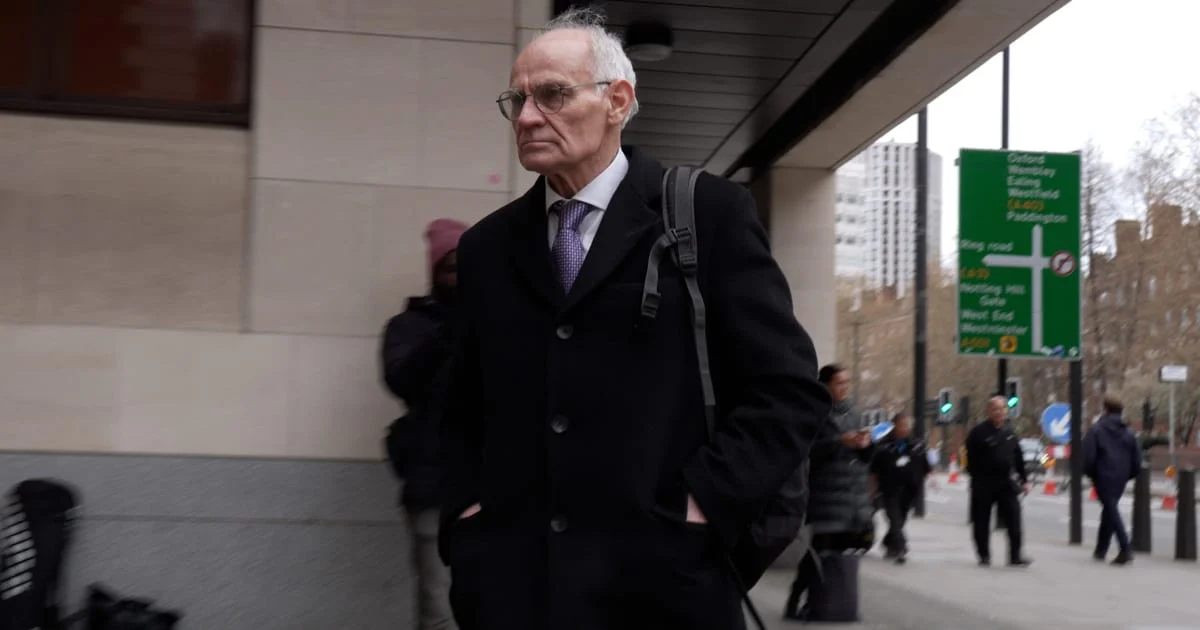
Former Tory MP Crispin Blunt pleads guilty to possessing illegal drugs
The legal proceedings, which unfolded at Westminster Magistrates’ Court this Wednesday, mark a somber conclusion to the parliamentary career of a man who served as the Member of Parliament for Reigate for twenty-seven years. Crispin Blunt, 63, entered guilty pleas regarding the possession of controlled substances, specifically cannabis, methamphetamine, and the chemical sedative gamma-butyrolactone (GBL). The charges stem from a police raid conducted at his residence in Surrey in 2023, an event that triggered a complex investigation into the private life of a seasoned politician who had once held ministerial responsibility for the nation’s prison system.
Chronology of the Investigation and Legal Proceedings
The sequence of events leading to the guilty plea began in the summer of 2023. Following a police operation at his Surrey home, officers discovered a variety of substances that are strictly regulated under the Misuse of Drugs Act 1971. In the wake of the discovery, Blunt was interviewed by Surrey Police, eventually leading to his formal charging.
Throughout the months following the initial raid, Blunt remained a figure of intense public scrutiny. He initially stepped back from certain political duties as the legal process moved toward the magistrates’ court. The hearing this Wednesday served as the formal acknowledgment of the charges, where the former chair of the Foreign Affairs Select Committee stood before the bench to answer for the possession of these substances. The court heard the details of the seizure, which included quantities of GBL—a substance that has been subject to increased regulation due to its potential for misuse—alongside cannabis and methamphetamine.
Contextualizing the Political Career of Crispin Blunt
To understand the weight of this development, one must consider the trajectory of Blunt’s career. First elected in 1997, Blunt represented the Reigate constituency through multiple election cycles, witnessing the shifting tides of the Conservative Party from the opposition benches to government. His parliamentary record is extensive; he served as the Parliamentary Under-Secretary of State for Prisons and Youth Justice under the coalition government led by David Cameron between 2010 and 2012.
His tenure as Prisons Minister is particularly relevant to the current discourse. During his time in that portfolio, Blunt was tasked with overseeing the rehabilitation of offenders and the management of the prison estate, positions that required a stringent stance on the illicit drug trade within the correctional system. Critics and political analysts alike have noted the irony that a former minister responsible for policing and prison security now finds himself on the other side of the criminal justice system. Following his departure from the front bench, he remained a prominent voice on international affairs, serving as the chair of the influential Foreign Affairs Select Committee, where he scrutinized government policy on matters of global security.
Supporting Data on Drug Offenses in the UK
The case against Blunt takes place against a broader backdrop of drug policy debates in the United Kingdom. According to the Office for National Statistics (ONS), drug-related offenses remain a significant portion of the criminal justice caseload. While the government has historically maintained a "tough on drugs" stance, there has been a persistent debate within political circles regarding the efficacy of the current classification system under the Misuse of Drugs Act.
Cannabis, the most commonly used illicit drug in the UK, continues to account for the highest number of possession arrests. However, the presence of substances like methamphetamine and GBL in this specific case highlights the evolving nature of drug use patterns. GBL, in particular, has seen increased regulatory attention over the last decade due to its use as a date-rape drug and its risks when ingested in high concentrations. Data from the Home Office indicates that arrests for the possession of Class A substances remain a priority for regional police forces, with the Crown Prosecution Service (CPS) maintaining a policy of pursuing charges where there is a "realistic prospect of conviction" and it is in the "public interest."
Statements and Institutional Responses
While Crispin Blunt has publicly acknowledged the charges, the Conservative Party has maintained a distance from the proceedings. Following the initial revelation of the investigation in 2023, the party leadership signaled that the matter was a personal one and should be dealt with through the established judicial process. There has been no official statement from the current party leadership regarding the guilty plea, as the party focuses on its post-election transition following the 2024 general election.
The professional standards of the House of Commons are also at stake. While MPs are not immune from prosecution for criminal acts, the reputational damage to the institution of Parliament is often cited by ethics watchdogs. Though Blunt did not seek re-election in 2024, effectively ending his parliamentary career prior to the conclusion of the case, the proceedings serve as a reminder of the standards expected of public representatives. Legal experts suggest that given the nature of the charges and the defendant’s status as a first-time offender in this context, the sentencing phase will likely weigh the mitigating factors of his public service record against the seriousness of the illicit substance possession.
Analysis of Implications for Drug Policy
The case of a former Prisons Minister pleading guilty to drug possession inevitably fuels the ongoing national debate regarding the criminalization of drug use. Advocates for reform often point to cases involving high-profile individuals as evidence that current laws fail to address the underlying issues of addiction and mental health. Conversely, proponents of the existing legal framework argue that the law must be applied consistently, regardless of a person’s political status or background.
The inclusion of methamphetamine and GBL in the charges carries specific legal implications. Methamphetamine is a Class A drug, carrying the most severe potential penalties for possession, reflecting the government’s concern over its highly addictive nature and the social harm associated with its use. The legal process will now move toward sentencing, where the magistrate will consider the quantities involved, the intent behind the possession, and any evidence of personal use versus intent to supply.
Broader Societal Impact
The revelation and subsequent guilty plea of such a high-profile figure serve to destigmatize some aspects of the conversation while highlighting the gravity of drug legislation. For the constituency of Reigate, the event marks a final, controversial chapter in the long representation of a veteran politician. For the wider British public, the case acts as a litmus test for the impartiality of the justice system—demonstrating that the law applies to those who were once responsible for drafting and enforcing it.
As the case concludes, the focus shifts to the legislative implications. Does this incident trigger a reassessment of how the government handles substance misuse among its own ranks? Furthermore, it highlights the vulnerability of individuals in high-pressure roles to the same societal challenges—such as substance abuse—that they are tasked with regulating.
The case of Crispin Blunt will likely remain a significant case study in political ethics and the intersection of personal conduct and public life for years to come. As the court prepares for the final sentencing, the narrative remains one of caution: the intersection of law-making and law-breaking is a precarious line, and for a former minister, the consequences of crossing it are both legal and profoundly personal. The case serves as a stark reminder of the realities of the UK criminal justice system, which continues to struggle with the dual pressures of maintaining public order and addressing the complex health crisis posed by illicit substances. The sentencing, which will follow in due course, will provide the final verdict on a legal saga that has brought an abrupt and somber end to a quarter-century of parliamentary service.