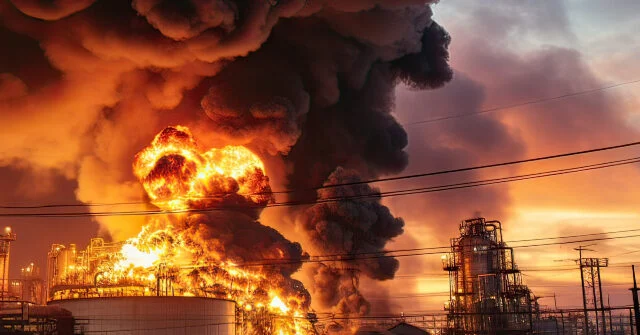
Massive Explosion Rocks Valero Refinery in Port Arthur, Triggering Widespread Emergency Response and Renewed Scrutiny on Industrial Safety
A powerful explosion tore through the Valero refinery in Port Arthur, Texas, on Monday, December 4, 2023, sending a colossal column of dense black smoke billowing into the sky over the city. The incident immediately triggered a comprehensive emergency response across Jefferson County, drawing fire crews, industrial hazmat teams, and law enforcement to the sprawling Gulf Coast facility. While the cause of the blast remains under active investigation, the event has cast a renewed spotlight on the critical safety protocols and environmental implications within one of the nation’s largest refining corridors.
The detonation occurred shortly after midday, at approximately 12:30 PM CST, producing a concussive force that was felt in nearby neighborhoods, prompting immediate concern among residents and authorities alike. The towering plume of smoke, a stark indicator of an industrial combustion event, was visible for miles across Southeast Texas, underscoring the severity of the incident. Initial reports from emergency services and Valero officials confirmed that despite the intensity of the explosion, there were no reported injuries to personnel or members of the public, and all refinery employees were quickly accounted for. This swift confirmation provided a measure of relief amidst the palpable anxiety that gripped the community.
Chronology of Events and Immediate Response
The sequence of events unfolded rapidly, demonstrating the established emergency response protocols in place for such a critical industrial hub.
- Midday Blast: The explosion erupted at the Valero Port Arthur refinery shortly after 12:30 PM CST. Witnesses described a loud boom and subsequent tremors, followed by the rapid ascent of a thick, dark smoke cloud.
- Emergency Dispatch: Within minutes of the blast, local fire departments, including the Port Arthur Fire Department (PAFD), and specialized industrial hazmat teams were dispatched to the scene. Valero’s internal emergency response teams, highly trained for such incidents, were also immediately activated, initiating containment and assessment procedures.
- Public Warnings Issued: Port Arthur police moved swiftly to alert residents, initially advising those on the west side of town to "shelter in place." This critical directive, designed to protect citizens from potential airborne contaminants or other hazards, was disseminated via official city channels and local news outlets.
- Expanded Shelter-in-Place: Recognizing the potential for widespread impact, the city expanded the shelter-in-place order just minutes later. The revised advisory encompassed residents in Sabine Pass, Pleasure Island, areas south of Highway 73, and from Stirlwell Boulevard west, covering a significant portion of the city and its surrounding communities.
- Official Confirmations: Jefferson County Sheriff Zena Stephens confirmed early on that there were no injuries and no broader evacuations were deemed necessary beyond the shelter-in-place zones. The Port Arthur Fire Department spokesperson, as reported by 12News NBC, stated that the cause of the explosion and the ensuing fire was unknown at that preliminary stage. Authorities reiterated that "air quality and fire response are underway," signaling a coordinated effort to monitor the environment and bring the incident under control.
- Employee Accountability: Valero officials, in collaboration with emergency services, confirmed that all refinery employees were accounted for, a critical piece of information that significantly reduced immediate concerns about human casualties.
The Valero Port Arthur Refinery: A Profile in Industrial Scale
The Valero Port Arthur refinery is a cornerstone of the American energy infrastructure and a dominant feature of the Southeast Texas industrial landscape. Ranked among the ten largest refineries in the United States, its sheer scale and operational capacity are immense. According to Valero’s own reports, the facility boasts a production capacity of approximately 435,000 barrels of gasoline, diesel, and jet fuel per day. This substantial output underscores its vital role in supplying refined petroleum products not only to regional markets but also to a broader national and international distribution network.
Valero Energy Corporation, headquartered in San Antonio, Texas, is one of the largest independent petroleum refiners in the world. Its operations span North America and the Caribbean, encompassing a vast network of refineries, ethanol plants, and pipelines. The Port Arthur facility, acquired by Valero in 2005 from Premcor Inc., has undergone significant investments and expansions over the years, solidifying its position as a technological and operational powerhouse within the company’s portfolio. Its strategic location on the Gulf Coast, with access to crude oil supplies and deepwater shipping channels, further enhances its importance to the global energy market.
Refineries like Valero’s Port Arthur plant are complex chemical processing facilities that convert crude oil into a wide array of marketable products. This process involves a series of intricate and often high-temperature, high-pressure operations, including distillation, catalytic cracking, hydrotreating, and blending. While these operations are highly regulated and incorporate advanced safety systems, the inherent nature of handling vast quantities of flammable and volatile hydrocarbons means that incidents, though rare, can have significant consequences. The Port Arthur refinery, like others of its size, is subject to stringent federal and state regulations, including those enforced by the Occupational Safety and Health Administration (OSHA) and the Environmental Protection Agency (EPA), which mandate comprehensive safety management programs, regular inspections, and emergency preparedness plans.
Broader Context: Port Arthur’s Industrial Landscape
Port Arthur, Texas, is situated in the heart of the "Golden Triangle," a region renowned for its dense concentration of petrochemical plants, refineries, and liquefied natural gas (LNG) terminals. This industrial ecosystem is a major economic engine for Southeast Texas, providing thousands of jobs and contributing billions of dollars to the state’s economy. However, this industrial prowess also comes with inherent risks and responsibilities. The close proximity of residential areas to these large-scale industrial operations means that safety incidents, even if contained, can trigger widespread public concern regarding air quality, health impacts, and the overall quality of life.
The city’s history is deeply intertwined with the oil and gas industry, dating back to the Spindletop oil boom of 1901, which transformed the region into a global energy hub. Over the decades, Port Arthur has developed a robust infrastructure to support these industries, including extensive pipeline networks, storage tanks, and port facilities capable of handling massive volumes of crude oil and refined products. This industrial heritage has shaped the community, creating a workforce skilled in energy-related fields but also fostering a heightened awareness of industrial safety and environmental stewardship.
Investigative Process and Regulatory Oversight
The investigation into the Valero Port Arthur explosion will be a multi-faceted and rigorous process, involving internal company experts, local fire marshals, and potentially federal agencies. The Port Arthur Fire Department, as the primary first responder, will lead the initial fire investigation to determine the origin and cause. Concurrently, Valero’s own team of engineers and safety specialists will conduct an internal review, meticulously examining operational data, equipment maintenance records, and witness accounts.
Given the scale of the incident and the nature of the facility, federal agencies such as the U.S. Chemical Safety and Hazard Investigation Board (CSB) and the Occupational Safety and Health Administration (OSHA) may also initiate independent investigations. The CSB, an independent federal agency charged with investigating chemical accidents, focuses on identifying root causes and making recommendations to prevent future incidents. OSHA, responsible for workplace safety, will assess whether any violations of federal safety standards contributed to the explosion. The EPA may also be involved, particularly in monitoring environmental impacts and ensuring compliance with air quality regulations.
These investigations typically involve:
- Site Examination: Detailed forensic analysis of the explosion site, examining damaged equipment, structural integrity, and potential ignition sources.
- Data Review: Scrutiny of process data, control room logs, alarm history, and maintenance records to identify operational anomalies or equipment failures.
- Interviews: Gathering testimonies from operators, maintenance personnel, witnesses, and emergency responders.
- Material Analysis: Laboratory testing of materials and components involved in the incident to identify metallurgical failures, corrosion, or chemical reactions.
- Root Cause Analysis: A systematic process to identify not just the immediate cause but also the underlying systemic failures, such as inadequate procedures, training deficiencies, or design flaws.
The findings from these investigations are crucial not only for determining accountability but also for implementing corrective actions and sharing lessons learned across the industry to enhance safety standards.
Community Concerns and Environmental Implications
While the immediate relief of no reported injuries was significant, the black smoke plume and the shelter-in-place order naturally sparked concerns within the Port Arthur community regarding air quality and potential long-term health effects. Residents in industrial zones often live with an underlying apprehension about emissions and accidental releases, and incidents like this can intensify those anxieties.
Local authorities and environmental agencies typically deploy air quality monitoring teams in the wake of such events. These teams use specialized equipment to detect and measure concentrations of various pollutants, including volatile organic compounds (VOCs), sulfur dioxide, particulate matter, and other potentially hazardous substances that can be released during industrial fires or explosions. The results of these monitoring efforts are critical for informing the public and determining if any health advisories beyond the initial shelter-in-place are necessary.
Beyond immediate air quality, there are broader environmental considerations. Depending on what materials were involved in the combustion, there could be concerns about residual contamination, although modern refineries have extensive containment systems. The incident also serves as a reminder of the delicate balance between industrial growth and environmental protection in communities like Port Arthur. Advocacy groups and environmental organizations often highlight such events as evidence for the need for stricter regulations, enhanced monitoring, and greater transparency from industrial operators.
Economic Significance and Potential Disruptions
The Valero Port Arthur refinery is a significant economic driver for the region, employing hundreds of highly skilled workers and supporting numerous ancillary businesses. An incident of this magnitude, even without major injuries, can have several economic ramifications:
- Production Interruption: While Valero has not publicly stated the extent of production disruption, an explosion of this nature typically necessitates the shutdown of affected units for damage assessment, repairs, and safety inspections. This can lead to a temporary reduction in the refinery’s daily output of gasoline, diesel, and jet fuel. Given its substantial capacity, even a partial shutdown could have localized impacts on supply chains, though the vast U.S. refining network often mitigates widespread market disruptions.
- Repair Costs: The cost of repairing the damaged section of the refinery will likely be substantial, involving specialized engineering, construction, and equipment replacement. These costs are usually covered by insurance, but they represent a significant financial outlay.
- Investigation Costs: The extensive internal and external investigations also incur significant costs, including expert consultations, laboratory analyses, and employee time dedicated to the process.
- Impact on Workforce: While no injuries were reported, the incident can create uncertainty for the workforce. Employees may be temporarily redeployed, or their work schedules affected during the repair phase. The long-term safety culture and employee morale can also be influenced by how the company manages the aftermath and implements improvements.
Looking Ahead: Recovery and Prevention
The immediate focus following the Port Arthur Valero explosion will be on securing the site, completing the fire response, ensuring environmental safety through continuous monitoring, and meticulously investigating the cause. Once the investigations are complete, Valero will be tasked with implementing any recommended corrective actions, which could range from equipment upgrades and procedural revisions to enhanced training programs.
For the community of Port Arthur, the incident serves as a stark reminder of the inherent risks associated with living in close proximity to major industrial operations. It also underscores the importance of effective emergency communication, robust safety regulations, and transparent reporting from both industry and regulatory bodies. As Port Arthur continues to play a pivotal role in the nation’s energy infrastructure, the lessons learned from this incident will be crucial in shaping future safety protocols and fostering greater trust between industry and community stakeholders. The path forward will involve a concerted effort to rebuild, re-evaluate, and reinforce the safety measures designed to prevent such events from occurring again, ensuring the well-being of both the workforce and the surrounding population.

Related Posts
Democratic Candidates Must Moderate to Win General Elections, Says Rep. Greg Stanton

Lisa Demuth Secures Republican Gubernatorial Nomination in Minnesota, Defeating Trump-Endorsed Mike Lindell