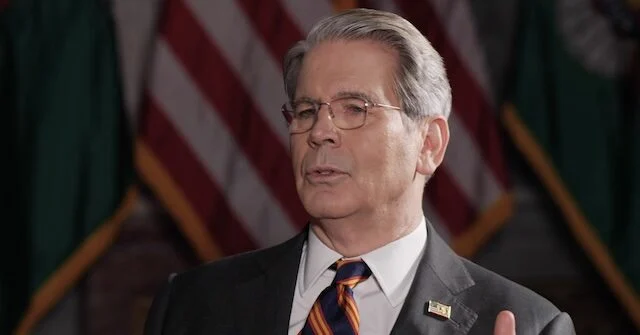
Strategic Sanctions Reversal: Treasury Secretary Bessent Explains "Jiu-Jitsuing" Iran with its Own Oil
In a significant policy revelation, Treasury Secretary Scott Bessent appeared on NBC’s "Meet the Press" on Sunday, outlining a complex strategy employed by the Trump administration concerning Iranian oil sanctions. Bessent asserted that the U.S. was effectively "jiu-jitsuing the Iranians" by leveraging their own oil exports against them, a move that has sparked debate and scrutiny regarding its implications for U.S. foreign policy and global energy markets. This intricate approach involves the strategic lifting of certain sanctions on Iranian oil stored on tankers, a decision that, while seemingly providing Iran with financial relief, is argued to grant the U.S. greater oversight and control over the revenue flow.
Background of Iran Sanctions and "Maximum Pressure"
To fully comprehend the latest developments, it is crucial to revisit the historical context of U.S. sanctions against Iran. The United States has maintained various forms of sanctions against Iran for decades, primarily targeting its nuclear program, support for regional proxy groups, and human rights abuses. A pivotal moment came in 2015 with the Joint Comprehensive Plan of Action (JCPOA), an international agreement that saw Iran limit its nuclear activities in exchange for the lifting of multilateral sanctions.
However, in May 2018, the Trump administration withdrew from the JCPOA, deeming it insufficient, and subsequently re-imposed a sweeping "maximum pressure" campaign. This campaign aimed to severely cripple Iran’s economy, particularly its vital oil sector, to force Tehran back to the negotiating table for a more comprehensive deal. Sanctions targeted Iran’s crude oil sales, shipping, banking, and petrochemical industries, significantly reducing its ability to export oil and access international financial systems.
The impact of "maximum pressure" was substantial. Iran’s oil exports, which had peaked at over 2.5 million barrels per day (bpd) before the 2018 withdrawal, plummeted to as low as 200,000-300,000 bpd at times. This drastically curtailed Iran’s revenue, leading to severe economic hardship within the country, marked by currency devaluation, inflation, and social unrest. Despite the pressure, Iran continued to find illicit ways to export oil, often using sophisticated evasion tactics such as ship-to-ship transfers, disabling transponders, and creating complex financial networks, particularly for sales to China, its largest remaining customer.
The Treasury’s Strategic Sanctions Adjustment
During his "Meet the Press" interview with Kristen Welker, Secretary Bessent addressed the Treasury Department’s recent decision to lift sanctions on approximately 140 million barrels of Iranian oil stored on tankers. Welker challenged Bessent, questioning why the U.S. would facilitate over $14 billion in oil revenue for a country with which it is in an adversarial relationship.
Bessent vehemently contested the $14 billion figure, dismissing it as "grossly overstated." He clarified that the oil in question was always destined for sale, primarily to China, regardless of U.S. sanctions. His core argument revolved around a strategic pivot: instead of attempting to completely block these sales, which often pushed them into opaque channels, the U.S. is now seeking to control where and how this oil is sold, and critically, where the revenue goes.
"That Iranian oil was always going to be sold to the Chinese. It was going to be sold at a discount," Bessent explained. He posited a choice: either allow the illicit, untraceable sales to continue, or guide them into more visible transactions. The "jiu-jitsu" analogy, borrowed from the martial art where an opponent’s momentum is used against them, illustrates this approach. Rather than directly confronting the flow of Iranian oil, the U.S. aims to redirect and control it.
The "Line of Sight" and Price Stability Arguments
A central tenet of Bessent’s explanation was the concept of "line of sight." He argued that when Iranian oil is sold to China, the revenue "completely gets recycled" through an intricate, opaque system that is nearly impossible for the Treasury Department to track or block. This allows Iran to fund its activities, including support for proxy militias like Hezbollah, Hamas, and the Houthis, with minimal U.S. intervention.
Conversely, Bessent asserted that by allowing sales to other countries – specifically mentioning Indonesia, Japan, and Korea – the Treasury gains "a much better line of sight." This improved visibility enables the U.S. to track the financial transactions associated with these oil sales and, crucially, "block accounts that the oil goes into." This implies a nuanced approach: allowing the physical oil to be sold to prevent market disruption, but actively interdicting the financial proceeds before they can be fully utilized by the Iranian regime for illicit purposes.
Another critical component of Bessent’s rationale was global oil price stability. He argued that allowing this stored Iranian oil to enter regulated markets, rather than being sold illicitly at deep discounts, helps prevent significant price spikes. "Which is better, Kristen?" he asked, "If oil prices spike to $150 and they were getting 70% of that? Or oil prices below $100? It’s better to have them where they are now." This suggests a recognition that aggressively cutting off all Iranian oil, especially a large volume of already extracted and stored crude, could constrict global supply and push prices upward, potentially harming U.S. consumers and the global economy. By managing the entry of this oil, the administration aimed to keep prices stable, or even below $100 per barrel, thereby reducing Iran’s potential windfall even if it sold a larger volume.
Economic Implications and Market Dynamics
The strategic release of 140 million barrels of Iranian oil into the market, even if phased, carries significant economic implications. In a global oil market often characterized by volatility, such a volume could influence supply-demand dynamics. While 140 million barrels is a substantial quantity, representing roughly 1.5 days of global consumption, its impact depends on the pace of its release and existing market conditions.
Current global oil prices (e.g., Brent crude hovering around $80-90 per barrel) are sensitive to supply changes. An influx of Iranian crude, particularly if it displaces other suppliers or adds to an already well-supplied market, could exert downward pressure on prices. This aligns with Bessent’s stated goal of preventing spikes, which benefit oil-producing nations like Iran. For the U.S., lower oil prices translate to cheaper gasoline for consumers, a politically salient issue.
However, critics might argue that even if the U.S. gains a "line of sight," any revenue, however managed, still benefits the Iranian economy to some extent, potentially freeing up other funds for illicit activities. The effectiveness of "blocking accounts" also depends on the sophistication of Iran’s financial evasion networks and the willingness of buyer nations to cooperate fully.
Geopolitical Ramifications and Expert Analysis
The "jiu-jitsu" strategy carries profound geopolitical ramifications. It signals a shift from a purely punitive "maximum pressure" approach to one that incorporates elements of managed engagement, albeit with continued financial interdiction.
- For Iran: While the regime might welcome the ability to sell its stored oil, the U.S. intention to track and block revenues means the benefit is not unmitigated. It could create internal debates within Iran between pragmatists seeking economic relief and hardliners wary of any U.S. oversight.
- For U.S. Allies: European allies, who often favored the JCPOA and have been more inclined towards diplomatic solutions with Iran, might view this as a pragmatic step to stabilize oil markets while still addressing Iranian illicit financing. However, countries that have been staunch proponents of strict sanctions might express concern about any perceived easing of pressure.
- For China: As a primary illicit buyer of Iranian oil, China’s role is complex. If the U.S. strategy successfully diverts Iranian oil to other markets with better oversight, it could reduce China’s access to discounted crude, potentially impacting its energy security strategy. However, China might also see an opportunity to legitimize some of its purchases if transactions become more transparent.
- Regional Stability: The Middle East remains a volatile region. Any policy that directly or indirectly impacts Iran’s financial resources will be closely watched by Saudi Arabia, Israel, and other regional powers. The effectiveness of blocking revenue from reaching proxy groups will be a key metric for assessing the strategy’s success in mitigating regional destabilization.
Expert analysis on such a nuanced strategy is likely to be divided. Some analysts might laud it as a clever adaptation to the realities of sanctions evasion, acknowledging that a complete halt to Iranian oil exports is unrealistic and potentially counterproductive to global economic stability. They might argue that a controlled flow with financial interdiction is more effective than an uncontrolled, illicit flow. Others might criticize it as a concession that weakens the overall sanctions regime, arguing that even partial revenue allows Iran to bolster its economy and continue its problematic behavior. The success of the strategy hinges entirely on the Treasury’s ability to effectively track and block the financial proceeds, a challenge given Iran’s long history of financial subterfuge.
Chronology of Relevant Events
- January 2016: Implementation of the Joint Comprehensive Plan of Action (JCPOA), leading to the lifting of international sanctions on Iran.
- May 2018: Trump administration withdraws from the JCPOA and announces re-imposition of sanctions.
- November 2018: U.S. re-imposes oil sanctions on Iran, initially granting waivers to several major buyers.
- May 2019: U.S. ends all waivers for Iranian oil imports, aiming to drive Iran’s exports to zero. This period marks the height of the "maximum pressure" campaign.
- 2019-2023: Iran continues to export oil illicitly, primarily to China, using various evasion tactics.
- Recently (as per article’s context): Treasury Department lifts specific sanctions on Iranian oil stored on tankers, leading to Secretary Bessent’s explanation.
Conclusion: A Pragmatic or Perilous Pivot?
Treasury Secretary Scott Bessent’s articulation of the "jiu-jitsu" strategy represents a departure from traditional "maximum pressure" tactics. It acknowledges the limitations of a total blockade and seeks to transform an unavoidable reality – Iran’s continued oil sales – into a tool for greater U.S. oversight and global market stability. The strategy attempts to walk a tightrope: allowing a controlled flow of Iranian oil to prevent global price shocks, while simultaneously aiming to starve the Iranian regime of the untraceable funds it uses to support its regional proxies and nuclear ambitions.
The success of this complex maneuver will be measured by its ability to effectively track and interdict illicit financial flows, prevent significant revenue from reaching the Iranian regime’s problematic elements, and maintain global oil price stability. As the U.S. navigates the intricate challenges of Iran policy, this "jiu-jitsu" approach highlights the evolving and often unconventional methods employed to balance national security interests with broader economic and geopolitical considerations. The debate over whether this is a pragmatic adaptation or a perilous concession will undoubtedly continue as its effects unfold on the international stage.

Related Posts
Democratic Candidates Must Moderate to Win General Elections, Says Rep. Greg Stanton

Lisa Demuth Secures Republican Gubernatorial Nomination in Minnesota, Defeating Trump-Endorsed Mike Lindell