U.S. Army Apache Helicopters Conduct Historic First Air-to-Air Drone Interceptions in European Theater during Operation Skyfall
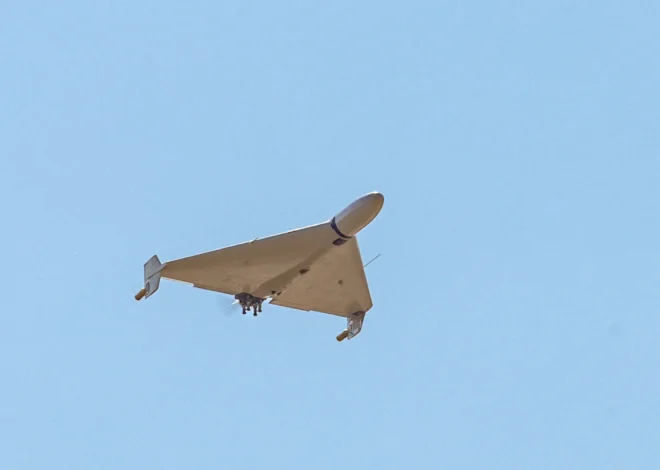
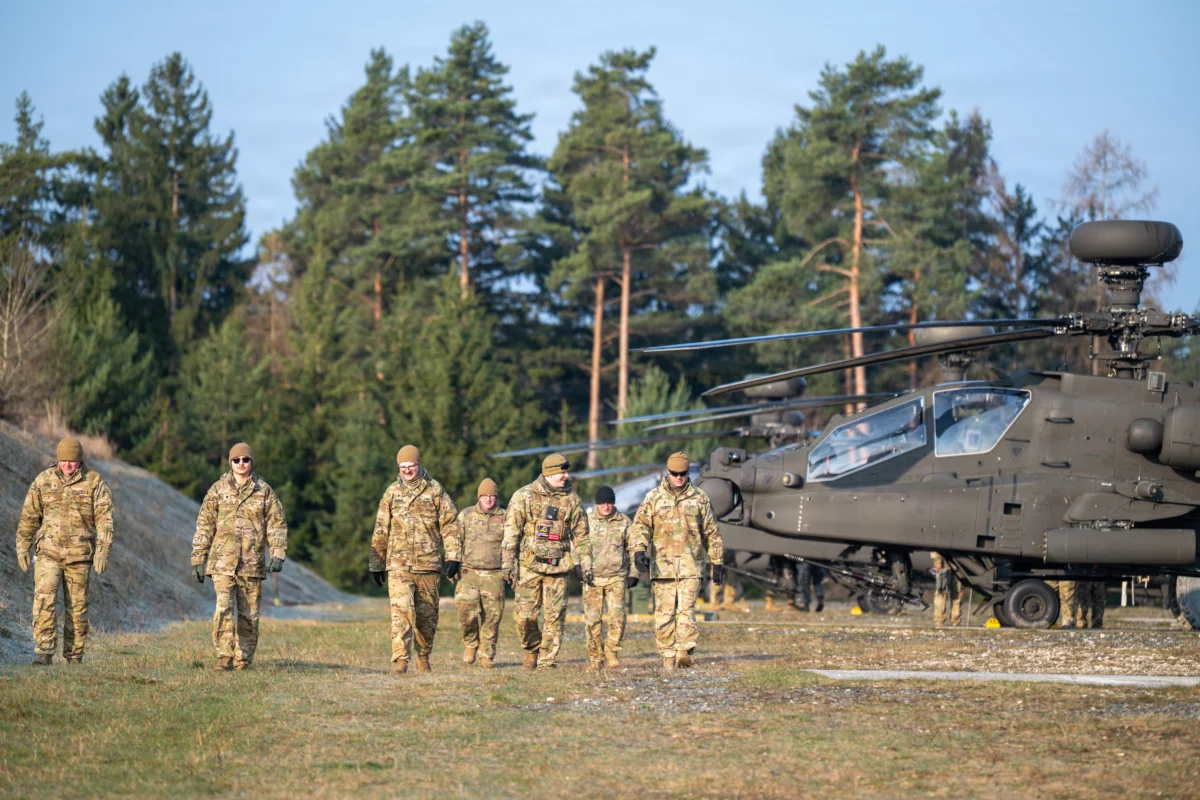
The U.S. Army has achieved a landmark milestone in rotary-wing aviation and integrated air defense by successfully utilizing AH-64E Apache attack helicopters to intercept and down unmanned aircraft systems (UAS) in a live-fire environment in Europe for the first time. This historic engagement took place during Operation Skyfall, a high-intensity training exercise held at the Grafenwoehr Training Area in Germany during the third week of March 2026. The exercise, spearheaded by the 2-159th Attack Battalion of the 12th Combat Aviation Brigade (CAB), represents a fundamental shift in how the U.S. Army and its NATO allies view the role of attack aviation in a modern battlespace increasingly dominated by low-cost, high-threat drones.
Operation Skyfall was designed to test the lethality and adaptability of the Boeing AH-64E Apache—the most advanced iteration of the legendary attack helicopter—against the evolving threat of Unmanned Aircraft Systems. For decades, the Apache has been primarily recognized as a "tank killer" and a ground-support platform. However, the proliferation of drones in recent regional conflicts, particularly along NATO’s eastern borders, has necessitated a rapid evolution in tactical procedures. The success of the 2-159th Attack Battalion, known colloquially as the “Gunslingers,” demonstrates that the Apache is not only capable of traditional ground-attack missions but is also a formidable asset in air-to-air counter-UAS (C-UAS) operations.
A New Frontier in European Air Defense
The significance of the Grafenwoehr exercise cannot be overstated. While the U.S. Army had previously experimented with air-to-air drone intercepts in domestic testing environments, this marks the inaugural operational application of these tactics within the European theater. The exercise serves as a direct response to the changing security architecture of the continent, where the threat of small, agile, and often weaponized drones has become a primary concern for ground commanders and strategic planners alike.
The 12th Combat Aviation Brigade, stationed in Germany, serves as the vanguard of U.S. Army aviation in Europe. Their presence is described by the Department of Defense as a "tactical necessity," providing a rapid-response capability that supports NATO’s broader deterrence posture. By integrating counter-drone training into their standard operational profile, the 12th CAB is effectively rewriting the playbook for rotary-wing combat in contested environments.
Chronology of Development: From Yuma to Grafenwoehr
The path to the successful intercepts in Germany began months earlier in the United States. In December 2025 and continuing into early 2026, the U.S. Army conducted a series of secretive and highly technical trials at the Yuma Proving Ground in Arizona. During these trials, Apache pilots were tasked with tracking and destroying a variety of drone classes using the helicopter’s onboard 30mm M230 chain gun.
The breakthrough in these trials was the implementation of the APEX (Area Proximity Explosive) round. Unlike traditional high-explosive dual-purpose (HEDP) rounds, which require a direct hit to destroy a target, the APEX round utilizes a sophisticated proximity fuse. This allows the projectile to detonate when it detects it is within a lethal radius of a target, showering the drone with fragmentation. This technology is particularly effective against small, maneuverable drones that are notoriously difficult to hit with traditional kinetic munitions.
The success in Yuma provided the data and confidence necessary to export these tactics to Europe. On March 18, 2026, Operation Skyfall commenced at Grafenwoehr, one of the largest and most advanced training areas in the world. Over the course of 48 hours, the Gunslingers of the 2-159th practiced the "pursue and attack" profile, culminating in the historic air-to-air kills reported this week.
Technical Specifications and Tactical Advantages
The AH-64E Apache Guardian offers several unique advantages in the hunt for unmanned systems. While high-performance fixed-wing fighter jets like the F-35 or F-16 are capable of downing drones, they often fly too fast to effectively track low-speed, low-altitude UAS. Furthermore, the cost of using a multi-million dollar air-to-air missile to destroy a drone that may cost only a few thousand dollars creates an "asymmetric cost curve" that favors the attacker.
The Apache, by contrast, provides a more sustainable solution:
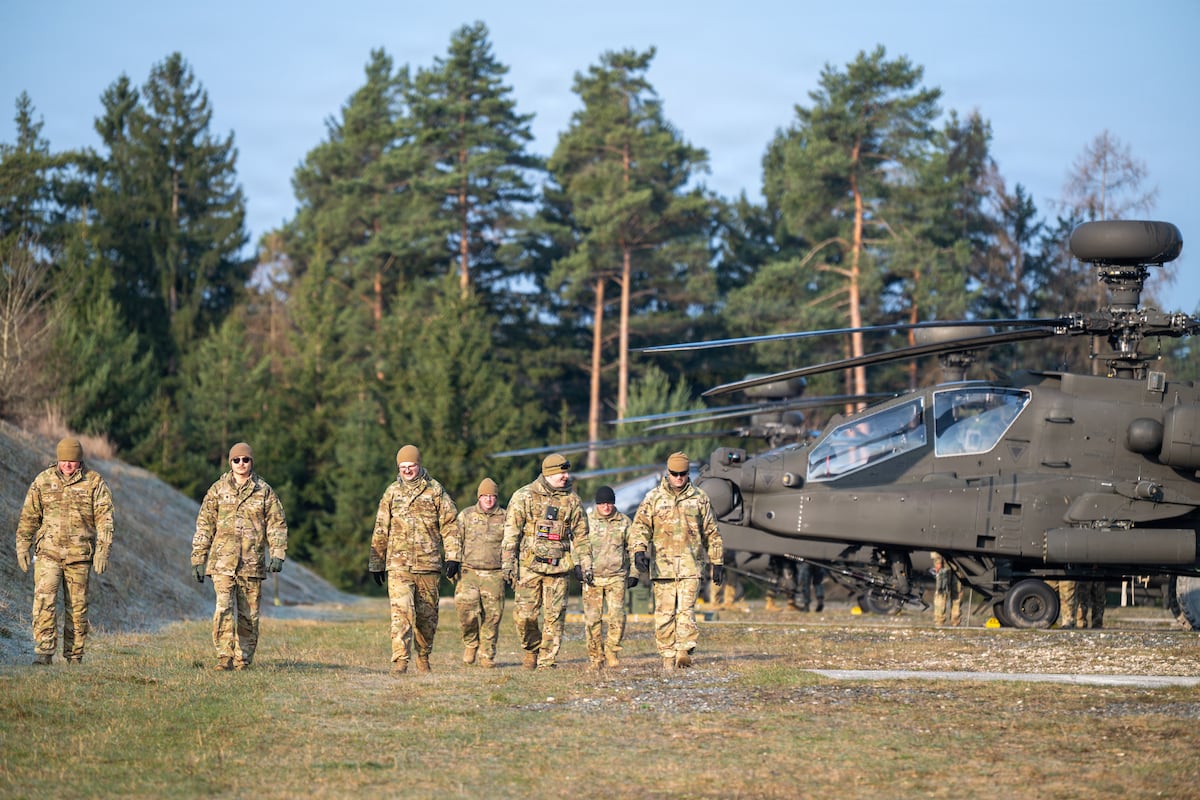
- Speed and Maneuverability: With a top speed exceeding 180 miles per hour and the ability to hover or move laterally with high precision, the Apache can match the flight profiles of many tactical drones.
- Advanced Sensor Suites: The Apache’s Target Acquisition and Designation Sight (TADS) and the AN/APG-78 Longbow Fire Control Radar allow pilots to detect and track small cross-section targets in various weather conditions and light levels.
- Cost-Effective Lethality: Utilizing 30mm APEX rounds is significantly more cost-effective than deploying guided missiles. This allows for a higher volume of engagements without depleting expensive and limited missile stockpiles.
Official Reactions and Strategic Implications
The successful execution of Operation Skyfall has drawn praise from military leadership, who view the training as a blueprint for the future of Allied aviation. Major Daniel Murphy, the operations officer for the 2-159th Attack Battalion, emphasized the novelty and importance of the mission.
“Most pilots in our unit and across the Army have never engaged in air-to-air with the Apache, so this is a new engagement profile for us that we have to develop tactics, techniques, and procedures for,” Major Murphy stated. He further noted that the battalion is eager to share these lessons with NATO partners to bolster the collective defense of the Eastern Flank.
The timing of this training is particularly relevant given the Eastern Flank Deterrence Initiative (EFDI). This initiative aims to harden the defenses of nations bordering Russia and Belarus, creating a "deterrence line" that discourages incursions. Drones have become a tool of choice for grey-zone warfare and reconnaissance; having a mobile, rotary-wing platform capable of neutralizing these threats adds a critical layer to the regional defense network.
The Polish Factor: Expanding the Apache Footprint
One of the most significant takeaways from Operation Skyfall is its impact on Poland. In November 2025, Boeing announced a massive $4.7 billion contract to produce 96 AH-64E Apaches for the Polish Armed Forces. This acquisition will make Poland the second-largest operator of Apaches in the world, trailing only the United States.
The delivery of these aircraft, slated to begin in 2028, will fundamentally transform Poland’s military capabilities. By establishing these counter-drone tactics now, the U.S. Army is ensuring that when Polish pilots receive their aircraft, they will have a mature set of "tactics, techniques, and procedures" (TTPs) to follow. The 12th CAB’s training in Germany serves as a live-fire laboratory for the very missions Polish pilots will likely be tasked with in the coming decade.
Analysis: The Future of Rotary-Wing Combat
The events at Grafenwoehr signal a broader transformation in the doctrine of attack aviation. For much of the Global War on Terror, helicopters operated in relatively permissive environments where the primary threats were ground-based small arms and MANPADS (Man-Portable Air-Defense Systems). The return of "Great Power Competition" and the lessons learned from recent conflicts in Eastern Europe have shown that the sky is no longer the sole domain of manned aircraft.
By turning the Apache into a "drone hunter," the U.S. Army is addressing a critical gap in short-range air defense (SHORAD). While ground-based systems like the Patriot or the NASAMS are vital, they are static or semi-mobile. An Apache can be repositioned rapidly across hundreds of miles, providing a "floating" air defense bubble that can protect moving convoys or vulnerable infrastructure from drone swarms.
Furthermore, this exercise highlights the importance of the AH-64E’s "Version 6" software and hardware upgrades, which enhance the aircraft’s ability to operate within a networked environment. Through Link 16 and other data-sharing protocols, an Apache can receive targeting data from ground radars or other aircraft, close the distance, and neutralize a drone threat before it ever reaches its intended target.
Conclusion
Operation Skyfall has proven that the AH-64E Apache remains a versatile and indispensable asset in the U.S. Army’s inventory. The successful air-to-air drone interceptions in Germany provide a clear signal to both allies and adversaries that the U.S. and NATO are adapting to the realities of 21st-century warfare. As the "Gunslingers" of the 2-159th continue to refine these new tactics, the lessons learned on the ranges of Grafenwoehr will likely become the gold standard for attack aviation units worldwide.
The integration of the 30mm APEX round, the leveraging of the Apache’s superior agility, and the commitment to NATO interoperability all point toward a future where the attack helicopter is as much a guardian of the skies as it is a master of the ground. With Poland set to join the ranks of major Apache operators, the development of these counter-UAS capabilities ensures that NATO’s Eastern Flank will be defended by the most lethal and adaptable rotary-wing force in history.

Related Posts
Pentagon Forges Landmark Seven-Year Agreements with Boeing and RTX to Accelerate Standard Missile-3 Production and Stabilize Defense Supply Chains
Boeing Unveils Ultra Low-Cost Seeker to Enhance Missile Inventory and Combat Cost Challenges in Modern Warfare