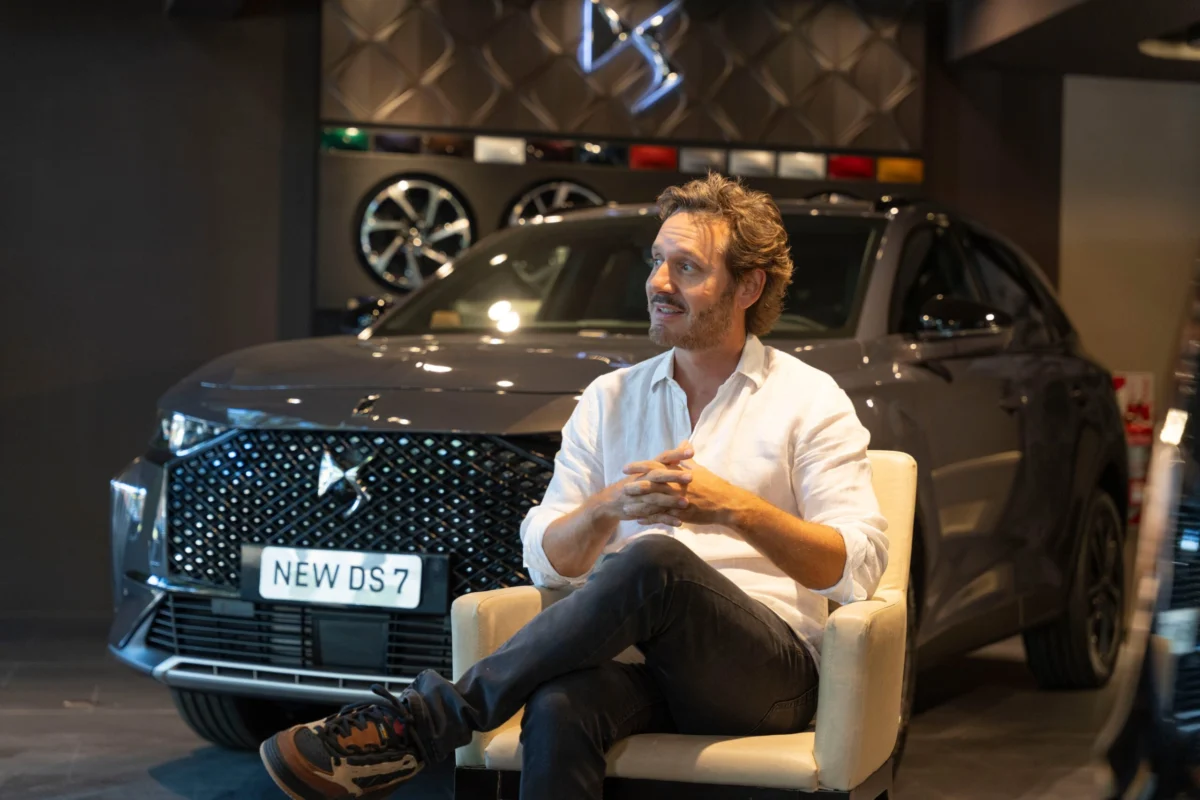
Beyond the Drive: Benjamín Vicuña’s Evolving Relationship with the Automobile
More than just a passion for cinema, television, and theater, acclaimed actor Benjamín Vicuña has opened up about his profound connection with automobiles. From the nascent moments of learning to drive, navigating through a spectrum of experiences – both triumphant and trying – to his current perspective, Vicuña now views the car as an indispensable tool for enjoyment and personal decompression. This introspection offers a unique glimpse into the life of a public figure, revealing a relatable narrative of growth, evolution, and the simple pleasures found on the road.
The Genesis of a Driver: Youthful Ambitions and Parental Guidance
Vicuña’s journey behind the wheel began in his youth in Chile, marked by an eagerness to master driving that predated the legal age. He recalls, with a touch of nervous laughter in an interview with LA NACION, how his father initially took on the role of instructor, guiding him through the intricacies of a manual transmission, complete with the challenging inclines and declines of Chilean terrain. This formative period, however, culminated in a more structured learning environment, with Vicuña completing his driving education at a dedicated "driving school." This foundational experience, steeped in the practicalities of early automotive education, laid the groundwork for his lifelong engagement with vehicles.
The landscape of driver education has shifted considerably since Vicuña’s youth. While manual transmissions were once the standard for novice drivers, the prevalence of automatic vehicles has dramatically altered the learning curve for new generations. This generational shift is vividly illustrated by Vicuña’s current role as a driving instructor for his own son. "It makes me nervous," he admits, "I have to cultivate patience. My son didn’t finish driving school; now they go directly to automatic." This observation highlights a broader societal trend towards more accessible and less technically demanding vehicle operation for new drivers, reflecting advancements in automotive technology and changing consumer preferences.
The Iconic Beetle and the Evolution of Driving Preferences
Vicuña’s own introduction to car ownership was a significant milestone, marked by the acquisition of a Volkswagen Beetle. This iconic model, a symbol of youthful freedom and a rite of passage in his native country, held a special place in his heart. During this period, Vicuña confesses to a youthful predilection for speed, a taste that has since mellowed with maturity. The allure of rapid acceleration and nimble handling has gradually given way to a more refined appreciation for safety, comfort, and the overall driving experience. This evolution mirrors a common trajectory for many car enthusiasts, where the initial thrill of performance is often tempered by the practical demands and evolving priorities of adult life.
The Volkswagen Beetle, often referred to as the "Bug," has a storied history in automotive culture. Introduced in the 1930s, it became one of the most recognizable and enduring car designs globally. Its simplicity, affordability, and distinctive silhouette made it a popular choice for generations, particularly for new drivers. In many Latin American countries, including Chile, the Beetle was a ubiquitous presence on the roads, serving as a reliable and accessible entry point into the world of driving. Vicuña’s personal connection to this model underscores its cultural significance and its role as a catalyst for his early driving experiences.
Embracing Modernity: The DS 7 E-Tense and a Discerning Eye
In the present day, Vicuña navigates the roads in a DS 7 E-Tense, a plug-in hybrid SUV. This choice reflects a contemporary sensibility, blending performance with environmental consciousness. The DS 7 E-Tense has recently seen a notable price adjustment, with its cost reduced by $18,000, bringing its current offering to $72,000. This price recalibration by the manufacturer positions the vehicle more competitively within the premium SUV market, potentially attracting a wider range of discerning buyers.
When discussing his automotive preferences, Vicuña emphasizes a holistic approach that prioritizes aesthetics and functionality. "I must admit that the first thing I notice is not the mechanics, but how it looks. Design is fundamental; I like it to be sober. I also pay attention to the seats, the technology, the comfort, and the safety, although I must admit I like to feel the engine," he explains. This sentiment highlights a modern consumer’s desire for vehicles that are not only functional but also aesthetically pleasing and technologically advanced. The integration of design, technology, and performance is a key differentiator in today’s automotive market, particularly within the premium segment.
The DS 7 E-Tense, as a plug-in hybrid, represents a significant step towards sustainable mobility. Its ability to run on electric power for a certain range reduces reliance on fossil fuels and lowers emissions. The inclusion of advanced technology, such as sophisticated infotainment systems, driver-assistance features, and premium interior appointments, further enhances the driving experience. The manufacturer’s decision to adjust the price of this model suggests a strategic move to capitalize on growing consumer interest in electrified vehicles and to maintain a competitive edge in a rapidly evolving automotive landscape.
The Car as a Sanctuary: Finding Solace on the Road
Vicuña endeavors to keep his vehicle a sanctuary, a space separate from the demands of his profession. "I try to make it a moment of relaxation. I use Google Maps or Waze a lot, even if I know where I’m going, because it makes me calmer. I take advantage of the car’s screen and it’s a place to listen to music. It’s a moment for me, although when my children get in, they take over the music," he shares with a smile. This practice underscores the car’s potential to serve as a personal haven, a mobile space for introspection and enjoyment amidst the hustle of daily life.
The integration of navigation apps like Google Maps and Waze into the driving experience has revolutionized how people interact with their vehicles. These tools not only provide efficient routing but also offer real-time traffic updates, contributing to a less stressful journey. The car’s infotainment system, often equipped with large, intuitive screens, has become a central hub for entertainment, communication, and information. Vicuña’s use of these technologies, even on familiar routes, speaks to a desire for optimized comfort and a reduction in potential anxieties associated with driving. The mention of his children taking control of the music further illustrates the car’s role as a family space, a shared environment where personal preferences often converge.
A Preference for the Driver’s Seat: Navigating Urban Landscapes and Road Etiquette
Vicuña unequivocally prefers to be in the driver’s seat, finding the role of a passenger unnerving due to an inclination to offer unsolicited advice. "I’m more of a city driver. The last time I went on the highway was in Uruguay, and it’s full of speed cameras. All things considered, it’s okay, I drive calmly, but you have to be very attentive. Also, I don’t like driving at night, especially on the highway," he states. This preference for active control reflects a sense of responsibility and engagement with the driving process.
His commentary on highway driving in Uruguay, specifically mentioning the prevalence of speed cameras, highlights a common concern for drivers worldwide: the balance between adhering to traffic regulations and the pressure to maintain pace. The increasing adoption of speed enforcement technologies, while aimed at improving road safety, can also contribute to a more tense driving experience for some. Vicuña’s admission of disliking night driving on highways further emphasizes a preference for clear visibility and predictable conditions, traits that are more readily available in urban environments during daylight hours.
Navigating Traffic: Anxieties and the "Winning Gene"
Vicuña identifies two key aspects of traffic that induce anxiety: covering minimal distances in extended periods and the behavior of certain drivers. While he acknowledges that slow-moving traffic can be an opportunity to decompress, listen to music, and relax, he expresses frustration with aggressive driving. "I hate the winning gene," he remarks, particularly referring to drivers who exploit the shoulder or "banquina" to gain an advantage. While he refrains from honking, this sentiment reveals a strong disapproval of inconsiderate and potentially dangerous driving practices.
The phenomenon of "road rage" and aggressive driving is a complex issue with significant implications for public safety. Drivers who exhibit a "winning gene" often prioritize their own convenience over the safety and well-being of others, leading to risky maneuvers and increased conflict on the roads. The use of shoulders for passing, a practice that Vicuña decries, is a prime example of such behavior. This not only disrupts traffic flow but also poses a danger to pedestrians, cyclists, and emergency personnel who may utilize these areas. Addressing this issue often requires a combination of stringent enforcement, public awareness campaigns, and fostering a culture of mutual respect among road users.
A Measured Embrace of Technology: The "Old School" Approach
Despite his vehicle boasting a high level of technological sophistication, Vicuña admits to utilizing only about 40% of its capabilities. "I’m old school; for example, for parking, I use the mirrors even though the car has tools that facilitate that maneuver. I only use technology for things I really need," he explains. This pragmatic approach suggests a preference for established methods and a measured adoption of new technologies, prioritizing those that offer genuine utility rather than novelty.
The increasing integration of advanced driver-assistance systems (ADAS) and automated features in modern vehicles presents a dichotomy for drivers. While these technologies offer enhanced safety and convenience, some users, like Vicuña, prefer to rely on their ingrained skills and intuitive understanding of the driving process. His continued reliance on mirrors for parking, despite the availability of parking assist systems, illustrates a confidence in his own abilities and a potential skepticism towards overly automated solutions. This "old school" mentality, while seemingly counterintuitive in a technologically advanced vehicle, highlights a personal philosophy of control and a belief in the enduring value of fundamental driving skills.
Tales from the Road: Color, Cost, and Mechanical Mishaps
Vicuña’s relationship with automobiles has not been without its share of memorable, and at times costly, anecdotes. One such story involves the purchase of a used car that he promptly sold after just a month and a half. The reason for the swift sale was not mechanical failure or a dislike for the model, but a far simpler, and ultimately more expensive, issue: the color. "I bought a white car because the seller convinced me, but one day a friend said, ‘the ambulance.’ That killed me. The nickname stuck, and I felt I had made a mistake. Color is key, and I didn’t like that one," he recounts, adding with a laugh, "Don’t do this at home, because I lost money." This humorous yet cautionary tale underscores the subjective nature of personal preferences and the financial implications of impulsive decisions in the automotive market.
Beyond color-related misjudgments, Vicuña also recounts a significant and costly experience with a premium segment vehicle, distinct from his current model. This incident involved severe electronic malfunctions that resulted in substantial repair bills. "The steering wheel locked up, and I was stranded on the exit of the Panamericana. All things considered, I thought: ‘Thank goodness it wasn’t somewhere else.’ I left the car on the shoulder, and the problem was that it couldn’t be unlocked: you couldn’t push it or get it onto a tow truck. Long story short, I had to go with an engineer," he details.
Upon learning that the issue stemmed from a computer fault and that the repair costs were exorbitant, Vicuña’s reaction was one of exasperation. "I’m poisoned," he concluded, again with a chuckle. These experiences, while financially taxing, offer a candid look at the potential pitfalls of vehicle ownership, particularly within the premium market where complex electronic systems can be prone to costly failures. The anecdote of the steering wheel locking up on a major highway serves as a stark reminder of the importance of vehicle reliability and the potential for severe disruption and safety concerns when mechanical issues arise.
The Evolving Purpose of the Automobile: Pleasure Over Pressure
Today, Vicuña views driving primarily as a means of relaxation. His connection with cars mirrors the enthusiasm he felt when first learning to drive. He aspires to impart this sense of security and enjoyment to his children, leveraging technology to make driving a more pleasurable experience rather than a source of stress associated with haste. This perspective reflects a mature understanding of the automobile’s role in modern life, shifting from a purely utilitarian tool to one that can contribute significantly to well-being and personal fulfillment. The emphasis on pleasure over the pressure to arrive quickly signifies a broader cultural shift towards valuing the journey as much as the destination, a sentiment that resonates with an increasing number of individuals seeking to reclaim moments of peace in their busy lives.

Related Posts

Argentina’s President Javier Milei Reflects on 2026 World Cup Reception and Political Criticisms

Argentina’s Captain Lionel Messi to Forego National Team Celebrations for Club Commitments