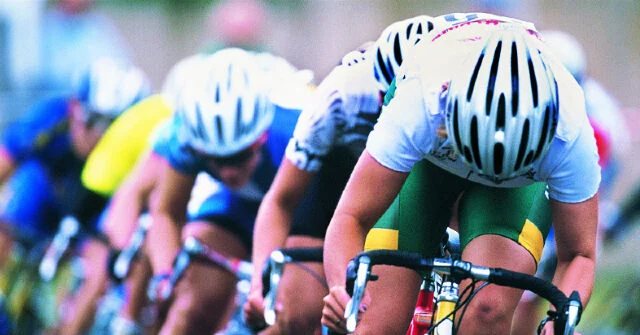
Horrific Crash Mars Women’s Milan-San Remo as Debora Silvestri Sustains Severe Injuries, Reigniting Safety Debates
A severe incident marred the Women’s Milan-San Remo on Saturday, casting a shadow over one of cycling’s most prestigious "Monuments" and sending Italian cyclist Debora Silvestri to the hospital after she was knocked unconscious in a multi-rider collision. The crash, which occurred on the notoriously challenging descent of the Cipressa climb, less than 20 kilometers from the finish line of the 156-kilometer race, saw several competitors involved, including two of the pre-race favorites, Kasia Niewiadoma-Phinney and Kim Le Court-Pienaar, significantly impacting the race’s outcome and reigniting critical discussions surrounding rider safety in professional cycling.
The Catastrophic Incident on the Cipressa Descent
The drama unfolded with breathtaking speed and violence on a section of the course renowned for its technical demands and high-speed descents. As the peloton, already thinned by the preceding climbs, navigated the winding, precipitous roads off the Cipressa, a sudden chain reaction of events triggered a devastating pile-up. Debora Silvestri, a competitor known for her tenacity, found herself caught in the maelstrom. Eyewitness accounts and initial reports suggest she attempted to swerve and avoid the unfolding chaos ahead of her, a common instinct in the tight confines of a professional peloton. However, in a cruel twist of fate, her evasive maneuver sent her hurtling off course, over a guardrail, and down an embankment. She was left lying motionless on the ground, a chilling sight that immediately signaled the severity of the incident.
Race officials and medical personnel were on the scene with remarkable swiftness, a testament to the stringent safety protocols in place for such high-profile events. Silvestri, initially unconscious, eventually regained consciousness, a crucial development that offered a glimmer of relief amidst the palpable concern. She was immediately stabilized by the on-site medical team and subsequently transported to a local hospital for comprehensive evaluation and treatment. While specific details of her injuries remained undisclosed in the immediate aftermath, a loss of consciousness in such a high-impact fall often points to a concussion, and thorough examinations would be necessary to rule out fractures or other internal injuries. The psychological toll of such a traumatic event also represents a significant aspect of a cyclist’s recovery, often requiring as much attention as the physical wounds.
Ripple Effects: Favorites Derailed and the Race Transformed
The crash’s ramifications extended beyond Silvestri’s immediate well-being, profoundly altering the competitive landscape of the Women’s Milan-San Remo. Among those entangled in the incident were Kasia Niewiadoma-Phinney, a formidable Polish-American rider consistently ranked among the world’s best, and Kim Le Court-Pienaar, a strong South African contender. Both had entered the race with high expectations, positioned as potential winners or at least strong contenders for a podium finish.
For Niewiadoma-Phinney, the crash proved to be a definitive end to her race. The impact and subsequent damage to her bicycle and potentially herself forced her to abandon, a significant blow to her season’s objectives and a stark reminder of the sport’s unpredictability. Her withdrawal deprived the race of one of its most dynamic talents and left her team to regroup from the unexpected setback. Le Court-Pienaar, demonstrating remarkable resilience, managed to remount her bicycle and continue, albeit severely hampered. Her valiant effort saw her cross the finish line, but far outside contention, barely within the top 100, a result that belied her pre-race form and aspirations. The incident effectively neutralized her chances, turning what could have been a career-defining performance into a gritty display of determination under adverse circumstances.
Ultimately, it was the Belgian powerhouse Lotte Kopecky who seized the opportunity, navigating the chaotic final kilometers to claim a prestigious victory. Her triumph, while celebrated, was undeniably tinged with the sobering reality of the crash that had overshadowed the latter stages of the race, a common, bittersweet dynamic in professional cycling where heroism often coexists with unforeseen misfortune.
The Cipressa: A Technical Crucible and Historical Hazard
The Cipressa climb, and particularly its descent, holds a legendary status in the annals of Milan-San Remo. Introduced to the race in 1982, it immediately established itself as a pivotal point, offering both a launching pad for attacks and a treacherous test of nerve and skill. Rising approximately 240 meters above sea level over a distance of 5.6 kilometers, it is not the steepest climb in professional cycling, averaging around 4.1% gradient. However, its strategic placement, relatively close to the finish, and its intricate, technical descent make it a critical juncture. The roads are narrow, winding, and often feature sharp, unforgiving turns, coupled with varying road surfaces that can be slick or uneven.
The speeds attained by professional cyclists on such descents are staggering, often exceeding 70-80 kilometers per hour (43-50 mph). At these velocities, reaction times are razor-thin, and even the slightest misjudgment or unforeseen obstacle can lead to catastrophic consequences. The proximity of residential areas, guardrails, and other roadside furniture further amplifies the danger. Historically, both the Cipressa and the subsequent Poggio climb have been the sites of numerous crashes, punctures, and mechanical failures, underscoring their inherent risks and their role as true arbiters of cycling prowess. The incident involving Debora Silvestri serves as a potent, if unfortunate, reaffirmation of the Cipressa’s reputation as a high-stakes, high-risk segment of "La Primavera."
Milan-San Remo: A Monument of Cycling and the Rise of Women’s Racing
Milan-San Remo, affectionately known as "La Primavera" (The Spring Classic), stands as one of cycling’s five "Monuments," a quintet of the sport’s oldest, longest, and most revered one-day races. Inaugurated in 1907, the men’s edition is typically the longest professional one-day race on the calendar, covering approximately 298 kilometers (185 miles) from Milan to the coastal town of San Remo. Its immense distance, combined with the late challenges of the Cipressa and Poggio, makes it a race of attrition, often culminating in a thrilling sprint from a reduced peloton or a daring solo breakaway.
The inclusion and growing prominence of a dedicated women’s edition of Milan-San Remo is a more recent, yet incredibly significant, development in professional cycling. While various women’s races have been held around the same time or on similar routes, the establishment of a truly equivalent, prestigious women’s Milan-San Remo, mirroring the men’s stature, has been a concerted effort by race organizers and the UCI (Union Cycliste Internationale). This year’s women’s race, covering 156 kilometers, represented a substantial challenge, designed to test the riders’ endurance and tactical acumen, aligning with the ethos of its male counterpart. The increasing investment in women’s cycling, evidenced by larger prize purses, enhanced media coverage, and the inclusion of more demanding routes, reflects a broader trend towards gender parity within the sport. However, with increased challenge comes increased risk, a reality starkly highlighted by Saturday’s incident. The women’s peloton, now faster, more aggressive, and deeper in talent than ever before, navigates these demanding courses with the same intensity and courage as their male counterparts, making safety an equally paramount concern.
The Broader Context of Rider Safety in Professional Cycling
Professional road cycling, by its very nature, is a sport fraught with inherent dangers. Riders hurtle at high speeds, often shoulder-to-shoulder, inches apart, on open roads that are subject to myriad external factors: unpredictable weather conditions, varying road surfaces, unforeseen obstacles, and the constant threat of human error – both their own and that of fellow competitors. Statistics compiled by various cycling bodies and sports injury researchers consistently show that crashes are a common occurrence, with a significant percentage resulting in injuries ranging from minor abrasions to severe fractures, concussions, and, in rare tragic cases, fatalities.
The UCI and race organizers worldwide have made considerable efforts to enhance rider safety. These measures include:
- Course Design and Inspection: Meticulous pre-race inspections to identify and mitigate hazards, such as poorly placed road furniture, potholes, or sharp, unmarked turns. Course modifications, including the removal of certain obstacles or the addition of protective barriers, are increasingly common.
- Barrier Placement: Strategic placement of high-quality, continuous barriers in sprint finishes and other high-speed sections to prevent riders from crashing into unforgiving surfaces or spectators.
- Medical Support: Comprehensive medical infrastructure, including multiple ambulances, doctor cars, motorcycles with paramedics, and dedicated trauma units at hospitals along the route.
- Technological Advancements: While advancements in bike technology (e.g., disc brakes, stiffer carbon frames) have increased speeds and responsiveness, they also contribute to the forces involved in crashes. This necessitates ongoing research into protective gear and bike component safety.
- Rider Education and Awareness: Ongoing emphasis on safe riding practices, peloton etiquette, and awareness of surroundings.
Despite these measures, the fundamental nature of the sport means that risks can never be entirely eliminated. Every descent, every sprint, every crowded peloton carries a degree of inherent danger, a reality that athletes and organizers grapple with constantly.
Inferred Statements and Reactions
In the wake of such a significant incident, the cycling community typically responds with a mix of concern, solidarity, and a renewed focus on safety.
- Race Director (Inferred Statement): "Our primary concern is always the safety and well-being of our riders. We are deeply saddened by the incident involving Debora Silvestri and are closely monitoring her condition. Our medical teams responded with exemplary speed and professionalism, and we extend our full support to Debora and her team during her recovery. We will conduct a thorough review of the incident, as we do with all serious occurrences, to ensure every possible measure is taken to enhance safety on our courses."
- Team Manager/Doctor (Inferred Statement): "This is a tough day for the team. Seeing Debora go down like that is heartbreaking. We are relieved she regained consciousness, but the full extent of her injuries is still being assessed. We are focused entirely on her recovery, both physical and mental. It’s a stark reminder of the sacrifices these athletes make and the dangers they face every time they pin on a number. Kasia [Niewiadoma-Phinney] is also disappointed but thankfully not seriously injured, only bruised and shaken. We’ll get her ready for the next challenge."
- Fellow Riders (Inferred Reaction): The peloton would undoubtedly express solidarity with Silvestri. Riders often use social media to send well wishes, acknowledging the shared risks of their profession. There would be a palpable sense of apprehension and increased caution in the days following such a crash, particularly on subsequent descents.
- UCI Representative (Inferred Statement): "The UCI is committed to continually improving rider safety across all disciplines. Incidents like the one at Milan-San Remo serve as crucial data points for our safety commissions. We work closely with event organizers, teams, and riders to implement and refine safety protocols, from course design to medical support, ensuring the highest possible standards for our athletes."
Debora Silvestri’s Condition and the Road to Recovery
While specific medical updates on Debora Silvestri are pending, the typical recovery trajectory for a professional cyclist sustaining a high-impact crash with a loss of consciousness is often protracted. A concussion requires careful management, involving rest, gradual return to activity, and cognitive assessments to ensure full recovery before resuming competition. Fractures, if present, would necessitate immobilization and rehabilitation. Beyond the physical, the psychological impact can be significant. Returning to racing after such a traumatic event requires immense mental fortitude, overcoming fear and rebuilding confidence, particularly on descents or in crowded peloton situations. Her team, medical staff, and family will play crucial roles in supporting her journey back to full health and, hopefully, to the competitive peloton.
Implications for the Sport and Future Safety Discussions
The severe crash at the Women’s Milan-San Remo will undoubtedly fuel ongoing discussions within the cycling world regarding rider safety. While such incidents are often attributed to the inherent risks of the sport, they also prompt re-evaluations of specific course sections, barrier placements, and emergency response protocols. There will be renewed calls for organizers to prioritize safety over spectacle, particularly in the design of high-speed, technical descents in the final kilometers of major races.
The incident also highlights the growing demands placed on the women’s peloton. As races become longer, harder, and faster, the physical and mental toll on athletes increases, as does the potential for severe accidents. The cycling community, from organizers and governing bodies to teams and individual riders, will need to continually balance the desire for thrilling competition with an unwavering commitment to the well-being of its athletes. The memory of Debora Silvestri’s crash will serve as a powerful reminder of this delicate balance, prompting introspection and proactive measures to make the sport as safe as it can possibly be, without compromising its thrilling essence.
The Associated Press contributed to this report.

Related Posts

Representative Kiley Questions US Strategy in Iran Amidst Escalating Regional Tensions and Calls for Comprehensive, Multi-Party Engagement

Department of Homeland Security Reports Steady 2,000 Daily Migrant Arrests Amidst Intense Political Scrutiny and Calls for Greater Enforcement