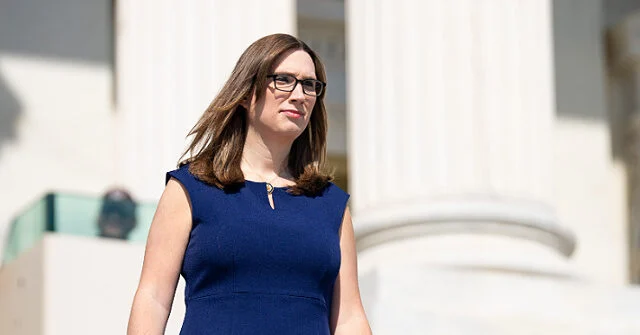
Eric Swalwell’s Gubernatorial Ambitions Clouded by Significant PG&E Contributions Amid Vows to Lower Energy Costs
Representative Eric Swalwell (D-CA), a prominent candidate in California’s gubernatorial race, is facing scrutiny over substantial campaign contributions from the Pacific Gas & Electric Company (PG&E), the state’s largest utility provider. This comes as Swalwell campaigns on a platform explicitly promising to curb escalating energy costs and hold utility companies accountable, a stance that appears to be at odds with the reported financial support he has received from a company notorious for its rate hikes and past legal troubles. The apparent conflict raises significant questions about transparency, corporate influence in politics, and the credibility of candidates’ pledges to address consumer concerns.
The Core Contradiction: Swalwell’s Pledges Versus Financial Ties
Swalwell’s campaign has made combating high energy costs a cornerstone of his gubernatorial bid. On social media advertisements and his official campaign website, he has repeatedly assured voters that he will "stop massive utility price hikes" by "ending monopoly markups and refinancing expensive debt to directly lower your monthly rates." He has also called for "accountability and requirements" for utility companies, framing himself as a champion for the average Californian struggling with exorbitant bills.
However, a recent report by the New York Post highlighted that Swalwell has reportedly accepted more than $113,000 from PG&E employees through his congressional campaign and associated Political Action Committee (PAC). These contributions, which span nearly a decade, date back to 2014, with the most recent recorded donation occurring just last year. This timeline is particularly notable as it includes periods when PG&E faced intense public backlash and severe legal consequences for its role in catastrophic wildfires, most notably the 2018 Camp Fire.
PG&E’s Troubled History and Financial Landscape
Pacific Gas & Electric Company operates as a monopoly utility in much of Northern and Central California, serving over 16 million people. Its history, however, is marred by a series of safety failures, legal battles, and escalating rates, contributing significantly to California’s already high cost of living. Over the past decade, PG&E has reportedly increased its rates by over 100 percent, placing a considerable burden on households and businesses across the state. These increases are often attributed to a combination of factors, including infrastructure upgrades, wildfire mitigation efforts, the costs associated with transitioning to renewable energy sources, and substantial legal liabilities from past incidents.
The company’s rap sheet includes multiple felony convictions. In 2010, a PG&E natural gas pipeline explosion in San Bruno killed eight people, leading to felony convictions for obstructing justice and violating pipeline safety laws. More recently, in 2020, PG&E pleaded guilty to 84 counts of involuntary manslaughter and one count of unlawfully causing a fire for its role in the 2018 Camp Fire, which decimated the town of Paradise, California, and resulted in the deaths of 85 individuals. The utility’s equipment was determined to have sparked the blaze due to poorly maintained infrastructure. This history of negligence and corporate culpability has eroded public trust and intensified calls for greater oversight and accountability. Despite these egregious incidents and the resulting financial and reputational damage, PG&E continues to be a significant political donor in California.
A Decade of Donations: A Chronology of Influence
The financial relationship between Rep. Swalwell and PG&E, through its employees’ PAC, extends over a critical period in the utility’s history.
- 2014 onwards: Donations from the PG&E Corporation Employees Energy PAC to Swalwell’s campaigns begin. At this time, PG&E was still grappling with the fallout from the 2010 San Bruno explosion and ongoing scrutiny regarding its infrastructure maintenance.
- 2015-2017: During these years, California experienced a series of severe droughts, increasing wildfire risks. PG&E continued its operations, often facing criticism for its vegetation management practices. Swalwell continued to accept contributions during this period.
- November 2018: The Camp Fire, ignited by PG&E equipment, devastates Paradise, California. This event triggered widespread outrage, investigations, and ultimately led to PG&E filing for bankruptcy in early 2019 to manage an estimated $30 billion in wildfire liabilities. Despite the profound human and economic toll, the New York Post report indicates that Swalwell "continued taking money from the PAC even after the firm’s equipment sparked the catastrophic Camp Fire."
- 2019-2023: PG&E emerges from bankruptcy in 2020, facing new regulatory oversight and an ongoing mandate to invest in wildfire safety and grid hardening. Throughout this period, as the utility continued to raise rates on consumers, Swalwell’s campaign reportedly received further contributions, with the most recent recorded donation occurring last year.
This chronology suggests a sustained pattern of financial support from PG&E-affiliated entities to Swalwell’s political endeavors, even as the utility’s actions directly contradicted the public interest he now vows to protect. The specific nature of the donations, originating from the "PG&E Corporation Employees Energy PAC," indicates organized giving from individuals associated with the company, often seen as a legitimate way for employees to participate in the political process, yet simultaneously acting as a conduit for corporate influence.
The Broader Political Context: PG&E’s Enduring Influence in California
PG&E’s extensive lobbying and campaign contributions are not unique to Swalwell’s campaign. The utility, alongside other major energy providers in California, has a long history of cultivating relationships with influential politicians across the state’s political spectrum. Governor Gavin Newsom (D) has also reportedly accepted significant contributions from PG&E, as documented by various news outlets, including Breitbart News in 2025, which reported on the "cozy" relationships between several utilities and Democratic politicians in California.
This pattern of donations highlights the pervasive role of special interest money in state politics. Utility companies, operating in highly regulated environments, have a vested interest in maintaining favorable relationships with lawmakers and regulators who control their rates, approve their projects, and oversee their operations. Campaign contributions, while legal, often raise concerns about whether elected officials can truly act independently in the public interest when significant financial support flows from the very entities they are tasked with regulating. For California, a state grappling with a complex energy landscape, grid reliability challenges, and ambitious climate goals, the influence of powerful utilities on policy decisions is a constant point of contention.
Campaign Implications: Public Trust and Electoral Challenges
The revelations regarding Swalwell’s PG&E donations introduce a significant hurdle for his gubernatorial campaign, potentially eroding voter trust and providing potent ammunition for his political opponents. In a state where the cost of living, particularly energy expenses, is a top concern for residents, a perceived conflict of interest could be politically damaging.
Voters grappling with high utility bills may view Swalwell’s pledges to lower costs with skepticism, questioning whether his financial ties to PG&E would compromise his ability to genuinely challenge the utility’s practices. This issue strikes at the heart of public confidence in elected officials and the integrity of the political process.
The crowded field in California’s gubernatorial primary further complicates Swalwell’s position. A recent poll reported by ABC 10 showed Republican candidates leading the primary race, with businessman Steve Hilton receiving 17% of the vote and former Riverside County Sheriff Chad Bianco at 16%. The Democratic vote, split among numerous candidates, saw Swalwell polling at 13%, alongside fellow Democrat Katie Porter, with Tom Steyer at 10%, and several others trailing. In such a fragmented electoral landscape, any perceived vulnerability, especially one related to corporate influence, can significantly impact a candidate’s standing.
Opponent Reactions and Campaign Messaging
Swalwell’s political adversaries have been quick to seize upon the issue. Steve Hilton, a Republican gubernatorial candidate, issued a sharp statement to the Post, directly criticizing Swalwell and the broader Democratic establishment in California. "Democrats have given us the highest electric bills in the country after Hawaii; they’ve nearly doubled in the last ten years," Hilton stated. He added, "How can we possibly trust a Democrat to do anything about it, especially one who is a PG&E puppet just like Gavin Newsom?" This aggressive framing seeks to link Swalwell directly to the perceived failures of current state leadership and the utility company, portraying him as part of the problem rather than a solution.
Other candidates, both Republican and Democrat, are likely to leverage this narrative to highlight their own independence from corporate interests. Democratic candidates, in particular, might seek to differentiate themselves by emphasizing their rejection of corporate PAC money or advocating for more stringent utility oversight measures. This issue provides a clear contrast opportunity for candidates aiming to position themselves as true advocates for consumers.
Beyond Energy Costs: Other Challenges for Swalwell’s Campaign
While the PG&E controversy is a pressing concern, it is not the only challenge facing Swalwell’s gubernatorial aspirations. Breitbart News reported in January that his past dealings with Chinese communists could also "threaten his run for governor." This refers to previous reports detailing his association with Christine Fang, a suspected Chinese intelligence operative, during his early career. While Swalwell has denied any wrongdoing and cooperated with federal investigators, the issue remains a potential vulnerability that could be exploited by opponents.
These combined factors — significant corporate donations from a controversial utility, past national security concerns, and a competitive primary field — underscore the uphill battle Swalwell faces in convincing California voters that he is the most suitable candidate to lead the state.
The Stakes for California Voters
The debate over energy costs and corporate influence in politics is not merely a campaign talking point; it represents fundamental issues for California residents. The state’s energy policies profoundly impact household budgets, environmental goals, and the reliability of its infrastructure. As California continues its ambitious transition to renewable energy and grapples with the increasing threat of wildfires, the integrity of its regulatory and political processes becomes paramount.
For voters, the ability to trust that their elected officials are prioritizing public welfare over special interests is crucial. The scrutiny surrounding Rep. Swalwell’s PG&E donations forces a critical examination of how campaign finance influences policy, and whether candidates can truly deliver on their promises when substantial financial ties to the very entities they vow to regulate exist. The outcome of this debate will undoubtedly shape the narrative of the gubernatorial race and could significantly influence voter perceptions of accountability and transparency in California politics.

Related Posts
Democratic Candidates Must Moderate to Win General Elections, Says Rep. Greg Stanton
Lisa Demuth Secures Republican Gubernatorial Nomination in Minnesota, Defeating Trump-Endorsed Mike Lindell