US State Department Assures Congress Iran Conflict Will Not Impede Taiwan Arms Deliveries Amid Growing Regional Tensions
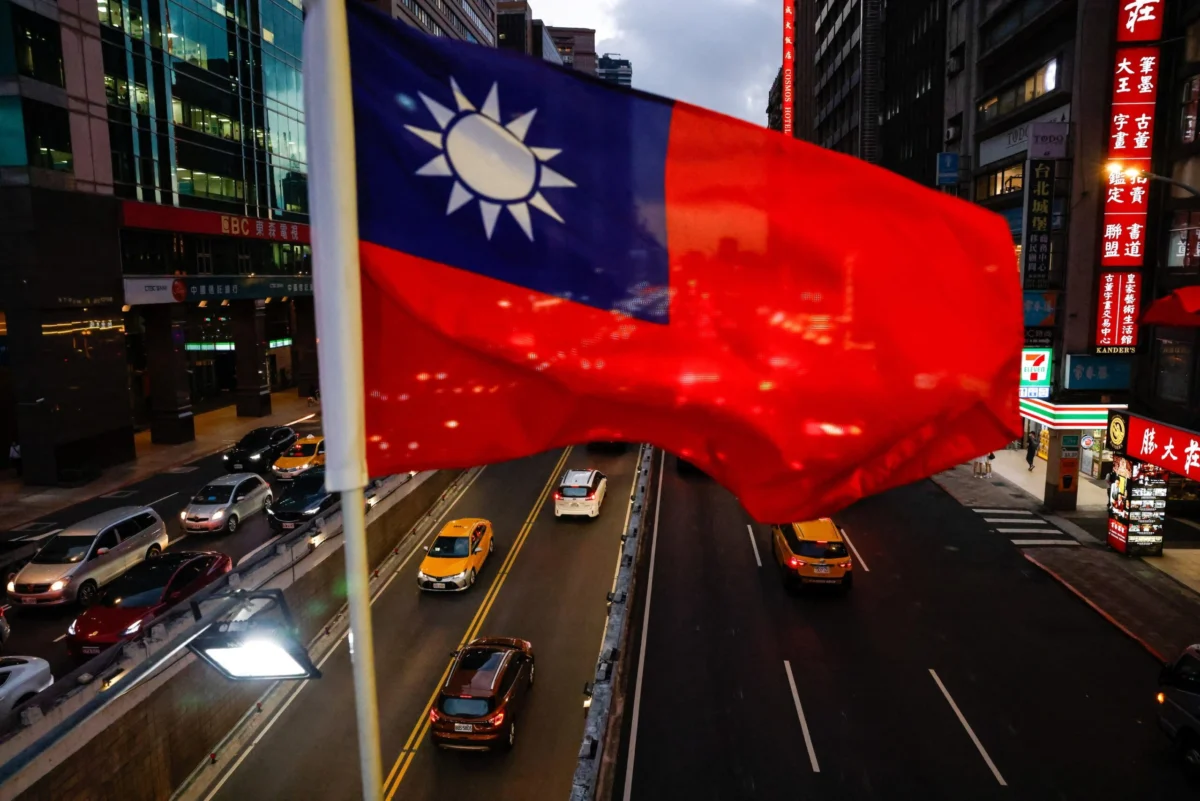
The United States Department of State has formally assured members of Congress that the ongoing military operations against Iran have not resulted in delays to critical weapons shipments destined for Taiwan. Despite the logistical and industrial demands of a high-intensity air campaign in the Middle East, senior administration officials testified on Tuesday that the United States remains committed to its security obligations in the Indo-Pacific, maintaining that the current conflict has not altered Washington’s long-standing policy toward Taipei.
Stanley Brown, the Principal Deputy Assistant Secretary of State for Political-Military Affairs, provided the assurance during a high-stakes hearing before the House of Representatives Foreign Affairs Committee. Addressing concerns that the redirection of resources to the Middle East theater might compromise the defense posture of Taiwan, Brown stated unequivocally that no shipments had been deferred. "Have we delayed moving things to Taiwan? We haven’t," Brown told the committee, emphasizing that the administration is actively seeking mechanisms to expedite the delivery of equipment already backlogged by years of supply chain and production challenges.
The Dual-Theater Challenge: Iran and the Indo-Pacific
The testimony comes at a volatile moment for American foreign policy. On February 28, 2026, the United States and Israel launched a series of coordinated airstrikes against Iranian strategic assets, marking the beginning of a significant combat operation. The intensity of the air campaign has placed a renewed spotlight on the U.S. defense industrial base, which was already struggling to meet the demands of global security commitments.
Observers and lawmakers have expressed concern that the consumption of precision-guided munitions (PGMs), interceptor missiles, and spare parts in the Iranian theater could lead to a "cannibalization" of stocks intended for other partners. Taiwan, in particular, remains a focal point of these concerns due to the persistent and escalating military pressure from the People’s Republic of China (PRC).
The "America First" weapons sales policy championed by the administration has prioritized the rapid arming of Taiwan in theory, but the reality on the ground has been complicated by a multi-billion-dollar backlog of orders. Before the outbreak of hostilities with Iran, the value of undelivered arms to Taiwan was estimated to be in the tens of billions, including F-16V fighter jets, M1A2T Abrams tanks, and various missile systems.
Diplomatic Postponement and the $14 Billion Arms Deal
The hearing took place against the backdrop of a significant diplomatic shift. Earlier on Tuesday, President Donald Trump announced the postponement of a highly anticipated summit in Beijing with Chinese President Xi Jinping. The trip was intended to address a range of friction points, including trade imbalances, cybersecurity, and the status of Taiwan.
Taiwan was expected to be a primary agenda item for the two leaders. The postponement of the trip has introduced fresh uncertainty into the bilateral relationship, particularly regarding a major pending arms package. Reports indicate that a $14 billion deal—the largest in the history of U.S.-Taiwan relations—is currently awaiting the President’s signature. This package is said to include advanced interceptor missiles and sophisticated surveillance technology designed to bolster Taiwan’s "porcupine strategy" of asymmetric defense.
While it remains unclear if the delay of the Beijing summit will stall the signing of the $14 billion package, administration officials suggested that the bureaucratic process for the sale remains on track. The package is viewed as a critical countermeasure to the PRC’s increasing naval and aerial incursions into Taiwan’s Air Defense Identification Zone (ADIZ) and across the median line of the Taiwan Strait.
Chronology of Escalation and Military Activity
The urgency of Taiwan’s defense needs is underscored by a timeline of recent military activity in the region:
- October 2025: Taiwan celebrated its National Day amid a record number of incursions by People’s Liberation Army (PLA) aircraft.
- December 2025: The PRC conducted large-scale "Joint Sword" war games surrounding the island, simulating a blockade and precision strikes on key infrastructure.
- January–February 2026: Regular "combat readiness patrols" by PLA warships became a daily occurrence in the waters surrounding Taiwan.
- February 28, 2026: The U.S. and Israel began airstrikes against Iran, shifting global attention and military resources toward the Persian Gulf.
- March 17, 2026: The State Department testifies to Congress that Taiwan deliveries remain a priority despite the Middle East war.
Beijing continues to view Taiwan as a breakaway province and has never renounced the use of force to achieve "reunification." Taipei, conversely, maintains that it is a sovereign entity and that the future of the island should be determined solely by its 23 million citizens.
Congressional Friction Over Emergency Declarations
The hearing also highlighted deep partisan divisions within the House Foreign Affairs Committee regarding how arms sales are conducted. The administration has recently utilized national emergency declarations to bypass the standard congressional review period for foreign military sales. This includes a recent $650 million sale of precision bombs to Israel, a move that sparked intense debate on Capitol Hill.
Committee Chairman Brian Mast, a Republican from Florida, defended the administration’s use of expedited authorities. Mast and his Republican colleagues accused Democrats of obstructionism, arguing that bureaucratic delays in Congress jeopardize the security of key allies like Taiwan and Israel during times of active conflict.
"We are in a period where our allies are facing existential threats," Mast noted during the hearing. "Delaying the tools they need to defend themselves is not just a policy disagreement; it is a strategic failure that emboldens our adversaries."
In contrast, Representative Gregory Meeks of New York, the committee’s ranking Democrat, argued that bypassing Congress undermines the legislative branch’s role in human rights oversight. Meeks expressed concern that the rush to arm various theaters could lead to a lack of transparency and accountability regarding how U.S.-made weapons are utilized.
"Congressional review is not a hurdle to be cleared; it is a fundamental part of our democratic process," Meeks said. "By sidestepping this committee, the administration weakens our ability to ensure that American weapons are used in accordance with international law and our own national values."
Analysis: The Industrial Base and Strategic Readiness
The central question facing the Pentagon and the State Department is whether the U.S. defense industrial base possesses the "surge capacity" required to support a war in the Middle East while simultaneously fortifying a partner in the Pacific.
Industry analysts suggest that the production lines for key systems, such as the Patriot Missile Segment Enhancement (MSE) interceptors and the High Mobility Artillery Rocket System (HIMARS), are already operating at or near capacity. The $14 billion Taiwan package reportedly includes many of the same components currently being expended or prioritized for the Iranian theater and Israeli defense.
To address these concerns, Stanley Brown indicated that the administration is exploring "innovative ways" to expedite shipments. While he did not provide specifics, experts suggest this could involve:
- Third-Party Transfers: Encouraging allies with existing stocks of U.S. equipment to transfer them to Taiwan in exchange for newer models later.
- Multi-Year Procurement Contracts: Using recent legislative authorities to provide defense contractors with long-term certainty, allowing them to expand production lines.
- Direct Drawdown Authority: Utilizing the Presidential Drawdown Authority (PDA) to send equipment directly from U.S. military inventories, rather than waiting for new production.
Broader Implications for Global Stability
The administration’s ability to maintain its commitments to Taiwan while engaged in a conflict with Iran will be a litmus test for the "Two-Theater" capability of the United States. If Taiwan experiences significant delays in its $14 billion arms package, it could signal to Beijing that American resources are overextended, potentially encouraging further provocations in the South China Sea or the Taiwan Strait.
Furthermore, the postponement of the Trump-Xi summit suggests a hardening of positions between the world’s two largest economies. With the Iran war occupying much of the White House’s "bandwidth," the risk of a miscalculation in the Pacific remains high.
The State Department’s testimony was intended to project a message of strength and capability. By asserting that the war on Iran has not hindered the arming of Taiwan, the administration seeks to reassure both the domestic legislature and international allies that the U.S. remains the "arsenal of democracy," capable of managing multiple crises simultaneously. However, as the conflict in the Middle East continues and the $14 billion deal remains unsigned, the pressure on the administration to turn these assurances into tangible deliveries will only intensify.
As the hearing concluded, the consensus among lawmakers was one of cautious skepticism. While the verbal commitment to Taiwan remains firm, the logistical reality of a two-front strategic environment will require more than just policy statements; it will require a massive, sustained effort to revitalize an industrial base that is now being tested by the realities of 21st-century warfare.

Related Posts
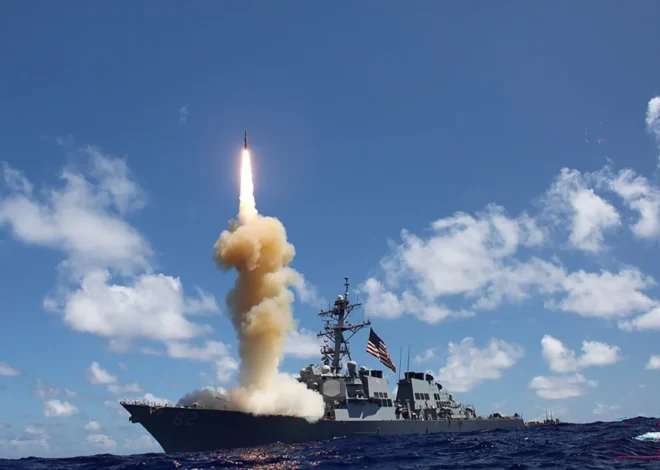
Pentagon Forges Landmark Seven-Year Agreements with Boeing and RTX to Accelerate Standard Missile-3 Production and Stabilize Defense Supply Chains
Boeing Unveils Ultra Low-Cost Seeker to Enhance Missile Inventory and Combat Cost Challenges in Modern Warfare