Israel says it killed Iran’s security chief Ali Larijani in overnight airstrike
The Middle East remains in a state of heightened volatility as the Israeli military confirmed on March 17, 2026, that an overnight precision airstrike successfully neutralized Ali Larijani, Iran’s high-ranking security chief. This development marks a significant escalation in the ongoing conflict between Israel and the Islamic Republic, fundamentally altering the power dynamics within the Iranian security apparatus and signaling a potential expansion of hostilities.
Chronology of the Escalation
The strike on Larijani is the latest in a series of intensifying exchanges that have characterized the regional security environment throughout early 2026. For months, the border regions and maritime corridors have been the site of intermittent clashes.
- Early March 2026: Tensions regarding the Druzhba pipeline, a critical energy artery for Central and Eastern Europe, reached a fever pitch as technical shutdowns forced Hungarian officials to deploy investigative teams to Kyiv.
- March 11–12, 2026: A United Nations investigation released a scathing report detailing the systematic deportation of Ukrainian children, labeling the actions as crimes against humanity. The report noted that nearly 80 percent of documented children remain in Russian custody, further straining the geopolitical landscape.
- March 16, 2026: U.S. President Donald Trump addressed NATO allies regarding the vulnerability of the Strait of Hormuz, issuing a stark warning about the consequences of failing to secure global energy transit points.
- March 17, 2026: The Israeli Defense Forces (IDF) conducted the targeted operation against Ali Larijani, confirming his death shortly after the conclusion of the mission.
Strategic Implications of the Strike
Ali Larijani, a veteran figure in Iranian politics, served as a key architect of Iran’s regional security strategy. His removal creates a vacuum within the Islamic Revolutionary Guard Corps (IRGC) and the broader Supreme National Security Council. Military analysts suggest that the loss of such a senior official is likely to prompt a retaliatory response, potentially involving proxy forces in Lebanon, Syria, or the Gulf.

The airstrike, which was executed with surgical precision, indicates a shift in Israeli military doctrine—moving from deterrence to the active dismantling of high-value strategic assets within the Iranian hierarchy. By targeting Larijani, Israel has signaled that no figure, regardless of rank or institutional role, is shielded from its reach in the current conflict.
Geopolitical Pressures and the Strait of Hormuz
The broader context of this strike is inextricably linked to the ongoing war between Israel and Iran, which has increasingly threatened the stability of global energy markets. U.S. President Donald Trump’s recent comments to NATO underscore the urgency of the situation.
"It is only appropriate that people who are the beneficiaries of the strait will help to make sure that nothing bad happens there," President Trump remarked on March 16. His demand for NATO allies to contribute to the security of the Strait of Hormuz highlights the "very bad future" he envisions should the conflict disrupt the flow of oil. The strait, through which roughly 20 to 30 percent of the world’s total global petroleum consumption passes, has become a central point of leverage for Tehran.
The death of Larijani potentially complicates these maritime security efforts. If Iran perceives the strike as a provocation coordinated with Western allies, they may increase their harassment of commercial shipping in the Persian Gulf as a form of asymmetric retaliation.

Humanitarian and Regional Concerns
While the focus remains on the kinetic conflict, the international community continues to grapple with the fallout of the war. The recent UN report on the situation in Ukraine serves as a reminder that the world is currently facing multiple overlapping crises. The report, which found that 80 percent of forcibly removed children have not returned, has added a layer of moral pressure on international bodies to maintain order.
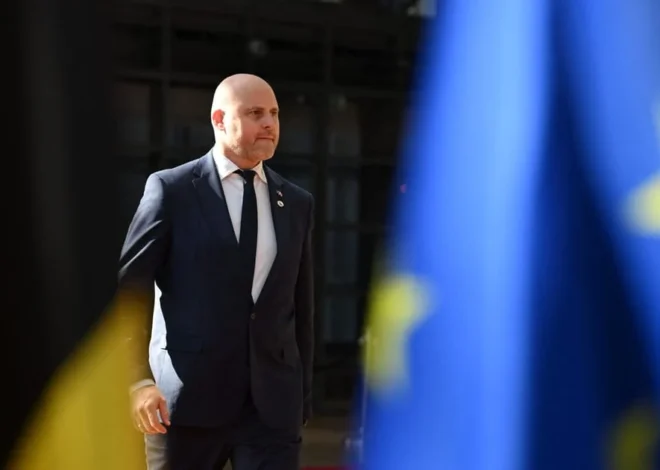
The Hungarian mission to Ukraine, led by Energy State Secretary Gábor Czepek, highlights how the regional war is not just a military affair but a systemic threat to European energy security. Kyiv’s dismissive characterization of the Hungarian delegation as "tourists" reflects the high levels of distrust currently permeating diplomatic channels.
Data and Military Analysis
Military observers note that the strike on Larijani was likely made possible by advanced intelligence gathering. The use of precision-guided munitions against a high-profile target in a fortified environment demonstrates a significant technological advantage. However, the political cost of such an action is high.
- Intelligence Indicators: The operation suggests deep penetration of Iranian security networks, potentially causing a period of internal paranoia within Tehran.
- Economic Impact: Global crude oil prices have fluctuated significantly in the hours following the announcement. Investors remain wary of a total blockade of the Strait of Hormuz, which would cause an immediate spike in energy costs worldwide.
- Diplomatic Fallout: The United Nations and other international organizations are bracing for a fresh wave of diplomatic tension. The lack of a clear de-escalation pathway means that the next 72 hours are critical.
Official Responses and Future Outlook
As of this writing, Tehran has vowed to respond to the "cowardly assassination" of their security chief. Spokespeople for the Iranian leadership have suggested that the response will be "decisive and proportional," though details remain scarce.

In Washington, the White House has maintained a position of cautious monitoring. While President Trump has been vocal about the necessity of securing the Strait of Hormuz, he has yet to comment directly on the strike, suggesting that the administration is currently assessing the risks of further regional destabilization.
Israel, for its part, has stated that the strike was a defensive necessity. An IDF spokesperson stated, "We are committed to the security of our citizens and will take all necessary measures to neutralize threats emanating from those who direct the machinery of terror."
The coming days will be defined by whether this event leads to a wider regional war or if the parties involved will seek to contain the fallout. The combination of the ongoing energy crisis, the unresolved humanitarian issues stemming from the war in Ukraine, and the sudden decapitation of Iran’s security leadership creates a high-stakes environment where miscalculation could have catastrophic global consequences.
As the international community watches, the primary concern for world leaders is the stabilization of the Strait of Hormuz and the prevention of a broader kinetic conflict. The death of Ali Larijani is not merely a tactical victory for one side; it is a fundamental shift in the regional order that will likely necessitate a recalibration of alliances and security policies across the Middle East and beyond.

Investors, diplomats, and military strategists are now operating under the assumption that the status quo has been permanently altered. Whether this leads to a new, albeit fragile, equilibrium or a descent into a wider conflict remains the central question facing the international order in the spring of 2026.