Iran’s Escalating Drone and Missile Campaign Against Gulf States Threatens Civilians and Global Economic Stability
Civilians across the Gulf Cooperation Council (GCC) region are facing unprecedented risks as Iranian forces continue a sustained campaign of drone and missile strikes in retaliation for military actions by the United States and Israel. Human Rights Watch (HRW) issued an urgent warning today, noting that while Tehran claims to be targeting military assets, its projectiles have repeatedly struck high-density residential buildings, luxury hotels, international airports, and diplomatic missions. These actions, which have unlawfully targeted civilian objects including global financial hubs, represent a significant escalation in the regional conflict that began in late February 2026.
The current wave of hostilities was triggered on February 28, 2026, when Israeli and United States forces launched thousands of coordinated strikes across Iranian territory. In the weeks since, Iran has responded with massive volleys of unmanned aerial vehicles (UAVs) and ballistic missiles directed at Bahrain, Kuwait, Oman, Saudi Arabia, and the United Arab Emirates (UAE). Data indicates that the UAE has borne the brunt of these attacks, facing the highest volume of incoming fire. As of mid-March, the human cost has reached at least 11 confirmed civilian deaths and 268 injuries, with the vast majority of casualties being migrant workers who form the backbone of the Gulf’s labor force.
A Chronology of Escalation: February 28 to March 16
The conflict transitioned from a localized military exchange to a regional crisis on February 28, 2026. On that day, Iranian forces launched a multi-pronged aerial assault. In the UAE, an Iranian Shahed-238 one-way attack drone struck the forecourt of the Fairmont The Palm, a luxury hotel located on Dubai’s iconic Palm Jumeirah. Simultaneously, Zayed International Airport in Abu Dhabi was hit, resulting in the death of Diwas Shrestha, a security guard from Nepal.
In Bahrain, the Era View residential building was struck by a Shahed-136 drone, while Kuwait International Airport reported injuries to four Bangladeshi nationals following a direct hit. By March 1, the focus shifted toward hospitality and diplomatic sites, with the Crowne Plaza Hotel in Bahrain being struck. On March 3, the violence reached diplomatic quarters, as drone strikes targeted the United States Consulate in Dubai and the U.S. Embassy in Riyadh, Saudi Arabia.
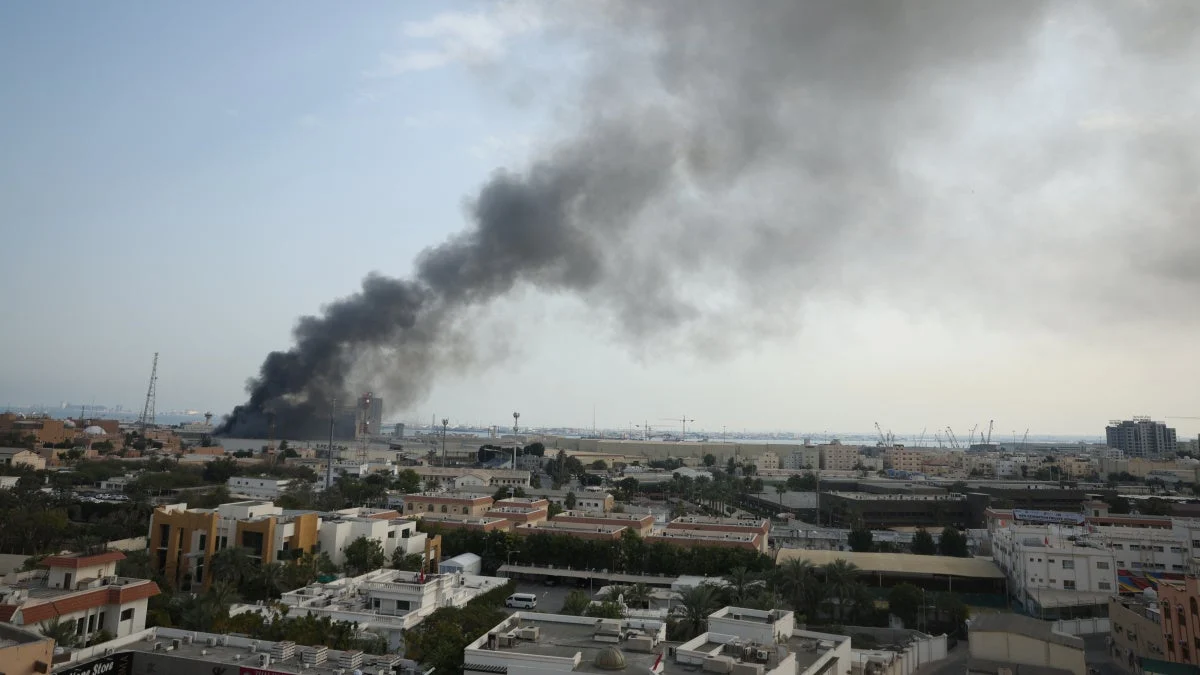
Despite a brief diplomatic overture on March 8, when Iranian President Masoud Pezeshkian issued an apology and promised a cessation of attacks, the offensive resumed with renewed vigor. On March 10, the Millennium Tower in Bahrain was hit, killing a 29-year-old Bahraini woman. Between March 12 and March 16, the campaign intensified its focus on economic infrastructure, striking the Dubai International Financial Centre (DIFC) and causing a major fire at a fuel storage facility near Dubai International Airport.
The Targeting of Global Financial Hubs and Infrastructure
One of the most concerning developments in this conflict is the explicit targeting of civilian economic centers. Iranian officials have shifted their rhetoric from claiming "accidental" civilian damage to asserting that economic hubs are legitimate targets. Ebrahim Jabbari, a general with the Islamic Revolutionary Guard Corps (IRGC), stated that Iran would "hit all economic centers in the region" if Western pressure continued.
Human Rights Watch specifically investigated the targeting of the Dubai International Financial Centre (DIFC), a critical node in the global economy. On March 14, an Iranian drone struck ICD Brookfield Place, a high-rise complex housing premier office spaces, gyms, and retail outlets. This attack followed a series of warnings from IRGC-affiliated media outlets, which published graphics listing specific American management consulting and investment firms—such as KKR, Bain & Company, and Boston Consulting Group—as "legitimate targets."
The impact on global aviation has been equally severe. Dubai International Airport, consistently ranked as the world’s busiest for international passenger traffic, has seen multiple disruptions. On March 16, a drone strike on a fuel tank caused a massive fire, forcing the Civil Aviation Authority to suspend flights. These disruptions affect not only global commerce but also humanitarian efforts, as the airport had been serving as a primary hub for repatriation flights for those fleeing the broader Middle East conflict.
Technical Analysis of Iranian Weaponry and Accuracy
The nature of the weapons used suggests a high degree of intentionality in these strikes. Human Rights Watch and independent weapons experts have identified the use of the Shahed-136 and the more advanced Shahed-238 drones. The Shahed-238 is a turbojet-powered version of its predecessor, capable of higher speeds and equipped with sophisticated guidance systems, including Global Navigation Satellite Systems (GNSS) and radar homing.
These drones are designed to overcome electronic jamming, which is a common countermeasure used by GCC air defenses. While the UAE and its neighbors have reported an interception rate exceeding 90 percent—utilizing advanced systems like the Patriot and THAAD—the sheer volume of Iranian launches ensures that some projectiles penetrate the shield. Furthermore, the "success" of an interception does not guarantee civilian safety; several deaths, including those in Bahrain and the UAE, have been attributed to falling debris from intercepted missiles and drones over densely populated areas.
The Disproportionate Impact on Migrant Workers
The human toll of the conflict highlights a grim reality: the migrant worker population in the Gulf is on the front lines. Of the 11 confirmed deaths, at least 10 were foreign nationals. These individuals often live in high-density housing or work in service sectors—such as security at airports or maintenance at luxury hotels—that have become the focal points of Iranian strikes.
In one documented case on February 28, Saleh Ahmed, a Bangladeshi national, was killed in Ajman, UAE, while operating a water delivery truck. His son, Mohammad Abdul Haq, reported that debris from an aerial engagement pierced the cab of the truck, killing Ahmed instantly. Such incidents underscore the vulnerability of a population that often lacks the resources or the legal protections to evacuate during times of crisis. "Civilians, particularly migrant workers, across Gulf states are being threatened, killed, and injured by Iranian drones and missiles," said Joey Shea, senior Saudi Arabia and UAE researcher at Human Rights Watch.
Official Responses and Diplomatic Stalemate
The international response has been characterized by a mix of condemnation and strategic silence. While the United States State Department has confirmed injuries to Defense Department employees in Bahrain and suspended operations at its embassy in Kuwait, GCC governments have been more reserved in their public statements. Authorities in Bahrain, Kuwait, Saudi Arabia, and the UAE did not provide formal comments to HRW by the time of publication, though Oman requested more time to review the findings.
Iran’s official position remains contradictory. While the presidency offered an apology in early March, the IRGC and the Khatam al-Anbiya Central Headquarters have maintained that "every point that serves as the origin of aggression against Iran is a legitimate target." In a formal response to HRW, Iranian authorities rejected claims of attacking regional countries, asserting that their "defensive operations" are strictly directed at U.S. military facilities. However, HRW’s field investigations and geolocated video evidence suggest a much broader and more indiscriminate targeting pattern.
Legal Analysis and Potential War Crimes
Under International Humanitarian Law (IHL), the principle of distinction is paramount. Parties to a conflict must distinguish between military objectives and civilian objects at all times. HRW’s analysis suggests that many of the sites hit—luxury hotels, retail centers, and private residences—have no discernible military utility. Even if U.S. personnel were present in some of these locations, the presence of a few military individuals does not transform a 400-room civilian hotel into a legitimate military objective.
Furthermore, the principle of proportionality prohibits attacks where the expected harm to civilians outweighs the anticipated military advantage. The use of explosive drones in densely populated financial districts and residential neighborhoods carries a high risk of "incidental" loss of life, which, when conducted recklessly or deliberately, constitutes a war crime. The IRGC’s public statements regarding the targeting of private American companies further suggest a policy that ignores the civilian status of economic entities.
Broader Implications for Regional Stability
The ongoing strikes have far-reaching implications beyond the immediate loss of life. The targeting of the GCC’s economic infrastructure threatens to destabilize one of the few regions of relative financial growth in the Middle East. If international firms and expatriate workers begin a mass exodus due to security concerns, the long-term economic damage to the UAE and its neighbors could be catastrophic.
Moreover, the conflict demonstrates the evolving nature of modern warfare, where low-cost, high-precision drones can be used to hold a region’s most sophisticated cities hostage. The psychological impact on the civilian population is profound; residents of Dubai and Manama, once considered safe havens, now find themselves scanning the skies for the sound of jet-engine drones.
Human Rights Watch has called on the Iranian government to immediately cease all attacks on civilian objects and for the international community to hold perpetrators accountable. "Iran’s response appears to be striking civilians and civilian objects and devastating lives and livelihoods across the Gulf," Shea concluded. As the conflict enters its second month, the need for a diplomatic off-ramp has never been more urgent, lest the cycle of retaliation consume the entire region.

Related Posts
Human Rights Watch Calls for Investigation into Death of Detainee Following Removal from Najaf Hospital by Iraqi Drug Police
Human Rights Watch Urges UN Security Council to Extend Lebanon Peacekeeping Mission Amid Escalating Conflict and Humanitarian Crisis