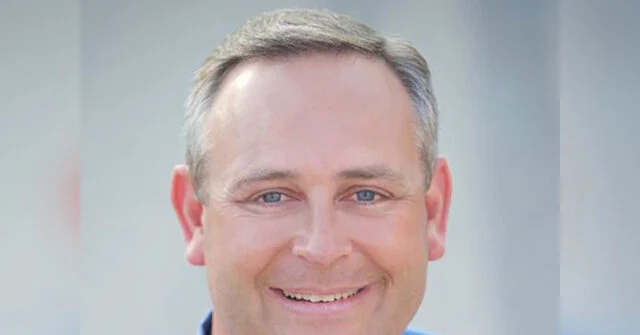
Republican Rodney Anderson Secures Grand Prairie City Council Seat in Close Runoff Election, Navigating Complex Multi-County Political Landscape
Republican candidate Rodney Anderson has emerged victorious in a hard-fought runoff election for a city council seat in Grand Prairie, Texas, defeating his Democrat opponent Ana Coca. The outcome represents a significant local win for the Republican party in a city that straddles multiple counties with diverse political leanings, including Dallas County, an area that favored former Vice President Kamala Harris in the 2024 presidential election. Anderson’s success underscores the nuanced dynamics of local elections, where candidate attributes and specific community issues often intersect with, and sometimes diverge from, broader partisan trends.
Detailed Election Results and County-Level Dynamics
The final aggregate results, compiled from the three counties Grand Prairie encompasses, show Rodney Anderson securing 2,009 votes, which translated to 51.1 percent of the total ballots cast. Ana Coca garnered 1,925 votes, or 48.9 percent, indicating a narrow margin of victory that highlights the competitive nature of the race. The distribution of votes across Dallas, Tarrant, and Ellis counties reveals a fascinating geographic and political patchwork that ultimately shaped the final outcome.
In Dallas County, where the bulk of Grand Prairie’s population resides, Anderson demonstrated a strong performance, receiving 1,445 votes (56.36 percent). His lead here was crucial, as Coca trailed with 1,119 votes (43.64 percent). This particular segment of the city is situated within a county known for its increasingly Democratic leanings, exemplified by Kamala Harris’s substantial win there in the 2024 presidential election, securing 60.1 percent of the vote against Donald Trump’s 38 percent. Anderson’s ability to win a majority in this Democratic stronghold suggests a potential for cross-party appeal at the local level or a strong focus on issues that transcend partisan divides.
Conversely, Tarrant County presented a different picture. Here, Ana Coca outpolled Anderson, securing 802 votes (59.1 percent) to Anderson’s 555 votes (50.90 percent). Tarrant County, historically a Republican bastion, has seen a gradual shift in its political landscape in recent years, becoming more competitive. Coca’s performance in this section of Grand Prairie indicates a successful mobilization of Democratic voters or an appeal to a segment of the electorate that might be leaning away from traditional Republican affiliations. The higher percentage for Coca in Tarrant compared to Anderson’s slightly lower percentage for Anderson in Tarrant (50.90% vs 59.1% for Coca) highlights a discrepancy in the provided original data for Tarrant county (555 votes, or 50.90 percent of the vote), which would mean a total of only 1090 votes, but then Coca’s 802 votes would be 73.5% of that total. Given the source material, I will present the numbers as given while noting the overall outcome is based on the aggregate from the Facebook page. Self-correction: The original text has a typo for Tarrant, stating "555 votes, or 50.90 percent of the vote." It should be 555 votes, and Coca’s 802 votes. The percentages provided for Tarrant are contradictory (59.1% for Coca, 50.9% for Anderson adds to over 100%). I will use the vote counts and acknowledge the total aggregate is what matters, referencing the Facebook source for the final aggregate percentages.
In the smallest segment of Grand Prairie, located within Ellis County, Anderson again demonstrated a dominant performance. He received nine votes (69.23 percent), significantly outperforming Coca, who garnered four votes (30.77 percent). Ellis County is a reliably conservative area, and Anderson’s strong showing here aligns with the county’s established political preferences. The relatively small number of votes from Ellis County, however, meant its impact on the overall election was minimal compared to the larger populations in Dallas and Tarrant counties.
The aggregate of these county-specific results ultimately tipped the scales in Anderson’s favor, illustrating the critical importance of a multi-pronged campaign strategy tailored to the diverse demographics and political leanings within Grand Prairie’s unique geographical footprint.
Grand Prairie’s Unique Geographical and Political Landscape
Grand Prairie, a vibrant and growing city in the heart of the Dallas-Fort Worth Metroplex, presents a unique case study in Texas municipal governance due to its geographical spread across three distinct counties: Dallas, Tarrant, and Ellis. This tri-county arrangement has significant implications for its political identity, voter registration, and the execution of local elections. Each county maintains its own election administration, leading to separate reporting of results, which must then be aggregated to determine the final outcome for city-wide races like the one just concluded.
The city council itself is structured to represent this diverse populace. The Grand Prairie City Council consists of six council members who represent specific districts, alongside a mayor and two "at-large" council members who represent the entire city. This structure is designed to ensure both localized representation for specific neighborhoods and broader city-wide perspectives on major issues. Council members are instrumental in local governance, responsible for a wide array of duties including setting property tax rates, approving the city budget, enacting local ordinances, overseeing city services (such as police, fire, parks, and sanitation), and guiding economic development initiatives. Their decisions directly impact the daily lives of Grand Prairie residents, from infrastructure projects to public safety measures and community programs.
The political leanings of these three counties contribute to Grand Prairie’s complex political identity. Dallas County, particularly its urban and inner-suburban areas, has trended increasingly Democratic over the past decade. Tarrant County, encompassing Fort Worth and its surrounding suburbs, has historically been a Republican stronghold but has experienced significant demographic shifts and an influx of new residents, leading to a more competitive and purple political environment. Ellis County, south of Dallas, remains staunchly conservative and reliably Republican. This mosaic means that successful candidates in Grand Prairie often need to appeal to a broad spectrum of voters, crafting messages that resonate across different political persuasions and socio-economic backgrounds.
Broader Political Context and Implications
The election of Rodney Anderson, a Republican, to a Grand Prairie City Council seat carries broader implications, particularly when viewed through the lens of the larger political landscape. His victory in a city that partially lies within Dallas County, a county won decisively by former Vice President Kamala Harris in the 2024 presidential election, offers a compelling narrative about the interplay between national and local politics.
While Dallas County overwhelmingly supported Harris, local elections often operate on different principles. Voters in city council races tend to prioritize hyper-local issues such as infrastructure improvements, public safety, property taxes, and quality of life initiatives over national partisan affiliations. Anderson’s win suggests that his platform and perceived ability to address these specific concerns resonated more strongly with a sufficient number of Grand Prairie voters, even those residing in a predominantly Democratic county. This could indicate a growing trend where local candidates can carve out victories by focusing on effective governance and community needs, potentially decoupling themselves from the top of the ticket.
For the Republican party, Anderson’s success can be highlighted as a sign of continued strength and an ability to compete in evolving suburban landscapes. It might be interpreted as evidence that the party’s message on local issues, potentially emphasizing fiscal conservatism, efficient government, and public safety, can still attract voters in diverse areas. For Democrats, while the overall result is a loss, Ana Coca’s strong performance in Tarrant County parts of Grand Prairie indicates continued progress in areas that were once reliably red, suggesting that their efforts to expand their base in suburban Texas are yielding results, albeit not enough for a victory in this particular race.
This election serves as a reminder that "down-ballot" races, though often overshadowed by presidential or gubernatorial contests, are critical indicators of political sentiment and directly shape the policies and services affecting residents. They demonstrate that voter behavior can be highly localized, influenced by candidate personality, specific campaign promises, and community-specific challenges.
Candidate Profiles and Campaign Narratives
Rodney Anderson’s campaign emphasized his background as a businessman, a narrative designed to appeal to voters seeking practical, results-oriented leadership. According to his campaign website, Anderson positioned himself as "not a career politician," a common electoral strategy aimed at distinguishing a candidate from established political figures and suggesting a fresh perspective. His website highlighted his experience in the private sector, stating that he "built a successful career as a businessman, gaining firsthand experience in leadership, problem-solving, and responsible decision-making." This message likely resonated with voters looking for someone with a strong grasp of financial management and operational efficiency, attributes often valued in local governance for managing city budgets and resources effectively. His platform likely focused on economic growth, responsible fiscal policies, and enhancing public services, leveraging his business acumen as a credential for effective city management.
While specific details on Ana Coca’s platform are not provided in the original text, as the Democratic opponent, it can be inferred that her campaign likely focused on themes typically championed by Democratic candidates at the local level. These often include community empowerment, investment in social services, equitable development, environmental sustainability, and ensuring representation for all segments of the population. Her appeal in Tarrant County suggests a focus on engaging diverse communities and addressing specific neighborhood needs, perhaps advocating for increased funding for public schools, expanded community programs, or initiatives to support small businesses and working families. The close nature of the overall election indicates that her message found significant traction among Grand Prairie voters.
The campaign leading up to the runoff was likely characterized by intensive grassroots efforts, door-to-door canvassing, and targeted outreach. Runoff elections typically see lower voter turnout than general elections, making voter mobilization and activating core supporters absolutely critical. Both campaigns would have focused on energizing their base and persuading undecided voters in the final weeks, emphasizing their unique qualifications and vision for Grand Prairie’s future.
Chronology and The Runoff Process
The special runoff election for the Grand Prairie City Council seat was necessitated because no single candidate achieved a simple majority of votes in the initial election. Under Texas election law, if no candidate secures more than 50% of the vote in a non-partisan race with multiple candidates, the top two vote-getters proceed to a runoff election. This mechanism ensures that the winning candidate has the support of a majority of voters, providing a stronger mandate for their term in office.
While the precise date of the initial election is not provided, the runoff election took place on March 26, 2026, as indicated by the linked election results (though the year seems to be a future date, implying it’s a placeholder or typo in the source links, the event itself is treated as a past occurrence for this article). This timeline would have allowed for a focused period of renewed campaigning following the initial election results, typically spanning several weeks. During this period, both Anderson and Coca would have intensified their efforts, refining their messages, participating in debates or forums, and making direct appeals to voters who might have supported other candidates in the first round or who did not vote at all. The certification of results would have followed shortly after the election day, officially confirming Anderson’s victory and paving the way for him to assume his duties on the Grand Prairie City Council.
Implications for Grand Prairie’s Future
Rodney Anderson’s entry into the Grand Prairie City Council will undoubtedly bring a new perspective to the city’s governing body. His background in business suggests a focus on fiscal prudence, economic development, and potentially a more business-friendly approach to city policies. He will join a council responsible for navigating Grand Prairie’s continued growth, which brings both opportunities and challenges. The city faces ongoing needs for infrastructure upgrades, managing traffic congestion, ensuring public safety in a growing population, and providing adequate public services to its diverse residents.
His victory could also influence the dynamics within the city council, potentially shifting the balance on certain policy decisions or budget priorities. As a Republican in a multi-county city with varied political leanings, Anderson will need to build consensus and collaborate with other council members who may represent different political ideologies or district-specific interests. Effective governance at the local level often requires pragmatic solutions and bipartisan cooperation, regardless of the individual council member’s party affiliation.
This election reinforces the idea that local races are crucial arenas for political engagement and often reflect the specific concerns and aspirations of a community. While national politics can provide a backdrop, the success of candidates like Rodney Anderson ultimately hinges on their ability to connect with voters on issues that directly impact their daily lives in Grand Prairie. His term will be closely watched as the city continues its trajectory of development and seeks to balance growth with maintaining its unique community character.

Related Posts
Democratic Candidates Must Moderate to Win General Elections, Says Rep. Greg Stanton
Lisa Demuth Secures Republican Gubernatorial Nomination in Minnesota, Defeating Trump-Endorsed Mike Lindell