US Lifts Sanctions on Senior Malian Officials Amid Resumed Intelligence Cooperation and Regional Security Shifts
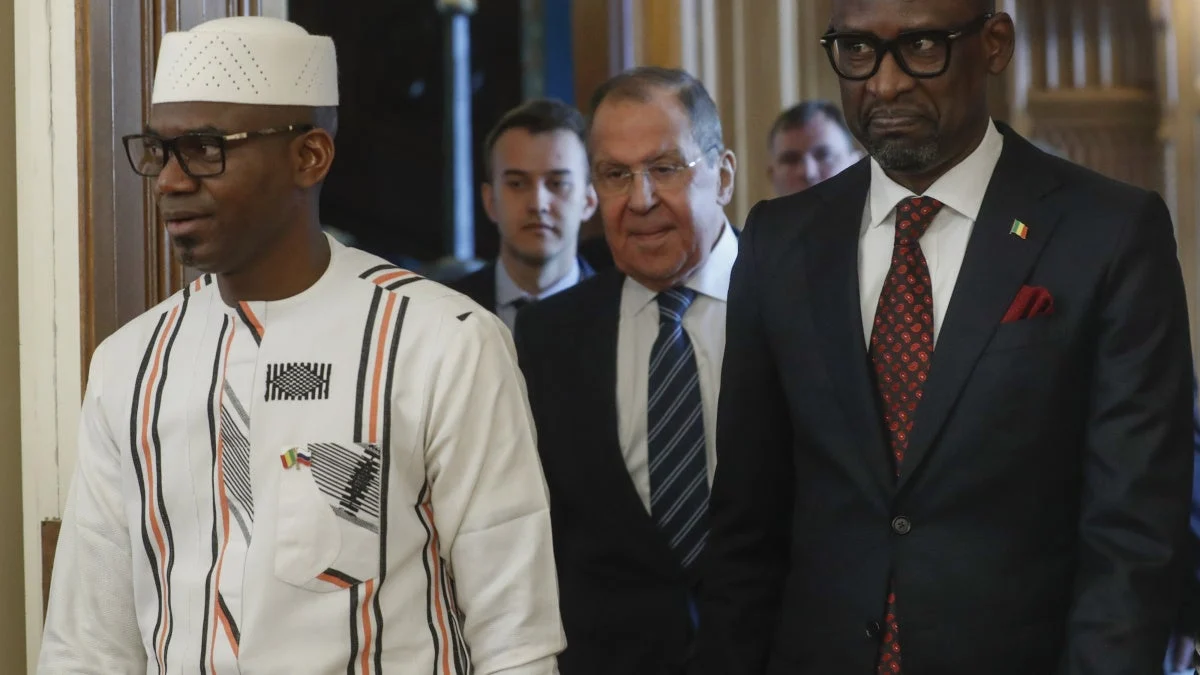
The United States government has formally announced the removal of sanctions against three high-ranking Malian military officials previously targeted for their roles in facilitating the presence of the Russian-backed Wagner Group. The decision, executed by the Department of the Treasury’s Office of Foreign Assets Control (OFAC), involves Defense Minister Sadio Camara, Air Force Chief of Staff Colonel Alou Boï Diarra, and Deputy Chief of Staff Colonel Adama Bagayoko. This policy reversal comes at a critical juncture in the Sahel region’s security landscape, marking a significant pivot in Washington’s diplomatic strategy toward the Malian military junta. While the move is framed within the context of evolving bilateral relations and regional stability, it has drawn sharp criticism from international human rights monitors who argue that the lifting of these restrictions signals a disregard for documented atrocities and undermines global accountability mechanisms.
The three officials were originally sanctioned in July 2023 under Executive Order 14059. At the time, the U.S. Treasury Department asserted that Camara, Diarra, and Bagayoko were instrumental in "facilitating the Wagner Group’s activities in Mali," an involvement that reportedly exposed Malian civilians to systemic human rights abuses and enabled the exploitation of the nation’s sovereign resources. The sanctions froze any U.S. assets held by the individuals and prohibited American entities from conducting business with them. The sudden removal of these names from the Specially Designated Nationals (SDN) list suggests a shift toward what analysts describe as "security pragmatism," as the U.S. seeks to regain a foothold in a region where Russian and Chinese influence has expanded rapidly following the withdrawal of European forces.
A Decade of Conflict and the Rise of the Military Junta
The current political and security crisis in Mali is rooted in a complex insurgency that began in 2012. What started as a Tuareg rebellion in the north was quickly co-opted by Islamist armed groups linked to Al-Qaeda and later the Islamic State. For over a decade, these groups have waged a relentless campaign against the Malian state, targeting security forces and local populations alike. The conflict has resulted in the deaths of tens of thousands of civilians and the displacement of more than 400,000 people within Mali’s borders, according to data from the United Nations High Commissioner for Refugees (UNHCR).
In response to the perceived inability of the civilian government to quell the insurgency, the Malian military seized power in a 2020 coup, followed by a second "coup within a coup" in May 2021 led by Colonel Assimi Goïta. The military junta, known as the National Committee for the Salvation of the People (CNSP), initially promised a swift return to democratic rule but has since repeatedly delayed elections. During this period, relations with traditional Western allies, particularly France, deteriorated. In 2022, French forces involved in Operation Barkhane departed the country, leaving a security vacuum that the junta filled by pivoting toward Moscow and the Wagner Group.
The Wagner Group and the Transition to Africa Corps
The entry of the Wagner Group into Mali in late 2021 marked a turning point in the conflict’s dynamics. The private military company, founded by the late Yevgeny Prigozhin, was contracted by the Malian junta to provide training, security for high-ranking officials, and direct combat support. However, the group’s arrival was accompanied by a surge in reports of extrajudicial killings, torture, and forced disappearances. One of the most notorious incidents occurred in March 2022 in the town of Moura, where United Nations investigators concluded that Malian troops and "foreign armed personnel"—widely identified as Wagner fighters—summarily executed at least 500 people during a five-day operation.
By 2025, following the death of Prigozhin and the restructuring of Russian paramilitary operations, the Wagner Group’s assets in Mali were largely integrated into the "Africa Corps," a structure operating more directly under the oversight of the Russian Ministry of Defense. Despite the rebranding, human rights organizations like Human Rights Watch and Amnesty International have documented ongoing abuses. Reports from late 2025 and early 2026 indicate that joint operations between the Malian Armed Forces (FAMa) and Russian personnel have continued to target civilian populations, particularly those from the Fulani ethnic group, who are often collectively accused of supporting Islamist insurgents.
Strategic Realignment: The U.S. Quest for Regional Influence
The decision to lift sanctions on Camara, Diarra, and Bagayoko appears to be a calculated move to facilitate a new intelligence-sharing agreement between Washington and Bamako. In February 2026, Nicholas Checker, a senior official from the U.S. State Department, conducted a high-level visit to Bamako to meet with Malian Foreign Minister Abdoulaye Diop. Sources close to the negotiations suggest that the U.S. is nearing a deal to resume intelligence operations in Mali, which were largely suspended or curtailed following the 2020 and 2021 coups.
This diplomatic thaw is driven by several geopolitical factors:
- The Loss of Niger: Following the July 2023 coup in neighboring Niger and the subsequent expulsion of U.S. forces from Air Base 101 and Air Base 201 (a critical drone hub), the United States lost its primary surveillance capabilities in the Sahel. Establishing a renewed presence in Mali is seen as a way to mitigate this intelligence "blind spot."
- Countering Russian Hegemony: By engaging with the Malian junta, Washington hopes to provide an alternative to total reliance on the Kremlin. The lifting of sanctions on the Defense Minister—the very man who brokered the Wagner deal—is a significant concession intended to build trust with the junta’s inner circle.
- Containment of Islamist Groups: The Sahel has become the global epicenter of jihadist violence. U.S. policymakers argue that a complete abandonment of security cooperation with Mali would allow Al-Qaeda and ISIS affiliates to expand their territorial control, potentially threatening coastal West African states.
Chronology of Key Events
- January 2012: Tuareg and Islamist insurgency begins in northern Mali.
- August 2020: Military officers led by Assimi Goïta overthrow President Ibrahim Boubacar Keïta.
- May 2021: A second coup consolidates military control; Goïta is named interim president.
- December 2021: Wagner Group personnel begin arriving in Mali.
- March 2022: The Moura massacre occurs; over 500 civilians are killed.
- July 2023: U.S. Treasury Department sanctions Sadio Camara, Alou Boï Diarra, and Adama Bagayoko for Wagner-related activities.
- December 2023: MINUSMA (UN Peacekeeping Mission) completes its withdrawal from Mali at the junta’s request.
- September 2025: Mali, Burkina Faso, and Niger announce plans to withdraw from the International Criminal Court (ICC), citing "imperialist bias."
- February 2026: U.S. State Department official Nicholas Checker visits Bamako.
- February 2026: U.S. officially lifts sanctions on the three senior Malian officials.
Human Rights Implications and Domestic Suppression
The removal of sanctions has sparked an outcry from human rights defenders who view the move as a betrayal of the victims of the conflict. Human Rights Watch has noted that accountability in Mali is virtually non-existent. The domestic judiciary is under the heavy influence of the military, and the junta’s decision to move away from international legal frameworks, such as the ICC, further narrows the path to justice.
Furthermore, the internal political climate in Mali has grown increasingly restrictive. Since 2020, the junta has systematically dismantled the democratic space. In early 2026, the government escalated its assault on free expression by banning political parties and arresting several high-profile critics and journalists. Civil society activists who have spoken out against the military’s conduct or the presence of Russian mercenaries have been subjected to forced disappearances and arbitrary detentions. By lifting sanctions on the architects of this security apparatus, critics argue the U.S. is tacitly validating a regime that maintains power through repression.
Legal Constraints and the Leahy Law
The resumption of security cooperation faces significant legal hurdles in the United States. Under the "Leahy Law," the U.S. government is prohibited from providing military assistance to foreign security force units that have committed a "gross violation of human rights" (GVHR) with impunity. Given the documented history of the Malian Air Force—overseen by Diarra and Bagayoko—conducting airstrikes that have resulted in civilian casualties, any renewed assistance would require rigorous vetting.
Additionally, U.S. law generally restricts aid to governments that have come to power through a military coup. While "national security waivers" can sometimes be applied, the process is politically sensitive. The lifting of individual sanctions on these officials may be a precursor to a broader legal maneuver to reclassify the Malian government as a partner in counterterrorism, despite its undemocratic origins.
Analysis of Broader Impacts
The decision to lift sanctions represents a shift from a values-based foreign policy to one defined by strategic competition. For the U.S., the risk of being completely sidelined in the Sahel is now perceived as greater than the moral and political cost of engaging with abusive regimes. However, this strategy carries long-term risks.
First, by easing pressure on the junta without demanding progress on human rights or a return to civilian rule, the U.S. may inadvertently encourage further impunity. If military leaders perceive that sanctions are temporary and can be negotiated away in exchange for intelligence access, there is little incentive for them to alter their conduct.
Second, the move could alienate democratic allies in the region and within the African Union who have sought to uphold constitutional order. It sends a confusing message to other nations where the U.S. continues to advocate for democratic transitions and the rule of law.
Finally, the effectiveness of the intelligence-sharing deal remains to be seen. The Malian junta has demonstrated a strong preference for the Russian model of security, which prioritizes regime survival over population-centric counterinsurgency. Whether the FAMa will act on U.S.-provided intelligence in a way that aligns with international humanitarian law is a question that remains unanswered.
As the Sahel continues to grapple with instability, the U.S. removal of sanctions on Camara, Diarra, and Bagayoko stands as a testament to the difficult choices facing global powers in a fragmented geopolitical era. While Washington aims to secure its interests and counter extremist threats, the cost of this rapprochement may be paid by the Malian civilians who remain caught between the violence of insurgents and the abuses of the state.

Related Posts
Human Rights Watch Calls for Investigation into Death of Detainee Following Removal from Najaf Hospital by Iraqi Drug Police
Human Rights Watch Urges UN Security Council to Extend Lebanon Peacekeeping Mission Amid Escalating Conflict and Humanitarian Crisis