
United States Poised to Conclude Iran Operations as G7 Calls for Open Hormuz and Civilian Protection
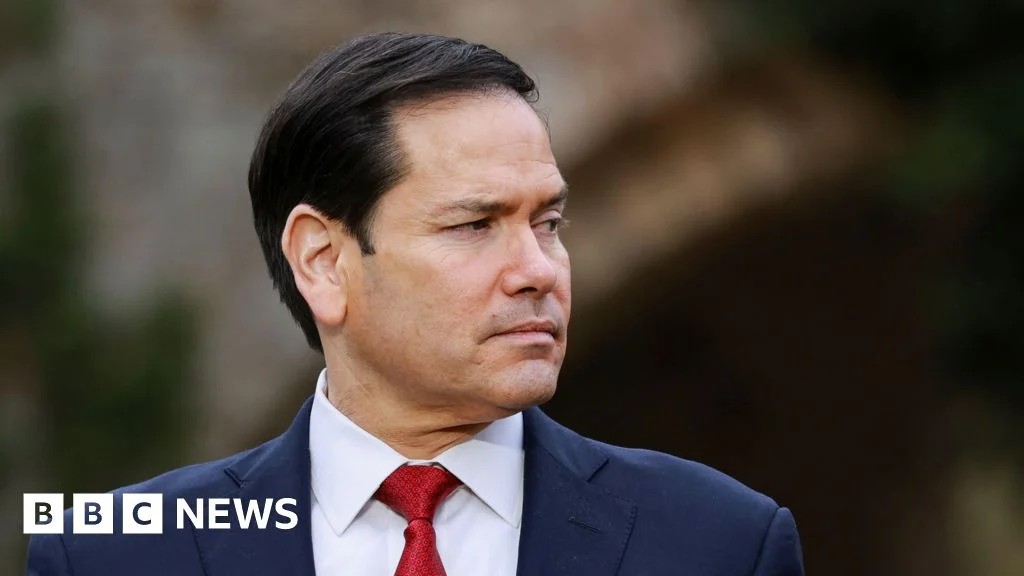
United States Secretary of State Marco Rubio announced today that the U.S. expects to finalize its military operations in Iran within the "next couple of weeks," signaling a potentially swift resolution to a conflict that has significantly reshaped geopolitical dynamics in the Middle East and sent shockwaves through global energy markets. Speaking at the conclusion of a high-stakes meeting of G7 foreign ministers in France, Secretary Rubio emphasized that the campaign’s objectives were being achieved ahead of schedule, underscoring the perceived efficacy of the U.S. and Israeli joint military efforts.
The declaration from the top American diplomat comes as the fourth week of the conflict, which commenced on February 28, draws to a close. This timeline aligns closely with initial predictions from President Donald Trump and his senior officials, who had projected a duration of four to seven weeks for the operations. Rubio reiterated this outlook, stating unequivocally that the conflict’s end was a matter of "weeks, not months," during a press conference following the G7 deliberations.
Geopolitical Landscape: The War’s Context
The conflict began on February 28, when the United States and Israel launched a concerted military campaign against Iran. This intervention followed what U.S. officials described as a series of escalating regional aggressions and direct threats to international shipping by Tehran, though specific triggering events leading to the February 28 offensive remain subject to detailed official reports. The stated objectives of the U.S.-led operations were to neutralize Iran’s capacity for regional destabilization, dismantle key military infrastructure, and ensure the security of international maritime routes, particularly in the Persian Gulf and the Strait of Hormuz.
Since the war’s inception, several prominent Iranian leaders have reportedly been killed, a development that Secretary Rubio highlighted when addressing the prospect of peace talks. While President Trump has indicated that Iran desires such negotiations—a claim Tehran vehemently denies—Rubio expressed uncertainty regarding who might credibly represent the Iranian government in any prospective discussions, given the significant disruption to its leadership structure. In parallel, the U.S. has continued to deploy additional troops to the region, a measure Rubio described as providing President Trump with expanded operational "options."
The Strait of Hormuz: A Critical Chokepoint Under Threat
A central focus of the G7 foreign ministers’ discussions was the precarious situation in the Strait of Hormuz, a vital maritime artery that Iran has threatened to close or impose fees upon in retaliation for the ongoing conflict. In their joint communiqué issued after the talks, the foreign ministers underscored "the absolute necessity to permanently restore safe and toll-free freedom of navigation in the Strait of Hormuz." Secretary Rubio clarified that this statement was a direct response to Iran’s explicit threats to levy charges on vessels transiting the strait.
The Strait of Hormuz holds immense strategic and economic importance, serving as the chokepoint through which approximately 20% of the world’s total petroleum consumption, including a significant portion of its liquefied natural gas (LNG), typically passes. Its closure, even partially, has already triggered a sharp increase in global oil prices, with crude benchmarks soaring by over 15% since the conflict began. Experts warn that a prolonged or complete blockage could precipitate a severe global energy crisis, potentially leading to a substantial contraction in the economies of numerous countries heavily reliant on these energy supplies. The International Energy Agency (IEA) had previously estimated that a sustained disruption could shave several percentage points off global GDP growth, leading to widespread inflation and economic instability.
International Diplomacy and Divergent Strategies
The G7 meeting, which brought together foreign ministers from Canada, France, Germany, Italy, Japan, the United Kingdom, and the United States, along with the European Union’s High Representative for Foreign Affairs and Security Policy, highlighted both unity in principle and divergence in operational strategy among Western allies. While all members agreed on the critical need to secure the Strait of Hormuz, most G7 countries, with the notable exception of Japan, are also members of the transatlantic NATO alliance.
These NATO members have, thus far, resisted President Trump’s appeals to deploy naval assets to escort commercial vessels through the strait. Their collective stance emphasizes that the most effective way to guarantee freedom of passage is to bring an end to the underlying conflict itself, rather than to engage in potentially escalatory military escorts. This position has reportedly been a source of frustration for the U.S. leader.
Despite these strategic differences, Secretary Rubio confirmed that the United Kingdom is spearheading efforts to forge a broader international coalition aimed at ensuring the long-term security and freedom of navigation in the Strait of Hormuz. Such a coalition, he explained, would be essential for the period following the cessation of current hostilities. Rubio also reiterated the U.S. assessment that its European and Asian allies would bear a disproportionately greater economic burden than the United States should Iran’s threats to the strait fully materialize, given their higher reliance on Middle Eastern oil and gas imports.
Humanitarian Concerns and Civilian Impact
Beyond the immediate military objectives and maritime security concerns, the G7 communique also addressed the broader humanitarian implications of the conflict. The statement unequivocally called for "an immediate cessation of attacks on civilians and civilian infrastructure." It further asserted, "There can be no justification for the deliberate targeting of civilians in situations of armed conflict as well as attacks on diplomatic facilities."
While the communiqué refrained from explicitly naming the warring parties, its strong language and context strongly suggested a condemnation of Iran’s actions. In retaliation for the U.S. and Israeli military campaign, Tehran has launched a series of drone and missile attacks not only towards Israel but also against various civilian and strategic targets across several Arab Gulf countries allied with the United States. These attacks have reportedly impacted international airports, residential complexes, U.S. diplomatic missions, and crucial energy installations in a region that plays a pivotal role in global oil and gas production. Such actions represent a grave violation of international humanitarian law, which strictly prohibits attacks on non-combatants and civilian infrastructure. The G7’s unified stance underscores the international community’s profound concern over the escalating human cost and the potential for wider regional destabilization.
Implications for Regional Stability and Global Energy Markets
The impending conclusion of U.S. operations in Iran, if achieved within the stated timeframe, marks a significant inflection point in Middle Eastern geopolitics. The rapid pace of the campaign, coupled with the reported neutralization of Iranian leadership figures, suggests a substantial reordering of power dynamics in the region. However, the long-term implications for stability remain complex and uncertain. The absence of clear Iranian representation for peace talks, as noted by Secretary Rubio, indicates that the path to a sustainable resolution may be fraught with challenges, even after military objectives are met.
Economically, while a swift end to the conflict could alleviate immediate pressures on oil prices, the deep-seated animosities and the demonstrated vulnerability of critical shipping lanes like the Strait of Hormuz will likely necessitate a fundamental reassessment of global energy security strategies. Nations will undoubtedly explore diversification of energy sources and supply routes, potentially accelerating investments in renewable energy and alternative transportation corridors. The commitment by the UK to lead a post-war security coalition for the Strait is a crucial step, but its effectiveness will hinge on broad international participation and a clear mandate.
Furthermore, the G7’s strong condemnation of civilian targeting highlights the imperative for all parties to adhere strictly to international law and protect non-combatants. The documented attacks on civilian infrastructure by Iran, as detailed in the communiqué’s implicit critique, underscore the brutal realities of modern conflict and the urgent need for humanitarian considerations to remain at the forefront of diplomatic efforts.
The Path Forward
As the United States anticipates drawing down its direct military involvement, the focus will inevitably shift towards consolidating gains, stabilizing the region, and addressing the multifaceted challenges that will undoubtedly emerge in the post-conflict environment. The divergent approaches within the G7 and NATO regarding direct military engagement in the Strait of Hormuz underscore the complexities of multilateral security cooperation in an era of rapidly evolving threats. The formation of an effective, broad-based coalition to secure international waterways will be paramount, requiring sustained diplomatic efforts to bridge strategic differences among allies. The ultimate success of this operation will not only be measured by the achievement of military objectives but also by the establishment of a durable framework for regional peace, economic stability, and the unwavering protection of civilian lives.

Related Posts
Zambia on Edge: Opposition Leader Arrested Amid Allegations of Insurrection Plot and Election Tensions
Rescuers search for survivors of powerful Indonesia earthquake

