
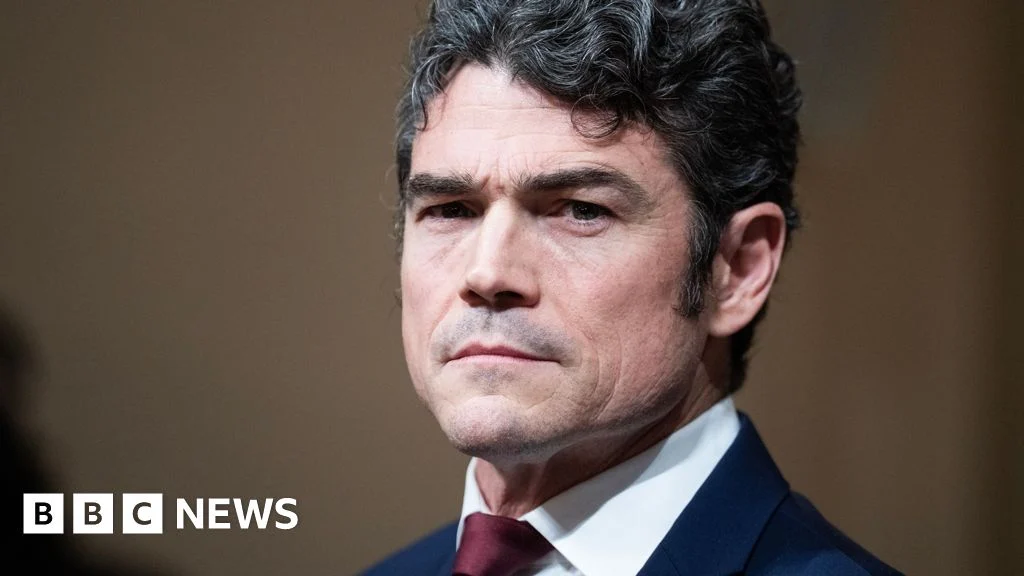
Top US counterterrorism official resigns over Iran war, urging Trump to ‘reverse course’
The Trump administration has been rocked by the high-profile resignation of its top counterterrorism official, Joe Kent, who publicly denounced the ongoing military operation in Iran and implored President Donald Trump to "reverse course." In a scathing letter shared on his X account, Kent, the Director of the National Counterterrorism Center, asserted that Iran posed "no imminent threat" to the United States and controversially claimed that the administration "started this war due to pressure from Israel and its powerful American lobby." This dramatic departure marks a significant moment of dissent within the administration, highlighting deep divisions over a conflict that has rapidly reshaped geopolitical dynamics in the Middle East.
Kent’s resignation comes amidst heightened scrutiny of the intelligence leading to the "US-Israeli operation in Iran," which has drawn sharp criticism from various quarters and raised questions about the administration’s foreign policy direction. His direct challenge to the official narrative—that Iran posed an immediate danger—has ignited a fierce debate, casting a shadow over the administration’s stated justifications for military engagement.
A Veteran’s Public Rebuke and Allegations of Deception
Joe Kent, a 45-year-old veteran with a distinguished career in US special forces and the CIA, leveraged his considerable credibility to issue a powerful indictment of the administration’s Iran policy. His letter, addressed directly to President Trump, did not mince words, alleging that "high-ranking Israeli officials" and "influential US journalists" had actively sown "misinformation" to manipulate the President. According to Kent, this concerted effort created an "echo chamber" designed to "deceive you into believing that Iran posed an imminent threat to the United States," which he unequivocally labeled a "lie."
Kent’s personal history lends particular weight to his statements. His wife, Navy cryptologic technician Shannon Kent, was tragically killed in a bombing in Syria in 2019 while serving in the fight against ISIS. Citing this profound personal loss and his extensive military service, Kent articulated a deeply personal rationale for his resignation: "I cannot support sending the next generation off to fight and die in a war that serves no benefit to the American people nor justifies the cost of American lives." This emotional appeal underscores his conviction that the current conflict is not in America’s strategic interest and represents a betrayal of the "America First" platform that initially brought President Trump to power. His 11 overseas deployments, including service with the US Army’s special forces in Iraq, and his subsequent tenure as a paramilitary officer at the CIA, position him as an insider with intimate knowledge of national security operations and intelligence assessments.
The White House Responds: Dismissal and Defense
The White House was quick to dismiss Kent’s allegations, vehemently defending its actions and the intelligence underpinning the military operation. Speaking in the Oval Office, President Trump acknowledged Kent as a "nice guy" but characterized him as "weak on security," suggesting a fundamental disagreement on the severity of the Iranian threat. Trump stated that Kent’s resignation letter solidified his belief that "it was a good thing that he’s out," indicating a clear divergence in strategic outlook.
White House Press Secretary Karoline Leavitt further elaborated on the administration’s stance, calling Kent’s suggestion that "Trump made the decision based on the influence of others, even foreign countries, is both insulting and laughable." Leavitt reiterated the administration’s official position, asserting, "As President Trump has clearly and explicitly stated, he had strong and compelling evidence that Iran was going to attack the United States first." This direct rebuttal highlights the administration’s firm conviction in the validity of its intelligence and its determination to project an image of decisive leadership. The conflicting narratives set the stage for an intense political and public debate over the origins and justifications of the Iran conflict.
A Tumultuous History: US-Iran Relations Leading to Conflict
The current "US-Israeli operation in Iran" is the culmination of decades of fraught relations between Washington and Tehran, punctuated by periods of intense hostility and fleeting attempts at rapprochement. The trajectory towards this military engagement can be traced through several critical junctures:
The Legacy of the JCPOA and Maximum Pressure
Under the Obama administration, the landmark Joint Comprehensive Plan of Action (JCPOA), or Iran nuclear deal, was signed in 2015, aiming to curb Iran’s nuclear program in exchange for sanctions relief. This agreement was hailed by some as a diplomatic triumph but criticized by others, notably then-candidate Donald Trump and key allies like Israel, who viewed it as too lenient and insufficient to prevent Iran from developing nuclear weapons.
Upon assuming office in 2017, President Trump made dismantling the JCPOA a central tenet of his foreign policy. In May 2018, the US unilaterally withdrew from the agreement, reimposing and expanding a draconian "maximum pressure" campaign of sanctions targeting Iran’s oil exports, financial sector, and key industries. The stated goal was to force Iran back to the negotiating table for a "better deal" that would address not only its nuclear program but also its ballistic missile development and regional proxy activities.
Escalation and Regional Tensions
The "maximum pressure" campaign led to a period of escalating tensions in the Persian Gulf. In 2019, there were a series of attacks on oil tankers, drone shoot-downs, and assaults on Saudi oil facilities, which the US and its allies attributed to Iran. These incidents brought the region to the brink of conflict multiple times. The assassination of Iranian Major General Qassem Soleimani, commander of the Quds Force, in a US drone strike in Baghdad in January 2020, marked a significant escalation, with Iran retaliating by firing missiles at US bases in Iraq.
Throughout this period, intelligence reports regarding Iranian capabilities and intentions were frequently contested, with some analysts warning against exaggerating the threat while others emphasized the need for a robust response to Iranian provocations. The backdrop of regional instability, including conflicts in Yemen, Syria, and Iraq where US and Iranian interests clashed through proxies, further complicated the security landscape.
The Precipice of War
The specific events immediately preceding the "US-Israeli operation in Iran" are not fully detailed in Kent’s letter or the White House’s response, beyond the claim of "compelling evidence that Iran was going to attack the United States first." This suggests a critical intelligence assessment, perhaps indicating a direct and imminent threat to US personnel or assets in the region, or to a key ally. The phrase "US-Israeli operation" also indicates a coordinated military effort, suggesting a shared strategic imperative and close intelligence cooperation between Washington and Jerusalem in perceiving and addressing the threat. The exact nature and scope of this "operation" remain a subject of intense public and political debate, but its initiation clearly crossed a threshold into active military conflict.
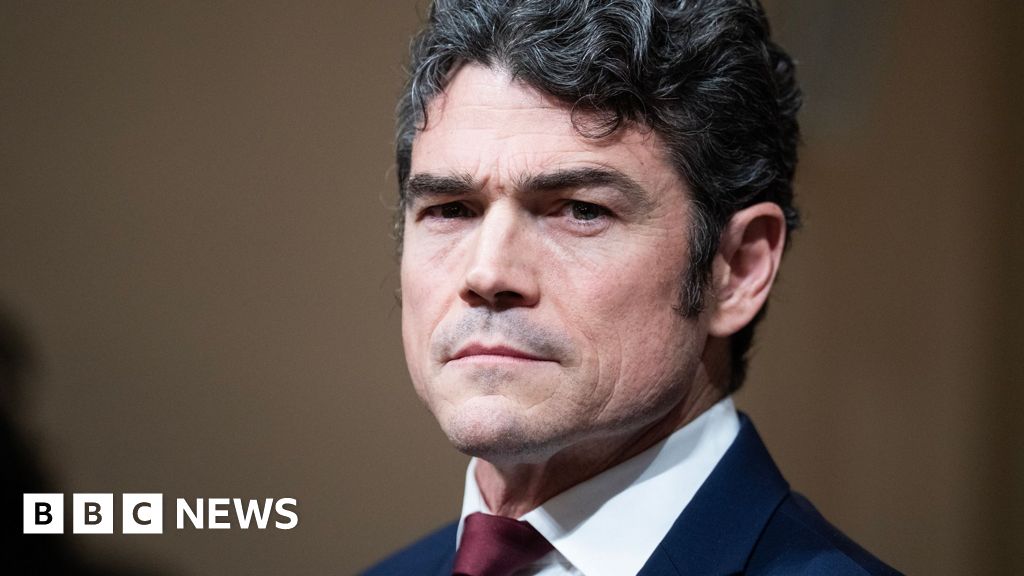
Joe Kent: A Controversial Figure
Joe Kent’s journey from decorated military operative to prominent political dissenter has been marked by both heroism and controversy. His career began in the US Army’s Special Forces, where he completed 11 deployments to combat zones, including Iraq, earning him a reputation as a hardened and experienced combat veteran. Following his military service, he transitioned to the CIA as a paramilitary officer, operating in some of the world’s most dangerous regions. His decision to leave government service after his wife’s death underscored the personal sacrifices inherent in his line of work.
Political Aspirations and Affiliations
Upon returning to civilian life, Kent emerged as a vocal supporter of Donald Trump and the "America First" movement. He unsuccessfully ran for Congress twice, aligning himself with the populist conservative wing of the Republican party. His political leanings and associations, however, drew significant criticism. During his confirmation hearing for the National Counterterrorism Center Director role, many Democrats raised concerns about his links to extremist groups, including members of the Proud Boys, a far-right organization. Furthermore, Kent refused to retract claims that federal agents had instigated the January 6 riots at the US Capitol or that Trump had won the 2020 election, positions that sparked considerable debate about his judgment and suitability for a high-level intelligence post.
Despite these controversies, Kent was narrowly confirmed to his position, reporting to Director of National Intelligence Tulsi Gabbard. In this role, he oversaw the critical task of analyzing and detecting potential terrorist threats globally, placing him at the nexus of sensitive intelligence regarding national security. His sudden resignation and public denunciation of the Iran war, therefore, carry significant weight, not just for his personal credibility but also for the institutional integrity of the intelligence community.
Broader Implications and Reactions
Kent’s resignation and his explosive allegations have sent ripples through Washington and beyond, triggering a cascade of political, domestic, and international reactions.
Political Fallout within the Administration
For the Trump administration, Kent’s departure represents the most high-profile public criticism of the US-Israeli operation in Iran from within its ranks. While President Trump’s second term has seen less turnover than his first (2017-2021), previous resignations, such as those of Security and Exchange Commission enforcement director Margaret Ryan and Kennedy Center President Ric Grenell, have occasionally signaled internal disagreements. However, Kent’s direct challenge to the fundamental justification for war is on an entirely different scale. It could embolden other potential dissenters within the administration or, conversely, solidify support for President Trump among loyalists who view Kent as "weak" or misguided. The incident highlights the enduring tension between the "America First" non-interventionist wing and more hawkish elements within the Republican party and the broader national security establishment.
Domestic Debate and Media Scrutiny
Domestically, Kent’s statements have fueled an already fervent debate about the war in Iran. Conservative media commentator Tucker Carlson, known for his close ties to Kent, was quick to praise him, telling the New York Times, "Joe is the bravest man I know, and he can’t be dismissed as a nut." Carlson added, "He’s leaving a job that gave him access to the highest-level relevant intelligence. The neocons will try to destroy him for that. He understands that and did it anyway." This reaction underscores the deep ideological chasm within the American political landscape, pitting those wary of foreign entanglements and military intervention against proponents of a more assertive foreign policy.
Critics of the war will undoubtedly seize upon Kent’s allegations, demanding greater transparency regarding the "compelling evidence" cited by the White House. The historical precedent of controversial intelligence justifications for military action, such as those preceding the 2003 invasion of Iraq, will likely be invoked, increasing public skepticism and calls for congressional oversight.
International Repercussions
Internationally, Kent’s resignation could complicate diplomatic efforts related to the Iran conflict. Allies of the United States, particularly those in Europe who favored the JCPOA and have been wary of escalating tensions with Iran, may view Kent’s statements with concern, potentially questioning the stability and coherence of US foreign policy. Adversaries like Russia and China could leverage the internal dissent to criticize American leadership and portray the US as acting on dubious pretenses or under external influence. Regional actors, particularly those directly affected by the conflict, will be closely watching how the US navigates this internal challenge, assessing its impact on the conflict’s trajectory and the broader regional power balance. The "US-Israeli operation" itself implies a complex web of alliances and rivalries in the Middle East, and any perceived cracks in the foundation of the leading powers could have wide-ranging consequences.
The "Imminent Threat" Doctrine and the Role of Lobbying
Central to Kent’s allegations is the claim that the concept of an "imminent threat" from Iran was a "lie," manufactured through "misinformation" and "pressure from Israel and its powerful American lobby." The "imminent threat" doctrine has historically been a critical, and often controversial, justification for preemptive military action. Its application typically requires robust, verifiable intelligence demonstrating that an attack is not only possible but likely to occur in the immediate future, leaving no time for diplomatic alternatives. Kent’s assertion challenges the veracity of the intelligence presented to President Trump, implying either a misinterpretation or a deliberate manipulation of facts.
The allegation of undue influence from foreign powers and domestic lobbying groups is also a significant charge. While lobbying is a legal and common practice in Washington, Kent’s claim suggests that such influence crossed a line, potentially leading to a policy decision that prioritized external interests over genuine American national security concerns. This narrative resonates with elements of the "America First" philosophy, which often emphasizes sovereignty and caution against entanglement in foreign conflicts driven by external pressures.
Conclusion
Joe Kent’s dramatic resignation from his post as Director of the National Counterterrorism Center represents a pivotal moment in the ongoing US-Israeli operation in Iran. His public denunciation of the war, grounded in his extensive military and intelligence background and personal tragedy, casts a long shadow over the administration’s justifications for military action. By alleging a manufactured "imminent threat" and undue influence from external actors, Kent has ignited a fierce debate that transcends typical political disagreements, delving into the very integrity of intelligence assessments and the motivations behind foreign policy decisions.
As the White House firmly defends its actions and the conflict in Iran continues, Kent’s voice stands as a powerful counter-narrative, forcing a critical re-evaluation of the war’s origins, its costs, and its implications for American foreign policy. His departure not only highlights deep divisions within the Trump administration but also underscores the enduring complexities and controversies surrounding US engagement in the Middle East, ensuring that the debate over the Iran war will remain at the forefront of national and international discourse for the foreseeable future.

Related Posts
Zambia on Edge: Opposition Leader Arrested Amid Allegations of Insurrection Plot and Election Tensions
Rescuers search for survivors of powerful Indonesia earthquake

