South Sudan Conflict Escalates as Mass Evacuation Orders and Aid Blockades Trigger Humanitarian Crisis in Jonglei and Upper Nile
Human Rights Watch issued a stark warning today, reporting that South Sudan’s military and various opposition forces are systematically blocking humanitarian access and issuing unjustifiable evacuation orders to civilians in populated areas. Since the final months of 2025, the South Sudan People’s Defense Forces (SSPDF) and the Sudan People’s Liberation Army in Opposition (SPLA/IO) have collectively issued at least six sweeping evacuation orders, forcing hundreds of thousands of civilians to abandon their homes and flee into regions plagued by further danger and destitution. These actions, characterized by human rights researchers as a potential instrumentalization of aid, have placed a massive civilian population at risk of starvation, violence, and displacement.
Nyagoah Tut Pur, a South Sudan researcher at Human Rights Watch, emphasized the gravity of the situation, stating that the repeated pressure from both government authorities and opposition forces is placing hundreds of thousands of people in harm’s way. Pur noted that warring parties are legally obligated to protect civilians regardless of whether they choose to evacuate or remain in areas of military operations. The report underscores a disturbing trend where evacuation orders are frequently followed by indiscriminate aerial bombardments and ground-level abuses, including unlawful killings, sexual violence, and the systematic destruction of civilian property.
Escalation of Conflict and Mass Displacement in Jonglei State
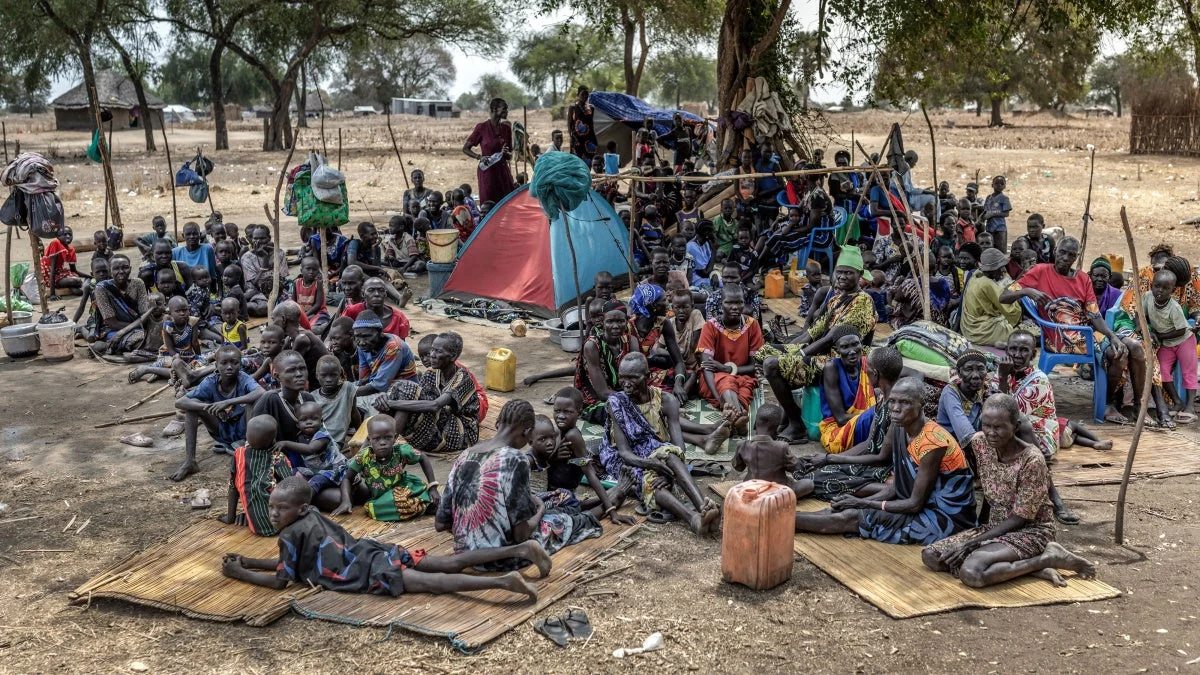
The conflict’s intensity reached a new peak in December 2025, primarily centered in the northeastern Jonglei state. This region has long been a flashpoint for political and inter-communal violence, but the current clashes between the SSPDF and the SPLA/IO represent a significant breakdown in security. Data from humanitarian monitoring agencies indicates that at least 280,000 people have been displaced in Jonglei alone over the past few months. The displacement is driven by a combination of factors: direct government bombardments, the fear of retaliatory abuses by both sides, and the formal evacuation orders issued by military commanders.
The humanitarian fallout has been catastrophic. In many instances, civilians are given mere hours to vacate towns before military operations begin. Those who flee often find themselves in swampy, inaccessible regions or crossing international borders into neighboring Ethiopia. In March 2026, a military order for the evacuation of Akobo County resulted in more than 110,000 people crossing the border into Ethiopia, seeking refuge from the impending offensive. This mass movement has strained regional resources and created a secondary crisis for international refugee agencies already struggling with funding shortages.
A Chronology of Forced Displacement and Military Action
The timeline of the current crisis reveals a calculated series of maneuvers by both the government and opposition forces to clear strategic areas of civilian presence, often without regard for the safety or sustenance of the displaced.
Late December 2025: On December 27, the SPLA/IO warned civilians in northern Jonglei to flee to opposition-controlled towns such as Pieri, Motot, and Palony. Two days later, on December 29, government forces launched a heavy bombardment on the town of Lankien. The strikes hit the local airstrip and a nearby market, resulting in the deaths of 11 civilians and injuring 12 others, including children and the elderly.
January 2026: On January 8, armed actors in Ayod county issued a 72-hour evacuation ultimatum, triggering a mass exodus. By January 12, the opposition expanded these orders to include humanitarian workers and civilians in Bor, Ayod, and surrounding areas. On January 25, the South Sudanese military issued a sweeping order for all civilians, aid workers, and United Nations personnel to evacuate opposition-controlled areas in Nyirol, Uror, and Akobo. This followed an earlier, narrower order on December 30 aimed at clearing areas around military barracks.
February 2026: Violence against humanitarian infrastructure intensified. On February 3, government bombardments struck a Médecins Sans Frontières (MSF) hospital in Lankien. Despite the warring parties having the GPS coordinates of the facility, the strike destroyed a warehouse and medical supplies while injuring a staff member. On the same day, armed fighters looted an MSF health facility in Pieri.
March 2026: On March 6, the military ordered the total evacuation of Akobo County. This was followed on March 15 by an order from the Nasir County commissioner in Upper Nile state, giving civilians and aid workers in Mandeng town 72 hours to relocate before a planned counteroffensive. By the end of the month, contradictory administrative orders in Ulang county further complicated aid delivery, with both government and opposition officials threatening aid agencies with "legal and security penalties" if they did not comply with specific relocation demands.
Obstruction of Humanitarian Aid and Attack on Infrastructure
The human rights report highlights a disturbing pattern of targeting the very organizations meant to provide relief. Beyond the physical destruction of hospitals and warehouses, the South Sudanese government has imposed severe administrative and physical barriers to aid. During the first two months of 2026, the government enforced a no-flight zone over opposition-held territories, including Lankien and Akobo. This effectively halted the delivery of life-saving medical supplies and prevented the emergency evacuation of critically ill patients.
The United Nations Children’s Fund (UNICEF) reported that between January and March 2026, at least 28 health and nutrition facilities were forced to suspend operations due to the violence. Additionally, 17 separate incidents of looting of humanitarian supplies were recorded. In Upper Nile state, local commissioners have used coercive letters to dictate where aid can be delivered, effectively using humanitarian assistance as a bargaining chip or a tool of war. For example, a March 23 letter from an opposition-aligned commissioner warned that any agency accessing government-controlled areas would be considered "government-aligned" and lose their permission to operate in the county.
Legal Analysis and Potential War Crimes
Under international humanitarian law, specifically the laws governing non-international armed conflict, the forced displacement of civilians is strictly prohibited unless the security of the civilians or imperative military reasons demand it. Human Rights Watch asserts that many of the recent orders in South Sudan do not meet these criteria. For an evacuation to be considered lawful, it must be temporary, necessary, and conducted in a manner that ensures the safety, nutrition, and health of the displaced population.
Furthermore, the report notes that civilians who choose to remain in their homes despite an evacuation order do not lose their protected status. They may not be targeted, nor can they be retaliated against for failing to leave. The evidence of indiscriminate aerial bombardments in areas under evacuation orders, combined with reports of targeted killings, rape, and the burning of civilian property, suggests that both the SSPDF and SPLA/IO may be committing war crimes and crimes against humanity.
Broader Implications and the Risk of Famine
The man-made nature of this crisis is exacerbating an already dire food security situation in South Sudan. According to the Integrated Food Security Phase Classification (IPC), several conflict-affected areas in Jonglei and Upper Nile are now at a significant risk of famine. The displacement has prevented farmers from planting or harvesting crops, and the blockades on aid mean that emergency food rations are not reaching those in need.
In Nyatim, Nyirol county, approximately 3,000 displaced people are currently sheltering in swampy areas without access to food or basic medical care. MSF reported that at least 58 people died in this location over a single four-week period due to the lack of assistance and the government’s ongoing blockades. The intersection of conflict, displacement, and the deliberate obstruction of aid has created a "perfect storm" for a humanitarian catastrophe.
Regional Stability and the Need for Accountability
The crisis is not contained within South Sudan’s borders. The influx of over 110,000 refugees into Ethiopia’s Gambella region threatens to destabilize an area already dealing with its own internal security challenges and resource scarcity. International actors, including the African Union and the United Nations, are being urged to take more decisive action to hold South Sudanese leaders accountable for these violations.
The 2018 Revitalized Agreement on the Resolution of the Conflict in the Republic of South Sudan (R-ARCSS) was intended to end the civil war that began in 2013. However, the recent surge in violence and the blatant disregard for civilian life by both signatories of the peace deal suggest that the agreement is failing to protect the population. Human Rights Watch and other international observers are calling for targeted sanctions and increased pressure on both the government in Juba and the opposition leadership to cease the forced displacements and allow unfettered access for humanitarian organizations.
As the conflict continues into mid-2026, the international community faces the challenge of addressing a crisis that is increasingly defined by the deliberate suffering of the civilian population. Without a significant shift in the behavior of the warring parties or a robust international intervention focused on accountability, the humanitarian disaster in Jonglei and Upper Nile is expected to worsen, potentially leading to a loss of life on a scale not seen since the height of the civil war.

Related Posts
Human Rights Watch Calls for Investigation into Death of Detainee Following Removal from Najaf Hospital by Iraqi Drug Police
Human Rights Watch Urges UN Security Council to Extend Lebanon Peacekeeping Mission Amid Escalating Conflict and Humanitarian Crisis