
Socialists Consolidate Urban Power in French Local Elections, Mainstream Parties Eye Presidential Prospects
France’s recent local elections delivered a complex and often contradictory message, ultimately reinforcing the dominance of mainstream parties in the nation’s largest urban centers while offering a nuanced glimpse into the evolving political landscape ahead of the 2027 presidential contest. The Socialist Party (PS) and its allies successfully retained control of the country’s four largest cities – Paris, Marseille, Lyon, and Lille – a significant achievement that defied some predictions and provided a morale boost for the traditional left. However, the elections also highlighted the persistent fragmentation of the left, the strategic gains made by the far-right, and the cautious optimism of President Emmanuel Macron’s centrist allies.
Key Urban Strongholds Remain Socialist
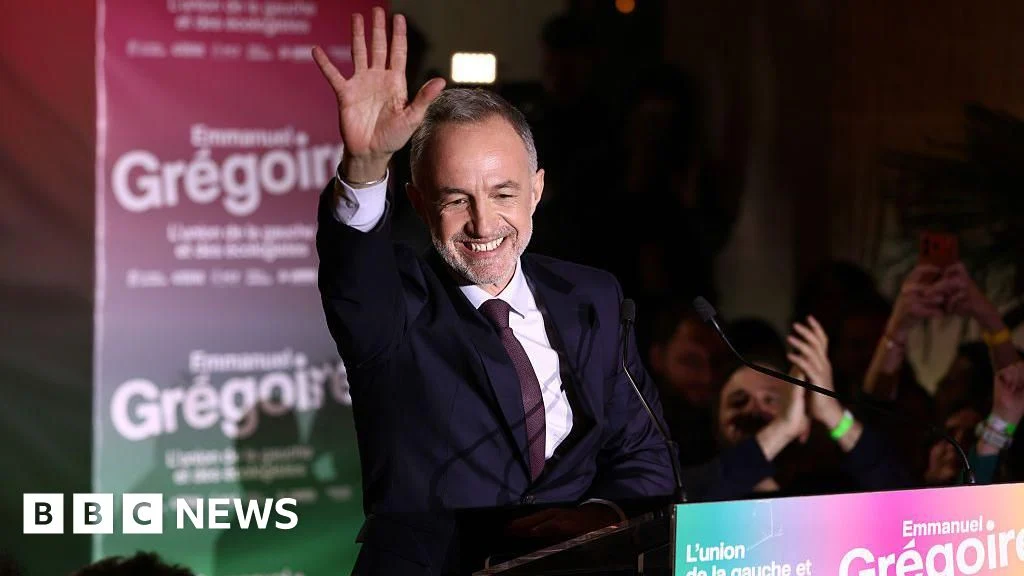
The most striking outcome of the second-round run-offs, held on March 22, 2026, was the Socialists’ ability to defend their long-held bastions. In Paris, the capital city, Emmanuel Grégoire, the Socialist candidate and protégé of outgoing mayor Anne Hidalgo, secured a decisive victory. Grégoire’s win was largely anticipated by opinion polls and solidified Paris’s reputation as a predominantly left-leaning metropolis. His campaign largely echoed Hidalgo’s popular, if sometimes controversial, anti-car policies, which have reshaped the urban landscape and resonated with a significant portion of Parisian voters. The right-wing challenger, Rachida Dati, a former minister under Presidents Nicolas Sarkozy and Emmanuel Macron, proved a pugnacious but ultimately divisive figure. Her campaign was further complicated by impending corruption charges, which likely swayed some undecided voters, and a late endorsement from far-right figure Sarah Knafo, after Knafo withdrew from the race, which may have alienated more moderate conservative voters.
Marseille, France’s second-largest city, also saw the Socialists and their allies hold firm. This victory was particularly significant given the concerted efforts by the far-right National Rally (RN) to make inroads into the port city, which has historically been a battleground for various political factions. The RN’s ambitions were thwarted as their opponents successfully rallied against them, and the presence of a Republican (LR) candidate splitting the right-wing vote ultimately benefited the incumbent left-wing administration.
Similarly, in Lyon, the ecologist mayor Gregory Doucet, who had allied with the far-left France Unbowed (LFI), secured another term. This outcome was viewed as somewhat an outlier, attributed more to the perceived weaknesses of the right-wing challenger, businessman Jean-Michel Aulas, whose campaign failed to energize the electorate. Lille, another major northern city, also remained under Socialist control, reinforcing the party’s urban footprint.
The Perilous Path of Left-Wing Alliances
One of the most profound lessons of the election night revolved around the efficacy, or lack thereof, of alliances between the mainstream left and the far-left LFI. While Lyon presented a successful case for such a coalition, it appeared to be an exception rather than the rule. The broader trend revealed a significant voter aversion to these broader left-wing pacts, particularly in traditional Socialist Party strongholds like Clermont-Ferrand and Brest, where voters instead gravitated towards centrist and right-wing candidates.
This reluctance to embrace comprehensive alliances with LFI stemmed from deep-seated ideological differences and a series of controversial incidents involving the far-left party. The Socialist Party secretary-general, Pierre Jouvet, articulated this sentiment clearly, stating, "My conclusion from tonight is that the LFI wins nothing – and what is worse it is the LFI that brings about defeat." This perspective gained traction after calls for a boycott of LFI emerged following serious accusations, including one of its parliamentary assistants being charged with incitement to murder a far-right student in Lyon. Further controversy erupted when LFI’s firebrand leader, Jean-Luc Mélenchon, made remarks that were widely interpreted as joking about the Jewishness of the late sex offender Jeffrey Epstein, infuriating many across the political spectrum and leading to accusations of sectarian anti-Semitism within the party’s ranks.
Despite these objections, many Socialist and Green candidates, after the first round of voting a week prior, chose to overlook these concerns and formed what the right-wing opposition derisively termed "alliances of shame," hoping to consolidate votes and secure victory in the second round. However, these alliances largely failed to deliver the anticipated results in several key cities, including Toulouse, Strasbourg, Poitiers, Limoges, and Tulle. Notably, Tulle is the electoral fiefdom of former Socialist President François Hollande, whose personal appeals for a boycott of LFI went unheeded in his own former constituency, only for the broader alliance to falter.
Manuel Bompard, representing LFI, countered this narrative by highlighting the party’s first-round victory in the northern Paris suburb of Saint-Denis and their subsequent win in Roubaix. He proclaimed, "Tonight we have made the demonstration that nothing can stand in the way of a people on the move. Next year the new France will sweep away the world of [President] Macron and his nefarious policies," signaling LFI’s continued ambition and defiance despite the overall mixed results for their broader alliances.
The Far-Right’s Shifting Fortunes and the Emergence of a "New Right"
The far-right National Rally (RN), currently the most popular party in pre-presidential opinion polls, experienced a mixed bag of results. While they failed to capture their primary targets in major cities like Marseille and Toulon, where the "Republican Front" – a rallying of opposing forces against the far-right – proved effective, they did achieve significant breakthroughs elsewhere.
The most notable success for the broader right, hailed by the RN as a sign of an "emerging new right," came in Nice. Here, Eric Ciotti, leader of the UDR party (Union of the Right for the Republic), secured a clear victory over the incumbent Christian Estrosi, a former Republican who had defected to President Macron’s centrist camp. This win was seen as highly symbolic, demonstrating a willingness among parts of the traditional right to collaborate, or at least align, with forces closer to the National Rally, signaling a potential erosion of the long-standing "cordon sanitaire" against Marine Le Pen’s party.
The RN also showcased its growing strength in smaller provincial towns, achieving mayoral victories in Montargis, Carcassonne, and La Seyne-sur-Mer. These wins confirm the party’s deepening roots in rural and peri-urban France, regions that often feel overlooked by the metropolitan elite. However, the party also faced a setback, losing the mayoralty of Villers-Cotterêts, a town north of Paris that had been a symbolic victory for them in previous elections.
Mainstream Resilience and the Road to 2027
Despite the narrative of rising extremes, the overall picture of the local elections was one of remarkable resilience for France’s mainstream parties across the political spectrum. They ultimately secured the vast majority of mayoralties, particularly in larger and medium-sized towns.
President Macron’s pro-business, centrist Renaissance party, while traditionally struggling to establish deep local roots compared to older parties, also registered important morale-boosting wins. In Bordeaux, former minister Thomas Cazenave, with the backing of centrist and right-wing elements, successfully unseated the incumbent Green mayor. This victory is crucial for Renaissance as it seeks to build a local presence to support its national ambitions.
Perhaps one of the most significant individual victories for the mainstream came in the Normandy city of Le Havre, where Macron’s former prime minister, Édouard Philippe, was declared the winner. Philippe’s win is more than just a local triumph; he is widely tipped as a leading centrist candidate for the 2027 presidential election. His explicit promise to only run for president if he was re-elected in his home city makes this victory a crucial stepping stone for his national political future, potentially positioning him as a successor to Macron or a formidable challenger.
Broader Electoral Dynamics and Future Implications
The election results underscore several evolving trends in French politics. The far-left continues to demonstrate growing strength in the peripheries of large cities, particularly in areas with significant immigrant working-class populations and the so-called "intellectual proletariat." This demographic shift contributes to their localized successes, even as their broader alliances face challenges. Conversely, the far-right National Rally has solidified its presence in provincial France, outside the major urban centers, capitalizing on disaffection and concerns often overlooked by metropolitan politicians.
Turnout, while not explicitly detailed in the original report, is a critical factor in French local elections. Historically, local elections tend to have lower turnout than national polls, but shifts in participation can significantly influence outcomes. The ability of parties to mobilize their base, particularly in the second round, proved decisive in many contests.
Ultimately, the strong showing of mainstream parties provides them with a reason for optimism regarding the 2027 presidential election. The prevailing wisdom suggests that in a presidential run-off scenario against a candidate from either of the extremes (far-left or far-right), a mainstream candidate would likely garner sufficient support from across the political spectrum to win, a phenomenon often referred to as the "Republican Front."
However, this hopeful outlook comes with a significant caveat, encapsulated in the concluding worry of many political analysts: "What if – in a presidential run-off – there are two candidates of the extremes?" This scenario, while historically unprecedented in the final round of a French presidential election, remains a growing concern given the sustained popularity of both the far-left and far-right in national polls. The local elections, while confirming the mainstream’s current grip on urban power, offer a complex blueprint for the next national contest, where strategic alliances, voter sentiment, and the avoidance of a deeply polarizing final choice will be paramount.

Related Posts
Zambia on Edge: Opposition Leader Arrested Amid Allegations of Insurrection Plot and Election Tensions
Rescuers search for survivors of powerful Indonesia earthquake

